
A brace for pectus carinatum is a clever, non-surgical device designed to gently reshape a protruding chest wall, often known as 'pigeon chest'. The best way to think of it is like orthodontics for the chest. It applies steady, external pressure to gradually correct the deformity over time, and it’s particularly effective during the adolescent growth spurt when the chest is most pliable. For the right person, this approach has become the gold standard, offering a highly successful alternative to surgery.
Understanding Pectus Carinatum and Bracing Solutions
Pectus carinatum is a developmental condition where the breastbone and ribs push outwards. While we don't know the exact cause, it often becomes most noticeable during the rapid growth spurts of early adolescence, typically around ages 11 to 12. For many young people, it's more than just a cosmetic issue—it can seriously affect their posture, confidence, and sometimes even their physical comfort.
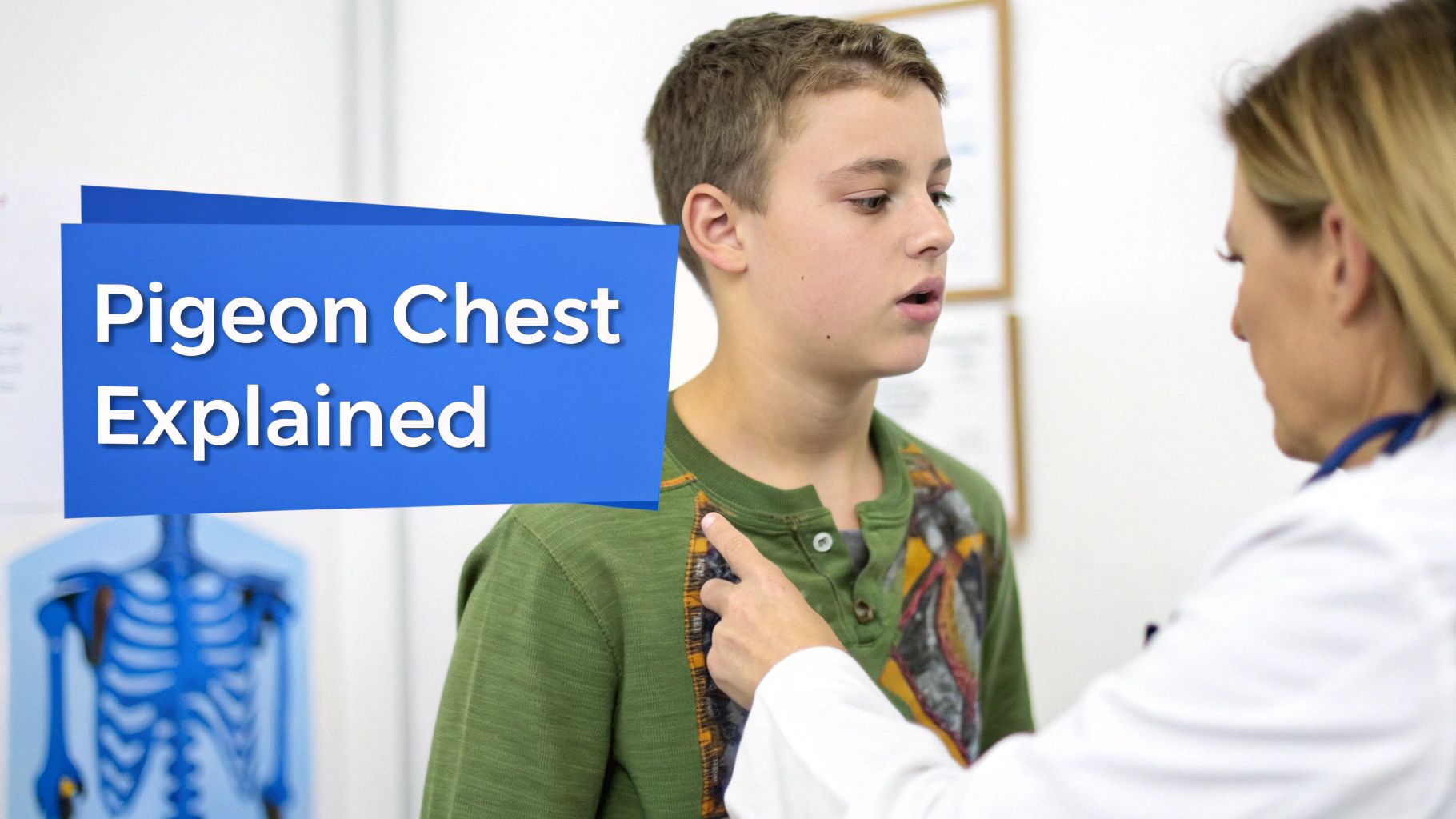
The secret to treating this condition without surgery lies in the natural flexibility of a growing chest wall. During the teenage years, the cartilage connecting the ribs to the sternum is still soft and adaptable. This is the window of opportunity where a custom-fitted brace can be an incredibly effective tool.
How Bracing Works Its Magic
A pectus carinatum brace works on a simple yet powerful principle: consistent, gentle pressure. A custom-made device, moulded specifically to the patient’s unique chest shape, applies targeted compression directly onto the most prominent part of the chest.
This constant pressure encourages the flexible cartilage to remodel itself, gradually moving into a flatter, more typical position. It’s a slow and steady process that works with the body's natural growth and adaptability. For the treatment to really work, the brace needs to be worn for many hours each day, often including overnight. Without a doubt, consistency is the single most important factor in achieving a lasting correction.
The core idea is straightforward: by applying controlled external force while the skeleton is still maturing and flexible, the brace can guide the chest wall back into its correct anatomical position, often avoiding the need for more invasive procedures.
Who Is Affected by Pectus Carinatum?
This condition is more common than many people realise. Here's a quick look at the key details.
| Pectus Carinatum and Bracing At a Glance | |
|---|---|
| Aspect | Description |
| What It Is | A protrusion of the breastbone and ribs, also known as 'pigeon chest'. |
| When It Appears | Most often becomes prominent during the adolescent growth spurt (ages 11-12). |
| Primary Treatment | Non-surgical bracing, which uses gentle, consistent pressure to reshape the chest. |
| Ideal Candidate | Adolescents with a flexible chest wall who are committed to wearing the brace. |
| Key to Success | Consistency. The brace must be worn for many hours daily over a set period. |
This table provides a foundational overview, but the condition often involves more than just the chest's appearance.
In the UK, data from specialist centres show that while it affects both genders, it is more common in males. Research also points to a significant genetic link, with around 26.4% of patients reporting a family history of the condition. While some people seek treatment for cosmetic reasons alone, about a third (32.6%) experience symptoms like chest pain or shortness of breath.
Furthermore, over half of patients (51.6%) also have related musculoskeletal issues, such as:
Rounded or forward-projecting shoulders, a very common postural side effect.
Thoracic kyphosis, which is an increased outward curve of the upper back.
A forward head posture, which can lead to neck and shoulder strain.
These associated postural problems highlight why bracing is almost always paired with targeted physiotherapy. Getting a clear picture of how pectus carinatum affects the whole body is the first step towards an effective treatment plan. To explore this topic further, our comprehensive guide on chest wall deformities offers more valuable information.
Is Bracing the Right Choice for Pectus Carinatum?
Figuring out if a brace is the right way forward isn't just a question of age. While we see it most often in teenagers, the real key to success is how flexible the chest wall is. It’s this flexibility that allows the gentle, steady pressure from a brace to slowly guide the protruding breastbone back into place.
I often use the analogy of a young tree. Trying to shape a young, supple branch is straightforward—it’s pliable and can be gently guided. An old, hardened branch, on the other hand, is rigid and will resist. It's the same with a growing adolescent's chest; the cartilage is still soft and adaptable, especially during a growth spurt, which makes it respond beautifully to this kind of corrective pressure.
How We Check for Chest Wall Flexibility
A specialist can tell a lot from a simple physical examination. This usually just involves applying some light pressure to the protrusion to gauge how much it moves. They'll also look closely at the specific type and location of the pectus, as this detail is crucial for designing a truly custom-fit brace.
Symmetrical Protrusion: This is the classic "pigeon chest" where the centre of the chest sticks out evenly. It typically responds very well to a standard brace design.
Asymmetrical Protrusion: Sometimes, one side of the chest juts out more than the other. This requires a more specialised brace designed to apply targeted, uneven pressure exactly where it's needed.
The whole point of this initial assessment is to perfectly match the brace's corrective force to the patient's unique anatomy and flexibility. It’s the foundational step for any effective treatment plan.
Patient Commitment: The Real Secret to Success
Beyond the physical side of things, the single biggest factor in getting a great result is the patient's commitment. A brace isn't something that just works on its own; it demands active participation. For the cartilage to truly remodel, the brace has to be worn consistently, which often means for most of the day and night.
Think of it this way: the patient’s commitment is the engine that drives the treatment. Without consistent wear, even the most flexible chest and the most perfectly fitted brace won't deliver the outcome we're all hoping for. It’s a real partnership between the patient, their family, and the clinical team.
This is why it's so vital for families to have a frank conversation about what's involved before starting. We talk through the daily routine, how to manage the brace at school, and strategies for staying motivated.
Here in the UK, bracing is well-established as the go-to non-surgical treatment for flexible pectus carinatum. In fact, a UK study following patients over five years found that external bracing worked incredibly well, correcting the deformity with very few complications. This has really cemented its role as a safe and effective first-line therapy. You can read more about the findings on pectus carinatum bracing in the UK.
Ultimately, checking for motivation and ensuring the patient understands their role is just as important as the clinical check-up. When a young person is on board and feels in control of the process, the chances of a fantastic, life-changing correction are incredibly high—often making more invasive surgery completely unnecessary.
From Your First Consultation to a Custom-Fitted Brace
Taking that first step can feel daunting, but understanding what’s involved often makes the process much less intimidating. It all starts with an initial consultation, where a specialist takes a close look at the chest to really understand what's going on. This isn't just a quick glance; it's a detailed assessment to build the foundation for a successful treatment plan.
During this first meeting, the clinician will carry out a physical examination, carefully checking how firm the protrusion is and how flexible the chest wall feels. They'll take very specific measurements to get a baseline—a starting point we can use to measure progress down the line. It's also your chance to ask every question you have, so you and your family leave feeling clear and confident about the path ahead. For those who can't easily travel, many specialist clinics now offer a virtual consultation to get the ball rolling.
What Modern Braces Are Really Like
After the assessment, the conversation turns to the brace itself. If you're picturing something huge and cumbersome, think again. The modern pectus carinatum brace is a lightweight, low-profile device designed to be effective without getting in the way of everyday life. Devices like the T-Brace are sleek enough to be worn discreetly under clothes, so life can carry on as normal.
Their effectiveness comes down to a clever principle called dynamic compression. Rather than just strapping on a rigid device, these braces apply a steady, targeted pressure that constantly adapts as the chest begins to remould. This intelligent approach not only works faster but is also far more comfortable, which is absolutely vital for sticking with the treatment.
This diagram breaks down the key factors clinicians weigh up when considering if a brace is the right fit for a patient.
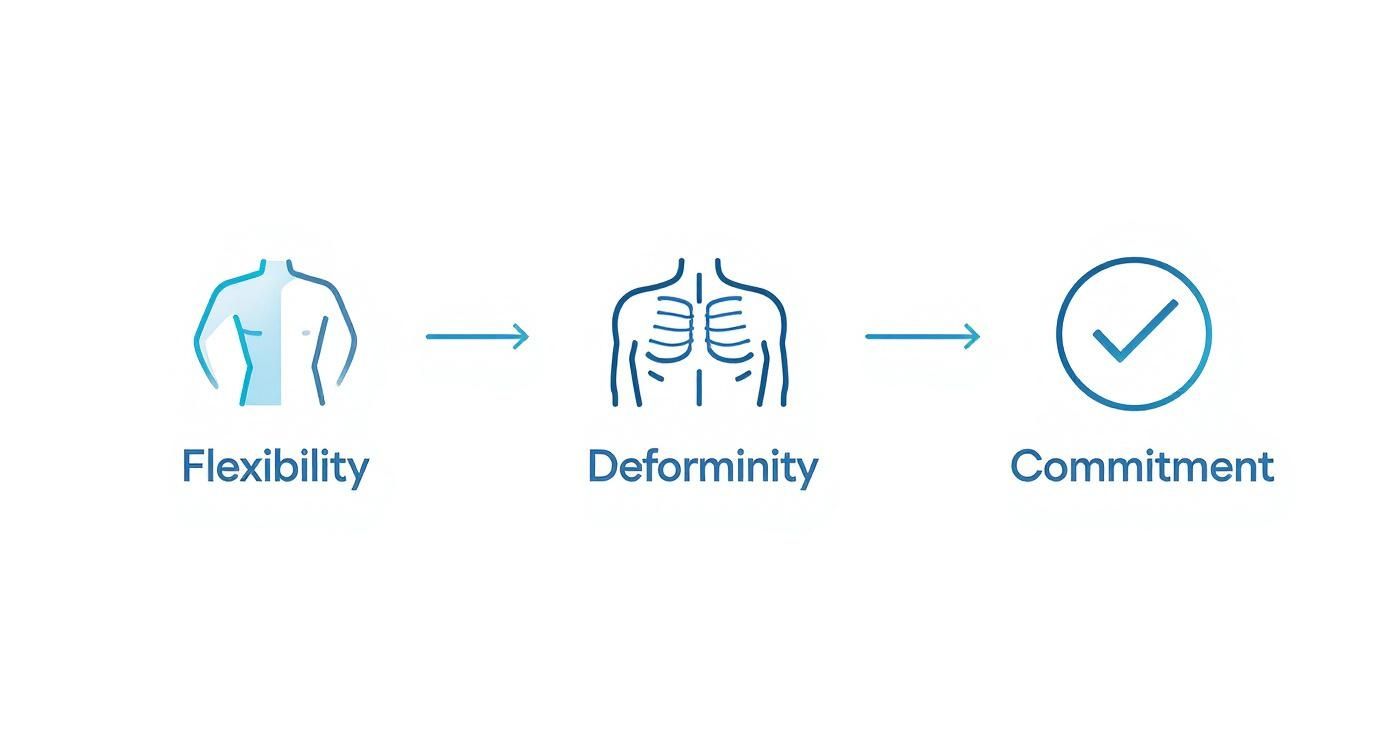
As you can see, a great outcome is about more than just the physical condition; it's a combination of the chest's flexibility, the type of protrusion, and the patient's commitment to the process.
To give you a better idea of what's out there, here's an overview of different pectus carinatum brace types and their key features.
Comparing Modern Pectus Carinatum Brace Designs
| Brace Type | Mechanism of Action | Best Suited For |
|---|---|---|
| Dynamic Compression Brace (e.g., T-Brace) | Uses front and back pads with a tightening mechanism to apply constant, targeted pressure on the protrusion. | Symmetrical and most asymmetrical protrusions in growing adolescents. Highly effective due to its adjustable and targeted pressure. |
| Custom 3D Printed Brace | Fabricated from a precise 3D scan of the torso, offering a highly contoured, low-profile fit. | Complex or very asymmetrical cases where a perfect, bespoke fit is essential for comfort and targeted correction. |
| Pectus Pectus Brace | A simple, single front-plate design that applies direct pressure. | Mild, symmetrical protrusions where broad, simple pressure is sufficient. Less common in modern specialist practice. |
Each design has its place, but the goal is always the same: to provide effective, comfortable correction that fits into the patient's life.
The Custom Fitting Process: Precision is Everything
Once bracing is confirmed as the right route, the next step is the custom fitting. This is where modern technology makes all the difference. A "one-size-fits-all" brace just won't work for something as unique as a person's chest wall.
To get that perfect fit, specialist centres use 3D scanning technology to create a precise digital map of the torso. It captures every single curve and contour with incredible accuracy. This digital model is then used to create a brace that is made just for you.
The whole point of custom fitting is to put corrective pressure exactly where it needs to be, while making sure the brace fits so well that it doesn't rub, dig in, or cause discomfort.
This tailored approach is what makes today’s bracing treatments so successful. The custom brace for pectus carinatum usually takes about 5-10 days to be made. Once it’s ready, you’ll come back in for a final fitting. The clinician will make any last-minute tweaks and give you clear instructions on wearing and looking after it. This appointment is the real start of the journey, sending you home with the tools and a clear plan to get started.
Navigating Daily Life with a Pectus Carinatum Brace
Starting treatment with a brace for pectus carinatum is a big step, and it’s completely normal to wonder how it will fit into your day-to-day life. The good news? Modern braces are designed to be as discreet as possible, so you can carry on with school, hobbies, and an active life without much disruption. The real key to success is understanding the process and committing to it from the very first day.
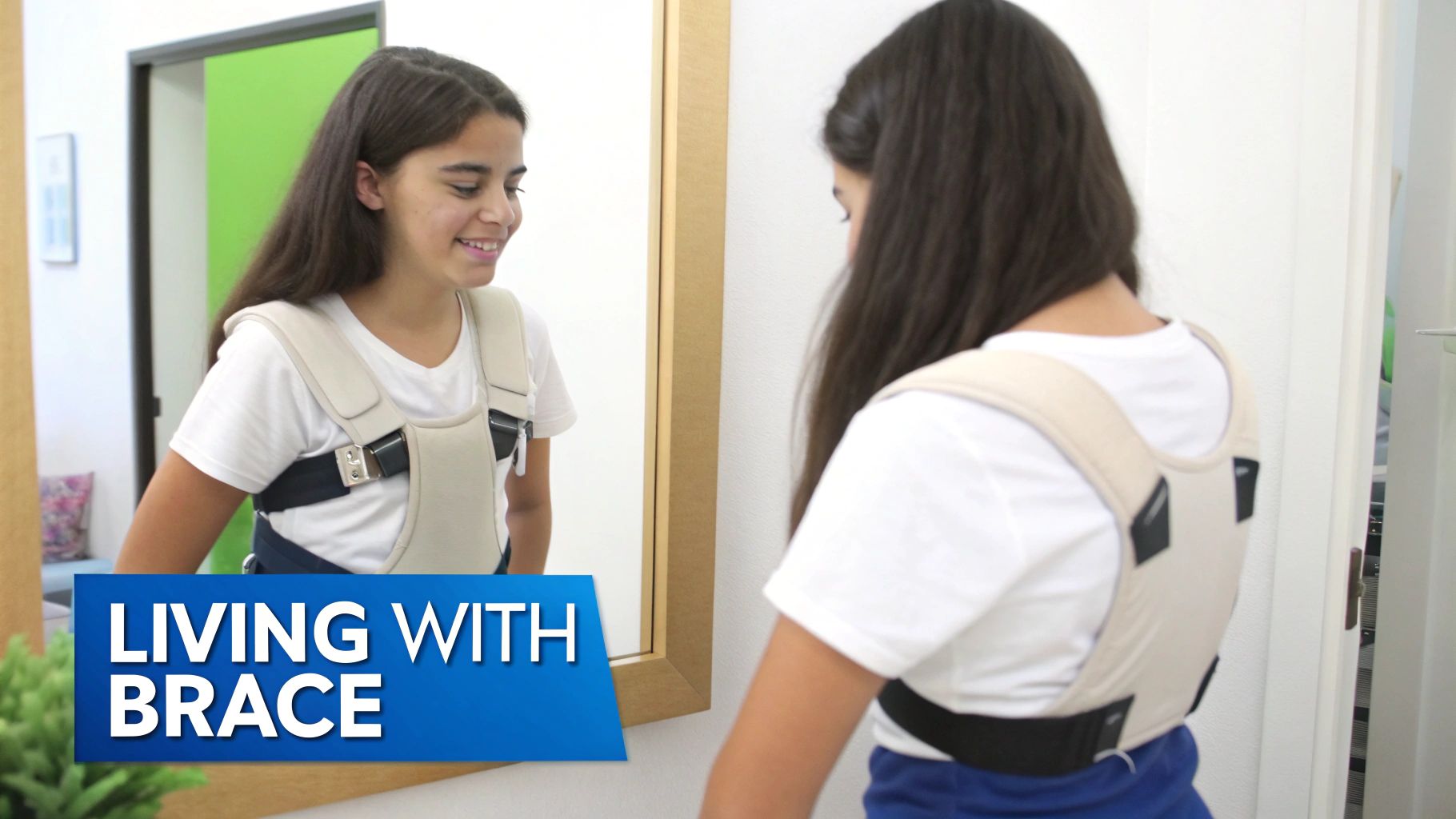
Think of it as a partnership. Your clinical team provides the expert guidance and the custom-fit brace, but it’s your consistency that makes the correction happen. When you embrace that role, you’re taking direct control of your treatment and setting yourself up for the best possible outcome.
Mastering Your Daily Wear Schedule
Consistency really is the cornerstone of effective bracing. The whole point is to apply gentle, continuous pressure that encourages the chest wall to remodel itself over time. To do this, you’ll need to wear the brace for a significant part of each day, following a schedule your clinician designs specifically for you.
For most people, this starts at 23 hours a day. While that might sound like a lot at first, it quickly becomes just another part of your routine. The only times you'll typically take it off are for bathing, swimming, or contact sports where the brace could get damaged or cause an injury.
Think of the brace like a retainer you wear after having your teeth straightened. It needs to be worn consistently to hold the correction in place and guide the final result. Wearing it on and off just won't create the steady, gradual change needed for a permanent fix.
As your chest becomes flatter and more stable, your clinician will begin to adjust this schedule. This is a gradual process, managed during your regular follow-up appointments to make sure everything is progressing as it should.
Practical Tips for Comfort and Discretion
One of the biggest worries we hear is about wearing the brace at school or when out with friends. This is where modern, low-profile designs are a real game-changer. They’re specifically made to be worn discreetly right under your clothes.
Here are a few tips to make daily life with your brace a bit easier:
Wear a soft undershirt: A thin, seamless cotton t-shirt or vest worn under the brace is a must. It acts as a protective barrier, stops any rubbing, and helps absorb moisture.
Choose looser clothing: You don’t have to change your style, but slightly looser tops, hoodies, or jumpers are great for concealing the outline of the brace and helping you feel more confident.
Look after your skin: It’s vital to keep the skin under the brace clean and dry. After a shower, make sure you're completely dry before putting the brace back on. If you ever spot any persistent redness or irritation, give your clinic a call—a minor adjustment is often all that's needed.
Staying active isn’t just possible; it’s encouraged! Regular activity, especially the targeted physiotherapy exercises that go along with bracing, will help strengthen your core muscles and improve your posture, which only enhances the final result.
Understanding the Treatment Timeline and Weaning Phase
While you’ll likely see some initial improvements within the first few months, it helps to think of bracing as a marathon, not a sprint. The entire treatment process, from day one to achieving a stable, long-term correction, typically lasts between 12 and 24 months. How long it takes for you will depend on the flexibility of your chest wall and, most importantly, how consistently you wear the brace.
Once your chest has reached its final corrected shape and your growth begins to slow, you’ll move into the 'weaning' phase. This is a carefully managed period where your daily wear time is gradually cut back.
For example, your clinician might reduce your schedule to wearing the brace for just 12 hours a day, usually overnight while you sleep. This acts like a retainer, making sure the chest wall stays stable in its new position. This final stage is crucial for preventing any recurrence and locking in all your hard-earned results for good.
The Team Approach: Physiotherapy and When to Consider Surgery
Think of a pectus carinatum brace as the main tool for reshaping the chest wall. But for the best results, it doesn't work alone. It needs a partner. That partner is physiotherapy, which acts like a personal trainer for your upper body, strengthening key muscles and correcting your posture. This combination ensures the final result isn't just about appearance—it's about creating a stronger, more functional upper body.
Over time, pectus carinatum often encourages related postural habits, like rounded shoulders or a slumped posture. A specialist physiotherapist designs a targeted exercise plan to tackle these issues head-on, working in tandem with the brace.
Why Physiotherapy Is a Game-Changer
A good physio programme builds a strong foundation. The goal is to train your body to hold its new, corrected chest position effortlessly long after the brace comes off. It’s a proactive strategy that helps lock in the results and prevent any backsliding once treatment is complete.
Here’s what the physio will focus on:
Strengthening Postural Muscles: Exercises are designed to engage the upper back and shoulder muscles, helping to naturally pull the shoulders back and open the chest.
Improving Core Stability: A strong core is the anchor for your entire torso. Building it up provides the support needed to maintain an upright posture, which pectus carinatum often weakens.
Enhancing Breathing Mechanics: You'll learn specific deep-breathing exercises and stretches that improve lung capacity and make breathing feel deeper and more efficient.
Stretching Tight Chest Muscles: The protrusion can cause the pectoral muscles to shorten and tighten. Gentle, targeted stretching helps release this tension, allowing the brace to do its work more effectively.
This double-act of bracing and physiotherapy creates a powerful synergy, leading to a much more comprehensive and lasting correction.
When Is Surgery the Right Option?
Let’s be clear: for most young people with a flexible chest wall, bracing is the go-to, highly successful first-line treatment. Surgery is rarely the first step. It's usually reserved for specific situations where non-surgical methods just won't cut it.
Surgery typically comes into the conversation under these circumstances:
A Rigid Chest Wall: In late teens or adulthood, the chest cartilage can harden and lose its flexibility, making it too stiff to be moulded by a brace's gentle pressure.
Severe Deformities: In rare and very pronounced cases, the degree of protrusion might be too significant for a brace to correct on its own.
Failed Bracing Treatment: If someone has followed their bracing programme perfectly but hasn't seen the desired results, surgery might then become the next logical option.
It's worth repeating: surgery is the exception, not the rule. The incredible success of modern bracing, especially when started during the adolescent growth spurt, means very few people ever need to consider an operation.
In the UK, surgery for pectus deformities isn't very common. The NHS in England performs an estimated 380 of these operations a year, which includes both pectus carinatum and the more prevalent pectus excavatum. Procedures like the Ravitch technique are only used for severe or rigid cases that haven't responded to other treatments. As confirmed by UK pectus deformity treatment data from the NHS, the evidence strongly supports bracing as the advised first step for younger patients with flexible chests.
The decision to move forward with surgery is never taken lightly. It always follows a thorough assessment and in-depth discussion between the patient, their family, and a specialist thoracic surgeon to ensure it's absolutely the right path.
Getting Specialist Help for Pectus Carinatum in the UK
When you first realise your child has pectus carinatum, figuring out where to get the right help can feel overwhelming. But once you know the routes, the process is actually quite straightforward. Most people start by visiting their GP, who can make an initial assessment and, if needed, refer you to a specialist on the NHS.
The reality, however, is that NHS waiting lists and the availability of local services can mean long delays. This is why many families decide to look at private care options, especially in a major hub like London. Going private often means you can get a consultation and start treatment much faster, which is critical if you want to begin bracing during the teenage growth spurt—the ideal time for it to work best. Plus, you can usually book an appointment directly with a private clinic, no GP referral needed.
How to Navigate Private Healthcare
Choosing the private route puts you in the driver's seat, giving you more say over who you see and when. The first thing to do is a bit of homework: look for thoracic surgeons or clinics that specialise in chest wall conditions like pectus carinatum. Once you have a specialist in mind, you can book a consultation to get a proper diagnosis and a clear plan of action. This first meeting is key to understanding what's involved before you commit financially.
For anyone thinking about this path, it helps to get a feel for what to expect. Reading up on what's involved with private thoracic surgery in London can give you a really good overview of the whole process, from that initial chat to the quality of care you should receive. It arms you with the knowledge to ask the right questions and make a decision you're comfortable with.
Looking at the Financials
Let's be honest, the cost of private treatment is a big factor. It’s vital to get a clear breakdown of the finances before you start. Typically, you'll either use private health insurance or pay for it yourself (self-funding).
If you have a private medical insurance plan, your first call should be to them. Never assume that the treatment is automatically covered.
When you speak to your insurer, be very specific. Ask them point-blank if your policy covers "non-surgical treatment for pectus carinatum" or an "external compressive orthosis." It’s always best to get their confirmation in writing before you move forward.
For families who choose to self-fund, many clinics understand that it's a significant expense and offer payment plans to help. These often let you spread the cost of the brace and the follow-up appointments over several months. Don't hesitate to ask the clinic's admin team about their financing options; they deal with these questions all the time and can guide you through it. This makes sure your child can get the treatment they need, right when they need it, without any extra stress or delay.
Your Questions Answered: Life with a Pectus Carinatum Brace
Starting any new treatment journey comes with a lot of questions. It's completely normal to feel curious or even a bit apprehensive. Here, we'll walk through some of the most common queries we hear from patients and their families, giving you the clear, straightforward answers you need to feel confident about treatment with a brace for pectus carinatum.
Is a Pectus Carinatum Brace Painful to Wear?
A properly fitted brace should apply firm, steady pressure, but it absolutely should not be painful. Think of it like a new pair of shoes or even orthodontic braces on your teeth; there's an initial adjustment period where it feels a bit strange and new.
That said, any sharp pain, significant rubbing, or lasting skin irritation is a red flag. It’s a clear sign that the brace needs adjusting. This is exactly why specialist clinics build in regular follow-up appointments—to fine-tune the fit as your body changes, check on your progress, and make sure the whole experience is as comfortable as it can be.
How Long Before I See Results?
You'll likely see the first visible cosmetic improvements within the first few months of wearing the brace consistently. Seeing that early progress is a fantastic motivator.
But it’s crucial to remember that achieving a permanent, stable correction takes time. The full treatment journey typically lasts somewhere between 12 to 24 months.
How long it takes for you personally will come down to a few things:
How flexible your chest wall is: Younger patients, especially those going through a growth spurt, tend to see results faster.
The severity of the pectus: A more prominent chest protrusion might need a longer treatment schedule.
How well you stick to the plan: This is the most important part. Adhering to the prescribed wearing time each day is the key to getting the best possible outcome.
Can I Still Play Sports While Wearing the Brace?
Yes, and we strongly encourage you to stay active! You'll simply take the brace off for any sports or physical activities, particularly contact sports like rugby or football. This is just to prevent any injury to you or damage to the device itself.
The only rule is to put the brace back on as soon as you're done to make sure you hit your daily wear time. In fact, the physiotherapy exercises that go hand-in-hand with bracing often boost core strength and posture, which can actually help your overall athletic performance.
Will My Health Insurance Cover the Cost of Bracing?
This is a big question, and the answer really varies between different private health insurance providers here in the UK. Some policies might cover the consultation and the custom-fitted brace, but others may consider it a cosmetic treatment and not cover it at all.
Before you begin, it is absolutely essential to call your provider directly. Ask them very specific questions about your policy's coverage for an 'external compressive orthosis for pectus carinatum' and get their answer in writing. Taking this one step first will help you avoid any unexpected financial surprises later on.
At Marco Scarci Thoracic Surgery, we are dedicated to providing rapid access to specialist care for chest wall conditions. If you have further questions or wish to explore your treatment options, please get in touch to arrange a consultation. Learn more about our approach at https://marcoscarci.co.uk.

