
By Marco Scarci
There’s a public image of the surgeon: calm, clinical, commanding the operating theatre like a conductor. But the life of a thoracic surgeon is far from that polished image. What the image leaves out are the missed breaks, the corridor decisions, the ward round detours, the quiet doubts—and the endless pager beeps.
Here’s what a real day looks like. No filters. Just the reality of the typical day of a thoracic surgeon split between the NHS and private practice.
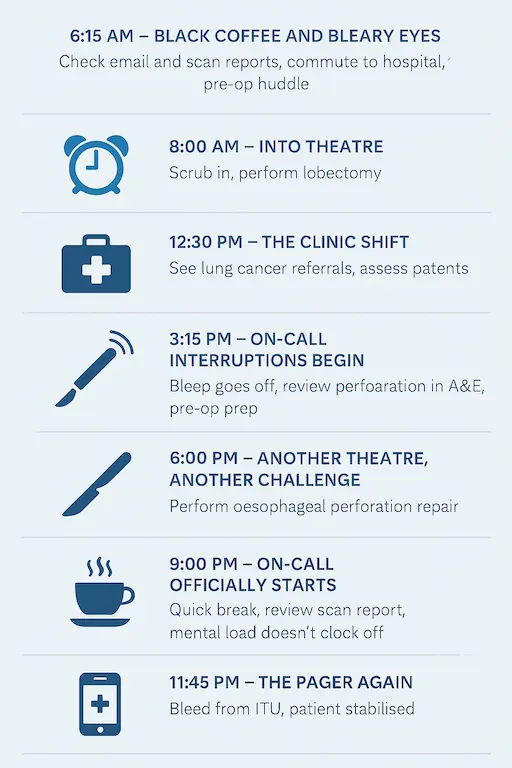
6:15 AM – Apple Juice and Bleary Eyes
First job of the day: checking my email and scan reports from home before the commute. PET-CT results for a new referral. A histology update. Bloods from a patient who’s been slow to recover. The list is long and the day hasn’t even started.
By 7:45AM, I’m on site. Change into scrubs. Pre-op huddle with the registrar and anaesthetics. We talk through the list—a lobectomy first, followed by a decortication for empyema.
8:00 AM – Into Theatre
Scrub in. Time slows in the theatre. Everything is deliberate. The lobectomy goes smoothly—keyhole surgery with VATS, thanks to decent lung function and early-stage cancer.
But just as we begin closing, the nurse alerts me to a rising heart rate. We run checks. It’s nothing sinister—just a response to fluid shifts—but it’s a reminder: nothing is ever truly “routine.”
12:30 PM – The Clinic Shift
Post-op notes done, I head to my private clinic in an hospital across town. It’s rather full today—new lung cancer referrals, pre-op assessments, and follow-ups.
One patient asks, “Is it curable?” Another, “Will I need chemo?” A third tells me she’s scared but doesn’t want to show it in front of her son.
Clinic is never just medicine. It’s people trying to navigate life-altering decisions with incomplete information. My job is to bring clarity. Sometimes reassurance. Always honesty.
3:15 PM – On-Call Interruptions Begin
I’ve barely finished dictating letters when the mobile goes off. A junior calls—stabbing about to arrive to the trauma centre. I review the CT in the hot reporting room. Classic signs. Needs theatre stat.
Meanwhile, a nurse from the ward flags a chest drain issue. The SHO has already been, but something’s off. I swing by, make a bedside tweak, reassure the patient. Then it’s back to prep for surgery number two.
6:00 PM – Another Theatre, Another Challenge
Repairing a stabbing isn’t quick. It’s fiddly, high-risk, and fraught with potential complications. It’s also not something you want to be doing when tired—but needs must. Anaesthetics are brilliant. The scrub team is solid. We get it done.
9:00 PM – On-Call Officially Continues
But let’s be honest, it never really stops. I head home and think what I have got tomorrow and whether I will be able to take my son to school.
There’s a late email from radiology—query progression on a patient I’ve been tracking. I’ll look properly in the morning, but the mental load doesn’t clock off.
11:45 PM – The Mobile Goes Off Again
A call from ITU. Post-op patient dropping sats, increased drain output. I head up. Quick chest X-ray, adjust the drain, stabilise things. Registrar handles the paperwork. We all know we’ll be back soon.
2:00 AM – One Eye Open
I try to rest in my office. It is rather cold as heating doesn’t work at night. My phone buzzes. Another serious issue.
This one’s another A&E call. Trauma. Chest injury. Likely conservative management, but I’d better assess it myself. Because I’d rather be sure.
The Morning After
There’s no clean ending. No Hollywood fade-out. Just the slow shift back into the morning rhythm. And then it all begins again.
This isn’t glamour. It’s graft.
Not heroics. Just commitment—to patients, to the team, and to doing what needs doing.
Even when you’re running on little food and water, instinct, and 4 hours of broken sleep.

