
Pain in your floating ribs can feel like a sharp, nagging ache deep in your lower chest or upper abdomen. It’s the kind of discomfort that makes you stop and wonder what’s going on. More often than not, it's linked to a muscle strain, a direct knock, or a condition known as slipping rib syndrome.
The unique feeling of this pain comes down to the anatomy of your 11th and 12th rib pairs. Unlike their neighbours higher up, they don't connect to your breastbone, which gives them more freedom of movement—but also makes them more prone to irritation.
Why Your Floating Ribs Hurt and What It Means
Let’s talk about Alex. He’s a keen weekend golfer who, out of nowhere, started feeling a sharp, mysterious pain in his side. Every swing sent a jolt through him, twisting his torso was agony, and even getting comfortable in bed at night became a real challenge. Alex's story is one I hear all the time; it highlights just how disruptive this kind of pain can be.
This type of discomfort often triggers a lot of anxiety because of where it's located. It’s only natural to worry if it’s a sign of a serious heart or organ problem. The good news is that in most cases, the real cause is much less frightening and is directly tied to the unique design of your lowest two pairs of ribs.
Understanding the Source of Discomfort
Think about your ribcage. The upper ribs form a solid, protective cage by connecting to your breastbone (the sternum). But the 11th and 12th pairs are different. We call them 'floating ribs' because they only attach to your spine at the back. This design is brilliant, as it gives your diaphragm the flexibility it needs to move while you breathe.
The downside? That extra mobility makes them more vulnerable to certain kinds of stress and injury.
We’ll dig into some of the most common culprits:
- Muscle Strain: This happens when you overstretch or tear the small intercostal muscles that run between your ribs.
- Direct Injury: A bump, a fall, or any impact can easily bruise or even fracture one of these delicate ribs.
- Slipping Rib Syndrome: This occurs when the cartilage on a rib tip becomes loose, allowing it to move abnormally and pinch or irritate the nerves nearby.
- Costochondritis: While this is an inflammation of the cartilage connecting ribs to the breastbone, the pain can often radiate downwards and be felt in the lower rib area.
This guide is here to demystify these conditions and help you make sense of what you're feeling. By exploring the common causes of lower rib cage pain in our detailed article, you can start to connect the dots. The goal is to give you clarity and reassurance, paving the way for a proper diagnosis and, ultimately, effective relief.
Understanding Your Rib Cage Anatomy
Before we dive into what might be causing your pain, it helps to get a clear picture of how your ribs are put together. Imagine your rib cage as a flexible suit of armour, cleverly designed to shield your heart and lungs while still letting you breathe, bend, and move.
Most of this armour is securely fastened. Your upper ribs connect from your spine at the back all the way around to your breastbone (the sternum) at the front, forming a strong, protective cage.
But the bottom two pairs, the 11th and 12th ribs, break this rule. These are your ‘floating’ ribs. While they attach firmly to your spine like all the others, they don’t connect to anything at the front. They just… stop.
This design is a brilliant piece of natural engineering. It gives your diaphragm, the primary muscle for breathing, plenty of room to move down as you inhale. It also gives your torso the freedom to twist and bend. But this extra mobility has a downside: it makes these ribs more susceptible to injury and strain.
A Patient Story: Sarah’s Unexpected Injury
Consider Sarah, a keen yoga enthusiast. While holding a deep twisting pose, she felt a sudden, sharp pinch in her left side. It wasn’t agony at first, but it soon settled into a nagging ache that flared up whenever she took a deep breath or twisted her body. Naturally, she was worried it was something serious.
A physical examination, however, revealed she’d simply strained the small, delicate intercostal muscles that surround the floating ribs. She had pushed the natural flexibility of her rib cage just a fraction too far. Her story is a perfect example of how even very controlled movements can cause problems in this uniquely mobile area of the body.
How This Anatomy Can Lead to Pain
Your floating ribs aren't just for movement; they also form a protective shield for the organs nestled behind them, like the upper parts of your kidneys and spleen. But because they aren't anchored at the front, they handle impact and stress differently from the rest of the rib cage. A direct blow, a heavy fall, or even a violent coughing spell can easily cause an issue.
The following concept map shows the main reasons why this unique structure can become a source of pain.
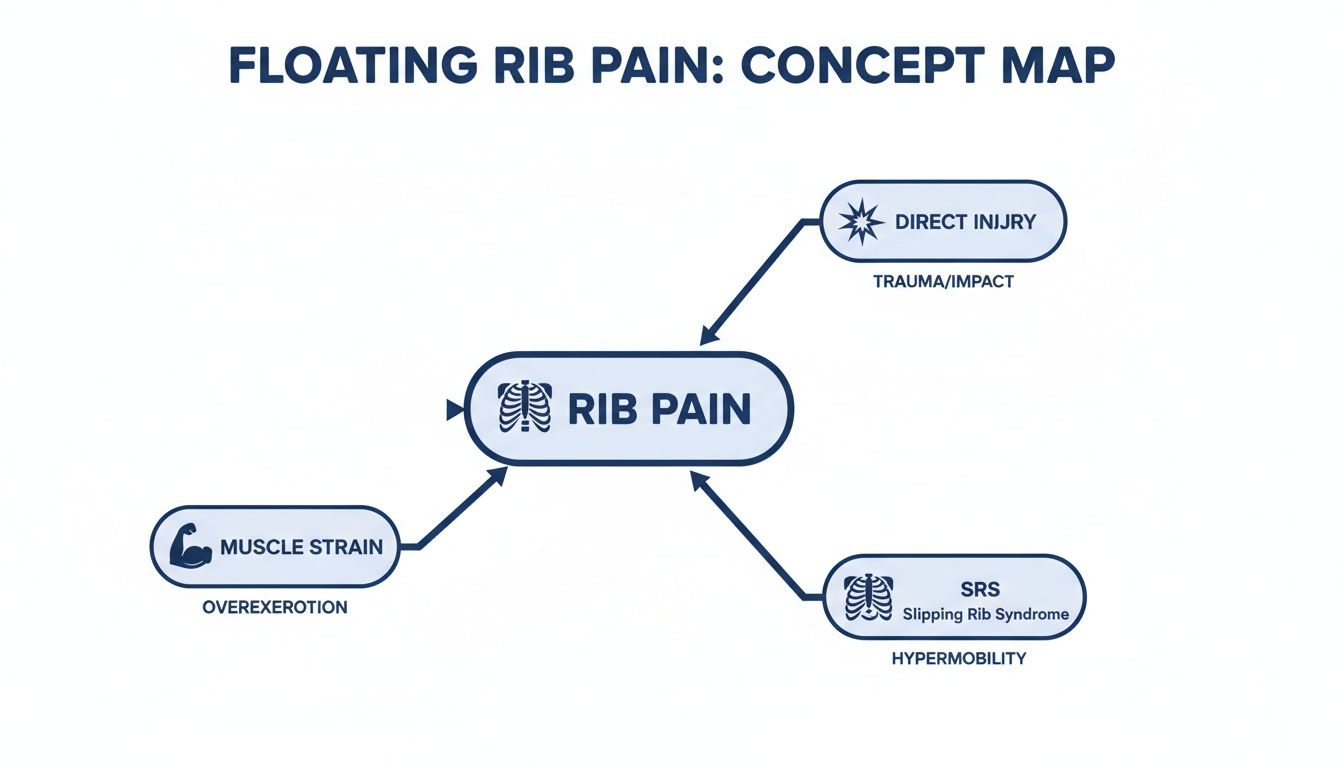
As you can see, the trouble often stems from a direct injury, a simple muscle strain, or a more specific condition like Slipping Rib Syndrome (SRS), where a rib becomes too mobile and starts to irritate the nerves around it.
Because of this unique anatomy, any repetitive twisting motion—think of a golf swing or a tennis serve—can repeatedly stress the muscles and ligaments in the area. This can also aggravate the sensitive intercostal nerves that run just underneath each rib, producing that sharp, localised pain so typical of floating rib problems. Getting to grips with this relationship between anatomy and pain is the first real step toward a proper diagnosis and, ultimately, effective relief.
So, What's Causing Your Floating Rib Pain?
When you feel that sharp, nagging pain in your lower back or along your side, the first question is always, "What on earth is that?" While it's easy to jump to the worst conclusion, pain around the floating ribs often stems from the musculoskeletal system itself—the bones, muscles, and cartilage doing their jobs. Let’s walk through the most common culprits.
A Patient's Journey: The Frustration of an Unseen Injury
Take the case of a young, active woman I treated who had been suffering for years. She described a debilitating pain under her ribs that came with a distinct 'clunking' sensation whenever she moved. Despite seeing multiple specialists and undergoing numerous scans, no one could find the cause. Her experience, which you can hear in her own words in the video below, is a powerful reminder of how challenging and isolating conditions like Slipping Rib Syndrome can be.
The Elusive Cause: Slipping Rib Syndrome
One of the most frequently missed diagnoses is Slipping Rib Syndrome (SRS). To understand it, picture the tough, flexible cartilage at the tip of your 8th, 9th, or 10th rib. This cartilage is supposed to anchor it securely to the rib cage above. In SRS, this connection becomes weak or loose.
This allows the rib to move more than it should, sometimes slipping under the rib above it and pinching or irritating the sensitive intercostal nerve that runs right along the bone. The result? A sharp, stabbing pain and often a very distinct clicking, popping, or slipping sensation when you twist, bend, or even just breathe deeply.
Many people live with it for years, misdiagnosed. The pain can be intermittent but intense, often triggered by very specific movements. We estimate that SRS accounts for about 5% of musculoskeletal chest pain seen in primary care. In the UK, where chest pain is a top reason for GP visits, that’s a significant number of people who might be dealing with a rib issue, not a heart problem.
For a deeper dive, our comprehensive guide to Slipping Rib Syndrome covers this condition in much more detail.
A Clear-Cut Case: Direct Trauma and Fractures
Sometimes, the cause is much more straightforward. A fall, a heavy knock in a football match, or the impact from a car accident can easily bruise or fracture one of the floating ribs. Because these ribs don't connect at the front, they have more give, but they’re also more vulnerable to direct impact.
A bruised rib involves damage to the bone itself and the surrounding muscle, leading to serious tenderness, pain, and sometimes visible bruising. A fracture, a clean break or crack, is even more painful. In either case, the pain is typically sharp, constant, and made dramatically worse by breathing deeply, coughing, or laughing. You'll know exactly where it hurts.
The Usual Suspects: Muscle Strains and Costochondritis
The muscles running between your ribs, the intercostals, are workhorses. They're constantly moving as you breathe and twist. It’s easy to overdo it with a sudden, forceful movement, heavy lifting, or even a prolonged, violent coughing fit. This can lead to an intercostal muscle strain—a sharp, pulling pain that's usually very localised. This can also involve knots of muscular tension known as myofascial trigger points, which create persistent, aching discomfort.
A different issue altogether is Costochondritis. This is an inflammation of the cartilage that connects a rib to the sternum (your breastbone). While it’s primarily felt at the front of the chest, the pain can radiate around to the side and feel very similar to floating rib pain. It’s often described as a sharp, aching, or pressure-like pain.
To help you get a clearer picture of how these conditions differ, here’s a quick comparison.
Comparing Causes of Floating Rib Pain
This table breaks down the key characteristics of each condition, which can help you start to understand what might be going on.
| Condition | Primary Symptom | Common Triggers | Key Feature |
|---|---|---|---|
| Slipping Rib Syndrome | Sharp, stabbing pain; sometimes a dull ache | Twisting, bending, deep breaths, lifting | A distinct 'clicking' or popping sensation |
| Rib Fracture/Bruise | Sharp, constant pain at the point of impact | A fall, direct blow, or accident | Pain is severe and worsens with any breathing |
| Muscle Strain | A sharp, pulling sensation or persistent ache | Overuse, sudden twisting, or heavy lifting | Pain is localised and tender to the touch |
| Costochondritis | Sharp, aching, or pressure-like chest pain | Often no clear cause; can follow an illness | Pain is usually at the front of the chest but can radiate |
Being able to notice these distinctions is the first step toward having a productive conversation with your doctor. When you can describe not just where it hurts, but how it hurts and what makes it worse, you're giving your healthcare provider the clues they need to get to an accurate diagnosis.
How Doctors Diagnose Your Rib Pain
If you're struggling with a nagging pain around your floating ribs, getting to the bottom of it is the first, most important step towards feeling better. The diagnostic process isn't a shot in the dark; it's a careful, methodical investigation that always begins with a conversation and a hands-on physical exam.
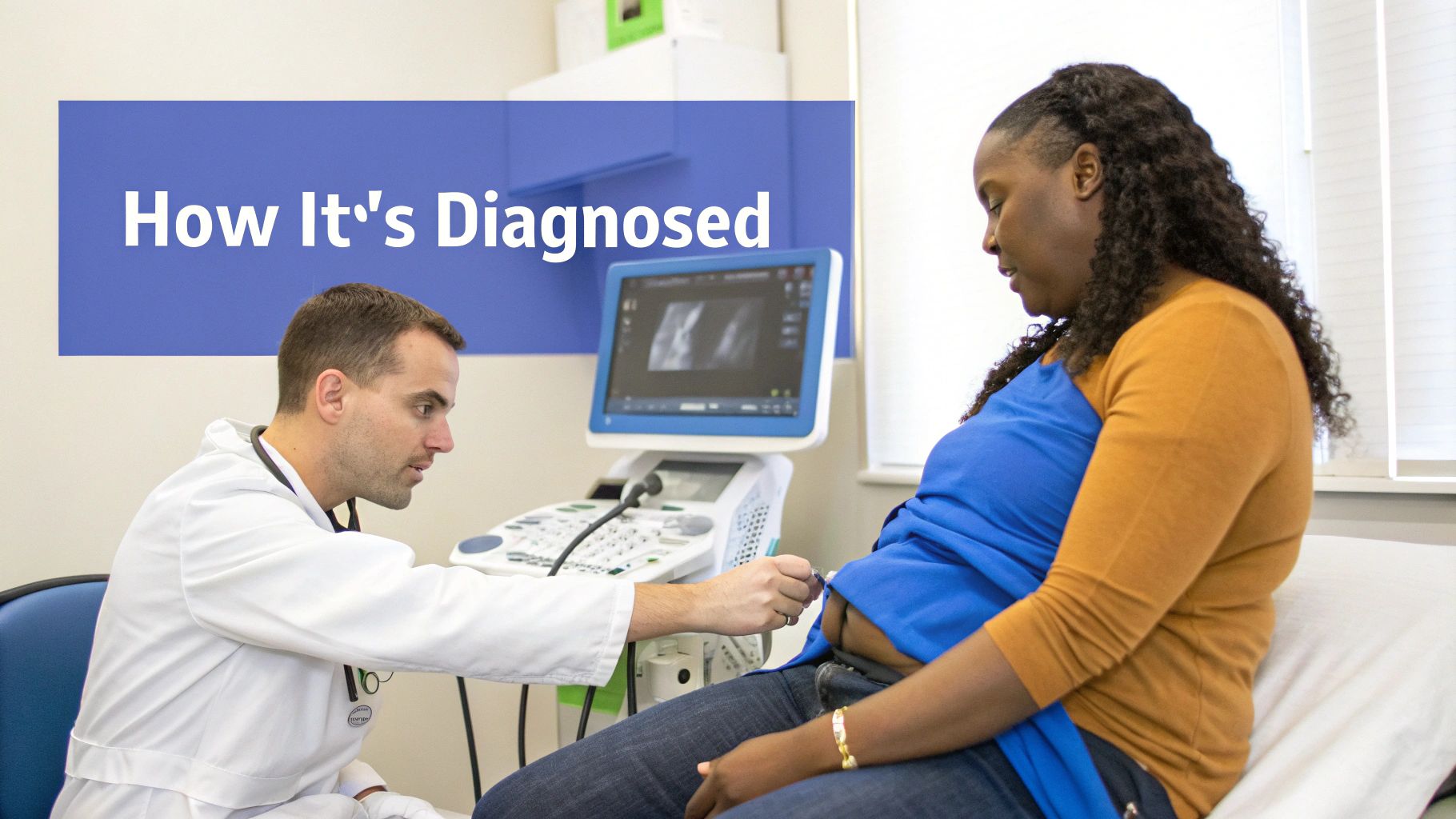
Think of it like being a detective. Take David, a retired teacher who came to see me with a sharp, persistent pain under his left ribs. It had been plaguing him for months, especially when he twisted to get out of the car. He was worried, but mostly frustrated by the lack of clear answers. His story really shines a light on why a thorough, step-by-step approach is so crucial.
The Initial Consultation and Physical Exam
Your journey always starts with a detailed chat. Your doctor will want to know everything about your symptoms, your medical history, and any activities that make the pain flare up or feel better. This isn't just small talk; every detail is a vital clue.
Next comes the physical exam. A specialist will carefully and gently press along your rib cage, trying to find the precise spot where it hurts. For conditions like Slipping Rib Syndrome, we use a specific test called the 'hooking manoeuvre'. This is where the clinician carefully hooks their fingers under the edge of the lower ribs and pulls gently upwards. The goal is to see if this action reproduces that familiar click, pop, or sharp pain. With David, this simple test immediately brought on the exact pain he’d been living with, giving us our first solid lead.
The Role of Medical Imaging
While a physical exam tells us a lot, we often need to look beneath the surface to confirm what's going on. Different scans give us different pieces of the puzzle:
- X-ray: This is usually the first port of call. It’s fantastic for spotting a clear bone fracture, but it won’t show cartilage or soft tissue damage. This means conditions like Slipping Rib Syndrome often go completely unseen on an X-ray.
- Dynamic Ultrasound: This is a real game-changer, especially for issues with rib movement. Unlike a static picture, a dynamic ultrasound lets the clinician watch your ribs move in real-time as you breathe or perform certain actions. We can literally see the problem as it happens.
- CT or MRI Scans: We don't use these as often, but they can be incredibly useful for getting a high-definition view of the bones, cartilage, muscles, and nerves. They are reserved for more complex cases where the diagnosis is still proving elusive.
Here in the UK, dynamic ultrasound is becoming the gold standard. In fact, studies show that using a 'rib-push manoeuvre' during an ultrasound can spot abnormal rib movement with an impressive 87% sensitivity rate. It’s a powerful tool that, when combined with a clinical exam, gives us a very high degree of confidence. If you want to dive deeper into the science, you can explore the research on floating rib pain diagnoses here.
Confirming the Diagnosis with Nerve Blocks
Sometimes, even after a clear exam and imaging, we need one final piece of confirmation. This is where a diagnostic nerve block comes in. It’s a simple procedure where we inject a small amount of local anaesthetic around the specific intercostal nerve we believe is causing all the trouble.
If the injection provides immediate, albeit temporary, relief from your pain, we have our answer. It confirms that the targeted nerve is the culprit. This not only provides a definitive diagnosis but also helps us plan the next steps, showing us whether you might be a good candidate for more lasting treatments.
Finding Relief with Effective Treatment Options
When you're dealing with the nagging, often sharp pain of a floating rib issue, finding a clear path to relief is the top priority. The good news is that the approach is usually straightforward, starting with simple, effective steps you can take at home before moving on to more specialised treatments if the pain persists.
A Patient Story: Sarah’s Road to Recovery
Think of Sarah, a dedicated office manager who spent months struggling with a dull, persistent ache in her side. It was a constant distraction, making long hours at her desk feel like an endurance test. At first, she tried to push through it, but the pain eventually started waking her at night. That’s when she knew she had to take it seriously.
Her recovery journey started with the fundamentals. She took a strategic break from any activities that made the pain flare up and used over-the-counter anti-inflammatory medicine to get the initial swelling down. A crucial part of her home care was understanding the difference between heat therapy vs cold therapy. For the first 48 hours, she used ice packs to tackle the inflammation head-on. After that, she switched to a heating pad, which helped to soothe and relax the tight, overworked muscles around her ribs. This simple combination gave her some much-needed initial relief and laid the groundwork for her next steps.
The Role of Physical Therapy
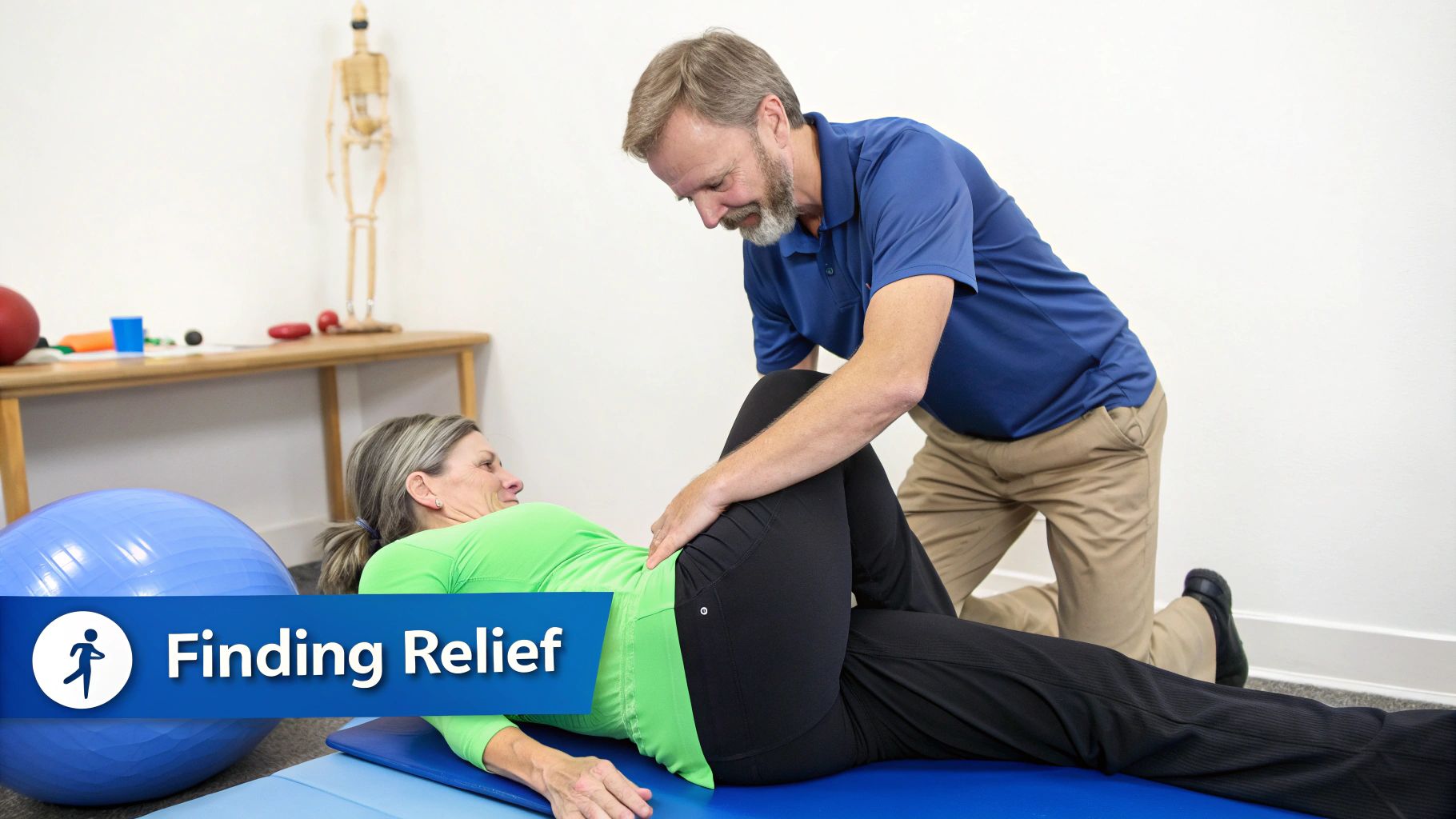
Conservative care is almost always the first and most important line of defence for floating rib pain. While a short period of rest is essential right after an injury, staying inactive for too long can backfire, leading to stiffness and weaker supporting muscles. This is where a targeted physical therapy programme becomes invaluable.
A specialist physiotherapist will create a plan tailored to you, typically focusing on a few key areas:
- Core Strengthening: Building up the muscles in your abdomen and back acts like a natural corset, giving your lower rib cage the support it needs to heal and function properly.
- Postural Correction: So many of us spend our days slouching over a desk, which puts constant, low-grade strain on the rib and back muscles. A physio can teach you exercises to correct your posture and take that pressure off.
- Breathing Exercises: Deep, diaphragmatic breathing isn't just for relaxation. It gently mobilises the rib cage and eases tension in those small but crucial intercostal muscles between the ribs.
The goal here isn't to "push through the pain." It's about methodically rebuilding strength and resilience in the area to protect you from future problems.
When Conservative Treatments Aren’t Enough
What happens if the pain just won't go away, even with rest and physiotherapy? This is when we start to consider more direct interventions to target the source of the problem.
Interventional pain management can be a real turning point for patients with persistent discomfort. These procedures bridge the gap between physiotherapy and major surgery, offering significant relief with minimally invasive techniques.
Some of the most effective options include:
- Corticosteroid Injections: By injecting a powerful anti-inflammatory medication directly at the site of pain, we can calm down irritated cartilage or a specific inflamed nerve far more effectively than with oral medication.
- Intercostal Nerve Blocks: As we mentioned in the diagnosis section, a nerve block can be both a diagnostic tool and a treatment. By using a local anaesthetic to temporarily "switch off" the pain signals from a specific nerve, we can confirm the source and provide immediate relief.
In rare and severe situations, particularly after a major trauma or for a debilitating case of Slipping Rib Syndrome that hasn't responded to anything else, surgery might be the best option. Procedures like rib stabilisation or resection can permanently fix the underlying instability. If you're recovering from a serious injury, our detailed fractured ribs treatment guide provides a much deeper look into the surgical and non-surgical options available.
Your Questions About Floating Rib Pain, Answered
When you're dealing with the sharp, unnerving pain of a floating rib issue, it’s natural to have a lot of questions. Let's walk through some of the most common concerns to give you a clearer picture of what might be happening and what you should do next.
When Is It Time to See a Doctor for Rib Pain?
You should seek immediate medical attention if your rib pain is severe, especially after a major trauma like a car crash or a bad fall. Other urgent red flags include shortness of breath, a high fever, or coughing up blood – these could signal a much more serious problem that needs to be looked at right away.
For less dramatic pain, a good rule of thumb is to book an appointment if things aren't improving after about a week of rest and self-care. If the pain is getting worse or it's starting to stop you from doing everyday activities, it’s definitely time to get a proper diagnosis. Figuring out the root cause is the only way to get onto the right treatment path.
Can Stress and Anxiety Really Make Rib Pain Worse?
They absolutely can. While stress won’t cause a rib to break or slip, it has a very real physical impact. When we're anxious or stressed, our muscles tend to clench up, and this is especially true for the muscles in our chest, back, and abdomen.
This constant tension puts a huge strain on the small intercostal muscles between the ribs, making any existing pain feel a lot worse. Stress also has a knack for lowering our pain threshold, so a discomfort that was manageable before can suddenly feel quite intense. Simple things like deep breathing exercises or mindfulness can make a surprising difference here.
How Long Does Floating Rib Pain Usually Last?
This really depends on the cause. A simple muscle strain, for instance, might start to feel better within one to three weeks with the right care. A bruised or fractured rib, however, is a longer haul – you’re typically looking at around four to six weeks for it to heal properly.
Conditions like Slipping Rib Syndrome are a different story altogether. The pain can come and go, with flare-ups followed by periods where it settles down. The key to managing this and promoting recovery is consistency – sticking with the plan your doctor gives you and committing to your physiotherapy exercises is the best way to get back on your feet.
If your rib pain isn't getting better, or you're tired of living with uncertainty, expert help is within reach. At Marco Scarci Thoracic Surgery, we provide rapid access to specialised care for complex conditions like Slipping Rib Syndrome and difficult rib fractures. We focus on getting you a clear diagnosis and an effective treatment plan, fast. Learn more and book your consultation today.

