
A collapsed lung strikes out of nowhere. The next one doesn’t have to.
One moment you’re fine; the next you’re in A&E with a chest drain, wondering if it will happen again. Mr Marco Scarci offers definitive keyhole surgery that reduces the risk of another collapse to a fraction — with most patients home within a day or two of their operation.
- No GP referral needed
- Most patients seen within one week
- Recognised by all major insurers

Imperial College Healthcare NHS Trust
*Published outcomes for VATS pleurectomy/pleurodesis, compared with roughly a 1-in-3 recurrence risk after a first untreated spontaneous pneumothorax. Individual risk is discussed at your consultation.
Recognised by all major UK health insurers
Paying for yourself? Fees are fixed and confirmed transparently when you book — no hidden extras.
Three ways patients come to this clinic
Whichever describes you, the first step is the same — a consultation, usually within a week.
Discharged from A&E — now what?
The emergency is over, but nobody really explained what comes next. Roughly one in three first spontaneous pneumothoraces recur. A specialist review tells you your personal risk, what to watch for, and whether treatment now makes sense for you.
Book a review →A second collapse changes the maths
After a recurrence, the chance of a third episode rises sharply — and definitive keyhole surgery becomes the standard recommendation. One operation, one to two nights in hospital, and the cycle stops for the vast majority of patients.
Book a consultation →Divers, pilots, travellers, athletes
If your work or life takes you underwater, into the air, or far from a hospital, even a low recurrence risk may be unacceptable — and some activities are off-limits until the problem is fixed definitively. Surgery after a first episode can be the right call.
Discuss your situation →Sudden severe chest pain or worsening breathlessness right now? Call 999 or go to A&E immediately. A collapsing lung can be a medical emergency. This page is for planned specialist care once the emergency is over.
What definitive keyhole surgery involves
A chest drain treats the collapse you have. Surgery treats the reason it happened — and stops the anxious wait for the next one. In this practice it is performed through keyhole incisions, often a single small incision.
- A single operation that reduces recurrence risk to under 5% for most patients*
- Keyhole incisions of 1–3 cm — often just one — instead of open surgery
- Typically one to two nights in hospital, walking the same day
- Most patients back to desk work within one to two weeks
- A clear, individual plan for returning to sport, flying and — where possible — diving
The operation, in plain English
- Bullectomy — removing the weak blisters (blebs) on the lung surface that burst and let air escape.
- Pleurectomy / pleurodesis — encouraging the lung to adhere gently to the chest wall, so it cannot collapse again.
- Uniportal VATS — where appropriate, the whole procedure through a single small incision.
- Complex cases welcome — including recurrent, bilateral and catamenial pneumothorax.
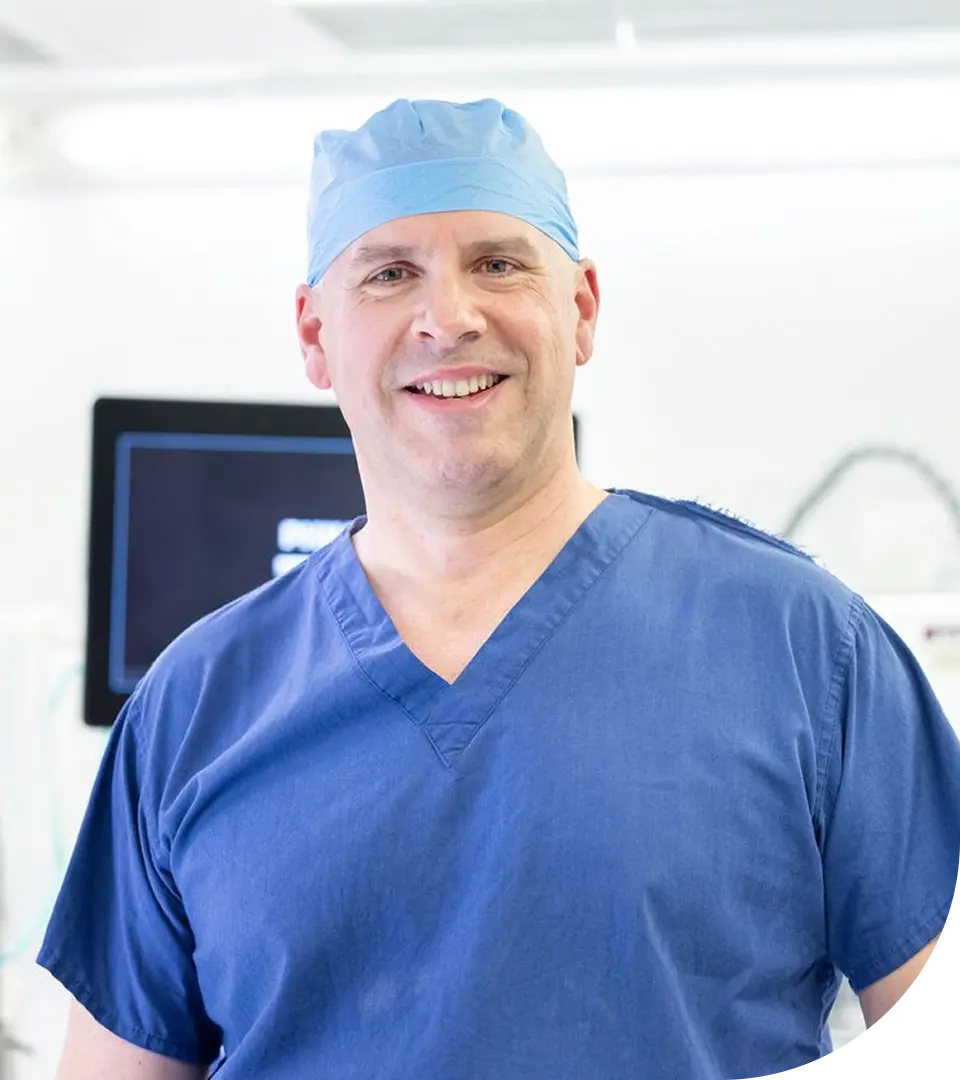
Chest surgery is all he does
With over 20 years at the forefront of thoracic surgery, Mr Scarci has dedicated his career to minimally invasive techniques — the keyhole approaches that mean less pain, smaller scars and faster recovery. Pneumothorax surgery is a deep subspecialty for him, not one procedure among many. He has performed more than 5,000 minimally invasive procedures and holds fellowships from four leading international surgical colleges.
“The goal is never just to treat the collapse. It’s to give you the best possible chance of preventing it from ever happening again.”
Patients come to him after a first episode, after a recurrence, or because their lifestyle makes any further risk unacceptable. They leave with a clear plan — and, where surgery is right for them, the confidence that it will be carried out by a highly experienced specialist.
Don’t just take our word for it
A selection of verified patient reviews. Read them all on the testimonials page.
“I have just had a first, remote consultation with Mr Scarci. I am completely stunned and so, so happy to have found him. In one consultation, he offered clarity on conditions I have been trying to speak to doctors about and get help for some 2 years and a positive plan forward.”
“Mr Scarci is an exceptional surgeon who truly cares about his patients. He explains everything clearly, is always approachable and available to answer questions, and was extremely thorough when completing my surgery. I felt at ease and well looked after under his care.”
“Clear and concise communication during initial consultation with excellent follow-up; subsequent surgery successful and stress-free due to professional and empathetic approach. Highly recommended.”
Your journey, step by step
New to private care? Here is exactly what happens — and how quickly.
First contact
Call, WhatsApp, or complete the form below. Namita, the practice manager, confirms your appointment, checks your insurance cover, and requests your existing scans and discharge summary so nothing is repeated unnecessarily.
Consultation with Mr Scarci
Your consultation is with Mr Scarci himself — he will have reviewed your imaging before you arrive. You leave understanding your personal recurrence risk, your options, and a written plan.
A clear, honest recommendation
Further imaging is arranged promptly if needed. Whether the right answer is observation, drainage or definitive keyhole surgery, the reasons are explained honestly — and the decision is yours. Insurance pre-authorisation is handled for you.
Surgery & recovery — if it’s right for you
Keyhole surgery at whichever of five London hospitals suits you best, typically with one to two nights’ stay. Mr Scarci performs your operation personally and follows you up directly — including a clear plan for returning to sport, flying and everyday life.
Five of London’s leading private hospitals
Choose whichever location and clinic time suits you. Remote video consultations are available for patients unable to travel to London.
Before you book
Will my lung collapse again?
After a first spontaneous pneumothorax, roughly one in three people experience a recurrence — and the risk rises with each further episode. Your personal risk depends on your age, build, smoking status, what your scans show and whether there’s underlying lung disease. That individual assessment is exactly what the consultation is for; after definitive keyhole surgery, published recurrence rates fall to under 5%.
Do I really need surgery after one collapse?
Often not — many first episodes are reasonably managed with observation, and you’ll be told so honestly. Surgery after a single episode earns its place when your scan shows blebs or other risk features, when the collapse was large or slow to resolve, or when your lifestyle — diving, flying, sport, remote travel — makes even a modest recurrence risk unacceptable. After a second episode, definitive surgery becomes the standard recommendation.
What does the operation involve, and how long is recovery?
It’s a keyhole procedure, often through a single small incision: the weak blisters (blebs) that caused the leak are removed, and the lung is encouraged to adhere gently to the chest wall so it cannot collapse again. Most patients are walking the same day, home within one to two nights, and back to desk work within one to two weeks — with a clear, staged plan for returning to exercise.
When can I fly — or dive — again?
Flying is generally safe once your pneumothorax has fully resolved and an appropriate interval has passed, and after successful definitive surgery most patients return to air travel with confidence. Diving is different: after a pneumothorax it is usually advised against altogether unless the problem has been treated definitively, and even then requires individual specialist assessment. Both are discussed specifically for your circumstances at consultation — bring your dive or flying requirements with you.
How much will it cost?
If you’re insured, Mr Scarci is recognised by all major UK insurers and pre-authorisation is handled for you. If you’re paying for yourself, the consultation fee is fixed and confirmed transparently when you book, and you’ll receive a clear written quote before any treatment — no hidden extras.
Do I need a GP referral, and how quickly can I be seen?
No referral is needed if you’re paying for yourself; some insurers require one, and the team will guide you through it. Your appointment is confirmed the same working day you get in touch, and most patients are seen within one week across five London locations.
Book your consultation
Complete the form and Namita, the practice manager, will come back to you the same working day. Prefer to talk it through first? Call or WhatsApp.
Form not loading? Book directly through the secure booking portal →