
The Complete Guide to Sternal Fractures

In this guide, I will cover, in easy-to-understand terms, what sternal fractures are, when they are most likely to occur, and why it is sometimes essential to surgically stabilise the sternum.

Key Takeaways
  • The sternum protects vital organs and is central to chest wall function. It connects to the ribs and shields the heart and lungs, while also enabling normal breathing mechanics.
  • Most sternal fractures result from blunt chest trauma. Motor vehicle collisions are the leading cause, particularly when the chest strikes the steering wheel or dashboard during deceleration.
  • Symptoms can be subtle and initially delayed. Adrenaline from trauma may mask pain, and undisplaced fractures can be difficult to diagnose without a CT scan.
  • CT scan is the gold standard for diagnosis. While chest X-rays are the first step, CT imaging provides the detail needed to confirm fractures and assess for associated injuries.
  • Sternal fractures are classified by location and stability. Fractures of the sternal body are most common; unstable or displaced fractures carry a higher risk of complications such as flail chest.
  • Associated injuries are the primary concern. Proximity to the heart and lungs means cardiac contusion, pneumothorax, and pulmonary complications must always be ruled out.
  • Most stable fractures are managed conservatively. Pain control, activity modification, and breathing exercises form the cornerstone of treatment for isolated, non-displaced fractures.
  • Surgery is reserved for unstable or complex cases. Severely displaced fractures, flail chest, or failed conservative treatment are key indications for surgical fixation with plates, screws, or wire cerclage.
  • Recovery typically spans 6–12 weeks but varies by severity. The acute phase involves significant pain; gradual return to activity with physical therapy support is essential for full recovery.
  • The vast majority of patients make a complete recovery. With appropriate care, most individuals return to normal activities, though chronic pain or reduced exercise tolerance can occur in complex cases.
Table of Contents

What is Sternum or Breastbone?

The sternum, or breastbone, is a flat bone in the centre of the chest that connects to the ribs and protects vital organs like the heart and lungs.

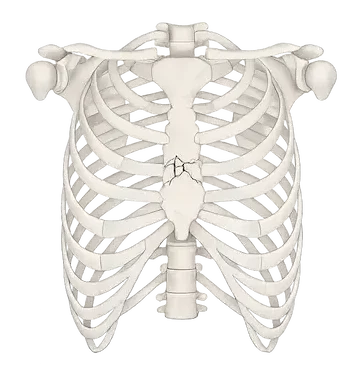
The sternum consists of three distinct parts: the manubrium at the top, the body (or gladiolus) in the middle, and the small xiphoid process at the bottom. Together, these sections form a protective barrier that’s both strong and surprisingly flexible. When functioning correctly, your sternum allows your chest to expand and contract naturally during breathing while providing structural support for your entire torso. Cartilage also connects the ribs to the sternum and can be broken in rare cases.

Sternal fractures 3 e1773221785224

Common Causes of Sternal Fractures

Traumatic Sternal fractures typically result from significant blunt chest trauma. The most common cause is motor vehicle collisions, particularly when the driver or passenger’s chest strikes the steering wheel or dashboard (deceleration injuries). However, these injuries can also occur from:

Insufficiency fracture

Sports-related collisions

Falls from significant heights

Physical altercations

Stress Fracture

Workplace accidents

What are Sternal Fractures?

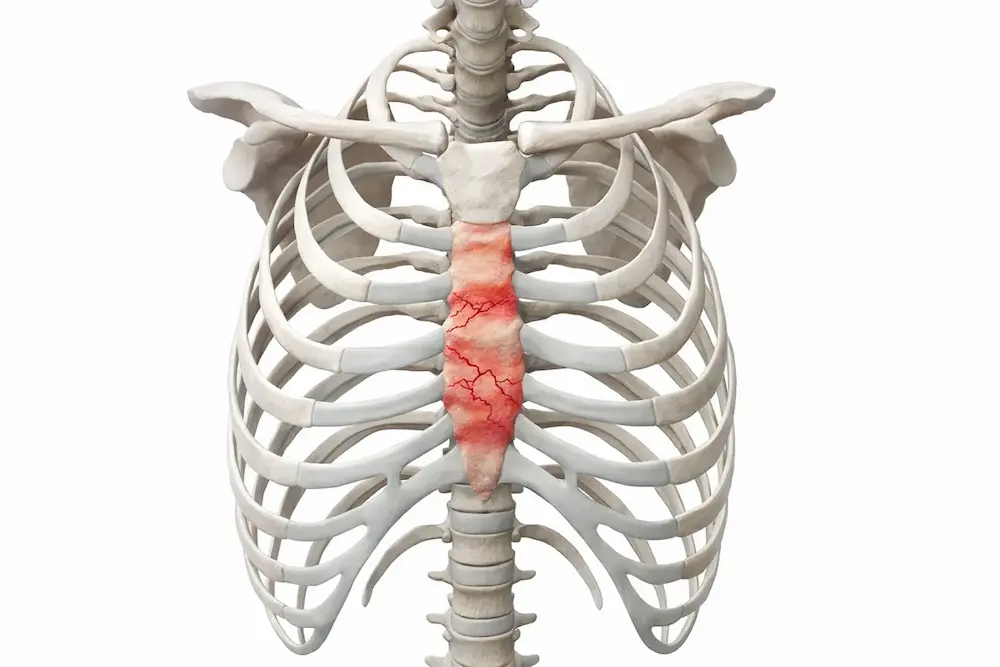
A sternal fracture is a break in the breastbone that weakens the anterior chest wall. Sternal fractures are more complex than typical bone injuries because of their location near vital organs. Unlike fractures of the arms or legs, sternal fractures carry unique implications due to their location and the essential structures they protect.

When I see a patient with a suspected sternal fracture, I’m not just looking at a broken bone. I’m evaluating the potential for underlying cardiac injury, pulmonary complications, and pulmonary contusion, and the overall impact on the patient’s breathing and circulation.

Download Your Free Guide “100 Questions & Answers About Sternal Fractures”

What are the Symptoms of a sternal fracture?

Primary Symptoms Include:

  • Central chest pain that worsens with movement or deep breathing, usually days after a chest wall injury
  • Tenderness over the breastbone
  • Swelling or bruising over the sternum
  • Difficulty taking deep breaths
  • Pain that radiates to the shoulders or arms

Secondary symptoms may include:

  • Shortness of breath
  • Rapid heartbeat
  • Anxiety or a feeling of impending doom
  • Nausea or dizziness
  • Difficulty sleeping due to pain

When antibiotics and simple chest tube drainage fail to resolve the infection, doctors must consider surgical options. Studies show that delayed surgical intervention can lead to prolonged hospital stays, increased complications, and higher healthcare costs.

How is fractured sternum Diagnosed?

With suspected sternal fractures, we follow a systematic approach; time is critical, not just for the fracture itself, but for any associated injuries that might be life-threatening.

Diagnostic Procedures for Sternal Fractures

Physical Examination:

The healthcare provider begins with a thorough physical examination, carefully palpating the chest wall to identify areas of tenderness, deformity, or instability. They’ll also assess breathing patterns, listen to heart and lung sounds, and check for signs of associated injuries. A thorough history is also always taken.

Cardiac Monitoring:

Because the sternum is close to the heart, patients with sternal fractures often receive cardiac monitoring to detect signs of heart injury or rhythm abnormalities.

Imaging Studies:

Chest X-rays:

While standard chest X-rays can sometimes miss sternal fractures, they’re still the initial imaging study of choice. They help rule out other chest injuries and may show indirect signs of a sternal fracture.

CT Scan:

Computed tomography is the gold standard for diagnosing sternal fractures. CT scans provide detailed images that can reveal even subtle fractures and help assess for associated injuries.

Lateral Chest X-ray:

This specialised view can sometimes better visualise sternal fractures than standard frontal chest X-rays.

Laboratory Tests:

Blood tests, including cardiac enzymes, may be ordered to check for heart muscle damage that could indicate associated cardiac injury.

Classification and Types of sternal fractures

Not all sternal fractures are created equal. Medical professionals classify these injuries based on several factors, each of which affects treatment decisions and prognosis.

Location-Based Classification:

  • Manubrium Fractures: These occur in the upper portion of the sternum and are often associated with clavicle or upper rib fractures. They’re less common but can be more complex to treat.
  • Sternal Body Fractures: The most common type occurs in the middle section of the sternum. These are often the result of direct frontal impact and may be associated with underlying cardiac injury.
  • Xiphoid Process Fractures: Less common and typically less severe, these fractures occur at the tip of the xiphoid process.
Anatomy of Sternal Fractures

Stability Classification:

  • Stable Fractures: The bone fragments remain properly aligned, and the chest wall maintains its structural integrity. These typically have better outcomes and may be managed conservatively, usually with a transverse fracture.
  • Unstable Fractures: Characterised by significant displacement of bone fragments, these fractures may cause a “flail chest” condition in which the chest wall moves paradoxically during breathing, primarily when associated with clavicle or vertebral fractures. Usually, this is an oblique fracture.

Associated Injury Classification:

  • Isolated Traumatic Sternal Fractures: These occur without significant associated injuries and generally have excellent prognoses.
  • Complex Sternal Fractures: These involve additional injuries to the heart, lungs, major blood vessels, or other chest structures, mostly rib fractures, requiring more intensive treatment and monitoring.

What are the Treatment Options?

The treatment of sternal fractures has evolved significantly over the past several decades. The approach depends on numerous factors, including fracture type, patient age, associated injuries, and overall health status.

Conservative Treatment

For most patients with stable, isolated sternal fractures, conservative treatment remains the cornerstone of management. This approach focuses on pain control, monitoring for complications, and supporting the body’s natural healing process.

Pain Management: Effective pain control is crucial for proper healing and the prevention of complications. Treatment typically includes:

Non-steroidal anti-inflammatory drugs (NSAIDs) for pain and inflammation

Prescribed pain medications for severe pain

Muscle relaxants for associated muscle spasms

Topical analgesics for localised relief

Activity Modification: Doctors typically advise patients to:

Avoid heavy lifting (usually anything over 10-15 pounds initially)

Limit overhead arm movements

Gradually increase activity as healing progresses

Topical analgesics for localised relief

Breathing Exercises: To prevent pulmonary complications, patients are taught specific breathing exercises and may work with respiratory therapists.

Surgical Treatment: When Surgical Fixation is Necessary?

While most sternal fractures heal well with conservative treatment, certain situations may require surgical intervention:

Indications for Surgery:

Severely displaced fractures

Unstable chest wall (flail chest)

Associated cardiac or significant vascular injury

Failed conservative treatment

Chronic pain syndromes

Surgical Techniques: Modern surgical repair of sternal fractures may involve:

Internal fixation with plates and screws

Wire cerclage techniques

Bioabsorbable implants

Minimally invasive approaches

What to expect after a diagnosis of a broken sternum?

Week 1–2

Acute Phase Management

The first two weeks after the injury are the most challenging. The pain is significant, making simple activities like getting dressed or sleeping difficult.

  • Regular follow-up appointments for monitoring
  • Chest X-rays to ensure no complications
  • Pain medication adjustment based on her response
  • Education about activity restrictions and warning signs

Week 3–6

Early Healing Phase

Physical therapy played a crucial role during this time. Sarah worked with Lisa Martinez, a physical therapist experienced in treating chest injuries.

"The goal isn't to push through pain," Lisa explained, "but to maintain mobility and strength while respecting the healing process."

A typical physical therapy program included:

  • Gentle range of motion exercises
  • Breathing exercises to maintain lung capacity
  • Posture training to prevent compensation patterns
  • Gradual strengthening of surrounding muscles
Week 6–12

Progressive Recovery

The middle phase of recovery brought both challenges and encouragement.

During this phase, treatment focused on:

  • Increasing activity tolerance
  • Returning to work with accommodations
  • Addressing any persistent symptoms
  • Planning for long-term recovery

What are the Potential Complications?

Immediate Complications

Respiratory Complications:

  • Pneumonia due to shallow breathing from pain and atelectasis
  • Pneumothorax (collapsed lung)
  • Respiratory failure in severe cases

Cardiac Complications:

  • Cardiac contusion (heart muscle bruising)
  • Rhythm abnormalities
  • Pericardial effusion (fluid around the heart)

Infection:

  • Particularly relevant in cases requiring surgery
  • Can significantly complicate healing

Long-term Considerations

  • Chronic Pain: Some patients develop chronic pain syndromes that persist beyond the expected healing time. These may require specialised pain management approaches.
  • Chest Wall Deformity: In cases of severe fractures or complications, patients may develop visible chest wall deformities that can affect both function and appearance.
  • Reduced Exercise Tolerance: Some patients report long-term limitations in performing strenuous activities, particularly those involving chest muscles.
  • Psychological Impact: The trauma associated with the initial injury, combined with the prolonged recovery process, can have lasting psychological effects that may require professional support.

The Future of Sternal Fracture Care

As our understanding of chest wall injuries continues to evolve, several trends are shaping the future of sternal fracture care:

How Do We Find the Right Treatment for You?

Treatment approaches are becoming increasingly individualised based on patient-specific factors, including genetics, healing capacity, and lifestyle factors.

Portrait of Marco Scarci, Consultant Thoracic Surgeon in London, standing with arms crossed in a professional indoor setting, wearing a navy suit and red polka‑dot tie.

Conclusion

The management of sternal fractures continues to evolve, with new techniques and technologies offering improved patient outcomes. However, the fundamental principles remain constant: careful assessment, appropriate treatment, patience with the healing process, and comprehensive support for the patient’s physical and emotional well-being.

For anyone facing a sternal fracture diagnosis, remember that while the journey may be challenging, the vast majority of patients go on to make complete recoveries and return to their normal activities. With proper medical care, patience, and support, the human body’s capacity for healing truly is remarkable.

The story of sternal fractures is ultimately one of hope—a testament to medical advancement, human resilience, and the power of comprehensive, compassionate care in facilitating healing and recovery.Treatment approaches are becoming increasingly individualised based on patient-specific factors, including genetics, healing capacity, and lifestyle factors.

If you or someone you know has experienced chest trauma, it’s vital to seek immediate medical attention. This article is for educational purposes only and should not replace professional medical advice, diagnosis, or treatment.

Ready to receive expert Lung and Chest Treatments in London?

Contact me today to schedule your consultation. Your journey to better health starts with a single phone call.

100+ 5-Star Reviews
Over 20 Years of Clinical Experience
5,000+ Minimally Invasive Procedures
Direct Phone Access & Prompt Response
Dedicated Support Throughout Your Journey
Shared Decision-Making at Every Stage

Schedule Your Consultation

Take the first step towards expert thoracic care. Dr. Scarci's minimally invasive surgical techniques offer the best chance for successful outcomes with faster recovery times.

📞
🕒

Emergency

24/7 emergency support available

Download Your Free Guide "100 Questions & Answers About Sternal Fractures"

I consent to receive educational content and updates from Mr. Marco Scarci. I can unsubscribe at any time.

Book Your Appointment

WhatsApp WhatsApp 020 7459 4367
WhatsApp 020 7459 4367

