
Persistent pain below the sternum is often misunderstood.
Learn what xiphoid pain is — and when expert evaluation is warranted

Chest pain should never be ignored, but it should be properly diagnosed.
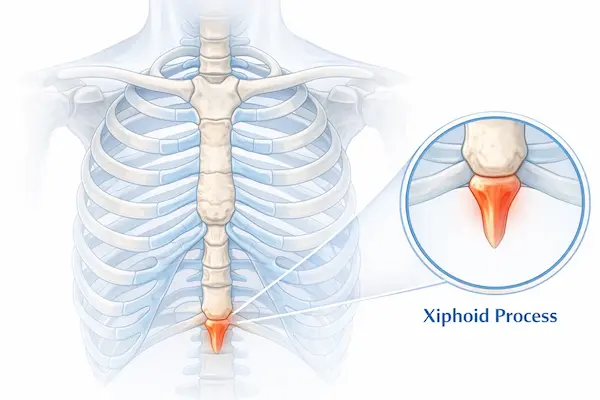
The “xiphisternum,” more commonly referred to as the Xiphoid process (or xiphoid, xiphoid cartilage, xiphoid process, metasternum), is the small, often sword‑shaped extension at the bottom of the breastbone (sternum) in the front of the rib cage. It’s located at the lower end of your sternum, just above the diaphragm — typically about 2–5 cm in length in adults.
In youth, it begins as cartilage and gradually ossifies (turns into bone) as part of normal development; in some adults, it remains partly cartilaginous.
Although small, the xiphoid process plays a critical role in anatomy. Several soft‑tissue structures — including abdominal muscles (like the rectus abdominis), diaphragm attachments, and connective tissue — attach to it.
Because of those attachments and their location, irritation or injury to the xiphisternum can produce pain that appears to originate deep within the chest or upper abdomen, or may radiate to the back, neck, or shoulders.
When the xiphoid process becomes inflamed, irritated, or injured, this can lead to a condition often referred to as Xiphodynia (also called xiphoidalgia or xiphisternum pain).
Xiphodynia or xiphoid syndrome can present with a variety of symptoms. Because of its location, many people (and even some doctors) initially mistake it for more serious conditions like heart problems or gastroesophageal reflux disease. Typical signs and symptoms include:
Tenderness or pain at the lower sternum / just above the upper abdomen, at or near the xiphoid process. Pressure over the xiphoid often reproduces the pain.
People describe pain as sharp, stabbing, dull, or pressure-like discomfort. Some report tightness or a “lump” under the breastbone.
Radiating pain or referred discomfort — the pain may spread into the chest, upper abdomen (epigastric region), back, neck, shoulders, arms, or even throat.
Aggravation of symptoms by specific movements or positions — bending forward or backward, deep breathing, coughing, lifting, exercising, or even lying down may worsen the pain.
Discomfort following meals, or after overeating, especially if acid reflux is involved — sometimes the pain feels like upper‑abdominal (gastric) discomfort.
Swelling or a palpable lump — in some cases, there may be a noticeable bump or protrusion at the xiphoid area.
Because these symptoms overlap with heart disease, gastrointestinal (acid reflux, ulcers), or other chest‑wall conditions, Xiphodynia is often misdiagnosed or overlooked.
If pressing below your sternum reproduces pain, specialist evaluation may help
Irritation, inflammation, or mechanical stress affecting the xiphoid process or the xiphisternal joint (where the xiphoid meets the sternum) is typically the cause of Xiphodynia. The most common causes and risk factors include:
Because the xiphoid process is connected to muscles, ligaments and the diaphragm, even seemingly minor strain or irritation can lead to prolonged discomfort.
Despite its relatively straightforward anatomy, xiphisternal pain (Xiphodynia) remains poorly understood—even among clinicians. Several factors contribute to frequent misdiagnosis:
Symptoms mimic severe conditions — because pain can resemble heart‑related chest pain, acid reflux, or gastrointestinal discomfort, patients often undergo extensive cardiac or GI evaluations before anyone considers the xiphoid.
Anatomic variability — the shape, size, and orientation of the xiphoid process vary significantly between individuals. Some have a short, broad xiphoid; others have a long, pointed or curved one. This variation can influence how pain presents.
Low awareness/rarity — Xiphodynia is considered uncommon, so many doctors may not routinely palpate the xiphoid when evaluating chest or upper abdominal pain.
Referred pain patterns — pain often radiates to other areas (back, shoulder, abdomen, neck), which can distract from the real source (the xiphoid). Many patients also complain of back pain.
As a result, by the time clinicians consider Xiphodynia, patients may have suffered months or years of unresolved pain.
Because clinicians often diagnose Xiphodynia by exclusion (i.e., by first ruling out other serious causes), the diagnosis usually involves several steps.

Including onset, triggers, relation to trauma or strain, GI symptoms (reflux, nausea), and prior chest injuries or surgeries.
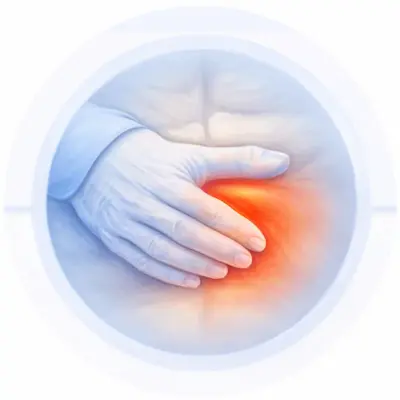
Gentle palpation of the xiphoid process and surrounding area; if pressing reproduces the pain, that strongly suggests a xiphoid origin.

Because chest/upper-abdominal pain can come from serious issues (cardiac, pulmonary, GI) — doctors may order:
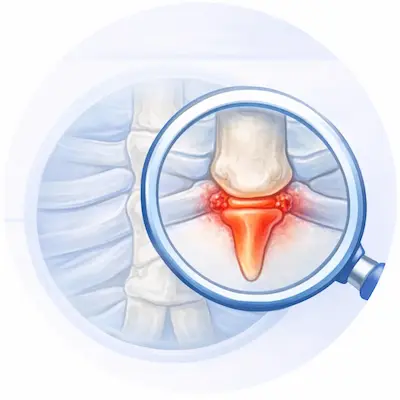
If clinicians rule out other serious causes and palpation reproduces symptoms, they may diagnose Xiphodynia.
Because awareness is limited and research is sparse, clinicians lack a universally accepted diagnostic protocol; they often tailor management to the individual.
Because Xiphodynia may stem from different causes (inflammation of the cartilage, trauma, anatomical variations, GI‑related stress, Tietze syndrome, slipping rib syndrome), treatment varies widely depending on the underlying factors.
Most patients improve hereMost patients improve here
For many people, especially when pain is mild-to-moderate or of recent onset, non‑surgical management is often effective:
Rest & avoid aggravating activities — stop heavy lifting, avoid bending, straining or exercises that stress the chest/upper abdomen, such as bench press.
Pain relief & anti‑inflammatories—over-the-counter NSAIDs (e.g., ibuprofen) or other analgesics may help reduce inflammation and pain. Many practitioners recommend a short course while avoiding triggers.
Cold therapy or heat therapy—applying a cold pack (for acute pain) or a warm compress (for muscle tension) — may be beneficial.
Gentle stretching and posture correction—tight chest or abdominal muscles may contribute to tension at the xiphoid area; gentle stretching, posture awareness, and ergonomic adjustments (especially if you sit or lift frequently) can relieve stress on the junction and reduce muscle spasms. Physical therapy might help, but avoid chiropractors.
Diet & lifestyle changes—if acid reflux or overeating contribute —avoiding large, heavy meals, adopting a reflux‑friendly diet, and paying attention to body weight may help alleviate pressure around the xiphoid.
Sometimes this can be an uncommon occupational disorder among taxi drivers.
Conservative therapy is often the first choice, especially given that many cases of Xiphodynia resolve over time.
Rare / carefully selected cases
When clinicians identify a structural abnormality, or when pain persists or is severe:
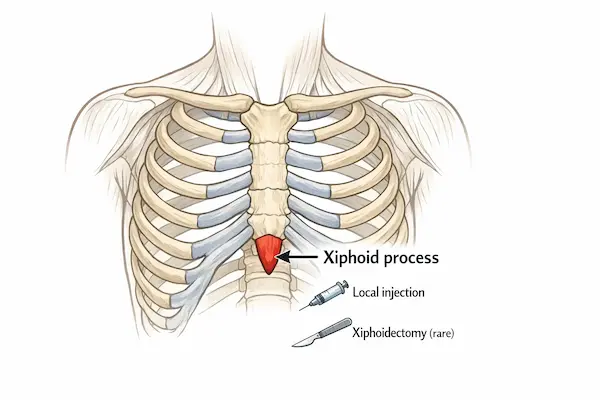
Local injections — clinicians administer injections to some patients (e.g., anaesthetic or steroid injections) around the xiphoid process. The procedure may provide temporary pain relief and help confirm the diagnosis if palpation and injection reduce symptoms.
Surgical removal (xiphoidectomy) — In rare, refractory cases, surgeons may consider removing the xiphoid process. Several case reports document that xiphoidectomy provides significant pain relief or even complete resolution in many patients.
However, surgery is typically a “last resort” — most cases respond to conservative or interventional non-surgical care.
Because the symptoms of xiphisternum pain overlap with severe conditions, it is essential to seek medical attention if you experience:
Sudden, severe, sharp pain in the anterior chest wall may result from angina pectoris
Chest pain accompanied by shortness of breath, dizziness, faintness, sweating or palpitations
Pain radiating to the jaw, left arm or back (typical signs of a heart attack)
Persistent or worsening pain even after rest, anti‑inflammatories or at-home care
Swelling, visible deformity, or lump in the lower sternum region
New or unusual abdominal symptoms (severe nausea, vomiting), or signs of gastrointestinal bleeding
Given the potential for cardiac or gastrointestinal causes, a healthcare provider should evaluate these symptoms appropriately. Always err on the side of caution — better to exclude serious causes than to assume it’s benign.
Expert answers to common questions about thoracic surgery, recovery and what to expect.
Pain of the xiphoid process (Xiphodynia) is considered relatively rare—in older literature, one small hospital-based study estimated that approximately 2% of inpatients had the syndrome. However, many experts believe it may be underdiagnosed because it's often overlooked or misattributed to other conditions.
It varies widely. Some people recover within a few weeks with rest and conservative treatment; others continue to experience symptoms for months if the cause (e.g., repetitive strain, anatomical abnormality) remains unaddressed. If surgery is required (xiphoidectomy), recovery and return to full activity can take several weeks.
Yes — the xiphoid process is considered a vestigial structure. Although it serves as a site of attachment for the chest and abdominal muscles, most people function normally after its removal.
You may have more than one issue, and the differential diagnosis might be challenging to get. Conditions like acid reflux or gastrointestinal problems sometimes contribute to or exacerbate irritation around the xiphoid process. If symptoms persist after reflux treatment, mention Xiphodynia to your doctor — a physical exam and palpation may reveal tenderness around the xiphoid, pointing to the actual source.
Still have questions about your condition?
If you suspect xiphisternum pain — or have been diagnosed with Xiphodynia — here are practical steps many find helpful for relief and prevention:
Avoid heavy lifting or intense workouts, especially those involving abdominal crunches, weightlifting, or repetitive bending/twisting.
Monitor posture and ergonomics — sitting or standing in a slouched position, hunching over desks, or carrying heavy loads incorrectly can strain the chest wall. Work on upright posture, take frequent breaks, and avoid slumping.
Use proper lifting technique — bend the knees, keep the back straight, and avoid jerky or forward‑bending motions.
Apply cold or warm therapy — during flare‑ups, a cold pack for 10–20 mins can reduce inflammation; once acute pain subsides, a warm compress or gentle chest muscle stretching may ease muscle tightness.
Take anti‑inflammatory medications (if advised) — over‑the‑counter nonsteroidal anti-inflammatory drugs like ibuprofen can help when pain flares, but use under guidance (especially if you have other health issues).
Avoid tight clothing or belts that press on the chest—especially if you sit or drive frequently; tight straps or seat belts may aggravate xiphoid pain.
Adopt reflux‑friendly habits if acid reflux is present: avoid large, heavy meals and spicy/acidic foods, and consider elevating the upper body while sleeping if reflux worsens at night.
Strengthen & stretch gently—once acute pain subsides, gentle chest-opening and abdominal stretches, combined with posture exercises, may help reduce tension at the xiphisternal junction. If possible, consult a physiotherapist.
If self-care and conservative treatments do not provide relief, or if there is structural damage (from trauma, prolonged strain, or anatomical variation), medical or surgical intervention may be necessary.
administered by a physician or pain specialist — of local anaesthetic (sometimes combined with a corticosteroid) around the xiphoid may relieve pain and help confirm the diagnosis. Some patients find long-term relief, others temporary respite.
A chest wall specialist may consider surgical excision of the xiphoid process in carefully selected cases. Case reports and small series demonstrate that many patients become pain‑free or have significantly reduced symptoms after xiphoidectomy.
because Xiphodynia often overlaps with other musculoskeletal, GI or thoracic conditions, a combined approach (physiotherapy, pain management, lifestyle changes, possibly surgery) tends to yield the best outcomes.
Because research is limited and there is no standardised treatment protocol, management is best individualised — in consultation with a qualified doctor.
Because Xiphodynia is rare and under‑reported, many clinicians don’t include it in initial differential diagnoses for chest or upper abdominal pain. As a result, patients often undergo rounds of cardiac or gastrointestinal tests before someone considers the xiphoid.
The pain mimics heart disease, reflux, gallbladder issues, and musculoskeletal chest-wall pain, but clinicians often overlook the actual source.
Differences in xiphoid shape, orientation, and soft-tissue attachments can lead to wide variation in how pain manifests — complicating diagnosis.
Because Xiphodynia is rarely studied, there is no consensus on best practices for diagnosis or long-term treatment; that leaves many sufferers in limbo.
If self-care and conservative treatments do not provide relief, or if there is structural damage (from trauma, prolonged strain, or anatomical variation), medical or surgical intervention may be necessary.
Contact me today to schedule your consultation. Your journey to better health starts with a single phone call.
Take the first step towards expert thoracic care. Dr. Scarci's minimally invasive surgical techniques offer the best chance for successful outcomes with faster recovery times.
London, UK
Multiple clinic locations available
24/7 emergency support available
Book your consultation through the
portal for a direct call with the surgeon
 020 7459 4367