
Cold pavements, black ice, and winter coughs make broken rib injuries very common at this time of year. If you have sharp chest pain after a slip, a bout of flu, or a forceful cough, you are not alone. Most rib injuries, including broken rib cases, settle with good pain control and simple breathing exercises, but a few need urgent assessment or specialist treatment. This guide explains how to tell a bruise from a break, when to go to A&E, what to expect from emergency care, how to recover well at home, and when surgical fixation is the right option.
Bruised, cracked, or broken: how to tell the difference
- Bruised rib: typically follows a knock or heavy cough. Pain is localised, worse with pressing on the area, deep breaths, coughing, laughing, or twisting. You may see bruising on the skin, yet imaging often looks normal. Movement is painful but usually manageable with regular analgesia.
- Hairline fracture: often called a cracked rib or minor broken rib. The pain is sharper than a bruise, with a pinpoint tender spot that hurts on every breath and when you roll in bed. Coughing or sneezing can cause a sudden stab of pain. It may feel similar to a bruise, which is why clinical assessment matters.
- Unstable or displaced fracture: the rib has moved out of position or several ribs are broken. You may notice a step or deformity, grinding or clicking, severe pain at rest, and difficulty drawing a full breath. If several adjacent ribs break in more than one place, the chest wall can move abnormally when you breathe. This needs immediate medical attention.
How do you know if you have a broken rib? Severity of pain, a clear tender spot on the rib, pain with deep breathing, and difficulty lying on the injured side are clues. Xrays do not always show a single hairline break, so diagnosis often combines your story, examination, and the right imaging when needed.
What can be mistaken for a broken rib?
Several problems can mimic rib pain. Muscular strain along the chest wall, costochondritis at the breastbone joints, shingles before the rash appears, and referred pain from the spine can all feel similar. Persistent focal pain with a click or pop may suggest slipping rib syndrome. If pain lingers or recurs, a specialist can help distinguish these conditions and advise next steps.
Red flags: when to go straight to A&E
Go to A&E or call emergency services if you notice any of the following:
- Severe breathlessness or a feeling you cannot get air in
- Chest pain that is worsening rapidly or spreading
- Coughing up blood Dizziness, fainting, cold clammy skin, or confusion
- A visibly deformed chest wall or paradoxical movement with breathing
These can indicate complications such as a pneumothorax, bleeding in the chest, or severe lung bruising. If you have sudden onesided chest pain with breathlessness after a fall or cough, do not wait.
Many people wonder: do I have a broken rib or just a bruise? Should you go to the hospital if your ribs hurt when you cough? If the pain is severe, associated with shortness of breath, fever, or you are coughing up blood, yes. If the pain is moderate but you can breathe comfortably, urgent GP or private sameday assessment is reasonable.
What urgent care might do
In A&E you will typically have a clinical examination and a chest Xray. Some patients need a CT scan, especially after significant trauma or if complications are suspected. Oxygen and strong pain relief are given to help you breathe deeply. If there is a large pneumothorax or bleeding, a chest drain may be inserted. Most simple or hairline fractures do not need admission and are managed with analgesia, breathing exercises, and safetynet advice.
Do doctors do anything for a cracked or broken rib? Yes. While the bone usually heals on its own, doctors provide structured pain control, assess for complications, teach breathing techniques to avoid pneumonia, and arrange imaging or followup. In selected complex cases with unstable fractures, surgeons may offer rib fixation.
Conservative care at home
Effective selfcare helps you heal faster and reduces complications.
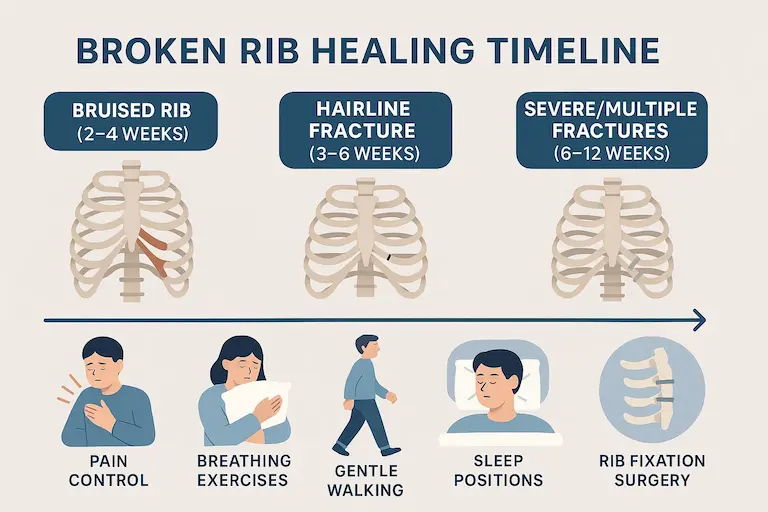
- Pain control: take regular paracetamol and, if suitable for you, an antiinflammatory as advised by your clinician. Short courses of stronger medication may be needed early on.
- Breathing exercises: every hour while awake, take 5 to 10 slow deep breaths. Hug a folded towel or pillow against the sore area when coughing to support the ribs. This prevents shallow breathing and reduces the risk of chest infections.
- Activity: is walking good for broken ribs? Gentle walking is very helpful. It keeps your lungs open and reduces stiffness. Increase distance gradually. Avoid lifting, pushups, heavy coughing without support, or highimpact sports.
- Sleep: try sleeping on your back with pillows to prop you up slightly, or on the uninjured side with your upper body supported. A small cushion under the arm on the painful side can reduce pressure points.
- What not to do with a broken rib: do not wrap your chest tightly, as this can restrict breathing. Do not ignore escalating pain or breathlessness. Do not return to contact sport until cleared by a clinician.
What helps fractured ribs heal faster? Good pain control so you can breathe and move, regular deepbreathing practice, early light mobility, adequate protein and hydration, and not smoking. Guided physiotherapy can speed your return to normal activities.

How long do ribs take to heal?
Most uncomplicated broken ribs improve steadily over 3 to 6 weeks, with pain easing after 2 to 3 weeks. Hairline fractures often follow a similar timeline. Bruised ribs can feel better within 2 to 4 weeks. More severe or multiple fractures can take 6 to 12 weeks. If pain is not improving after 3 weeks, or you are still struggling by 6 weeks, seek a review.
What does a hairline fracture feel like in your ribs? Expect a sharp, welllocalised pain that flares with deep breaths, coughing, or rolling in bed, often without dramatic bruising on the skin. Pressing the exact spot is very tender.
The most likely complication of broken ribs
The commonest problem is reduced breathing because of pain, which can lead to chest infections and pneumonia. Less common but important complications include a pneumothorax, bleeding into the chest, and in severe trauma, flail chest. Good analgesia and breathing exercises are the best prevention.
When rib fixation surgery is the right choice
If you have an unstable or displaced fracture, severe pain that prevents breathing or mobilising, failure to improve with conservative care, or a flail segment, surgical stabilisation of rib fractures can make a real difference. Modern rib fixation uses small incisions and titanium plates tailored to your rib shape to restore alignment, stabilise the chest wall, and allow you to breathe and move comfortably sooner.
At our London practice we offer sternal and rib stabilisation using minimally invasive approaches where appropriate. For complex injuries we consider sternal and rib stabilisation with plates after careful imaging. Patients typically notice quicker pain relief, better breathing, and fewer chest complications compared with prolonged bed rest alone. Recovery usually involves a short hospital stay, early physiotherapy, and a graded return to activity under guidance.
Private access in London, sameday clarity
If you need quick answers, we can arrange rapid imaging and a consultant review to confirm your diagnosis, rule out complications, and plan the right treatment. For complex chest wall injuries we offer assessment for ssrf and a tailored rehabilitation plan. If your pain pattern does not fit a fracture, we can also assess for rib injury mimics and advise on next steps.
Summary
Winter slips and persistent coughs can lead to bruised ribs, hairline cracks, or unstable fractures. Most heal well with structured pain relief, breathing exercises, gentle walking, and smart sleep positions. Go to A&E if you develop severe breathlessness, deformity, coughing blood, or sudden worsening pain. Expect 3 to 6 weeks for straightforward healing, with reviews if progress stalls. If your fracture is unstable or pain prevents you breathing properly, rib fixation can improve comfort and speed recovery. Our London team provides rapid access to imaging, expert assessment, and minimally invasive solutions when needed, so you can breathe easier and get back to normal safely.
Internal resources that may help:
- Learn more about rib fracture symptoms and treatment options on our rib fracture page: rib fracture treatments
- If you are experiencing sudden onesided chest pain and breathlessness after an injury, read about pneumothorax signs and symptoms and when to seek urgent care: pneumothorax signs and symptoms
- For complex rib injuries, explore how stabilisation can help: ssrf

