
The best way to speed up your healing after surgery is to start preparing weeks, or even months, before your operation date. It might sound counterintuitive, but taking proactive steps now can have a huge impact on your recovery. Simple changes to your lifestyle, like improving your diet, stopping smoking, and doing some light exercise, can dramatically reduce your risk of complications and get you home sooner.
We call this approach 'prehabilitation', and it’s all about giving your body the strength it needs to heal properly.
Your Recovery Starts Before You Enter the Operating Theatre
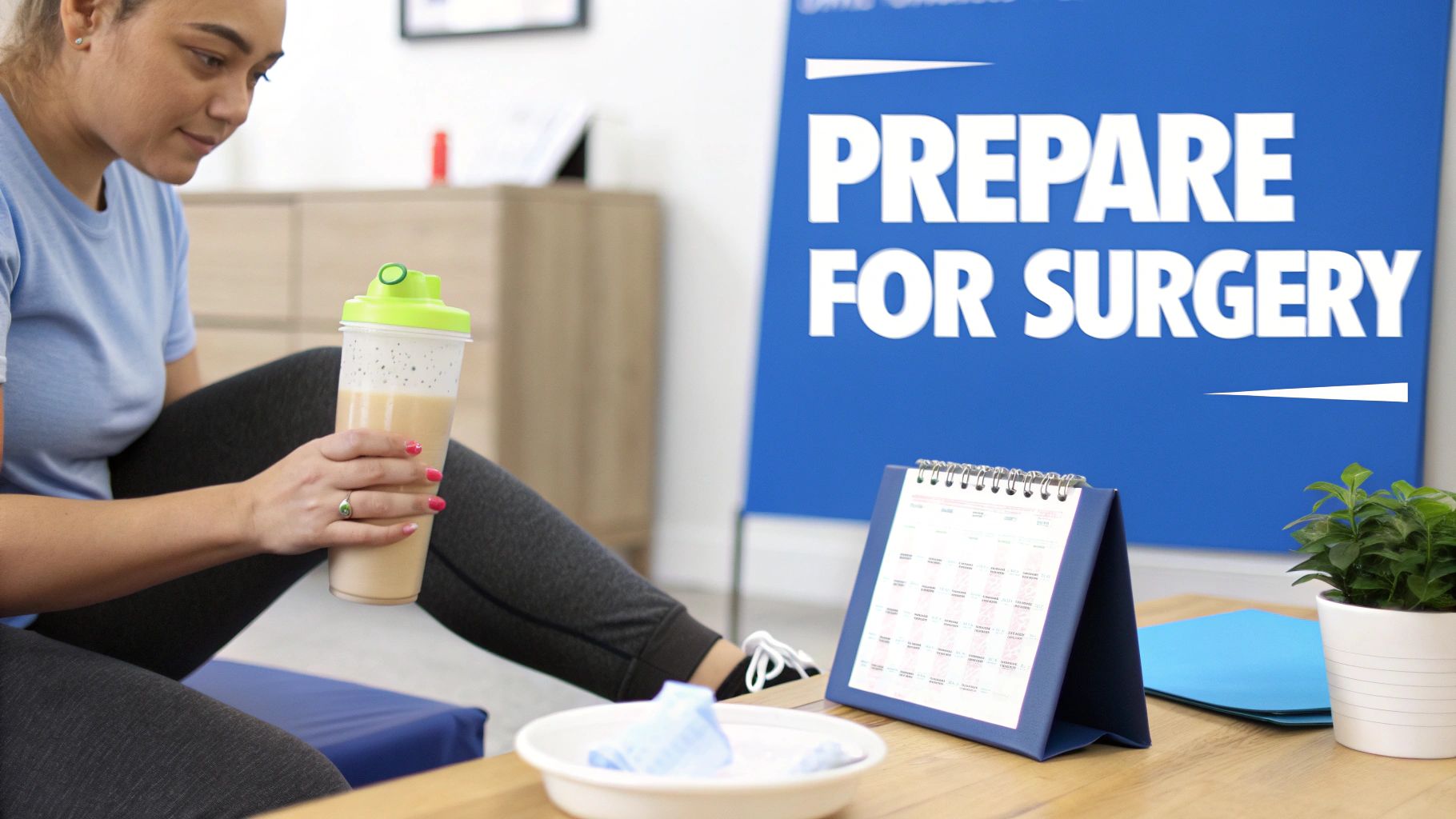
Most people think recovery is something that just happens after surgery. But from my experience, the groundwork for a smooth recovery is laid long before you ever see the inside of a hospital.
I often tell my patients to think of their surgery as a marathon. You wouldn't just turn up on the day and run 26.2 miles without any training, would you? Preparing your body for the physical stress of an operation follows the same logic. This period of prehabilitation is your training phase—it puts you in control of your own outcome.
It’s about building up your body's reserves so it's in the best possible shape to handle the procedure and the healing that comes after. For anyone facing thoracic surgery, the benefits are particularly significant.
The Power of Quitting Smoking
If you're a smoker, the single most important thing you can do for your recovery is to stop. I can't stress this enough. Smoking damages your lungs and circulation, which makes you much more vulnerable to chest infections and breathing problems after surgery.
The great news is that your body starts to heal almost as soon as you have your last cigarette.
Stopping smoking at least four to six weeks before your operation can slash your risk of post-operative lung complications. We see it in UK audits time and again: patients who quit beforehand have fewer chest infections and tend to be discharged from the hospital faster. You’re not alone in this; help is available through NHS smoking cessation services, which can give you the support you need.
Fuelling Your Body for Repair
Your body needs fuel to heal, and that fuel comes from good nutrition. After an operation, your metabolism goes into overdrive, and your body demands more calories—and especially more protein—to repair itself. Think of protein as the essential building blocks for healing.
In the weeks leading up to your surgery, make a conscious effort to eat more protein-rich foods. It doesn’t have to be complicated:
- Lean Meats: Chicken, turkey, and fish are fantastic choices.
- Dairy and Eggs: Greek yoghurt, cottage cheese, and eggs pack a protein punch.
- Plant-Based Options: Lentils, beans, tofu, and nuts are great alternatives.
If your appetite isn't great, a good-quality protein shake can be an easy way to get what you need. This isn't about starting a strict diet; it's simply about giving your body the raw materials it needs to mend itself.
Gentle Movement as Preparation
The idea of exercising before a major operation can seem a bit odd, but gentle, consistent activity builds stamina and strengthens your muscles, particularly your breathing muscles. I’m not suggesting you start training for a 5K.
Simple things like a daily walk, some gentle stretching, or even taking the stairs instead of the lift can improve your lung capacity and overall fitness.
Being fitter before your operation genuinely helps you get back on your feet more quickly afterwards. A stronger body is simply better equipped to handle the demands of surgery and bounce back. It's a direct investment in a smoother, faster healing process. This isn't just anecdotal; UK public health data, like the latest NHS operational statistics, consistently shows how modifiable factors like fitness and nutrition improve surgical outcomes.
Use this checklist to prepare your body for thoracic surgery and set the stage for a rapid recovery.
Your Pre-Surgery Action Plan
| Action Item | Recommended Timeline | How It Boosts Healing |
|---|---|---|
| Quit Smoking | 4-6 weeks (or more) pre-op | Reduces lung complications, improves oxygen flow, and lowers infection risk. |
| Boost Protein Intake | 2-4 weeks pre-op | Provides essential building blocks for tissue repair and wound healing. |
| Start Gentle Exercise | 4+ weeks pre-op | Improves lung capacity, builds strength, and helps you mobilise faster post-op. |
| Discuss Medications | 2 weeks pre-op | Allows your surgical team to adjust any meds (like blood thinners) safely. |
| Optimise Sleep | 1-2 weeks pre-op | Rest helps reduce stress and strengthens your immune system before surgery. |
Think of this table not as a list of chores, but as your personal training plan. Each tick in the box is a step towards a better, faster recovery.
How Modern Surgery Accelerates Your Healing
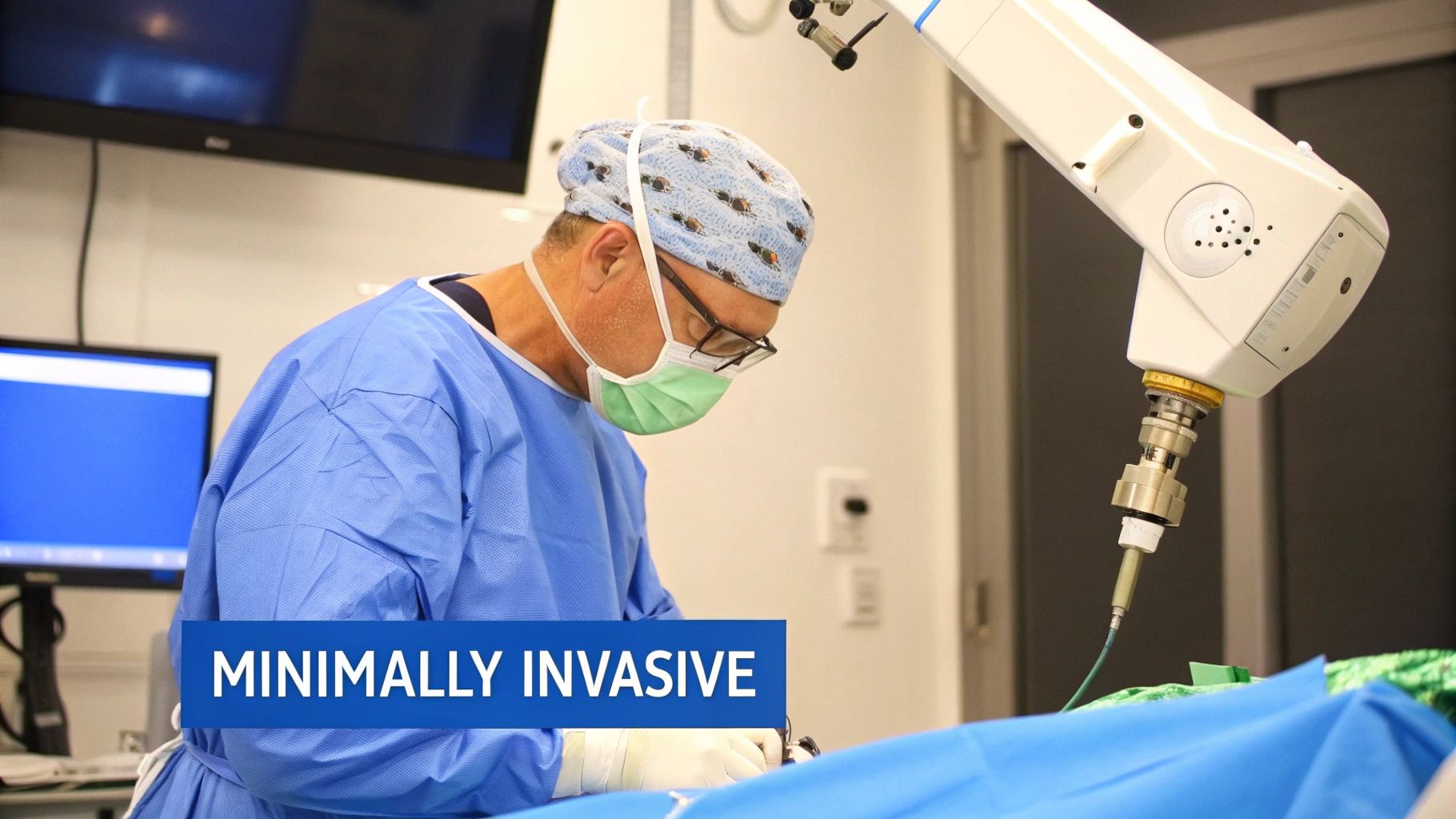
The kind of operation you have makes a massive difference to how quickly you’ll be back on your feet. For a long time, thoracic surgery meant a large incision, cutting through major chest muscles, and a long, painful recovery. Thankfully, things have changed dramatically.
Today, we've moved towards much less invasive techniques. Instead of one large opening, surgeons now use several tiny incisions, often just a centimetre or two long. This is the world of keyhole surgery, and it's completely transformed the recovery process for my patients.
Understanding Keyhole Thoracic Surgery
Keyhole surgery, which we call Video-Assisted Thoracoscopic Surgery (VATS), uses a tiny camera and highly specialised instruments inserted through these small ports. It gives us an incredibly detailed view inside the chest, allowing us to perform complex operations without the major trauma of traditional open surgery.
The benefits for you, the patient, are immediate and clear:
- Far Less Pain: By not cutting through large chest muscles, post-operative pain is a fraction of what it used to be.
- Smaller, Neater Scars: The small incisions mean minimal scarring.
- Lower Infection Risk: Smaller wounds are simply less likely to get infected.
- A Shorter Hospital Stay: Less pain means you’re up and moving sooner, which gets you home faster.
Robotic-assisted surgery takes this even further. From a console, I can control robotic arms that have an even greater range of motion and precision than the human hand. Both VATS and robotic techniques are designed with one goal in mind: to give you the best surgical result with the least physical impact on your body.
A Patient's Story of Rapid Recovery
I recently looked after a patient named Robert, a keen gardener in his late 60s who needed a lung resection. He was, quite understandably, terrified of a long and difficult recovery, picturing weeks of being unable to even walk around his garden.
We performed his operation using a VATS approach. The surgery itself went perfectly, but what truly amazed him was what came next. The very next day, he was up and walking short distances down the hospital corridor. Just two days after major lung surgery, he was ready to go home.
"I couldn't believe it," he told me at his follow-up appointment. "I had prepared myself for the worst, but the pain was so much less than I expected. Within a week, I was pottering around my greenhouse again. It felt like I got my life back almost immediately."
Robert's experience isn't an outlier; it's exactly what we now aim for with every patient. These modern techniques are a cornerstone of Enhanced Recovery After Surgery (ERAS) pathways—structured programmes designed to get you back to your normal life as quickly and safely as possible. You can learn more about these modern approaches by reading our guide on Enhanced Recovery After Surgery.
The Tangible Impact on Healing Times
This shift towards minimally invasive surgery isn't just about making patients more comfortable; it has a real, measurable impact on our healthcare system. Here in the UK, the widespread adoption of VATS and robotic surgery has led to major improvements in recovery times. National data shows these approaches can shorten hospital stays, sometimes by as much as 20-30% compared to open surgery. This is a crucial part of the wider NHS strategy to improve efficiency and tackle surgical waiting lists.
Beyond the procedure itself, understanding the full scope of modern medical advancements can help you take control of your healing. For those interested in the frontier of recovery, you can explore a masterclass on healing injuries using advanced regenerative therapies like peptides and stem cells. It all starts with the right surgical technique, which lays the foundation for a much faster recovery.
The First 48 Hours: Your Recovery Blueprint
Those first two days after your operation really set the stage for your entire recovery. It can feel like a bit of a whirlwind while you're still in hospital, but everything we do—and everything we'll ask you to do—is designed to get you healing well and back home safely.
Think of this time not as one big hurdle, but as a series of small, manageable wins. The focus is simple: keep your pain under control, get your body moving, and keep your lungs clear. Each little achievement is a step closer to sleeping in your own bed.
Getting on Top of Pain
Let's be realistic: you will have some discomfort after surgery. That's completely normal. The goal isn’t to be entirely pain-free, but to manage the pain so it doesn't stop you from doing what you need to do—breathing deeply, coughing, and moving around. Modern pain management is all about staying ahead of the pain, not chasing it.
If you wait until the pain becomes severe, it's much harder to get it back under control. It's far more effective to take your painkillers regularly as the nurses advise, especially in those first 24 to 48 hours.
Be open with your nursing team. When they ask about your pain, use the simple 0-10 scale (where 0 is no pain and 10 is the worst you can imagine). This gives them a clear picture and helps them tailor your pain relief perfectly. Honest communication is key to making sure you can actively participate in your own recovery. To get a better sense of what to expect right after your procedure, you can read more about the experience after a keyhole lung operation.
The Surprising Power of Getting Moving
It might be the very last thing you feel like doing, but early mobilisation is one of the most important things you can do to speed up your healing. I've seen it time and time again. Even something as simple as sitting in a chair for your first meal or taking a short, supported walk down the corridor has huge benefits.
When you're lying flat, your circulation slows down and fluid can settle in your lungs. This is a recipe for two of the most common post-op complications:
- Deep Vein Thrombosis (DVT): These are blood clots that can form in your legs.
- Chest Infections (Pneumonia): A significant risk after any kind of chest surgery.
Getting up and moving keeps your blood flowing and encourages your lungs to expand fully, dramatically cutting down these risks. It also gives your digestive system a kick-start and does wonders for your confidence.
I remember a patient, John, who’d had a VATS procedure. He was really reluctant to get out of bed the morning after his surgery. "I just felt so fragile," he told me later. "But the physio was fantastic. She helped me into the chair, and then we walked just a few metres. The next day, it felt worlds easier. That first step was the hardest, but it made all the difference."
John's experience is incredibly common. That first small movement is a massive milestone that paves the way for a quicker, smoother discharge from hospital.
Why Breathing and Coughing Exercises Are Non-Negotiable
After a chest operation, your instinct is to take shallow breaths to avoid any soreness. But that’s the opposite of what your lungs need to do to recover. Deep breathing is absolutely vital for re-inflating the tiny air sacs in your lungs and clearing out any mucus that’s built up during and after the anaesthetic.
Your physiotherapist will show you some simple but incredibly effective techniques. This usually involves taking a few slow, deep breaths, followed by a supported cough. To do this, you'll be shown how to hug a pillow tightly against your wound. This simple trick supports the area and makes coughing much more comfortable and effective.
Aim to do these exercises every hour you're awake. It's one of the most critical things you can do to prevent a chest infection. These early actions—moving, managing pain, and doing your breathing exercises—are the cornerstone of modern recovery pathways that have helped patients across the UK get better faster. By mastering these simple steps in the first 48 hours, you truly lay the best possible foundation for your journey home.
Your Practical Guide to Recovery at Home
Going home from the hospital is a fantastic milestone, but it’s also when you take the reins of your own recovery. All that preparation you did before surgery really starts to pay off now. The focus shifts to supporting your body's healing process and knowing what to look out for.
You're essentially building on the progress you’ve already made. For many people, arranging for temporary home care after surgery can make this transition much smoother, ensuring you have the support you need right from the start.
A Patient's Perspective on Home Recovery
I often think of a patient named Sarah who'd had a VATS procedure for a collapsed lung. About a week after she went home, she called my office, concerned about a strange pulling feeling near her incision. She described it perfectly, which allowed me to reassure her that this was a completely normal sign of the nerves healing and reconnecting.
Her experience really drives home an important point: your body will give you all sorts of new feedback as it heals. Learning to distinguish between what’s normal and what isn’t is key to feeling confident during your recovery.
Caring For Your Wounds
Your surgical wounds will be small, usually sealed with special dressings or surgical glue. We’ll give you very specific instructions before you leave the hospital, but these are the golden rules to follow:
- Keep them dry: For the first few days, keeping the dressings dry is vital to prevent infection. You can shower, just be sure to protect the area.
- Look, but don't touch: It's normal to see some bruising, swelling, or even numbness around the incisions. As tempting as it might be, don't poke or pick at the dressings.
- Know the red flags: A small amount of clear or slightly pinkish fluid is okay. However, you must contact us immediately if you notice signs of infection, like increasing redness, warmth, thick yellow or green discharge, or if you develop a fever.
Proper wound care is one of the most straightforward ways to keep your recovery on track and avoid any setbacks.
Fuelling Your Body For Optimal Healing
Just as it was important before your operation, good nutrition is absolutely essential now. Your body is working overtime repairing tissues, and it needs the right fuel. Think of your diet as a vital part of your recovery toolkit.
Your main focus should be on protein and vitamins—the fundamental building blocks for tissue repair.
Protein is the scaffolding your body uses to rebuild itself. Aim for a source of protein with every meal—think chicken, fish, eggs, beans, or Greek yoghurt. Good nutrition doesn't just mend wounds; it also boosts your immune system and helps you regain your strength faster.
Staying hydrated is just as crucial. Drinking plenty of water helps transport all those good nutrients to your cells and flushes out toxins. It can also help prevent constipation, a common side effect of pain medication.
Getting Back to Your Life: A Realistic Timeline
Everyone heals at their own pace, but having a general idea of what to expect can help you set realistic goals and not get discouraged.
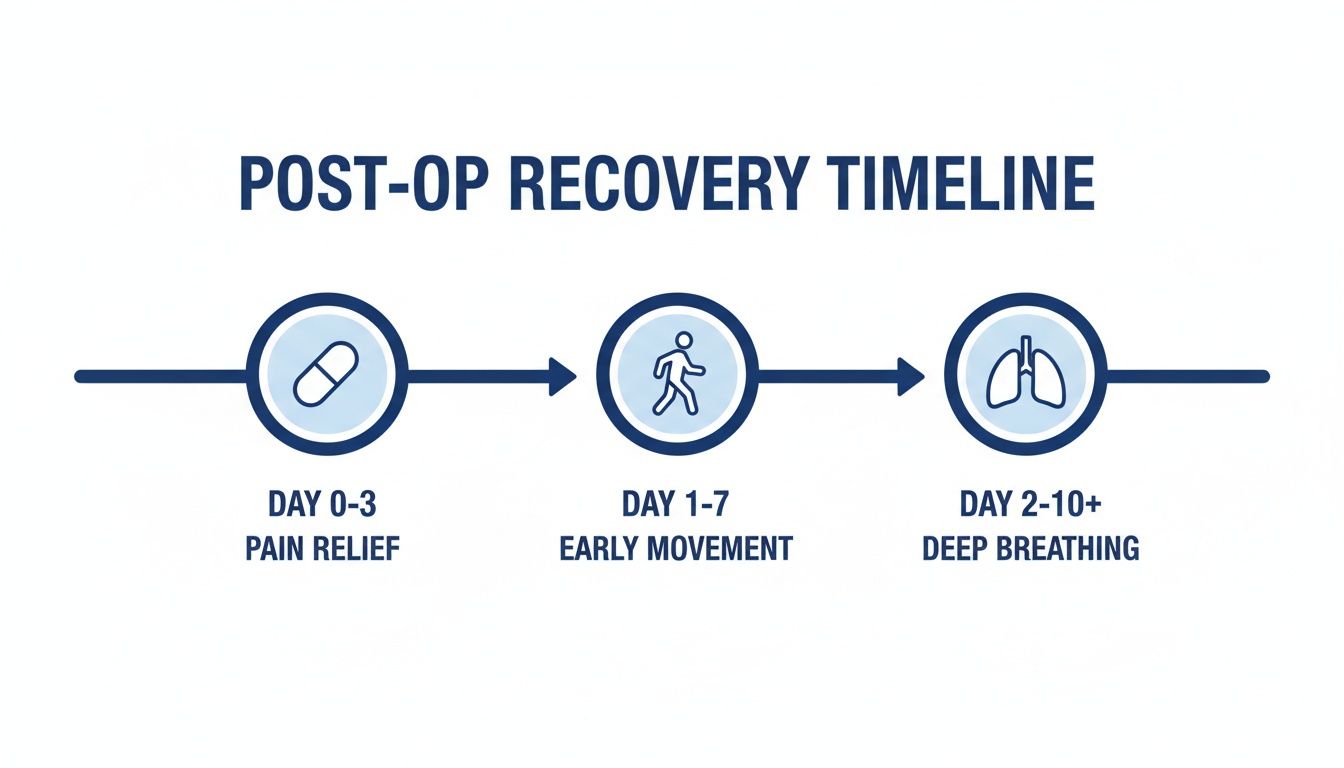
As you can see, the core pillars of recovery—managing pain, moving your body, and doing breathing exercises—start in the hospital but are just as important when you get home.
Here's a general guide for getting back to your usual activities after keyhole thoracic surgery:
- Driving: Most people feel ready to drive after 2–3 weeks. You need to be completely off strong painkillers and feel confident you could perform an emergency stop without hesitation. It's always a good idea to check with your insurance provider, too.
- Work: If you have a desk-based job, you might be looking at a return in 2–4 weeks. For more physically demanding roles, it's more likely to be 6–8 weeks.
- Exercise: Gentle walking is brilliant right from day one. You can usually get back to more strenuous activities like jogging or going to the gym after about 6–8 weeks, but always listen to your body and build up slowly.
For more specific guidance, especially if you've had surgery for a collapsed lung, you'll find our detailed advice on recovering from pneumothorax surgery quite helpful. Taking this phase one step at a time is the safest and, ultimately, the fastest way to get back to full strength.
A Patient's Journey: Putting It All Into Practice
All the clinical advice in the world is one thing, but hearing from someone who has actually been through it can make all the difference. To put this guide into perspective, I want to share the story of David, a patient I had the pleasure of looking after. His experience really highlights how taking charge of your own recovery can change everything.
David was a retired teacher in his late fifties who lived for hiking the fells. A nagging cough led to an X-ray, which revealed a small shadow on his lung. His world, as he knew it, was turned upside down. The diagnosis was an early-stage cancer, and surgery offered the best chance of a cure. Like anyone in his position, David was naturally anxious – not just about the operation, but about what came after. His greatest fear was losing the fitness he’d worked so hard for.
Getting a Head Start Before Surgery
David’s path to a faster recovery began the day we met in clinic. He was a smoker, and I was frank with him: stopping was the single most powerful thing he could do for himself. He took that advice to heart and immediately got in touch with a smoking cessation service. It was a tough battle, but he managed to quit a full six weeks before his surgery date.
We also talked about nutrition. David started making small but deliberate changes, like adding an extra egg to his breakfast or choosing fish over other options for dinner to boost his protein intake. He also kept up his daily walks, focusing on his breathing and maintaining his stamina without pushing himself too hard. He wasn't just passively waiting for his operation; he was actively preparing his body for the challenge.
The Operation and the First Steps
When we went over the surgical options, David was visibly relieved to learn about keyhole surgery (VATS). The thought of a few small incisions instead of one large one was a massive comfort. For him, it meant less muscle damage and, most importantly, a quicker return to the active life he loved.
The surgery itself went smoothly. The real story, though, began the next morning. When the physiotherapist arrived at his bedside, David was nervous but determined. He managed to sit up, then stand, and finally took his first few tentative steps down the corridor. It was exhausting, but it wasn't the overwhelming pain he had braced himself for.
"That first walk was a huge mental victory," he told me later. "It proved to me that I could do it. The nurses were brilliant, always reminding me to stay on top of the pain relief, which meant I could actually do my breathing exercises properly. It really felt like a team effort."
The Road Home
David was discharged just two days after his operation. That first week at home was all about listening to his body. He followed our wound care instructions to the letter, kept up with his breathing exercises, and made sure he ate well, even when his appetite wasn't great. He started with short, slow walks around the garden, adding a little more distance each day.
Of course, there were a few bumps in the road. He described a strange pulling sensation near his wounds, which is a common and completely normal sign of nerves healing. A quick phone call was all it took to reassure him. He was frustrated that he couldn't lift his heavy gardening pots, but he found a way to channel that energy into lighter tasks instead.
By his six-week follow-up appointment, David was a different person from the anxious man I’d first met. He was back to walking several miles a day and was already planning his next hike. His proactive approach before surgery, combined with his diligence afterwards, had paid off in spades. David’s journey is a powerful reminder that you, the patient, are the most important member of the recovery team.
Your Top Questions Answered
After you’ve been through the whole process—the prep, the surgery, and those first few days in hospital—it's completely normal to have a few more questions pop up once you’re home. This is where we’ll tackle some of the most common things my patients ask. Think of this as a quick, practical guide to help you feel confident as you get back on your feet.
How Long Until I Feel 'Normal' Again?
This is usually the very first question, and the most honest answer is that "normal" looks different for everyone and it changes week by week. Recovery is a journey, not a switch that flips overnight.
In the first couple of weeks, your main focus should be simple: rest, keep your pain under control, and give your body the time it needs to start healing properly.
You'll probably feel a real turning point around the one to two-month mark. That’s when many people feel up to returning to a desk job or feel energised enough for longer, more purposeful walks. By the time you get to three to six months post-op, you should be well on your way back to your usual activities, even more strenuous exercise. The key is to listen to your body and not compare your timeline to anyone else's.
What Warning Signs Should I Look Out for at Home?
Knowing the difference between normal healing and a potential problem is key to your peace of mind. Your body will give you plenty of signals as it recovers, but there are a few red flags that you should never ignore.
It helps to break them down:
- Infection: Keep an eye out for a high temperature, or increasing redness, heat, and swelling around your incisions. Any thick, yellow, or unpleasant-smelling discharge is also a sign to act on.
- Breathing Issues: If you find yourself getting more short of breath and it doesn't get better with rest, or if you develop a new, sharp pain in your chest, it's time to get medical advice.
- Blood Clots (DVT): A persistent cramping pain, swelling, or redness in one of your calves needs to be checked out immediately.
If you notice any of these, don't wait. Contact your surgical team or your GP straight away. For anything that feels severe, like sudden chest pain or real difficulty breathing, go straight to A&E.
Can Certain Foods or Supplements Help Me Heal Faster?
While there’s no magic pill for recovery, what you eat has a huge impact on how well your body can repair itself. Think of it as supplying your body with the right building materials.
Protein is your absolute priority. It’s the cornerstone of tissue repair. Try to include a good source—like lean meat, fish, eggs, beans, or lentils—with every single meal.
Vitamins are your allies, too. Vitamin C, which you'll find in berries, citrus fruits, and leafy greens, is crucial for making collagen, the scaffold for new tissue. Zinc, found in nuts and seeds, also gives your immune system a boost and helps with wound healing. And, of course, drink plenty of water.
A retired nurse I operated on once told me, "I treated my meals like medicine. Every plate had protein and something colourful." She was convinced it was why her energy came back so quickly, and I couldn't agree more. Her approach is a perfect example of how simple, smart food choices can make all the difference.
Just remember to have a word with your surgical team before starting any new supplements, just to be sure they won't interfere with your prescribed medications.
How Much Pain Is Normal, and How Do I Manage It?
You should expect some discomfort after surgery, but it should absolutely be manageable. The goal isn't to be completely pain-free, but to keep the pain low enough that you can move, breathe deeply, and cough properly. Good pain control is a tool for recovery, not a sign of weakness.
The trick is to stay ahead of the pain, especially in that first week. Take your painkillers on the schedule you've been given, rather than waiting for things to get bad. As the days pass, you'll find you can gradually ease off the stronger medication and switch to simpler things like paracetamol, as long as your doctor has given you the green light. Small things, like using a pillow to brace your chest when you cough or shift position, can make a world of difference, too.
At Marco Scarci Thoracic Surgery, we believe a well-informed patient is an empowered one. If you have more questions or are looking into your options for private thoracic surgery in London, we are here to offer the clear, expert guidance you deserve. Find out more about our minimally invasive approach and how we support a faster recovery at https://marcoscarci.co.uk.

