Sternal Fractures · Broken Breastbone · Sternal Fixation Surgery · London

A fractured sternum after a crash or fall. The pain is severe — but the question everyone wants answered is whether the heart is safe.

Sternal fractures occur most often from road traffic accidents and falls. Most are managed conservatively with excellent outcomes. But some are unstable, non-healing, or associated with injuries that need careful assessment. This page gives you the complete picture — from first-day cardiac monitoring to surgical plate fixation.

Mr Marco Scarci — Consultant Thoracic Surgeon London
Mr Marco Scarci FRCS · FCCP · FACS · FEBTS
Avg delay to correct diagnosis 2–5 yrs
Specialists seen before diagnosis 5+
Surgery Costal cartilage resection available
Over 20+ Years' chest wall experience
Severe midline chest pain after trauma Pain worse on breathing, coughing, or movement Seat belt injury from sudden deceleration Tenderness or deformity over the breastbone Sternal fracture that isn't healing after weeks Displaced or unstable fracture requiring fixation
FRCS(Eng) · FCCP · FACS · FEBTS
Chest wall trauma specialist, London
Sternal plate fixation available
All major insurers accepted
For patients and families dealing with a sternal fracture diagnosis

You've been told it isn't carpal tunnel. It isn't your rotator cuff. Your MRI is "normal." And you're still in pain.

Whether it came from a seat belt locking in a car accident, a fall from height, or a direct blow to the chest, a sternal fracture means your breastbone — the solid plate of bone sitting directly in front of your heart — has broken. The pain is immediate, severe, and made worse by every breath. It is hard to sleep. It is hard to cough. It is hard to move without a sharp reminder that something is wrong.

The anxiety about cardiac injury is entirely understandable and medically appropriate. Your sternum sits directly over your heart, separated by just a few centimetres of chest wall. The question of whether the force that broke your breastbone also bruised or damaged your heart is the most important question in the first 24 hours — and it is answerable, clearly, with the right investigations. For most patients with isolated sternal fractures, the answer is reassuring.

"The sternum is the guardian of the heart — it takes the blow so the heart doesn't have to. In most cases, it does its job. The fracture itself tells us there was significant force, which is why we always assess for associated injuries. But an isolated sternal fracture, properly evaluated, is far more manageable than it often first feels."

This guide explains what a sternal fracture means, what associated injuries must be excluded, how it is diagnosed and monitored, when surgery is needed, and what recovery looks like.

This guide covers: Thoracic outlet syndrome diagnosis London Neurogenic TOS treatment First rib resection surgery London Scalenectomy / TOS decompression Cervical rib removal / cervical rib TOS Paget-Schroetter syndrome (venous TOS) TOS vs carpal tunnel diagnosis Brachial plexus compression symptoms Adson's test / Roos test TOS Botulinum toxin scalene injection TOS

Book a Specialist Consultation

Seen within days. No referral needed. Mr Scarci specialises in chest wall trauma including sternal fractures, nonunion, and plate fixation surgery.

ic baseline phone Call 020 7459 4367
Seen within one week
All major insurers accepted
Sternal plate fixation available
No GP referral required

Key facts about sternal fractures

>95% Sternal fractures managed conservatively without surgery
60–80% Caused by road traffic accidents — seat belt injury most common
CT Gold standard for diagnosis — X-ray misses many fractures
6–12 wks Typical healing time with conservative management
Understanding the injury

What is the sternum — and what happens when it fractures?

The breastbone: protector of the heart and lungs

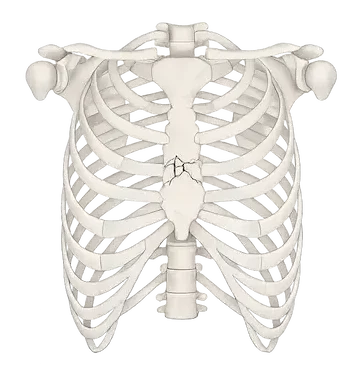
The sternum (breastbone) is a flat bone running vertically down the centre of the chest. It has three parts: the manubrium (top), the sternal body (middle — the longest section), and the xiphoid process (lower tip). The ribs connect to the sternum via costal cartilage on both sides, forming the front of the rib cage.

Directly behind the sternum sits the mediastinum — containing the heart, great vessels (aorta, superior vena cava, pulmonary arteries), and the trachea. This proximity explains why sternal fractures raise immediate concern about associated injuries: the same force that breaks the breastbone can also injure the structures immediately behind it.

Sternal fractures are relatively uncommon, accounting for 3–8% of blunt chest trauma patients. The mechanism is almost always a direct frontal impact — most commonly a seat belt injury during sudden deceleration. The sternum absorbs the kinetic energy of the impact and fractures under the load, typically as a transverse fracture across the sternal body.

The fracture may be non-displaced (the bone ends remain in normal alignment) or displaced (one fragment overlaps or moves behind the other). Displacement indicates greater force and a higher risk of associated injuries.

Sternal fracture anatomy
Classification

Types of sternal fracture

Sternal fractures are classified by location and by the degree of displacement. Both factors influence the likelihood of associated injuries and whether surgery may be needed.

Most common

Sternal Body Fracture

The most frequent type, occurring across the middle section of the sternum. Usually a transverse (horizontal) fracture caused by direct frontal impact or flexion-compression. In non-displaced fractures, the bone ends remain aligned and conservative management is appropriate. Displaced fractures — where one fragment slides behind the other — carry greater risk of associated injury and may need surgery.

Most common seat-belt injury pattern; direction of displacement matters
Upper sternum

Manubrium Fracture

Fractures of the top segment of the sternum, at or around the junction with the clavicles and first ribs. Less common but potentially more complex — the manubrium is close to major vessels. Often associated with clavicle fractures, upper rib fractures, or cervical spine injuries from the same traumatic event.

Associated with clavicle fractures; proximity to great vessels increases complexity
Manubriosternal junction

Sternal Dislocation

The joint between the manubrium and sternal body can dislocate — separating the two segments — rather than fracturing the bone itself. This creates significant instability, typically causes a visible step deformity on the chest wall, and almost always requires surgical fixation due to the mechanical instability it creates.

Creates visible deformity; usually requires surgical stabilisation
Lower sternum

Xiphoid Process Fracture

Isolated fractures of the xiphoid (the small cartilaginous tip at the base of the sternum) are uncommon and usually result from direct blows or CPR. They are the least clinically significant sternal injury — the xiphoid has no structural role and these fractures almost always heal without any intervention.

Least significant; almost always conservative management appropriate
Complication

Sternal Nonunion

Failure of a sternal fracture to heal after 6–8 weeks — producing a persistently mobile, clicking, or painful fracture site. Causes include severe displacement, inadequate immobilisation, poor bone quality (osteoporosis), infection, or metabolic factors. Nonunion causes chronic pain, respiratory impairment, and requires surgical fixation to achieve union.

Chronic, clicking sternal pain months after injury — requires surgical assessment
The primary clinical concern

Associated injuries — what must always be excluded with a sternal fracture

A sternal fracture itself has a favourable prognosis. The morbidity and mortality associated with sternal fractures is almost entirely determined by the injuries that accompany them. These must be systematically excluded before management of the fracture itself is planned.

❤️

Myocardial (cardiac) contusion

Bruising of the heart muscle from the same force that fractured the sternum. Can cause arrhythmias, reduced cardiac output, or (rarely) cardiac rupture. Assessed with ECG and troponin blood test. The vast majority of isolated sternal fracture patients have normal cardiac investigations — but the assessment is non-negotiable.

→ Assessed with: ECG + troponin. Normal results = low cardiac risk
🩸

Aortic injury / dissection

Injury to the aorta from high-energy deceleration trauma is rare but life-threatening. CT angiography assesses the aorta. The widened mediastinum on chest X-ray is a key warning sign that should never be ignored.

🚨 Emergency: widened mediastinum on X-ray requires immediate CT angiography
🫁

Pulmonary contusion & pneumothorax

The lungs lie immediately behind the chest wall. High-energy trauma can bruise the lung (pulmonary contusion) or tear the pleura (pneumothorax). Both are identified on CT scan. Pulmonary contusion typically worsens over the first 48 hours — monitoring oxygen saturation is essential.

→ CT scan identifies; oxygen monitoring required in early days
🦴

Rib fractures

Multiple rib fractures commonly accompany sternal fractures from high-energy chest trauma. Their significance lies primarily in the risk of complications — pneumonia, pneumothorax, haemothorax — and in the breathing impairment they cause alongside the sternal fracture.

→ Multiple fractures significantly impair breathing; pain control critical
🧠

Spinal injury (cervical & thoracic)

Vertebral fractures — particularly of the cervical and thoracic spine — are among the most frequent associated injuries with sternal fractures, occurring in up to 40% of cases in some series. The mechanism of sternal fracture (violent flexion of the trunk) can simultaneously compress or fracture the thoracic spine. Spinal assessment is mandatory.

🚨 High association: thoracic and cervical spine must always be assessed
🩺

Clavicle & upper limb fractures

Clavicular fractures, scapular fractures, and upper extremity injuries frequently occur in the same traumatic event. These injuries may be diagnosed simultaneously and affect rehabilitation planning — a fractured clavicle limits how the patient can be positioned and mobilised during sternal recovery.

→ Commonly co-exist; affects rehabilitation and positioning

The cardiac injury question — answered clearly

The most common anxiety after a sternal fracture is: "has my heart been damaged?" This is a legitimate and important question. The evidence now clearly shows that isolated sternal fractures rarely cause clinically significant cardiac injury. The risk of serious cardiac complication in an otherwise healthy patient with a simple sternal fracture and a normal initial ECG and troponin is very low.

Cardiac monitoring is appropriate after any significant sternal fracture — but in the majority of cases, the results are reassuring and patients can be managed without prolonged cardiac observation.

Low risk of significant cardiac injury in isolated sternal fracture with normal ECG and troponin — modern evidence supports early discharge when these are normal

The cardiac assessment protocol

  • ECG on arrival — identifies arrhythmias and ST changes that indicate cardiac injury
  • Troponin blood test — sensitive marker of myocardial cell damage
  • If both ECG and troponin are normal — significant blunt cardiac injury is effectively excluded
  • Echocardiogram — reserved for patients with abnormal ECG, troponin, or haemodynamic instability
  • CT angiography — performed when aortic injury is clinically suspected or mediastinum is widened
  • Repeat ECG at 4–8 hours if initial is abnormal — arrhythmias may develop hours after injury
Confirming the fracture

Diagnosing a sternal fracture — the imaging that matters

Standard chest X-ray misses the majority of sternal fractures. Proper diagnosis requires targeted imaging — and the choice of imaging has significant implications for identifying associated injuries.

Gold standard

CT Scan of the Chest

CT is the definitive imaging for sternal fractures. Published data shows that 94% of sternal fractures visible only on CT were missed on plain chest X-ray. CT provides detailed cross-sectional images showing fracture location, degree of displacement, and — critically — the presence of associated injuries to the lungs, mediastinum, heart, and spine.

→ Detects associated thoracic injuries in over 80% of sternal fracture patients
First-line

Chest X-Ray

Standard frontal chest X-ray has poor sensitivity for sternal fractures. A lateral chest X-ray provides better visualisation of the sternal profile. X-ray is still appropriate as first-line imaging because it quickly identifies pneumothorax, haemothorax, pulmonary contusion, widened mediastinum, and other associated injuries — before CT is arranged.

→ Poor sensitivity for the fracture itself; good for ruling out major co-injuries
Cardiac

ECG & Cardiac Enzymes

A 12-lead ECG is performed on all patients with significant sternal fracture to screen for arrhythmias and ST changes suggesting myocardial injury. Troponin I blood test sensitively detects myocardial cell damage. A combination of normal ECG and normal troponin at presentation effectively rules out significant blunt cardiac injury.

→ Both normal = low cardiac risk; abnormal = cardiac monitoring and possible echo
Bedside

Ultrasound

Ultrasound has emerged as a valuable bedside tool with high sensitivity (83–97%) and specificity (>95%) for sternal fractures. Particularly useful in settings where CT is not immediately available or when patient movement is restricted. Dynamic ultrasound can also assess for pneumothorax at the same examination.

→ Useful bedside adjunct; high sensitivity when performed by experienced operator
Advanced

Echocardiogram

Formal echocardiography is not routinely needed in isolated sternal fractures with normal ECG and troponin. It is indicated when cardiac injury is suspected — abnormal ECG, elevated troponin, haemodynamic instability, or a significant pericardial effusion on CT. Provides detailed assessment of cardiac function and wall motion.

→ Reserved for patients with ECG/troponin abnormalities or haemodynamic compromise
Spinal

CT of the Spine

Given the high incidence of thoracic and cervical spinal fractures associated with sternal fractures, spinal CT is a routine part of the workup for high-energy sternal fractures. MRI of the spine is added when spinal cord involvement or ligamentous injury is suspected. Spinal clearance cannot be assumed — it must be formally demonstrated.

→ Mandatory in high-energy trauma; spinal injury found in up to 40% of cases
A structured treatment approach

Managing a sternal fracture — from initial stabilisation to definitive care

The treatment of sternal fractures follows a clear, stepwise approach. Over 95% of patients are managed conservatively. The minority requiring surgery are those with specific indications that conservative management cannot address.

1
Emergency assessment

Immediate assessment and associated injury exclusion

The priority in the first hours after a sternal fracture is not the fracture itself — it is the exclusion of life-threatening associated injuries. CT scan of the chest, ECG, troponin, and spinal assessment are the cornerstones of the initial workup. The cardiac assessment question is answered promptly and clearly. Once associated injuries are excluded or stabilised, focus turns to the sternal fracture itself.

2
First line for >95% of patients

Conservative management — the standard of care for stable fractures

The vast majority of sternal fractures — including most displaced fractures — heal reliably without surgery, provided pain is adequately controlled. Conservative treatment comprises: analgesia (regularly dosed NSAIDs, paracetamol, and stronger medications as needed); breathing exercises to prevent pulmonary complications (pneumonia is a real risk when pain prevents full deep breathing); activity modification (avoiding heavy lifting, pushing, and pulling while the sternum heals); and monitoring for complications.

3
Pain management

Advanced pain control — when standard analgesia is insufficient

Sternal fracture pain is notoriously severe. When standard oral analgesia fails to allow adequate breathing and mobilisation, more targeted approaches are used: parasternal nerve blocks (intercostal nerve blocks at the sternal border) provide direct local anaesthesia to the fracture site; subperiosteal catheter infusion delivers continuous local anaesthetic directly over the fractured bone; epidural analgesia is occasionally used for patients with multiple concurrent rib fractures.

4
Surgical — selected cases

Surgical fixation — titanium plate osteosynthesis

Surgery is reserved for the minority of patients where conservative management is inadequate. When indicated, anterior sternal plating using titanium locking plates provides excellent stability, immediate pain relief, and allows early mobilisation. Published data show early plate fixation leads to faster recovery, earlier return to work, and lower analgesic requirements compared to prolonged conservative management of unstable fractures.

Surgical sternal fixation — when it is needed and how it is done

Sternal plate osteosynthesis is an established, well-described procedure. When performed by a thoracic surgeon experienced in chest wall surgery, outcomes are consistently excellent. The proximity of the heart and great vessels posterior to the sternum demands careful, measured drilling technique.

Indications for surgical fixation

⬆️

Severe displacement

Significant overlap of sternal fragments that cannot be reduced by closed techniques — creating deformity and mechanical instability

🔀

Sternal instability

A mobile, unstable sternum that moves with breathing — impairing ventilation and causing severe pain with every breath

Nonunion

Persistent failure to heal after 6–8 weeks, producing a chronic painful clicking fracture site — the most common indication for late surgery

😣

Refractory pain

Pain that cannot be adequately controlled with conservative measures and significantly limits breathing and quality of life

😮‍💨

Respiratory failure

Ventilatory compromise that requires sternal stabilisation to enable adequate breathing

💨

Mechanical ventilation dependency

Patients who cannot be weaned from a ventilator due to chest wall instability — surgical fixation removes the mechanical impediment

Surgical approaches

Preferred technique

Anterior Titanium Locking Plates

A midline incision over the sternum, subperiosteal dissection to expose the fracture, reduction of displaced fragments, and fixation with one or two low-profile titanium locking plates secured by unicortical or bicortical screws. Locked plate technology provides superior stability — the plate acts as an internal fixator, resisting both shearing and compressive forces. Depth-limited drilling prevents posterior penetration and injury to the heart and vessels.

✓ Immediate stability · Rapid pain relief · Early mobilisation · No second operation to remove
For nonunion

Fixation with Bone Graft

When the sternal fracture has developed nonunion — with fibrous tissue rather than bone at the fracture site — bone graft may be added alongside plate fixation to stimulate bony union. The fibrous callus at the nonunion site is debrided back to bleeding bone edges, the fragments are reduced and plated, and a bone graft is applied to promote healing.

→ Used for established nonunion with fibrous tissue; promotes bony union
Historical

Wire Cerclage

The older technique — encircling the sternal segments with stainless steel wires to achieve reduction. Provides less rigid fixation than plate osteosynthesis, carries higher malunion rates, and offers less resistance to shearing forces. Largely superseded by plate fixation in modern practice.

→ Less preferred; higher nonunion risk than plate fixation
1–2 hrsTypical operating time
2–4 daysHospital stay after plate fixation
RapidPain relief after stabilisation
6–8 wksBone healing expected after fixation

Sternal nonunion — when the fracture doesn't heal

A sternal fracture that fails to heal after 6–8 weeks is a recognised complication — more common in patients with significant displacement at the time of injury, osteoporosis, metabolic bone disease, or infection. Nonunion produces a persistently painful, mechanically unstable sternum that significantly impairs quality of life and breathing.

The diagnosis is confirmed on CT scan — showing the persistent fracture gap, often with fibrous tissue rather than callus formation at the fracture site. Surgical plate fixation — with or without bone graft — reliably achieves union when conservative management has failed, providing immediate mechanical stability and allowing the fractured bone to heal in correct alignment.

If you have had a sternal fracture that was managed conservatively and you are still experiencing significant pain, clicking, or instability in your breastbone more than 8–10 weeks later, a specialist assessment is warranted.

Symptoms that suggest sternal nonunion

  • Persistent midline chest pain more than 8 weeks after fracture
  • A clicking or crunching sensation when moving the upper body or breathing deeply
  • Visible or palpable movement of the breastbone with breathing
  • Pain that has not significantly improved since the original injury
  • Increasing pain rather than the expected gradual improvement
  • Difficulty with any activity that loads the upper chest — pushing, pulling, reaching overhead
  • Pain disrupting sleep, particularly when rolling over or changing position

🚨 When a sternal injury requires immediate emergency care

Most sternal fractures, while painful, are not immediately life-threatening once cardiac and aortic injury has been excluded. These signs, however, require immediate 999 / A&E attendance:

Sudden severe chest pain after trauma with haemodynamic instability (low blood pressure, rapid pulse) — possible aortic injury or cardiac tamponade
Widened mediastinum on chest X-ray — requires immediate CT angiography to exclude aortic dissection
Persistent chest pain with new ECG changes or elevated troponin — myocardial contusion or injury requiring admission
Increasing breathlessness hours after injury — may indicate developing pneumothorax, haemothorax, or pulmonary contusion
Neck or back pain after sternal fracture — spinal injury must be excluded urgently
Pericardial friction rub or signs of cardiac tamponade — urgent echocardiogram and cardiac surgery review
What to expect

Recovery timeline — sternal fracture healing

The timeline for sternal fracture recovery depends primarily on whether the fracture is stable and non-displaced, or displaced and requiring surgery. Most patients are surprised by how long the recovery takes — understanding the timeline helps set realistic expectations.

Days 1–3 Acute

Hospital assessment

Cardiac monitoring, CT imaging, associated injury exclusion. Pain management initiated.

Week 1–2 At home

Rest & analgesia

Rest; regular analgesia; breathing exercises. Avoid all lifting, pushing, pulling. Gradual mobilisation within pain limits.

Week 3–6 Healing

Gradual improvement

Pain gradually improving. Light activity within pain limits. No driving until pain allows emergency braking. Follow-up X-ray.

Week 6–12 Consolidation

Return to light work

Most stable fractures showing bone callus. Return to light work. Avoid heavy chest loading. Review if still painful.

Month 3+ Full recovery

Full activity

Most patients fully healed. Return to all activities. Residual sensitivity common. Suspect nonunion if still clicking.

Important: If significant pain, clicking, or instability persists beyond 8–10 weeks, do not continue waiting. A specialist review can confirm whether the fracture is healing normally or whether intervention is needed. Prolonged nonunion is easier to treat surgically when addressed early than when left for months or years.

What patients say
★★★★★

"I fractured my sternum in a car accident in January. After two months, I was still clicking and in severe pain every morning — my GP said to give it more time. Mr Scarci saw me within the week, confirmed nonunion on CT, and I had plate fixation three weeks later. The clicking stopped immediately. I wish I'd come sooner instead of waiting for three months of pain."

Private patient, London — verified review
Expert chest wall trauma care

What a specialist consultation provides for sternal fractures

Most sternal fractures are initially managed in A&E or by a general orthopaedic team. When the fracture is complex, is not healing, or requires surgical fixation, specialist chest wall surgery expertise is what determines outcomes.

🔍

Complete associated injury assessment

The most important part of sternal fracture management is excluding what you can't see — cardiac, aortic, pulmonary, and spinal injuries. A systematic approach ensures nothing critical is missed in the initial assessment.

📊

Correct imaging — CT not just X-ray

94% of sternal fractures are missed on plain chest X-ray. CT is the appropriate gold standard — providing fracture detail, displacement assessment, and associated injury identification in one investigation.

💊

Effective pain management

Sternal fracture pain that prevents adequate deep breathing leads to pneumonia. Advanced pain techniques — parasternal blocks, subperiosteal infusion — keep patients breathing properly when oral analgesia is insufficient.

🔧

Plate fixation expertise when needed

When surgery is indicated, anterior sternal plating with titanium locking plates requires specific chest wall surgical expertise. The proximity of the heart and great vessels demands meticulous technique — this is not a routine orthopaedic operation.

⏱️

Seen within days

Sternal nonunion and displaced fractures causing significant pain need prompt assessment. Most patients are seen within one week of contact. Prolonged conservative management of unstable or non-healing fractures delays recovery unnecessarily.

📞

Direct access throughout recovery

Concerns during the recovery period — new symptoms, persistent pain, questions about activity — are addressed directly by Mr Scarci. You are not left managing a painful chest injury without specialist support.

Your questions answered

Frequently asked questions about sternal fractures

  • How long does a fractured sternum take to heal?
    Most stable, non-displaced sternal fractures heal within 6–12 weeks with conservative management. You can expect significant improvement in pain from around 3–4 weeks, though full bone healing and freedom from any tenderness typically takes the full 6–12 weeks. Displaced fractures or those associated with other chest injuries may take longer. If you are still experiencing significant pain, clicking, or mechanical instability after 8–10 weeks, a specialist review is warranted to exclude nonunion — a fracture that has failed to heal and which is unlikely to resolve with further waiting alone.
  • How do I know if my heart has been damaged by the impact that broke my sternum?
    This is the most important question after any sternal fracture, and the answer is available from straightforward investigations. A 12-lead ECG and a troponin blood test are the standard assessments. If both are normal at presentation — and remain normal on a repeat assessment 4–8 hours later — clinically significant cardiac injury is effectively excluded. The current evidence shows that isolated sternal fractures rarely cause serious cardiac complications in patients with normal ECG and troponin. If either test is abnormal, cardiac monitoring and possibly echocardiography are arranged.
  • Can I drive with a fractured sternum?
    Not immediately. The primary concern is whether you can perform an emergency stop safely — this requires sudden forceful pressure on the brake pedal, which transmits force through the arms and chest. With a fractured sternum, this is both painful and potentially unsafe. Most surgeons advise waiting until you can perform this manoeuvre comfortably without flinching — typically 4–6 weeks after injury for a stable fracture. You should also inform your insurer of the injury.
  • What is a sternal nonunion and how is it treated?
    A sternal nonunion occurs when the fractured sternal bone fails to heal — typically defined as persistent fracture with symptoms beyond 6–8 weeks, confirmed on CT showing no bridging bone callus at the fracture site. Nonunion produces chronic midline chest pain, often with a clicking or crunching sensation when moving or breathing. It is unlikely to resolve spontaneously once established. Surgical plate fixation — using titanium locking plates to rigidly stabilise the fracture while the bone heals — is the definitive treatment. Most patients have dramatic reduction in pain immediately after surgery once the mechanical instability is eliminated.
  • When does a sternal fracture need surgery?
    The indications for surgery are specific: severe displacement that cannot be reduced; significant sternal instability causing respiratory impairment; nonunion (failure to heal after 6–8 weeks); refractory pain that cannot be controlled with conservative measures; and ventilator dependency in patients whose chest wall instability prevents weaning. More than 95% of sternal fractures are managed conservatively without surgery. The decision to operate is made after reviewing the CT scan, assessing the degree of displacement and instability, and considering the patient's overall health and the impact of pain and instability on their respiratory function.
  • Can a sternal fracture occur without a car accident?
    Yes. While road traffic accidents (particularly seat-belt injuries) account for 60–80% of sternal fractures, they can also occur from falls from height with direct impact to the chest, sports injuries, direct blows, and CPR (cardiopulmonary resuscitation). In older patients with osteoporosis, a sternal fracture can occur from relatively minor trauma. Pathological fractures — through weakened bone from metastatic cancer or other bone disease — are also possible.
  • Will my insurance cover treatment for a sternal fracture?
    Yes — sternal fracture assessment and treatment is covered by all major UK private health insurers as a medically necessary service. Mr Scarci's team will verify your specific policy and handle any pre-authorisation required. If the injury occurred in a road traffic accident, treatment costs may be recoverable through personal injury claims — Mr Scarci has medicolegal experience and can provide the necessary documentation to support such claims. Self-pay pricing with full transparency is also available.

A broken sternum is serious — and it deserves specialist attention.

Whether you've just been discharged from A&E or your fracture isn't healing weeks later, a specialist consultation provides clear answers: about the cardiac question, about the fracture itself, and about what comes next.

All major insurers accepted
Typically seen within one week
Sternal plate fixation available
No referral needed

Book Your Appointment

WhatsApp WhatsApp 020 7459 4367
WhatsApp 020 7459 4367