

Understanding atypical chest pain is important because it can signal a range of conditions, some of which require prompt attention to prevent serious complications. Here, you will find clear explanations of what atypical chest pain is (chest pain that does not fit the classic pattern associated with heart attacks), its possible causes, when to seek urgent medical help, how it is diagnosed, available treatment options, and practical prevention tips.
Those experiencing chest pain or concerned about heart or lung symptoms, as well as anyone seeking to understand the difference between typical and atypical chest pain, may find this article helpful, but please always remember that this is not a substitute for real medical advice.
What Is Atypical Chest Pain?
Typical or classic chest pain usually has three specific features: central pressure or heaviness, brought on by exertion, and relieved by rest. Atypical chest pain is defined as chest pain that does not fit the classic chest pain. Classic angina often feels like a squeezing sensation in the chest and may reflect plaque in coronary artery disease.
Atypical patterns include brief twinges, stabbing pain, burning discomfort, pain with breathing, or pain worse with movement. Clinicians and thoracic surgeons distinguish between typical and atypical chest pain based on pain characteristics, triggers, and relief factors. Any new or unexplained chest pain should be taken seriously, because atypical symptoms can sometimes occur with heart conditions, especially in women, elderly patients, and individuals with diabetes.
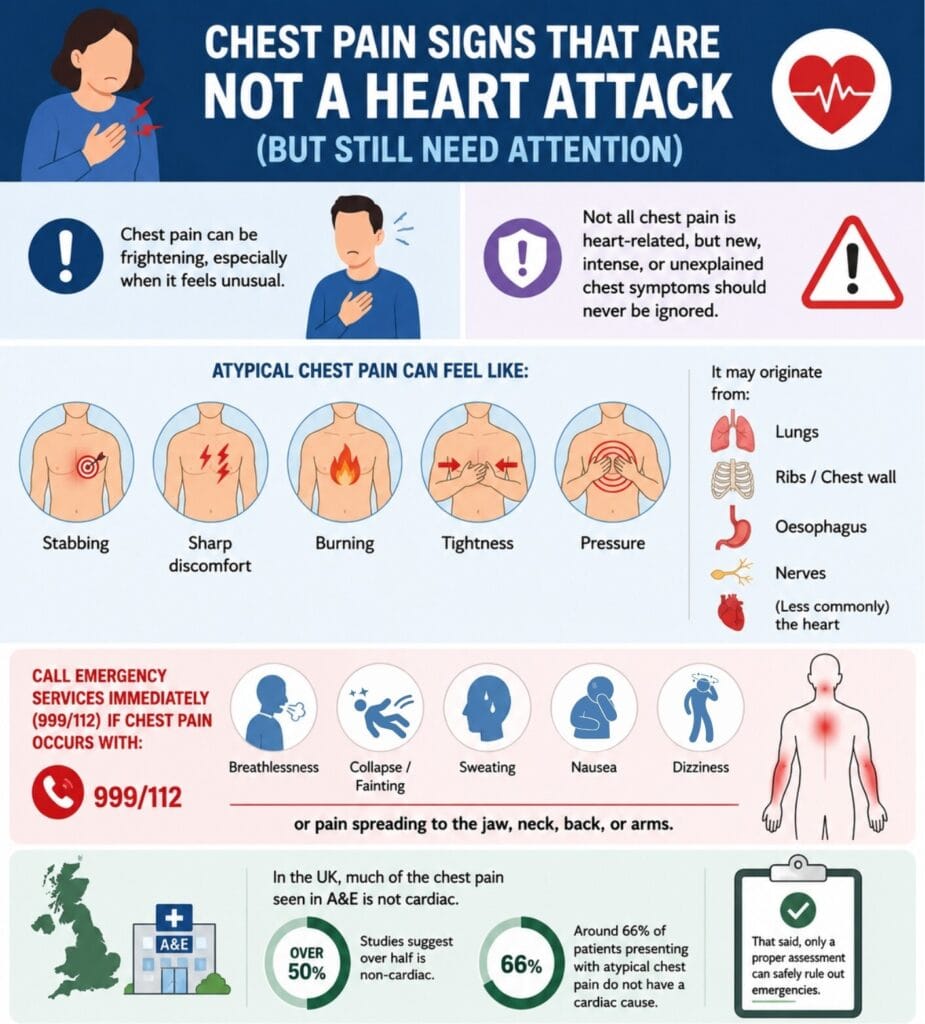
Chest Pain Signs That Are Not a Heart Attack (But Still Need Attention)
Chest pain can be frightening, especially when it feels unusual.
- Not all chest pain is heart-related, but new, intense, or unexplained chest symptoms should never be ignored.
- Atypical chest pain can feel like stabbing, sharp discomfort, burning, tightness, or pressure, and may originate from the lungs, ribs/chest wall, oesophagus, nerves, or (less commonly) the heart.
- Call emergency services immediately (999/112) if chest pain occurs with breathlessness, collapse/fainting, sweating, nausea, dizziness, or pain spreading to the jaw, neck, back, or arms.
- In the UK, much of the chest pain seen in A&E is not cardiac. Studies suggest over half is non-cardiac, and around 66% of patients presenting with atypical chest pain do not have a cardiac cause. That said, only a proper assessment can safely rule out emergencies.
Signs that are less typical of a heart attack, but still need medical attention
Some patterns of pain sound “less like” a heart attack, yet can signal conditions that require prompt evaluation:
- Sharp, pleuritic pain (worse when breathing in, coughing, or laughing) can indicate pleural inflammation, pneumonia, or a pulmonary embolism (blood clot in the lung). Serious lung causes can present this way, so this symptom pattern warrants careful assessment.
- Pain that is reproducible with touch or movement, for example, pain triggered by pressing the chest wall, twisting, lifting, or certain positions, often points to muscle strain, costochondritis, bruising, or a rib fracture. Even when musculoskeletal, severe pain or pain after injury should be checked.
- Burning discomfort rising behind the breastbone, especially after meals or when lying flat, is more consistent with acid reflux (GERD) or oesophageal spasm. These are common and treatable, but persistent or severe symptoms can mimic cardiac pain and may need investigation.
- Sudden one-sided chest pain with breathlessness, particularly in tall, slim individuals or those with a smoking history, can be a sign of pneumothorax (collapsed lung). This can range from mild to life-threatening, so urgent evaluation is important.
Finally, chest discomfort that is fleeting, worsens with pressure, or resolves quickly is generally less likely to be a cardiac emergency, but it still shouldn’t be dismissed. The safest approach is medical review, especially if symptoms are new, recurring, or accompanied by breathlessness, dizziness, or reduced exercise tolerance.
Not sure about your treatment options?
Mr Scarci provides expert consultations typically within one week of contact.
Common Non-Cardiac Causes of Chest Pain
In thoracic surgery practice, many patients referred after “normal” heart tests have chest wall, lung, or oesophageal causes.
Common non-cardiac causes of atypical chest pain include musculoskeletal issues like costochondritis, gastrointestinal disorders such as GERD, respiratory conditions like pneumonia, and psychological factors such as panic attacks. Lung causes include pulmonary embolism, pneumothorax, emphysema, and infection, causing tightness or sharp pain. Chest causes include rib fractures, chest wall tumours, and pectus deformity. Nerve pain from shingles or referred pain from the neck and upper back can also feel puzzling.
Some causes of atypical chest pain can be life-threatening, particularly those affecting the heart and lungs, where referral to a thoracic surgeon for specialised assessment may be required.
Red-Flag Symptoms: When Chest Pain Is an Emergency
If in doubt, treat chest pain as an emergency. Call 999/111 rather than waiting.
Warning signs include crushing central pain, heaviness, pain spreading to the arms, neck, jaw, or back, sweating, nausea, faintness, or symptoms lasting more than a few minutes.
Severe chest pain with difficulty breathing, lightheadedness, coughing blood, or collapse may signal pulmonary embolism. Sudden tearing chest or back pain may indicate aortic dissection. Fever, rigors, or confusion can suggest serious infection. Oesophageal rupture is rare but dangerous after severe vomiting.
Chest pain can indicate serious conditions. Consulting a healthcare provider is crucial for assessment. Failure to treat atypical chest pain may lead to serious complications such as heart attacks or other cardiovascular events. Atypical chest pain can be a symptom of underlying conditions that, if left untreated, may result in significant morbidity or mortality.
How Atypical Chest Pain Is Diagnosed
Diagnosis first excludes life-threatening causes, then determines the source. Doctors review age, history, family history, smoking, diabetes, high blood pressure, high cholesterol, obesity, coronary artery disease, and other symptoms. Family history of heart disease can increase risk, particularly if relatives had heart issues at a young age. Obesity is significant because it can lead to hypertension and diabetes, which further increase cardiovascular risk.
Tests may include ECG, troponin blood tests, chest X-ray, CT, CT pulmonary angiography, coronary CT angiography, MRI, lung function tests, or VATS investigation. In some cases, coronary angiography or percutaneous coronary intervention may be necessary. A structured pathway protects patients from missed diagnoses and unnecessary anxiety, and helps direct people to the right diagnosis and treatment.
Treatment Options for Non-Cardiac Chest Pain
Treatment for atypical chest pain varies greatly depending on the underlying cause, which may include medications, procedures, or surgery. Muscle and joint pain may improve with rest, physiotherapy, anti-inflammatory drugs, and posture changes. Common medications used to treat atypical chest pain may include anti-inflammatory drugs, nitrates, and beta-blockers, depending on the diagnosis.
Pneumonia may need antibiotics, pulmonary embolism may need anticoagulation, and emphysema may need inhalers. Pneumothorax, thymoma, chest wall tumours, selected rib fractures, and deformities may need keyhole VATS or robotic surgery. Reflux may improve with acid suppression, diet change, or specialist procedures.
Prevention and Self-Care: Reducing the Risk of Future Chest Pain

You cannot prevent every type of chest pain, but you can reduce risk: stop smoking, maintain healthy weight, exercise regularly, control blood pressure, cholesterol, and diabetes, and protect the chest wall during sport or work. Manage reflux by avoiding late heavy meals, alcohol triggers, and excess caffeine. People with lung disease or previous pneumothorax should stay under review to improve long-term outcomes.
Frequently Asked Questions
Can stabbing pain in the chest still be serious if it is not a heart attack?
Yes. Sharp pain can come from ribs, muscles, lung lining, pneumonia, pulmonary embolism, or pneumothorax. If it appears suddenly with breathlessness, dizziness, or collapse, call emergency services.
How can I tell if my chest pain is coming from my lungs or my ribs?
Pain that worsens with deep breathing or coughing may be lung or pleural. Pain reproduced by pressing a tender spot is more often in the rib or muscle. Only examination and imaging can give a reliable answer.
What should I do if my chest pain keeps coming back, but tests have been normal?
Recurrent symptoms deserve follow-up. Some conditions evolve or need specialist tests. Ask about referral to a thoracic or chest specialist.
Is it safe to exercise if I sometimes get atypical chest pain?
Do not increase exercise until new or worsening pain has been assessed. Once serious causes are excluded, a gradual plan is usually safe.
Can anxiety alone cause chest pain?
Yes, panic can cause real chest tightness and discomfort. However, the first episode should be assessed before assuming anxiety is the trigger.
Want a specialist opinion on your condition?
Get a clear answer from a surgeon who will be with you throughout.
How Mr Marco Scarci Can Help With Atypical Chest Pain
Mr Marco Scarci is a London-based consultant thoracic surgeon providing private and NHS care for complex lung and chest conditions. He often sees patients with persistent chest pain after cardiac causes have been excluded, supported by a highly experienced multidisciplinary thoracic surgery team.
He can coordinate imaging review, CT or MRI scans, lung function testing, multidisciplinary discussion, and minimally invasive treatment for pneumothorax, chest wall deformities, tumours, and emphysema, often arranged via private thoracic surgery appointments in London. Face-to-face and virtual consultations are available for UK and international patients at Elstree Outpatients Centre in Hertfordshire.
A note for online booking: if a website security service page is displayed, security verification may show waiting, verification successful, respond Ray ID, or blocked to protect the site content from bots and malicious bots. Do not click suspicious email links. Patients often find reassurance in reading testimonials from independent thoracic surgery patients when choosing a specialist.
