

Chest pain when lying down can stem from various causes, and working out which one applies to you matters. Whether it feels sharp, dull, or burning, positional chest pain deserves attention, especially when it disrupts sleep or worsens over time. This guide covers the most common and serious reasons, what to do about them, and when specialist assessment from a thoracic surgeon like Mr Marco Scarci may help.
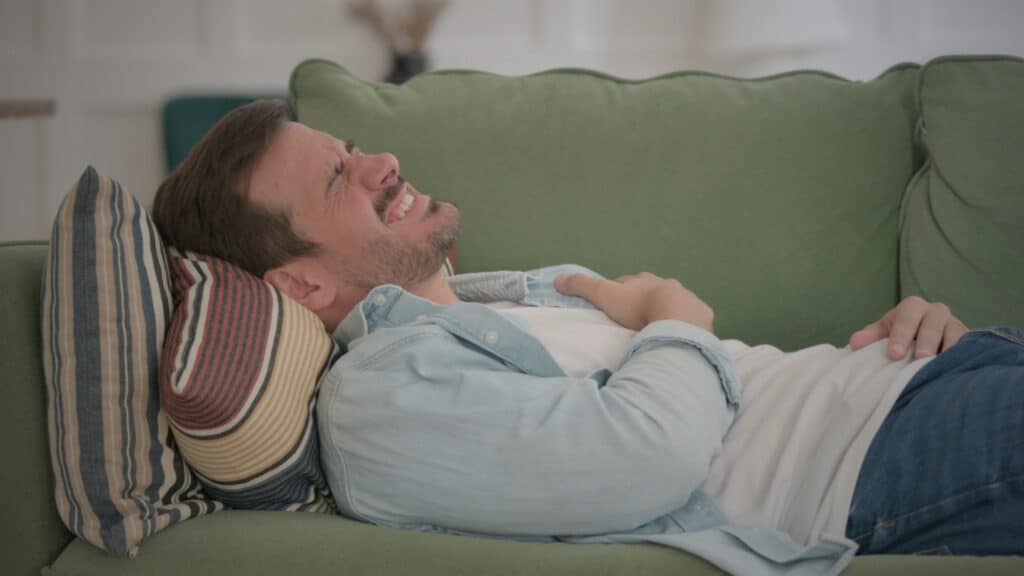
Sudden chest pain with shortness of breath, sweating, or pain spreading to the arm or jaw needs emergency help – call 999 (UK) or 911 (US) immediately.
Chest pain that feels worse when you lie flat can point to heart conditions (such as pericarditis), lung problems (including pulmonary embolism or pneumonia), acid reflux, or musculoskeletal strain.
Changing position, for example, feeling better when you sit up or lean forward, offers a diagnostic clue but cannot reliably rule out serious health conditions.
Chest discomfort should be taken seriously, especially if new or severe; many other potential causes exist beyond the heart.
Mr Marco Scarci, consultant thoracic surgeon in London, can assess persistent or unexplained chest pain related to lung and chest conditions, offering advanced minimally invasive treatment where appropriate.
When Chest Pain Lying Down Is an Emergency
Never ignore sudden chest pain that feels severe, new, or very different from your usual experience – particularly if it gets worse when you lie down. Chest pain can indicate serious cardiovascular conditions requiring immediate evaluation.
Call 999 or go to A&E if you notice any of the following:
Sudden chest pain or tightness, especially crushing or heavy pressure in the center of the chest, may be a sign of a heart attack. The pain often lasts more than 15 minutes and is usually not relieved by rest.
Pain spreading to the arm, neck, jaw, or back – chest pain that spreads to the arms, neck, or back can signal a heart problem, and pain reaching the jaw makes urgent assessment essential
Shortness of breath, feeling faint, cold sweats, or sudden confusion
Coughing up blood, which may indicate a pulmonary embolism
Sudden sharp pain in the chest after a long flight, recent surgery, or a period of immobility, with leg swelling – a pulmonary embolism causes sharp chest pain worsening with deep breaths
A heart attack is life-threatening if treatment is delayed. Shortness of breath with chest pain can indicate serious cardiovascular issues. If chest pain is milder, brief, or clearly linked to movement or tenderness on touch, seek urgent GP or same-day clinic advice – but do not ignore persistent symptoms.
Have a question about your diagnosis?
A consultation gives you a personalised plan — not a generic estimate.
What Chest Pain When You Lie Down Can Feel Like
Chest pain covers a range of sensations. Describing the exact character of your pain helps doctors narrow down the causes of chest pain. Chest pain is often associated with gastrointestinal, cardiac, and respiratory conditions, and lying down may worsen chest pain by changing pressure dynamics in the body.
Sharp or stabbing chest pain that feels worse when you lie on your back or take a deep breath, sometimes easing when you sit up and lean forward – typical of a condition called pericarditis or pleurisy. Chest pain may signify inflammation around the lungs or heart.
Dull ache or heavy tightness like a weight on the chest, which may suggest angina or a heart attack, especially if triggered by physical activity rather than position alone.
Burning sensation behind the breastbone, often after eating, that feels worse when you lie flat – suggesting acid reflux. You may notice an unpleasant taste in the mouth.
Localised muscle pain or soreness that is worse when pressing on the ribs, stretching, or rolling in bed. Chest pain can be caused by muscle strain or costochondritis, and musculoskeletal issues can cause chest pain that feels worse in certain positions.
"Dr. Marco Scarci is a deeply knowledgeable, open-minded, and empathetic surgeon. He listens to details and solves problems to truly deliver the most optimal results. As a medical professional myself, I can tell you that finding a specialist like Dr. Scarci is very rare, and it is a privilege to have him in my corner."
Heart-Related Causes of Chest Pain When Lying Down
Several heart conditions can make chest pain feel worse when you lie down. Distinguishing these from less serious problems usually requires medical assessment, including an ECG and blood tests.
Heart attack
Sudden chest pain or discomfort – often heavy or tight – that may wake you from sleep. It typically lasts more than 15 minutes, with other symptoms such as sweating, nausea, and difficulty breathing. The main symptom is severe pain or pressure that does not ease with rest.
Angina
Chest tightness triggered by climbing stairs, walking uphill, or emotional stress. Angina pain usually improves with rest after a few minutes. Decubitus angina occurs specifically when a person is lying down, sometimes because blood pressure or heart rate changes at night increase the heart’s demand for blood supply. A primary care doctor may prescribe nitrates for relief.
Pericarditis
Pericarditis is inflammation of the sac surrounding the heart. It can cause sharp, stabbing chest pain that often worsens when lying down and improves when leaning forward. The pain may spread to one or both shoulders or the neck and may follow a viral infection. Other symptoms can include shortness of breath and a high temperature. In some cases, a doctor may hear a pericardial rub when listening with a stethoscope. Chronic pericarditis can lead to low blood pressure and swelling over time.
Cardiac tamponade
When too much fluid accumulates in the sac surrounding the heart (fluid build up), it compresses the chambers that pump blood, causing breathlessness that is worse when lying flat, chest pressure, and rapid heartbeat. This is a medical emergency.
Any suspected heart-related chest pain – especially after age 40, in smokers, or those with existing medical conditions – should be reviewed urgently. The British Heart Foundation recommends calling emergency services rather than driving yourself to hospital.
Want a specialist opinion on your condition?
Get a clear answer from a surgeon who will be with you throughout.
Non-Heart Causes: Why Chest Pain May Feel Worse When You Lie Down
Many people with chest pain when lying down do not have a heart attack. Pain may arise from the lungs, oesophagus, or chest wall and still deserve careful assessment.
Gastro-oesophageal reflux disease (GORD)
GERD causes stomach acid to flow into the esophagus, producing a burning sensation or a tight feeling behind the breastbone. GERD is also known as gastro-oesophageal reflux disease. Symptoms of GERD worsen when lying down or bending over, particularly after a large meal. Stomach acid reaching the throat may cause an unpleasant taste. GERD can be treated with lifestyle changes and medication.
Costochondritis and chest wall strain
Chest pain caused by inflammation at the rib-cartilage joints or strained intercostal muscles is localised and painful when pressing a specific spot. It often feels worse turning in bed, taking a deep breath, or lying on the affected side – particularly the left side. Costochondritis accounts for 6–13% of outpatient chest pain presentations.
Pleurisy and pneumonia
Conditions like pleurisy can cause chest pain that worsens when lying down. Sharp stabbing chest pain on breathing in or with a cough, often accompanied by fever and breathlessness, may indicate a bacterial infection or viral infection in the lungs. Pneumonia may cause a productive cough and high temperature.
Anxiety and panic attacks
Anxiety or panic attacks can lead to chest discomfort that may be noticed when resting. Anxiety-related chest pain can feel similar to heart pain, producing similar symptoms including dizziness and breathlessness. Panic attacks can cause chest pain lasting five to 20 minutes, and stress hormones can trigger physical symptoms like chest pain. Even if a panic attack is suspected, serious causes must be ruled out first.
Sleep apnoea
Obstructive sleep apnoea can worsen breathing when lying flat, leading to nighttime chest tightness, palpitations, and daytime exhaustion.
"I was diagnosed in March with a rare condition. My local hospital said it was inoperable due to the size of the mass. Mr Scarci reassured me the thymoma was resectable. I was booked for surgery the following week where he successfully removed the entire tumour."
Serious Lung and Vascular Problems Like Pulmonary Embolism That Can Cause Chest Pain Lying Down
Some lung and blood vessels conditions cause severe pain and breathlessness that may be more obvious when lying down. These usually need urgent hospital care. Chest pain when lying down can be a symptom of lung or thoracic conditions.
Pulmonary embolism
A blood clot blocking an artery that carries blood to the lungs. The artery is suddenly blocked, causing sudden chest pain worse on breathing in, rapid heartbeat, and sometimes coughing up blood. Risk factors include recent heart surgery, long flights, pregnancy, or immobility.
Pneumothorax
Sudden sharp pain on one side of the chest with difficulty breathing, sometimes spontaneous in tall, slim people. Lying on the affected side may feel particularly uncomfortable, and specialist pneumothorax treatment may be needed, especially for recurrent episodes.
Pneumonia
An infection that can cause chest pain, fever, chills, and productive cough. Pain may become more obvious when lying quietly at night.
Chronic lung disease
Severe COPD, pulmonary hypertension, or bronchiectasis can cause exertional chest tightness and shortness of breath that worsens lying flat due to increased blood flow to the chest.
As a consultant thoracic surgeon, Mr Marco Scarci specialises in diagnosing and surgically treating many thoracic causes of chest pain – including pneumothorax, lung tumours, and chest wall problems – often using keyhole (VATS) or robotic techniques. He provides expert thoracic care for a wide range of conditions.
Not sure about your treatment options?
Mr Scarci provides expert consultations typically within one week of contact.
Getting a Diagnosis: What Your Doctor May Do
Because chest pain when lying down can come from different organs, a careful history, examination, and targeted tests are needed for a proper diagnosis.
Your clinician will ask about onset (sudden or gradual), location, type, what makes it worse when you lie flat, and what makes it better. Keeping a log of chest pain occurrences can be helpful for diagnosis.
Physical examination includes checking heart rate, blood pressure, oxygen levels, listening to heart and lungs, checking for leg swelling, and pressing gently over the chest wall for tenderness.
Initial investigations include ECG, blood tests (including troponin to look for a heart attack), and chest X-ray to assess lungs and heart size.
Specialised tests may include an echocardiogram – which uses sound waves to image the heart – for pericarditis or heart failure, CT pulmonary angiography for suspected pulmonary embolism, or MRI which uses radio waves and magnetic fields to examine soft tissues. Endoscopy may be arranged if severe reflux is suspected.
In Mr Scarci’s thoracic practice, patients with complex chest pain may be offered advanced imaging, lung function tests, and minimally invasive diagnostic procedures such as VATS biopsies to find the underlying cause, alongside specialist thoracic surgery for lung and chest conditions.
Treatment Options and When Thoracic Surgery May Help
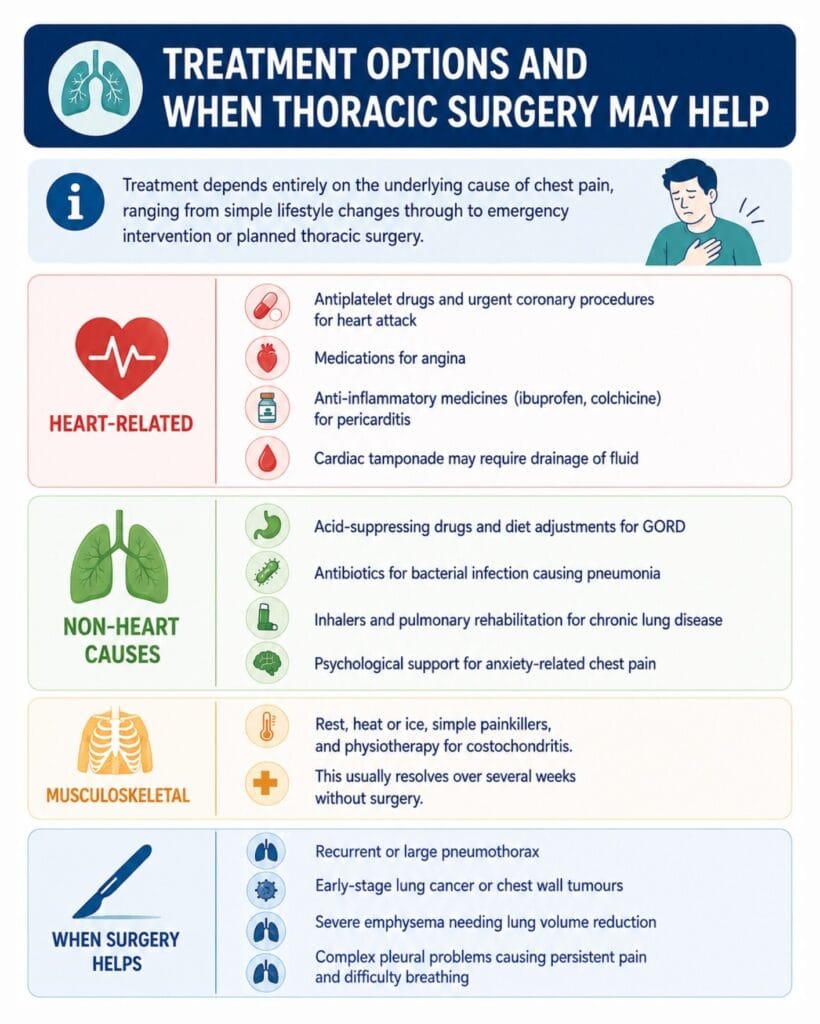
Treatment depends entirely on the underlying cause of chest pain, ranging from simple lifestyle changes through to emergency intervention or planned thoracic surgery.
Heart-related causes
Treatment may include antiplatelet medicines and urgent coronary procedures for a heart attack, medication for angina, or anti-inflammatory medicines such as ibuprofen or colchicine for pericarditis. Cardiac tamponade may require drainage of fluid around the heart.
Non-heart causes
For GORD, treatment often includes acid-suppressing medication and diet changes. Pneumonia caused by a bacterial infection may require antibiotics. Chronic lung disease may be managed with inhalers and pulmonary rehabilitation, while anxiety-related chest pain may benefit from psychological support.
Musculoskeletal causes
Costochondritis is usually treated with rest, heat or ice, simple painkillers, and physiotherapy. It often improves over several weeks and does not usually require surgery.
When surgery helps
Thoracic surgery may be considered when chest pain is linked to conditions such as a recurrent or large pneumothorax, early-stage lung cancer, chest wall tumours, severe emphysema requiring lung volume reduction, or complex pleural problems causing ongoing pain and breathing difficulty.
In these cases, pneumothorax surgery or other thoracic procedures may help relieve symptoms and, for recurrent pneumothorax, support long-term quality of life.
Mr Marco Scarci focuses on minimally invasive thoracic surgery – including VATS and robotic approaches – to reduce pain, shorten hospital stay, and support faster recovery. He offers both private and NHS pathways in London, and patients may choose private thoracic surgery for faster access and personalised care.
Have a question about your diagnosis?
A consultation gives you a personalised plan — not a generic estimate.
Practical Steps You Can Take at Home (Without Ignoring Danger Signs)
Home measures should never replace emergency help for sudden or severe chest pain. They are suitable only once a serious cause has been ruled out.
Sleep slightly propped up on pillows or use a wedge if reflux or breathlessness has been diagnosed. Avoid eating large meals within three hours of bedtime to reduce stomach acid reflux.
Gentle stretching and posture work may help if chest wall strain is suspected. Stop any exercise that clearly worsens chest pain and seek medical advice if pain persists longer than a few weeks.
Relaxation techniques such as slow breathing and meditation can reduce anxiety-related chest tightness but are an addition to, not a substitute for, medical assessment.
For longer-term prevention, stop smoking, moderate alcohol, maintain a healthy weight, control blood pressure and diabetes, and stay active within safe limits.
If you have known heart or lung conditions, have an agreed action plan describing what to do if chest pain changes pattern or becomes worse when you lie down.
How Mr Marco Scarci Can Help With Persistent Chest Pain
Mr Marco Scarci is a consultant thoracic surgeon based in London, specialising in lung, pleural, and chest wall conditions that can cause chest pain. He offers both private and NHS consultations, and patient testimonials highlight the quality of his thoracic care.
He evaluates complex chest pain where initial tests have not found a clear cause – particularly when lung, pleural, or chest wall problems are suspected.
He routinely performs minimally invasive procedures including VATS and robotic surgery for conditions such as pneumothorax, lung cancer, chest wall tumours, and emphysema.
Patients can access face-to-face appointments in London or virtual consultations for UK and international patients, with dedicated contact and appointment options.
If you have ongoing or unexplained chest pain that feels worse when you lie down – particularly after common causes have been excluded – seek specialist thoracic advice. Contact details and referral information are available on Mr Scarci’s clinic website.

Frequently Asked Questions
Is chest pain that only happens when I lie down at night always a sign of heart disease?
Not necessarily. While heart problems – including pericarditis and heart failure – can cause chest pain worse when you lie flat, many other causes such as acid reflux, chest wall strain, and lung conditions produce similar symptoms. Position-related pain should still be assessed, but it is not automatically a heart attack.
Can changing sleep position help reduce chest pain?
Some people feel better sleeping slightly propped up or on their side, especially with reflux or mild breathlessness. However, needing to sleep upright to breathe comfortably or to ease severe pain is a red flag – seek medical advice promptly if this applies to you.
How long should I wait before seeing a doctor about chest pain that comes and goes?
Any new, unexplained chest pain lasting more than a few minutes, recurring over several days, or waking you from sleep should be discussed with a GP or urgent care service within 24–48 hours. Sudden severe pain or symptoms of a heart attack or pulmonary embolism require calling emergency services immediately.
What tests might I need if my initial ECG and blood tests are normal but I still have chest pain lying down?
Further investigations could include a chest X-ray, echocardiogram, CT scan of the chest, lung function tests, or endoscopy. A thoracic or cardiology specialist may look for less common causes affecting the heart lining, lungs, or chest wall to reach a proper diagnosis.
Can thoracic surgery cure all causes of chest pain when lying down?
No. Surgery is only appropriate when chest pain is due to a structural problem that benefits from an operation – such as certain lung tumours, recurrent pneumothorax, or chest wall deformities. Many causes, including reflux, anxiety, and uncomplicated pericarditis, are best managed with medication and lifestyle changes rather than surgery.
