

Recovering after keyhole lung surgery is often quicker and less daunting than many people expect, but everyone’s timeline is different. Also known as minimally invasive lung surgery or VATS, this approach uses smaller incisions than traditional open surgery, which can mean less pain, a shorter hospital stay and a faster return to everyday activities.
Still, it is normal to wonder how long recovery will take, when you can walk comfortably, return to work, drive, or get back to your usual routine. This guide explains what recovery after keyhole lung surgery typically looks like, what can affect healing time, and when to seek medical advice during the recovery process.
Most patients who have keyhole lung surgery, also known as VATS or uniportal VATS, stay in hospital for about 2–5 days and then recover at home over the next few weeks.
You will wake up either in a recovery area or a high dependency unit (HDU), with close monitoring, chest drains, and strong pain relief so you can start breathing exercises and gentle movement the same day.
The first 2 weeks focus on wound care, pain control, walking around the house, and simple breathing exercises. By 4–6 weeks, most people are driving, doing light work, and steadily building up activity.
Keyhole surgery generally means less pain, lower risk of blood clots and chest infections, and a quicker return to normal life compared with open surgery, but full recovery of stamina can still take 3–6 months.
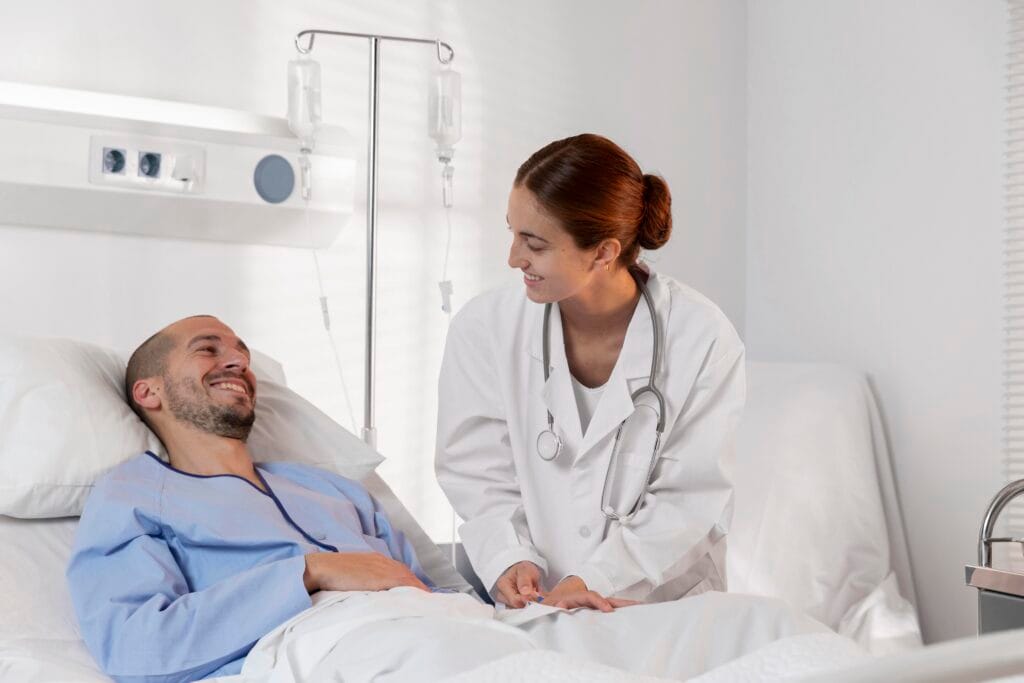
How Keyhole Lung Surgery Differs From Open Lung Surgery
Keyhole surgery, also known as VATS, uses 1–3 small incisions of around 2–4 cm, compared with the 10–20 cm cut and rib spreading of open thoracotomy. This minimally invasive approach reduces muscle and rib damage, which translates into meaningful differences for patients:
Less post-operative pain: Uniportal VATS reduced pain scores by approximately 2.5 points on a 0–10 scale at 24 hours compared with multiportal techniques, with lower overall opioid use.
Shorter hospital stay: Typically 2–5 days versus 5–10 days or more after open surgery.
Lower risk of long-term chest and shoulder stiffness.
Quicker return to driving and work.
It is worth knowing that surgeons occasionally need to convert from keyhole to open surgery during the procedure, for example, due to dense adhesions or a large tumour. Conversion rates in published series are around 4–6%. If this happens, recovery will follow the slower open-surgery pattern.
Where You Will Wake Up: Recovery Room and High Dependency Unit (HDU)
After a general anaesthetic, you will first wake in a post-anaesthetic care unit (PACU) with one-to-one nursing. Your heart rate, blood pressure, oxygen levels and pain score are monitored continuously. An oxygen mask or nasal cannula supports your breathing, and pain relief is given through a drip.
If your operation was more complex, such as a lobectomy for lung cancer, or if you have pre-existing heart or lung disease, you may go to a high dependency unit (HDU) rather than directly to the ward.
A short HDU stay of around 24 hours is routine after some lung cancer operations and is not a sign that something has gone wrong.
Your First 24 Hours After Keyhole Lung Surgery
The first 24 hours set the tone for your recovery. Once stable, you are transferred to the thoracic ward where you will have one or two chest drains (thin tubes through the chest wall attached to a collection bottle) that remove air and fluid so the lung can re-expand. A drip delivers fluids, antibiotics and pain relief, and a urinary catheter, if used, is usually removed within 24 hours.
Early movement is actively encouraged from the outset. Most keyhole patients sit in a chair within 6 to 12 hours, and walking a few steps with help is the goal before the end of the first day. Moving early reduces the risk of blood clots and chest infections and is a core part of modern enhanced recovery pathways.
Most patients are home within 1–4 days, though more complex procedures or complications may extend the stay to 3–7 days.
Pain Control and Comfort: What to Expect and What You Can Do
Good pain control is essential for breathing deeply, coughing and moving, all of which prevent serious complications after lung surgery.
During surgery, regional nerve blocks (paravertebral or intercostal) are placed to manage post-operative pain. Current PROSPECT guidelines recommend these over thoracic epidurals for VATS. You may also have patient-controlled analgesia (PCA), a pump that lets you deliver a small opioid dose when needed within safe limits set by the anaesthetist.
As you improve, pain relief is stepped down to oral tablets such as paracetamol, anti-inflammatories and milder opioids.
Pain is most noticeable on coughing, deep breathing or changing position, and typically improves significantly within 7–10 days. Some numbness or tingling around the scar is common and usually settles as nerves heal.
At home, take prescribed painkillers regularly for at least the first week rather than waiting until pain becomes severe. Reduce them gradually, starting with the strongest medication. If pain suddenly worsens or is not controlled by what you have been prescribed, contact your GP or surgeon.
"Dr. Marco Scarci is a deeply knowledgeable, open-minded, and empathetic surgeon. He listens to details and solves problems to truly deliver the most optimal results. As a medical professional myself, I can tell you that finding a specialist like Dr. Scarci is very rare, and it is a privilege to have him in my corner."
Breathing Exercises and Lung Function Recovery
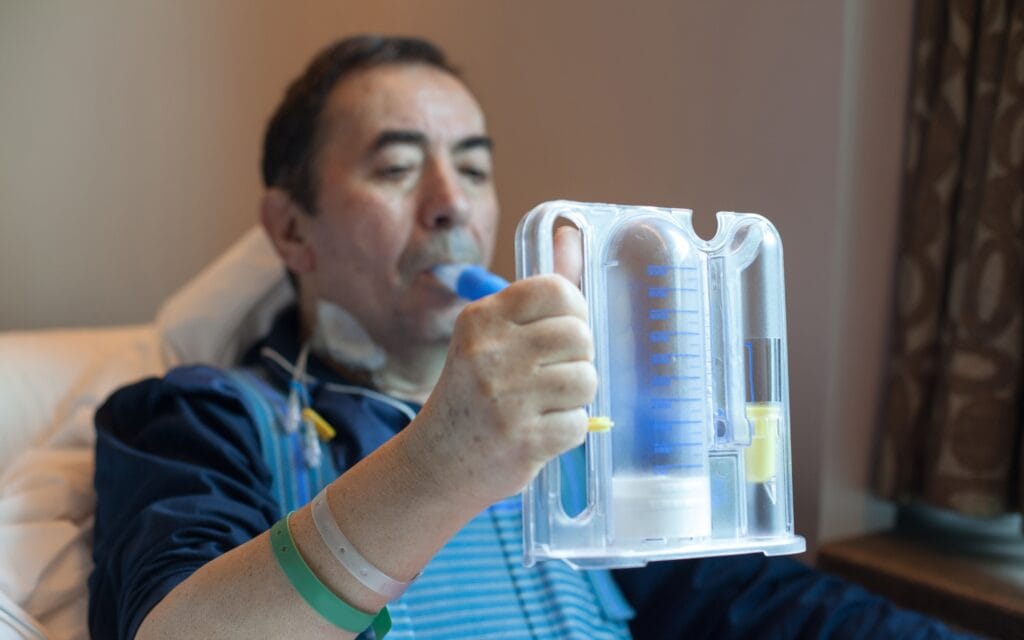
Breathing exercises help remaining lung tissue expand, clear mucus and reduce the risk of chest infection and pneumonia.
In hospital, physiotherapists will prompt you regularly to take slow, deep breaths, ideally every hour whilst awake in the first few days. You may use an incentive spirometer to guide and measure your breaths. Supported coughing (holding a pillow to your chest) helps clear mucus.
At home, continue breathing exercises for at least 2–3 weeks. Breathe in slowly through your nose, then out through pursed lips, aiming for 5–10 breaths followed by a gentle supported cough. Repeat this several times a day.
Mild shortness of breath during early recovery is expected, especially if lung tissue was removed. Report any new or worsening breathlessness to your team, as it may indicate a complication after a keyhole lung operation.
Typical Recovery Timeline
Period | What to expect |
Days 1–3 | In hospital; walking short distances; chest drains likely still in place; pain improving with medication |
Days 3–7 | Home for most patients; walking around the house; regular pain relief needed; daytime naps common |
Week 2 | Wounds healing; short outdoor walks; light desk work possible for some |
Weeks 3– 4 | Longer walks; many returning to office work; carrying light shopping comfortable |
Weeks 4–6 | Usually cleared to drive; follow-up appointments |
3–6 months | Gradual improvement in stamina; full lung function recovery, especially after lobectomy |
Recovery is slower after larger resections (lobectomy versus wedge), if you have pre-existing heart or lung disease, or if complications such as a prolonged air leak or chest infection arise.
Recovering After Keyhole Surgery for Lung Cancer
Recovery after lung cancer surgery follows the same general pattern described above, but there are important additional steps in the lung cancer pathway.
During the operation, lymph nodes from the centre of the chest are usually removed. This helps pathologists stage the cancer accurately and check whether any cancer cells have spread beyond the lung.
Histology results are usually available within 1–2 weeks after surgery. These results confirm the type of cancer, most commonly non-small cell lung cancer and less often small cell lung cancer, as well as whether the lymph nodes are clear.
A follow-up appointment with the surgeon is typically arranged 2–6 weeks after the operation. At this appointment, your surgeon will review the histology results, chest X-ray and wound healing. Your team will also discuss whether any further treatment, such as chemotherapy, immunotherapy or radiotherapy, is needed.
After minimally invasive lung cancer surgery, many patients stay in hospital for around 3–5 days following a lobectomy, where one lobe of the lung is removed. Some patients are able to go home within 1–3 days, especially as part of an enhanced recovery programme.
Longer-term follow-up usually involves CT scans every 6–12 months for up to 5 years. It is also important to report any new or worsening symptoms between appointments, rather than waiting for the next scan.
Many people with early-stage lung cancer treated with keyhole surgery are able to return to normal life, including work and exercise, within a couple of months.
Not sure about your treatment options?
Mr Scarci provides expert consultations typically within one week of contact.
Life After Discharge: Support, Activity and Emotional Recovery
Planning for the first 1–2 weeks of life after lung cancer surgery is important, particularly if you live alone. Family or friends can assist with shopping, cooking, laundry and transport to appointments. Keep key phone numbers in one visible place: the thoracic ward, your surgeon’s secretary, your GP and the community nursing team.
A district nurse will visit if you go home with a chest drain, need complex dressings or require suture removal. This is arranged before you leave the hospital. A lung cancer specialist nurse can also offer phone advice on symptoms, medication and emotional concerns between appointments.
For returning to normal activities, use these as a general guide:
Driving
Most people wait 4–6 weeks. You should be off strong opioids, able to wear a seatbelt comfortably and able to perform an emergency stop without hesitation. Check with your insurer and follow your surgeon’s specific advice.
Work
Desk or office work is often possible within 2–6 weeks. Heavy or manual work usually requires at least 4–6 weeks, sometimes longer after major resections.
Exercise
Walking is the main activity in the first month. Start short and flat, then build gradually. Gentle upper-body stretches can begin early to prevent shoulder stiffness. Avoid heavy lifting, high-impact sports and swimming until cleared at follow-up.
Everyday tasks
Light housework and simple cooking are often comfortable by week 2. Carrying light shopping follows at weeks 3–4. Hoovering, gardening and more demanding tasks should wait until at least weeks 4–6.
It is also common to feel anxious, low in mood or emotionally flat after lung surgery, particularly when it has been performed for cancer. Emotional recovery often lags behind physical recovery, and many patients feel more vulnerable once home. Mood changes, disturbed sleep and reduced concentration in the first few weeks are normal. Talking with family, friends or a counsellor, including about fear of recurrence, can help.
If low mood persists beyond a few weeks, contact your specialist nurse, GP or a support organisation. Follow-up appointments are an opportunity to raise emotional concerns, not just physical ones.
"After multiple failed consultations elsewhere, Mr Scarci identified exactly what was wrong and operated within two weeks. Recovery was smooth and I'm back to normal life."
How Mr Marco Scarci and His Team Support Your Recovery
Mr Marco Scarci is a London-based consultant thoracic surgeon with extensive experience in minimally invasive and keyhole techniques, including uniportal VATS and robotic-assisted thoracoscopic surgery. In robotic surgery for lung cancer (sometimes called a RATS procedure), robotic arms controlled by the surgeon allow for precise operations through small openings, further reducing tissue trauma.
His team supports recovery through:
Pre-operative assessment and prehabilitation, including tests for lung and heart function. Stopping smoking at least two weeks before surgery significantly improves outcomes.
Clear pre-surgery briefings on what to expect in the first days and weeks of recovery.
An enhanced recovery programme in hospital with structured early mobilisation.
Detailed discharge information covering painkillers, breathing exercises and activity guidance.
Flexible follow-up in-person or virtual consultations 2–6 weeks after surgery, with coordination with oncologists for lung cancer cases.
Many keyhole surgery patients are discharged within 1–3 days and return to light activities quickly, with individual recovery plans tailored to age, lung function and the extent of surgery.
Have a question about your diagnosis?
A consultation gives you a personalised plan — not a generic estimate.
Frequently Asked Questions About Recovery After Keyhole Lung Surgery
How long will it take to feel “back to normal” after keyhole lung surgery?
Most patients feel much better within 4–6 weeks and can return to everyday activities. Full recovery, especially after a lobectomy, may take 3–6 months. Recovery varies depending on the surgery and your overall health.
Is recovery quicker after uniportal VATS than standard VATS or open surgery?
Both uniportal and standard VATS usually offer less pain and faster recovery than open surgery. Differences between the two keyhole techniques are small, with recovery depending more on the amount of lung removed and your overall health.
Will I need help with my wounds or chest drain once I get home?
Most patients go home without a chest drain. Keyhole wounds usually need only basic care. If you have a drain, stitches, or clips, follow-up care will be arranged before discharge. Contact your team if you notice signs of infection.
Can I drink alcohol or smoke after my keyhole lung surgery?
Do not smoke after surgery, as it greatly increases the risk of complications and future lung problems. Small amounts of alcohol may be safe once you have stopped strong painkillers and are eating normally, but check with your healthcare team if you are unsure.
Do I still need follow-up scans if my cancer was removed by keyhole surgery?
Yes. Regular follow-up scans help detect any recurrence, monitor your lungs, and check your recovery. Most patients have CT scans every 6–12 months for up to five years, although your schedule will depend on your cancer type and treatment.
