

Rib flaring affects posture, breathing, and confidence, yet the right treatment plan can make a real difference. Here is what causes it, how to prevent it, and when surgery becomes an option.
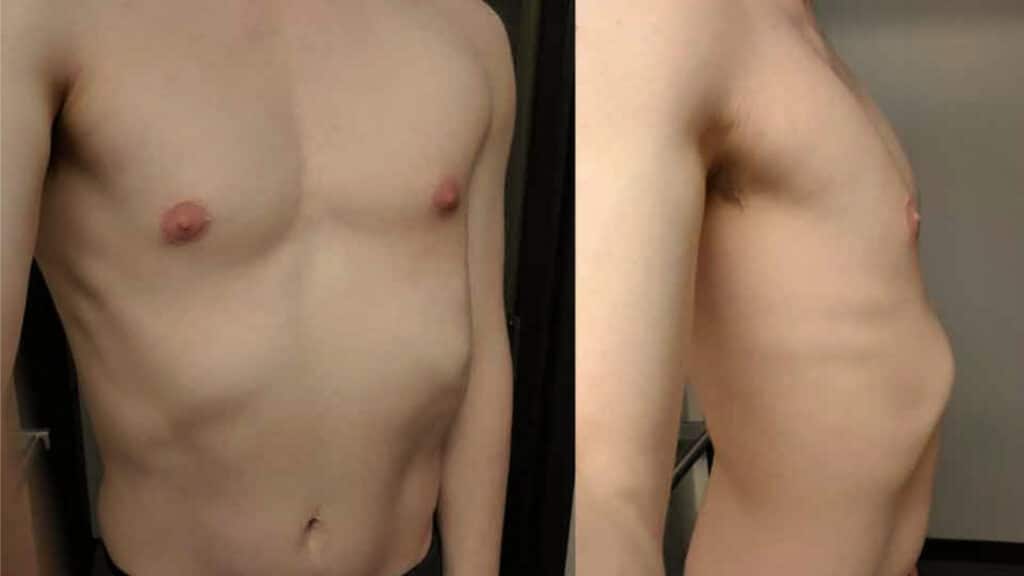
Rib flaring is the outward protrusion of the lower ribs and costal margin, caused by poor posture, muscle imbalance, or structural chest wall deformity such as pectus carinatum or pectus excavatum.
In milder cases, physical therapy, core muscle strengthening, and posture correction often improve symptoms significantly.
More severe cases may require a rib flare brace, a rib flare strap, or specialist thoracic assessment for surgery.
Mr Marco Scarci offers tailored assessment, CT-based planning and minimally invasive chest wall surgery in London for patients with significant deformity.
Early evaluation during adolescence can improve non-surgical outcomes and help prevent progression of flared ribs.
What Is Rib Flare and Why Does It Matter?
Rib flare occurs when the lower portion of the rib cage protrudes forwards and outward, creating a visible shelf at the lower edge of the ribcage. It is most obvious at the costal margin and when arms are raised overhead. A slightly prominent rib cage can be a normal body variation, but true rib flaring that alters appearance, comfort, or confidence is worth addressing.
Rib flaring can be an isolated finding or part of chest wall deformities such as pectus carinatum or pectus excavatum. Common symptoms include visible asymmetry, difficulty fitting clothes around the sternum area, and a sensation of ribs “popping out” when you arch your back or slouch. Beyond appearance, persistent rib flaring can alter breathing mechanics, strain the thoracic spine, and limit shoulder mobility by changing the shoulder socket angle. Patients who experience pain around the chest wall often find that rib flare is contributing to their discomfort in daily life.
Have a question about your diagnosis?
A consultation gives you a personalised plan — not a generic estimate.
What Causes Rib Flaring and How to Prevent It?
Rib flare usually arises from a combination of skeletal shape, muscle imbalance, and posture. Prevention targets these same factors. Rib flaring is associated with postural habits and muscular imbalances, and poor posture is one of the most common causes. Excessive lower back arching (hyperlordosis) can push the rib cage upward and forward, rotating the lower ribs into a flared position. A habitual “chest out” stance and prolonged sitting with poor posture reinforce this pattern over time.
Weak abdominal muscles contribute to rib flare because they cannot pull the ribs downward and inward. When abdominal muscles are weak, overactive lower back muscles and tight chest muscles dominate, holding the chest wall in a flared position. Rib flare is caused by these muscle imbalances more often than many patients realise.
Structural causes include abnormal growth of rib cartilage, pectus deformities, and rib flaring, which can result from spinal conditions like scoliosis. Rib flare can also result from injuries to the chest area, including previous fractures with malunion. Research shows that almost 75% of longitudinal rib growth in children occurs at the costochondral end, which explains why adolescent growth spurts can exacerbate flare.
Preventive strategies include maintaining a neutral spine posture, early core strengthening in teenagers, avoiding prolonged slouching, and correcting breathing patterns. Individuals who notice new or worsening flared ribs during growth spurts (around ages 10–18) should seek medical assessment.
"After multiple failed consultations elsewhere, Mr Scarci identified exactly what was wrong and operated within two weeks. Recovery was smooth and I'm back to normal life."
Recognising Signs, Symptoms and When to Seek Medical Advice
Not every visible rib is a problem, but certain signs warrant professional review.
Visual signs to watch for:
Lower ribs jutting forward compared with the upper chest
Asymmetry more pronounced on the right side or one side
Worsening when lying flat or lifting arms overhead
Physical symptoms:
Local tenderness along the costal margin or shoulders
Back ache, particularly around the mid-back and thoracic spine
Feeling breathless with a deep breath, or tightness across the chest wall
Functional clues:
Difficulty maintaining upright posture without conscious effort
Poor sport tolerance due to discomfort or fatigue
Pain that affects daily life, head position or general wellbeing
Red flags requiring urgent review include sudden severe chest pain, shortness of breath at rest, fever with chest pain, or recent trauma. For cosmetic or persistent postural concerns, a non-urgent consultation with a GP, physiotherapist, or thoracic surgeon is appropriate.
Non-Surgical Treatment Options for Rib Flaring
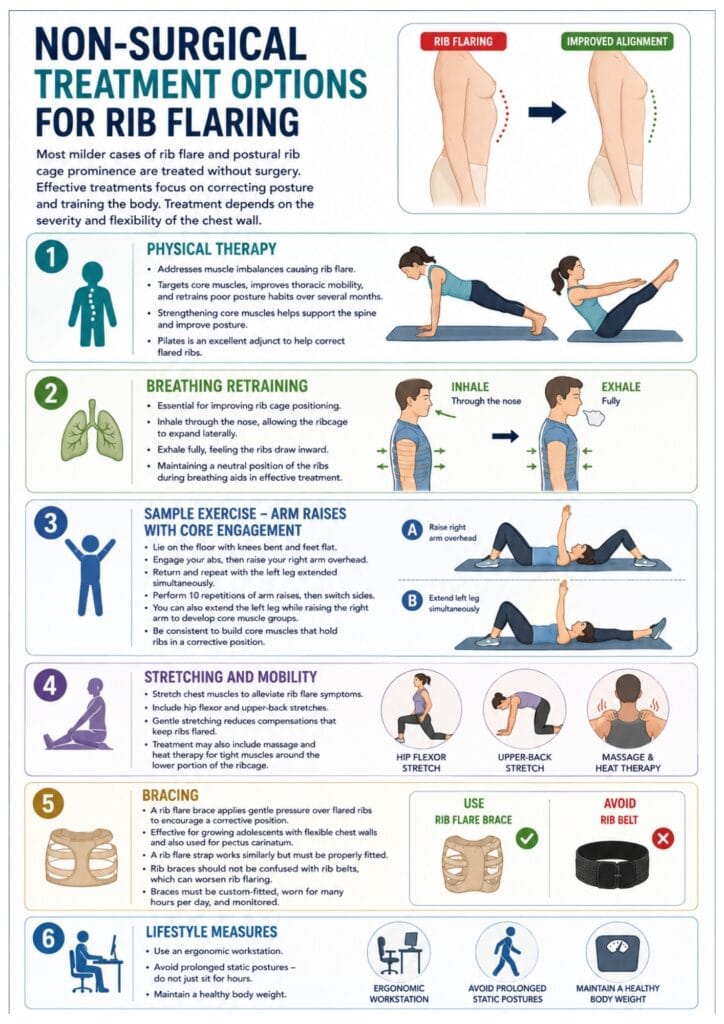
Most milder cases of rib flare and postural rib cage prominence are treated without surgery. Effective treatments for rib flaring focus on correcting posture and training the body. Rib flaring treatments typically depend on the severity and flexibility of the chest wall.
Physical therapy
This can address muscle imbalances causing rib flare. A structured programme targets core muscles, improves thoracic mobility, and retrains poor posture habits over several months. Strengthening core muscles helps support the spine and improve posture. Pilates can help correct flared ribs and is an excellent adjunct.
Breathing retraining
It is essential. Breathing exercises improve rib cage positioning by encouraging diaphragmatic patterns. Inhale through the nose, allowing the ribcage to expand laterally, then exhale fully, feeling the ribs draw inward. Maintaining a neutral position of the ribs during breathing aids in effective treatment.
Sample exercise – arm raises with core engagement
Lie on the floor with knees bent and feet flat. From this starting position, engage your abs, then raise your right arm overhead. Return and repeat with the left leg extended simultaneously. Perform 10 repetitions of arm raises to strengthen core muscles, then switch to the other side. You can also extend the left leg while raising the right arm to develop core muscle groups. Stick with this routine consistently to build the core muscle groups that hold ribs in a corrective position.
Stretching and mobility
Stretching chest muscles can alleviate rib flare symptoms. Include hip flexor and upper-back stretches. Gentle stretching reduces compensations that keep ribs flared. Rib flare treatment may also include massage and heat therapy for tight muscles around the lower portion of the ribcage.
Bracing
A rib flare brace applies gentle pressure over flared ribs to encourage a corrective position. Rib braces can be effective for treating rib flaring in growing adolescents with flexible chest walls, and are also used for pectus carinatum. A rib flare strap works similarly but must be properly fitted. Importantly, rib braces should not be confused with rib belts, which can worsen rib flaring. Bracing for flared ribs must be custom-fitted, worn for many hours per day, and monitored.
Lifestyle measures
These include an ergonomic workstation, avoiding prolonged static postures, not just sitting for hours, and maintaining a healthy body weight. Realistic expectations matter: non-surgical treatment often delivers improving rib flaring rather than perfectly flattening every rib.
"I was diagnosed in March with a rare condition. My local hospital said it was inoperable due to the size of the mass. Mr Scarci reassured me the thymoma was resectable. I was booked for surgery the following week where he successfully removed the entire tumour."
When Is Rib Flaring More Severe and Could Surgery Help?
A subset of patients has more severe cases of structural rib flaring due to abnormal cartilage growth or complex chest wall deformity. In these patients, the most significant deformity involves a rigid protruding costal margin, associated with pectus carinatum or excavatum, and other obvious abnormalities that bracing cannot fix.
Assessment in a specialist thoracic clinic includes detailed physical examination, postural analysis, and cross-sectional imaging such as CT. Where there is an obvious abnormality or significant deformity, surgical treatment options may be considered. Surgical intervention may be considered for severe cases of rib flaring in mature patients where conservative measures have been exhausted.
General surgical concepts involve reshaping or partial resection of protruding costal cartilage, sometimes combined with correction of an underlying pectus deformity. There is no single standardised procedure; surgery is tailored to the number of ribs involved, degree of protrusion, and the patient’s goals. In the UK, NHS funding is typically reserved for cases with clear pain, functional limitation, or major deformity. Surgery is rarely the first step, as most young patients and adults are advised to complete structured physical therapy and, where appropriate, bracing first.
Not sure about your treatment options?
Mr Scarci provides expert consultations typically within one week of contact.
Rib Flaring Care with Mr Marco Scarci in London
Mr Marco Scarci is a consultant thoracic surgeon in London with a special interest in chest wall surgery and minimally invasive techniques. The typical patient journey begins with a face-to-face or virtual consultation, review of symptoms, examination of the rib cage and posture, and discussion of treatment options, whether functional or cosmetic.
Investigations may include chest X-ray and high-resolution CT imaging to distinguish postural rib flare from fixed structural deformity and to plan any intervention. Treatment pathways range from reassurance and advice for milder cases, referral to trusted physical therapy providers, consideration of a brace in selected adolescents, through to bespoke surgical planning for more severe cases. Mr Scarci uses minimally invasive and keyhole approaches where suitable, with an emphasis on small incisions and optimised recovery. Private care is available for UK and international patients, and some complex or symptomatic cases may be managed within the NHS.
Living With Rib Flare: Practical Tips and Long-Term Outlook
Many people live active, healthy lives with mild flared ribs once they understand and manage the condition. Practical daily tips include aligning ribs over the pelvis when standing, avoiding a habitual “chest out” stance, and using mirrors to monitor posture changes.
Sustainable exercise habits matter, as regular low-impact activity combined with 2–3 weekly sessions to develop core muscle groups and upper-back muscles provides ongoing support. When choosing clothing, avoid very tight waistbands that press uncomfortably against the costal margin.
In adolescents, rib flare can change as growth completes. A periodic rib flare test , for example, yearly during the teenage growth spurt, guides whether treatment needs to be escalated. With consistent self-care and professional input, symptoms usually stabilise or improve over months, and the long-term outlook is generally good.
Frequently Asked Questions About Rib Flaring
Can sleeping position make my rib flare worse?
Sleeping on your back with a large pillow under the upper back can encourage an over-arched spine, potentially exaggerating the appearance of flared ribs on waking. A neutral position – back sleeping with a small pillow under the knees, or side sleeping with a pillow between the legs – keeps the spine aligned. Sleep position alone is unlikely to cause rib flare, but long-term posture habits, day and night, influence how visible the rib cage appears.
Is rib flaring dangerous for my heart or lungs?
In most isolated or mild rib flare, heart and lung function are normal. When rib flare is part of a more complex chest wall condition, lung volumes and exercise capacity may be affected. Any unexplained breathlessness, chest pain or reduced exercise tolerance should be assessed by a doctor rather than assumed to be cosmetic rib flare.
Can I still lift weights or play sport if I have flared ribs?
In the majority of cases, patients can safely continue resistance training and sports, provided pain is monitored and technique is corrected. Prioritise exercises that strengthen core and upper back while avoiding excessive “chest-up, back-arched” lifting posture that may accentuate rib flare. A physiotherapist familiar with rib flare can adapt training programmes, especially for competitive athletes.
Will a rib flare brace or strap permanently fix my ribs?
In adolescents with flexible chest walls, a well-designed brace worn as prescribed can significantly improve contour, but outcomes vary. Braces and straps work best when combined with exercise and posture work; if stopped too early, some recurrence is possible. Adults with rigid chest walls may see less structural change and are often better served by exercise-based management or, in selected cases, surgery.
How long does it take to see improvement from physical therapy?
Postural and muscular changes are gradual. Patients often notice initial improvements in control and comfort within 4–6 weeks. Visible changes in rib cage position may take 3–6 months of consistent work, particularly in long-standing postural rib flare. View therapy as a medium-term investment in your chest wall health rather than a quick fix.
