

Thoracic outlet syndrome (TOS) is a group of disorders caused by compression of nerves or blood vessels between the neck and shoulder. Symptoms can vary widely and may feel like a neck problem, shoulder injury, trapped nerve, or circulation issue, which can make the condition difficult to recognise.
This guide explains what thoracic outlet syndrome is, common symptoms, how it is diagnosed, available treatment options, and when specialist assessment may be needed. Whether you are a patient, caregiver, or healthcare professional, understanding TOS can help support earlier recognition and appropriate treatment.
- Thoracic outlet syndrome, or TOS, is caused by pressure on nerves and/or blood vessels between the neck and shoulder, usually affecting one arm.
- Day-to-day symptoms can include neck pain, shoulder or arm pain, pins and needles, abnormal sensations, weakness, colour change, swelling, or an affected arm that tires quickly, especially with overhead activity.
- Neurogenic thoracic outlet syndrome, also called neurogenic TOS, is the most common type, accounting for over 90% of cases, and occurs when the brachial plexus nerves are compressed.
- Venous thoracic outlet syndrome and arterial thoracic outlet syndrome are less common but can be more urgent because of blood clots, reduced blood flow, emboli, and other vascular complications.
- Most patients find relief through conservative treatment, including physical therapy and lifestyle adjustments; however, vascular types may require surgical intervention, including first rib resection offered by Mr Marco Scarci in London.
Understanding the Thoracic Outlet
The thoracic outlet is the crowded space between the lower neck and upper chest where important neurovascular structures travel into the arm. Think of it as a narrow tunnel bordered by the clavicle, first rib, and scalene muscles. Inside this tunnel are the brachial plexus, the subclavian artery, and the subclavian vein.
When this tunnel becomes tighter, it can create thoracic outlet compression syndrome. Any reduction in space, from poor posture, anatomical variations, soft-tissue thickening, traumatic injuries, or an extra rib, can cause outlet syndrome symptoms. The way it feels depends on what is compressed: nerve compression causes neurological symptoms, venous compression causes swelling and congestion, and arterial compression affects blood flow.

The brachial plexus supplies the arm muscles and hand, while the subclavian artery and subclavian vein carry blood to and from the upper body. Compression may occur around the anterior scalene muscle, middle scalene muscle, anterior and middle scalene region, or beneath the collarbone. In some people, the upper plexus or lower plexus may be irritated, creating symptoms that overlap with cervical spine conditions.
Want a specialist opinion on your condition?
Get a clear answer from a surgeon who will be with you throughout.
Types of Thoracic Outlet Syndrome
TOS is an umbrella term. Patients diagnosed with TOS do not all have the same problem, and the correct treatment depends on identifying the type.
- Neurogenic thoracic outlet syndrome: This is brachial plexus compression and accounts for over 90% of cases, according to clinical reviews such as StatPearls. It mainly causes pain, tingling, numbness, weakness, and hand clumsiness. You may also see the terms neurologic thoracic outlet syndrome or neurogenic tos.
- Venous thoracic outlet syndrome: This occurs when the subclavian vein is compressed. Venous thoracic outlet syndrome occurs when a vein is compressed, leading to upper body thrombosis, and represents about 5% of TOS cases. Venous tos may cause arm swelling, visible veins, and effort thrombosis, also called Paget–Schroetter syndrome.
- Arterial thoracic outlet syndrome: Arterial thoracic outlet syndrome is the least common type, occurring in about 1% of cases, and involves compression of an artery. Arterial tos can damage the subclavian artery and may lead to aneurysm, embolism, or reduced circulation to the hand.
Venous and arterial forms are grouped as vascular thoracic outlet syndrome. These arterial and venous types, or arterial or venous tos, often need faster assessment than purely neurogenic symptoms. TOS may affect one side or both, although the dominant arm is often more affected in athletes, manual workers, and people who perform repetitive motions.
"After two years of being told my symptoms were anxiety, Mr Scarci identified the problem immediately. The surgery was straightforward and I was discharged after three days. I only wish I had found him sooner."
What Thoracic Outlet Syndrome Feels Like
Most people describe symptoms in the neck, shoulder, arm, or hand on one side. The symptoms often worsen when the arms are raised, when carrying loads, during prolonged desk posture, or at night.
Neurogenic thoracic outlet syndrome
Symptoms of thoracic outlet syndrome can include pain or weakness in the shoulder and arm, tingling or discomfort in the fingers, and an arm that tires quickly. Pain may feel aching, burning, or shooting from the side of the neck into the shoulder, inner forearm, and ring or little finger. Some patients notice mild pain at first, then dropping objects, a weaker grip, or hand clumsiness. Long-standing peripheral nerve irritation can occasionally lead to wasting of small hand muscles.
Venous thoracic outlet syndrome
Symptoms may include swelling, or edema, of the arm, hand, or fingers, blueness of the hand and arm, and very prominent veins in the shoulder, neck, and hand. The arm may feel heavy, tight, or “bursting” after rowing, weightlifting, throwing, or overhead work.
Arterial thoracic outlet syndrome
This can present with symptoms such as a cold and pale hand, pain in the hand and arm during overhead motions, and potential embolism of an artery in the hand or arm. A weak pulse in certain positions, fingertip ulcers, or sudden severe colour change should be treated seriously.
Symptoms may fluctuate across the day. They are often worse after prolonged posture, sleeping awkwardly, driving, painting a ceiling, serving in tennis, or holding a phone. Rest, lowering the arm, and position changes may relieve symptoms temporarily.
Have a question about your diagnosis?
A consultation gives you a personalised plan — not a generic estimate.
Causes and Risk Factors
TOS usually develops from a combination of anatomy and stress on the thoracic outlet. Congenital abnormalities, such as cervical ribs or abnormal muscle formations, can lead to thoracic outlet syndrome by compressing nerves or blood vessels in the thoracic outlet area. A cervical rib, high first rib, bony spur, fibrous band, or unusual thoracic ribs anatomy may narrow the space from birth.
Poor posture, such as drooping shoulders or holding the head too far forward, can increase compression in the thoracic outlet. Repetitive overhead motions, often seen in athletes or individuals in certain occupations, can contribute to the development of thoracic outlet syndrome by increasing pressure in the thoracic outlet. Swimmers, tennis players, volleyball players, decorators, electricians, warehouse workers, and hairdressers are typical examples.
An acute injury, such as whiplash or fractures in the collarbone, can permanently alter the thoracic outlet space and contribute to TOS. Trauma to the neck, such as whiplash injuries, is a common cause of thoracic outlet syndrome, particularly in individuals with pre-existing anatomical abnormalities. Neck trauma, direct blows to the shoulder, and healed clavicle fractures can create scarring or altered mechanics.
Weight gain can also be a contributing factor to thoracic outlet syndrome, as excess fat in the neck area may compress nerves or blood vessels. Other risk factors include heavy upper body training, enlarged scalene muscles, enlarged subclavius or pectoralis minor muscles, and muscle bulk in young rowers or weightlifters.
Bony anomalies such as cervical ribs are particularly relevant in arterial TOS, while multiple conditions such as carpal tunnel syndrome, ulnar nerve entrapment, and pectoralis minor syndrome can create similar symptoms.
"Dr. Marco Scarci is a deeply knowledgeable, open-minded, and empathetic surgeon. He listens to details and solves problems to truly deliver the most optimal results. As a medical professional myself, I can tell you that finding a specialist like Dr. Scarci is very rare, and it is a privilege to have him in my corner."
How Thoracic Outlet Syndrome Is Diagnosed

Diagnosing thoracic outlet syndrome is clinical and can be challenging because many conditions mimic it. Diagnosis often begins with a complete medical history and a review of symptoms, followed by physical maneuvers to provoke symptoms. A specialist will ask about work, sport, sleep position, prior injury, and what makes symptoms better or worse.
Physical examination includes posture, neck and shoulder movement, sensation, grip strength, pulses, and symptom reproduction. Provocative tests such as the Roos test and Adson maneuver are used to reproduce symptoms of thoracic outlet syndrome and assess for vascular or neurological compromise. The elevated arm stress test and upper limb tension test may also help reveal positional nerve or vessel compression.
Common diagnostic tests for thoracic outlet syndrome include chest X-rays to check for anatomical abnormalities like cervical ribs, and nerve conduction studies to assess nerve function. Imaging tests may include ultrasound or duplex scans for venous thrombosis, CT angiography or MR angiography for suspected arterial or venous TOS, and X-rays of the cervical spine, chest, and first rib region.
Nerve conduction studies and electromyography can support neurogenic TOS assessment and help distinguish it from cervical radiculopathy, carpal tunnel syndrome, peripheral nerve compression, and muscle-nerve disorders. A careful differential diagnosis also considers shoulder impingement, rotator cuff tears, brachial plexus injury, pectoralis minor syndrome, and peripheral nerve surgery-related problems, as many of these can be mistaken for thoracic outlet syndrome.
In complex neurogenic cases, diagnostic injections around the scalene muscles or brachial plexus may help predict whether decompression surgery is likely to work. Botulinum toxin injections may be used as a treatment for neurogenic thoracic outlet syndrome when physical therapy does not fully relieve symptoms, providing temporary relief from pain and discomfort.
Not sure about your treatment options?
Mr Scarci provides expert consultations typically within one week of contact.
Treatment: From Conservative Care to Surgery
Thoracic outlet syndrome treated well starts with matching treatment to the type and severity. Most neurogenic cases begin without surgery. Physical therapy is typically the first treatment for neurogenic thoracic outlet syndrome, focusing on strengthening the muscles around the thoracic outlet to relieve pressure on the affected structures.
Conservative care may include a physical therapist-led programme for posture, scapular control, breathing mechanics, and gentle stretching of the anterior scalene muscle, middle scalene muscle, pectoralis minor, and chest wall. These biomechanical and exercise considerations are important because over-aggressive stretching or strengthening can worsen symptoms in some patients.
Other treatments include activity modification, workstation adjustment, pacing sport, anti-inflammatory medication where appropriate, neuropathic pain medication, and targeted injections for pain relief. A randomised clinical trial is difficult to design in TOS because patients vary widely, but clinical series consistently support structured physiotherapy as the starting point for neurogenic symptoms.
Surgical treatment is considered when symptoms persist despite several months of structured care, when weakness progresses, or when vascular TOS is present. For venous thoracic outlet syndrome, surgery is usually recommended, which may involve removing both the scalene and subclavius muscles and the first rib, along with treating any blood clots that may have formed.
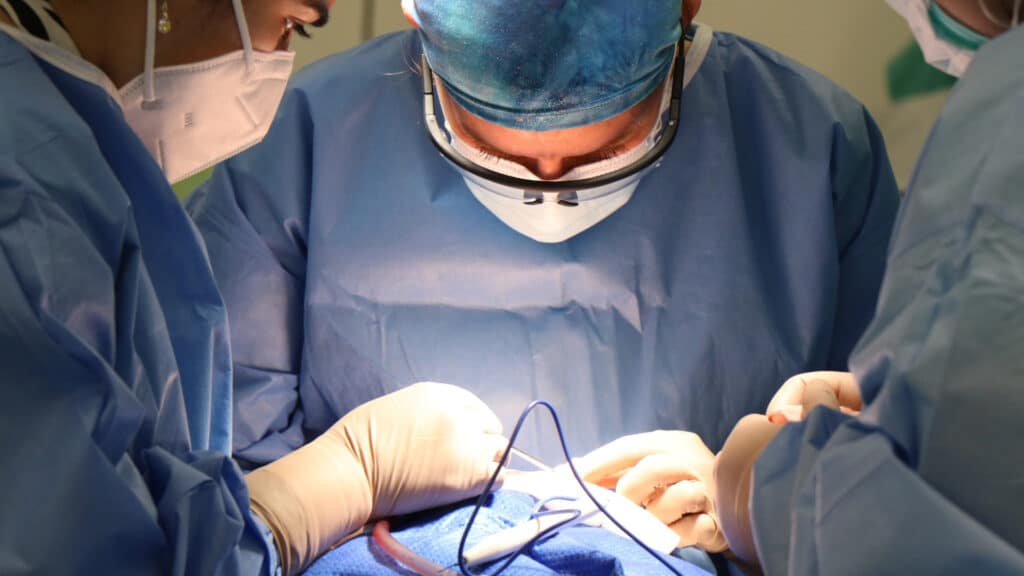
In cases of arterial thoracic outlet syndrome, surgical intervention is often necessary, which may include removing the scalene muscles, cervical rib, and first rib, along with potential reconstruction of the artery if it is compromised. Vascular surgery input may be needed for venoplasty, thrombolysis, anticoagulation, arterial repair, or bypass, and patients should understand how complications such as pneumothorax are also managed as part of comprehensive thoracic care, including pneumothorax treatment.
First rib resection, rib resection, scalenectomy, cervical rib removal, and thoracic outlet decompression aim to create more room for the nerves and blood vessels. Some elements of first rib resection and decompression surgery can be performed using minimally invasive or keyhole techniques by experienced thoracic surgeons such as Mr Marco Scarci, whose broader thoracic surgery practice in London includes advanced procedures for lung and chest conditions.
Published surgical series report high improvement rates in carefully selected patients. In one large series of first rib resections, symptom resolution or major improvement exceeded 90%, although pneumothorax and persistent symptoms remain recognised risks. Long-term studies also show that surgery usually aims to relieve symptoms and improve function rather than guarantee a complete cure.
Living With Thoracic Outlet Syndrome and When to Seek Help
TOS can affect work, sleep, driving, lifting, and sports, but many people return to active lives once symptoms are controlled. Useful habits include regular breaks from static desk posture, gentle shoulder and neck mobility, a healthy weight, ergonomic workstations, and avoiding prolonged shoulder elevation.
Seek medical care urgently if you develop:
- sudden severe arm swelling
- blue, pale, or mottled colour changes in the arm or hand
- new or intense weakness
- loss of hand function
- breathlessness
- chest pain
- cold, painful fingers that become white or mottled
These symptoms may indicate blood clots, reduced blood flow, arterial blockage, or other serious vascular complications requiring prompt assessment.
Consider specialist review if pain, numbness, weakness, abnormal sensations, or other symptoms persist despite physiotherapy and lifestyle change. Specialist review is also important when thoracic outlet syndrome diagnosed elsewhere remains uncertain, when patients suffering have mixed vascular and neurological symptoms, or when the previous assessments have not included a focused thoracic outlet evaluation.
Mr Marco Scarci, a leading thoracic surgeon, sees private patients for detailed assessment, discussion of minimally invasive thoracic surgery options, and close post‑operative follow‑up where surgery is indicated. Care is often multidisciplinary, involving vascular surgery, neurology, pain specialists, physiotherapy, and a specialist thoracic surgery team.
Want a specialist opinion on your condition?
Get a clear answer from a surgeon who will be with you throughout.
Frequently Asked Questions
Can thoracic outlet syndrome go away on its own?
Mild early neurogenic TOS related to posture, overuse, or repetitive motions can improve with rest, ergonomic changes, and targeted physical therapy. Symptoms lasting more than a few months, or interfering with work, sleep, or sport, should be assessed rather than simply watched. Vascular thoracic outlet syndrome is unlikely to resolve safely without medical review.
Is thoracic outlet syndrome dangerous?
Neurogenic TOS is usually not life-threatening, but it can become disabling if pain, weakness, and nerve compression are ignored. Venous and arterial TOS can be more serious because they may cause blood clots, pulmonary embolism, reduced blood supply, emboli, or tissue damage. Sudden swelling, severe pain, or dramatic colour change needs urgent assessment.
What is recovery like after the first rib resection?
Many patients spend 1–3 days in the hospital after the first rib resection, depending on the surgical approach and whether vascular reconstruction is needed. Shoulder and incision discomfort are expected for several weeks and usually improve with pain relief and physiotherapy. Desk work may resume within weeks, while heavy labour and high-level sport may take several months.
Can I still exercise if I have thoracic outlet syndrome?
Complete rest is rarely necessary. Most patients do best with modified activity that avoids provocative overhead loading, heavy upper body weights, or long static positions. Walking, cycling, and gentle conditioning are often possible, but an experienced physical therapist should tailor exercise for neurogenic thoracic outlet syndrome.
Should I see a thoracic surgeon or a neurologist first?
Many patients start with a GP, who can arrange initial tests and referral. If symptoms suggest vascular involvement or structural compression in the thoracic outlet, a consultant thoracic surgeon with TOS expertise may be the most appropriate lead specialist. Complex neurogenic cases may involve neurology, pain medicine, physiotherapy, and thoracic surgery working together.
