

Chest pain is one of the most alarming symptoms a person can experience. While many immediately think of their heart, a lesser-known condition called Tietze syndrome could be the real culprit.
This guide covers everything you need to know about this rare inflammatory condition, from its causes and symptoms to diagnosis, treatment, and when it makes sense to see a thoracic specialist.
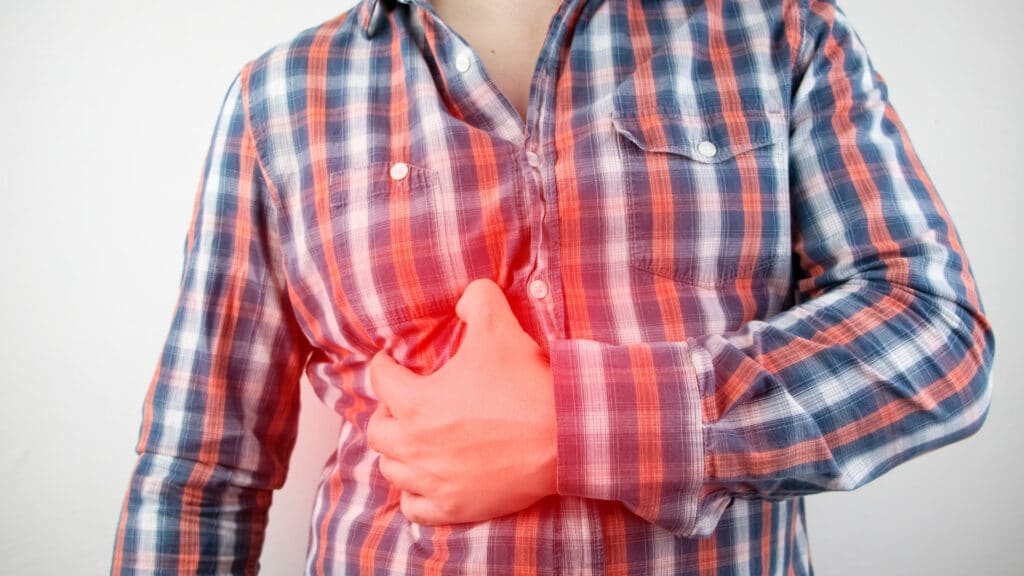
Tietze’s syndrome is a rare, benign inflammation of the costal cartilage of the upper ribs, causing localised chest pain and painful chest wall swelling.
Although symptoms can closely mimic heart disease, Tietze’s syndrome itself is not life-threatening, but it always needs proper medical assessment to exclude serious causes.
Diagnosis is mainly clinical and by exclusion, often supported by imaging tests to rule out cardiac, pulmonary, and chest wall tumours.
Most cases improve within a few weeks to a few months with rest, nonsteroidal anti-inflammatory drugs, and simple lifestyle adjustments.
For persistent or unclear pain, assessment by a thoracic specialist, such as Mr Marco Scarci in London, can confirm the diagnosis of Tietze syndrome and guide targeted treatment.
What Is Tietze’s Syndrome?
Tietze’s syndrome (sometimes called Tietze’s disease) is a rare inflammatory chest wall condition that causes pain and visible swelling where the upper ribs join the sternum (breastbone). It usually affects one costochondral/costosternal joint, most often the 2nd or 3rd rib on one side at the front of the chest, and it typically involves the top four ribs near the sternum.
It can affect men and women about equally and is most often seen in adults aged 20 to 50. The key feature that distinguishes it from costochondritis is the noticeable swelling: costochondritis can cause similar chest pain in the same area, but it doesn’t usually produce the firm, localised swelling typical of Tietze’s syndrome.
Tietze’s syndrome was first described in 1921 by the German surgeon Alexander Tietze and is recognised as a benign (non-cancerous) cause of chest wall pain. Even so, it remains relatively uncommon, and the exact cause still isn’t fully understood.
Want a specialist opinion on your condition?
Get a clear answer from a surgeon who will be with you throughout.
Causes and Risk Factors
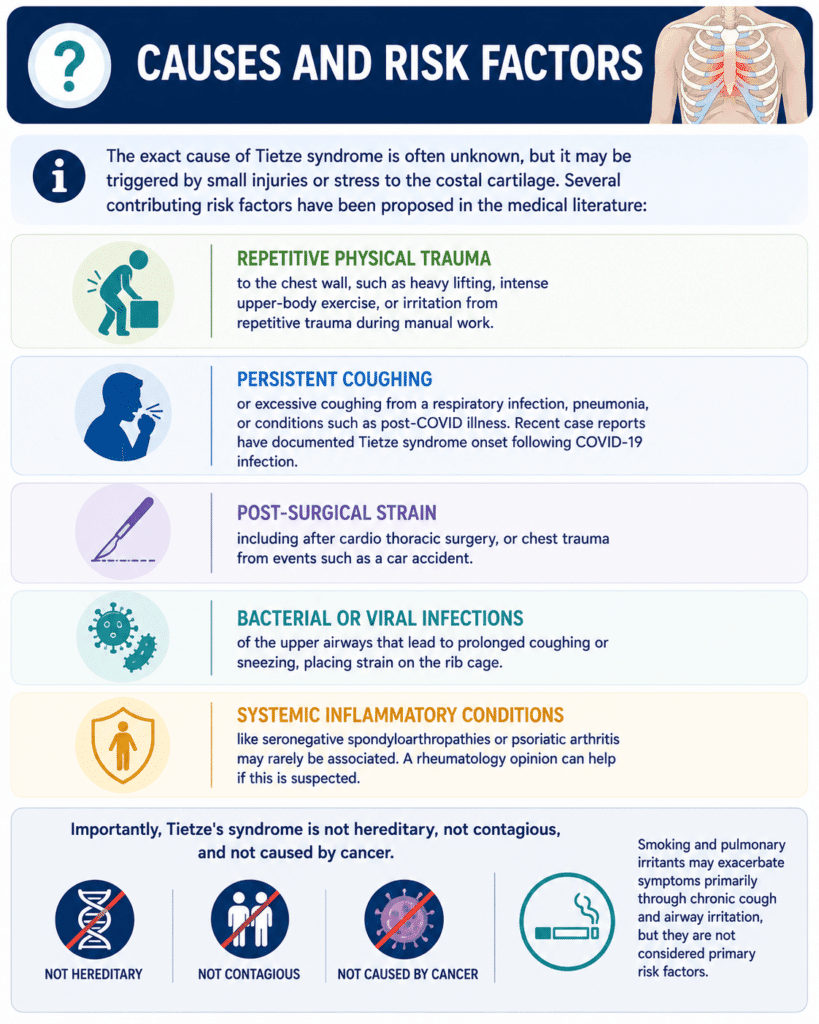
The exact cause of Tietze syndrome is often unknown, but it may be triggered by small injuries or stress to the costal cartilage. Several contributing risk factors have been proposed in the medical literature:
Repetitive physical trauma to the chest wall, such as heavy lifting, intense upper-body exercise, or irritation from repetitive trauma during manual work.
Persistent coughing or excessive coughing from a respiratory infection, pneumonia, or conditions such as post-COVID illness. Recent case reports have documented Tietze syndrome onset following COVID-19 infection.
Post-surgical strain, including after cardio-thoracic surgery, or chest trauma from events such as a car accident.
Bacterial infections or viral infections of the upper airways that lead to prolonged coughing or sneezing, placing strain on the rib cage.
Systemic inflammatory conditions like seronegative spondyloarthropathies or psoriatic arthritis may rarely be associated. A rheumatology opinion can help if this is suspected. Importantly, Tietze’s syndrome is not hereditary, not contagious, and not caused by cancer. Smoking and pulmonary irritants may exacerbate symptoms primarily through chronic cough and airway irritation, but they are not considered primary risk factors.
"I was diagnosed in March with a rare condition. My local hospital said it was inoperable due to the size of the mass. Mr Scarci reassured me the thymoma was resectable. I was booked for surgery the following week where he successfully removed the entire tumour."
Clinical Presentation and Symptoms of Painful Chest Wall Swelling
Tietze syndrome has a fairly recognisable pattern, although it can be painful and understandably worrying when it first appears. The most common symptom is localised pain over an upper costosternal (costochondral) joint, which is usually made worse by movement, deep breathing, coughing, or pressing on the area.
The pain may feel sharp, aching, or stabbing, and there is typically a tender, firm swelling over a single costal cartilage. This swelling is not infected (non‑suppurative) and most often affects the left 2nd or 3rd rib, sometimes feeling slightly warm to the touch.
Pain can occasionally radiate to the arm, shoulder, or neck. When symptoms are on the left side, they can closely mimic angina or a heart attack, which is a common reason people feel anxious and seek urgent reassurance.
Key symptoms to look out for
A firm, tender lump over one costochondral joint
Pain that worsens with twisting, reaching, coughing, or deep breathing
Sleep disruption, especially if you lie on the affected side
Anxiety, because the pain is in the chest and may feel “cardiac”
Systemic symptoms such as fever, unexplained weight loss, or shortness of breath are not typical of Tietze syndrome. If they’re present, they should prompt urgent assessment for other causes. Symptoms often come on over hours to days, can fluctuate, and in many people improve on their own within a few weeks.
Have a question about your diagnosis?
A consultation gives you a personalised plan — not a generic estimate.
Differential Diagnosis: Conditions That Can Mimic Tietze’s Syndrome
A differential diagnosis is the process of distinguishing Tietze syndrome from other conditions that could explain similar symptoms. This is essential because chest pain demands careful evaluation, and Tietze syndrome is often misdiagnosed as costochondritis or even cardiac disease.
Cardiac causes:
Myocardial infarction and unstable angina: central or left-sided pain, sometimes radiating to the jaw or arm, associated with sweating, nausea, or breathlessness. Any new chest pain with these features requires emergency assessment.
Musculoskeletal and chest wall conditions:
Costochondritis: similar musculoskeletal chest wall pain, but costochondritis does not cause swelling in affected joints. It often involves multiple ribs, and costochondritis affects individuals typically over 40, whereas Tietze syndrome more commonly presents in younger adults at a single joint.
Slipping rib syndrome: pain in the lower “false” ribs with a clicking or popping sensation.
Rib fractures or stress fractures: usually linked to physical trauma, osteoporosis, or intense coughing, and often identifiable on imaging.
Thoracic and systemic causes:
Intercostal neuralgia causes sharp pain around the ribs, often following surgery, trauma, or shingles (herpes zoster).
Chest wall tumours or neoplasms: progressive swelling, sometimes with night pain or weight loss.
Pulmonary embolism, pneumonia, or pleurisy: sharp chest pain with breathlessness requiring urgent investigation, which may lead to referral to a specialist chest clinic or uncover co-existing conditions such as pneumothorax.
The diagnosis of Tietze syndrome is therefore clinical and by exclusion. A thoracic or chest specialist can help avoid missing serious disease, especially when CT findings or other imaging raise questions about the thoracic area and warrant assessment by a thoracic surgeon.
"I had rib pain for 6 years, was bounced around NHS without diagnosis. I was recommended to Mr Scarci — at consultation within minutes he knew what the problem was. Was offered surgery date the next week. 2 weeks post surgery I am almost back to full health."
How Tietze’s Syndrome Is Diagnosed
There is no single definitive blood test for diagnosing Tietze syndrome. Instead, the process relies on a thorough medical history, physical examination, and investigations aimed at ruling out other causes of chest pain.
Clinical assessment:
Detailed history covering pain onset, location, triggers (such as physical activity, coughing, or deep breathing), and duration.
A focused physical examination to identify localised tenderness and swelling over a single costosternal joint. Diagnosis of Tietze syndrome typically involves a physical examination and imaging tests.
Investigations to exclude other conditions:
Test | Purpose |
|---|---|
ECG and cardiac markers | Rule out myocardial infarction or angina |
Chest x rays | Exclude lung disease, rib fractures, tumours |
Ultrasound | Detect cartilage thickening and inflammation at affected joints |
Computed tomography (CT) | Assess for chest wall masses or mediastinal disease |
Magnetic resonance imaging (MRI) | Evaluate affected cartilage, bone marrow changes, and exclude neoplasm |
Ultrasound can diagnose Tietze syndrome effectively by revealing hypoechoic foci and increased vascularity at the sternocostal joint. MRI studies have shown thickened costal cartilage with hyperintense signal on T2/STIR sequences, supporting the diagnosis and helping distinguish it from malignancy. |
A critical review of imaging and clinical findings is especially important when symptoms are atypical or prolonged. In UK practice, a GP or emergency department may initiate assessment, with onward referral to a thoracic surgeon appointment or rheumatologist for specialist input. Private pathways can offer rapid access to advanced imaging and expert opinion (Kim ES et al. have contributed to literature on chest wall conditions, and reference texts such as those published in Treasure Island provide useful summaries of the condition).
Not sure about your treatment options?
Mr Scarci provides expert consultations typically within one week of contact.
Treatment Options and Prognosis
Tietze syndrome is benign and self limiting in most cases, with an excellent long-term prognosis. The condition does not affect life expectancy, and treatment focuses primarily on helping patients relieve symptoms and reduce inflammation.
First-line, conservative management:
Rest and modification of activities that strain the chest wall. Patients should avoid strenuous activities for 1 to 2 weeks during the acute phase.
Nonsteroidal anti-inflammatory drugs such as ibuprofen are first-line medications to relieve pain and reduce inflammation.
Local measures include cold therapy or warm compresses and simple analgesics like paracetamol.
Second-line and interventional options:
Corticosteroid injections can reduce inflammation quickly when delivered to the costochondral joints under ultrasound guidance. A study of 28 patients showed that injections of triamcinolone hexacetonide with local anaesthetic produced statistically significant pain relief within one week.
Intercostal nerve blocks may be used in severe cases to relieve persistent pain, particularly for recurrent or refractory symptoms.
Surgery: Surgery is uncommon for Tietze syndrome cases and is only considered for refractory cases where all conservative and interventional measures have been exhausted. Surgical intervention involves resection of affected costal cartilages and sometimes the adjacent rib. Limited literature exists on surgical treatment for Tietze syndrome, reflecting how rarely it is needed.
Prognosis and timeline: Symptoms usually last an average of 1 to 2 weeks with appropriate treatment, and Tietze syndrome typically resolves within a few months. Many patients achieve full recovery with rest and NSAIDs alone. A minority may experience recurrent flares, sometimes needing repeated injections, but structural damage to the rib cage or surrounding organs is exceptionally rare.
Postoperative and Rehabilitation Considerations
Most individuals with Tietze syndrome never require surgery, but principles of chest wall rehabilitation apply to both non-operative patients and those recovering from thoracic procedures.
Practical self-care strategies:
Avoid heavy lifting, contact sports, and intense upper-body exercise until pain and swelling have settled.
Support the chest with a pillow during coughing or sneezing to reduce strain on healing cartilage.
Improve posture throughout the day to minimise compensatory strain on the costochondral joints.
Physiotherapy and breathing exercises play a valuable role in maintaining chest expansion, shoulder movement, and overall thoracic mobility without overloading the affected area. Gentle stretching and mobilisation of the shoulder girdle and thoracic spine can help prevent stiffness.

In complex cases, especially after cardio-thoracic surgery, rehabilitation may be guided by a multidisciplinary team including thoracic surgeons, physiotherapists, and pain specialists. Patients should seek review if they notice persisting or worsening swelling, new systemic symptoms, or pain that no longer responds to simple analgesia. This aftercare approach is particularly relevant for patients being followed by a thoracic surgeon such as Mr Marco Scarci at the Elstree Outpatients Centre.
Want a specialist opinion on your condition?
Get a clear answer from a surgeon who will be with you throughout.
When to See a Thoracic Specialist
Any new, severe, or unexplained chest pain should first be assessed as potentially cardiac or pulmonary until proven otherwise. Once emergency causes have been excluded, there are specific situations where referral to a thoracic specialist is appropriate:
Persistent pain and swelling despite several weeks of conservative treatment
Recurring episodes affecting quality of life, work, or physical activity
An unclear diagnosis after initial tests, particularly when imaging reveals chest wall abnormalities
Suspicion of co-existing thoracic conditions such as chest wall tumours, recurrent pneumothorax, or rib cage deformities
A specialist such as Mr Marco Scarci can offer a comprehensive thoracic assessment including advanced imaging and diagnostic procedures, expert differentiation between Tietze syndrome and more serious chest, lung, or pleural diseases, and access to minimally invasive or keyhole interventions where indicated for a wide range of thoracic conditions. Both private and NHS pathways are available in London, with face-to-face and virtual consultations for UK and international patients who may benefit from private thoracic surgery. Your healthcare provider can arrange a referral, or you can contact Mr Scarci’s practice directly.
Early specialist input can shorten the time to a confirmed diagnosis, reduce anxiety, and help you return to normal life with confidence, as reflected in many patient testimonials.
Frequently Asked Questions
Can Tietze’s syndrome turn into cancer or cause long-term damage?
Tietze’s syndrome is a benign inflammatory condition and does not turn into cancer or damage the heart or lungs. The priority is ruling out serious causes of chest pain; once confirmed, long-term chest wall damage is uncommon, although mild cartilage thickening can rarely persist with little effect on function.
Is Tietze’s syndrome the same as costochondritis?
Tietze’s syndrome and costochondritis are similar causes of chest wall pain, but they aren’t the same. Tietze’s usually affects one joint and causes visible, localised swelling, while costochondritis more often involves several ribs and typically doesn’t cause noticeable swelling; a clinician can confirm the diagnosis after examination and, if needed, imaging.
Can exercise or work make Tietze’s syndrome worse?
Heavy lifting, vigorous upper-body exercise, and repetitive chest-straining movements can worsen symptoms or trigger flare-ups. It’s usually best to scale these back during painful periods and reintroduce them gradually as symptoms settle, while keeping up low-impact activity like walking or gentle cycling to maintain fitness.
Will Tietze’s syndrome come back after it has settled?
Many patients experience only a single episode that fully resolves with conservative treatment. However, a minority may have intermittent recurrences over months or years. These are often linked to renewed strain, infection, or persistent coughing and usually respond well to the same treatments. If episodes become more frequent or behave differently from previous flares, seek a specialist review.
Can I be treated for Tietze’s syndrome through a virtual consultation?
An initial evaluation, review of symptoms, and discussion of previous test results can often be carried out via secure video consultation, which is especially useful for follow-up or second opinions. However, a physical examination remains important for confirming localised tenderness and swelling, so at least one in-person assessment is usually recommended. Mr Marco Scarci offers both virtual and face-to-face consultations in London, providing flexible options for assessment and ongoing management.
