

Fractured ribs can make sleep difficult, as breathing and movement can trigger pain. Most rib injuries heal well at home with the right support. This guide explains sleeping positions, pain relief, breathing exercises and pillow strategies to help you rest safely.
For the first one to two weeks, sleep semi-reclined at a 30 to 45 degree angle using a wedge pillow or recliner. This reduces pressure on the rib cage and diaphragm.
Take pain relief around 30 minutes before bed so it is working when you lie down.
Take deep breaths before bed and every 2 to 3 hours while awake to reduce the risk of chest infections and pneumonia.
Seek urgent medical advice for worsening pain after day three to five, breathlessness, fever, coughing blood or rapid shallow breathing.
For complex injuries, multiple fractures or persistent sleep problems, Mr Marco Scarci, a consultant thoracic surgeon in London, can provide specialist assessment.
Understanding Rib Injuries and Why Sleep Hurts So Much
Rib injuries range from bruising, where the bone remains intact, to hairline cracks, single fractures, multiple fractures and flail chest, where three or more ribs break in two places. Recognising the symptoms of a broken rib and knowing when to seek expert advice is important for a safe recovery.
Common causes include falls, cycling crashes, sports injuries, car accidents and severe coughing. Winter slips and falls are also a frequent cause of rib fracture symptoms and treatment needs.
Every breath moves the rib cage. The muscles between the ribs contract with each inhalation and exhalation, so an injured rib can hurt when you breathe, cough, laugh or turn in bed.
Typical healing timescales are:
Injury type | Significant pain phase | Full healing |
Bruised ribs | 2–3 weeks | 3–4 weeks |
Single uncomplicated fracture | 4–6 weeks | 6–8 weeks |
Multiple or displaced fractures | 6–8+ weeks | 8–12+ weeks |
Straightforward rib fractures often heal within two to six weeks. Most otherwise healthy adults are managed without surgery. While regular care for fractured ribs exists, complex or displaced fractures may need specialist review.
Want a specialist opinion on your condition?
Get a clear answer from a surgeon who will be with you throughout.
How Breathing Mechanics Change When You Lie Down
When you sit or stand, gravity allows the abdominal organs to move downwards, giving the diaphragm more room to move. Breathing may therefore feel more manageable.
When you lie flat, the abdominal contents press upwards against the diaphragm. The chest wall has to work harder, increasing movement around the injury. Sleeping elevated can reduce this pressure and make breathing easier.
It is common to take shallow breaths to avoid pain. However, shallow breathing can contribute to pneumonia after rib fractures. Under-expanded areas of the lung can collapse slightly, while mucus may collect in the airways. In older adults with rib fractures, pneumonia develops in roughly 30 to 35 per cent of cases, so breathing exercises matter.
Best Sleeping Positions for Broken or Bruised Ribs
There is no single ideal position, but some positions reduce pain and night-time waking. Your needs may change as the injury heals.
Semi-reclined on the back (30–45°)
This is usually the best starting position for the first seven to ten days. Use a wedge pillow, firm pillows or an adjustable bed. Support your knees as well to reduce strain on the lower back.
Recliner chair
A recliner can be helpful, particularly with multiple fractures. It reduces twisting when getting in and out and lets you adjust your position gradually.
Sleeping on the injured side
Once pain allows, often after the first week, some people find this more comfortable. The mattress can gently splint the ribs and limit movement during breathing. This may suit non-displaced fractures.
Sleeping on the uninjured side
This can increase movement on the painful side as gravity pulls on the injured ribs. Avoid it if you have severe pain or multiple fractures. With mild bruising, it may be comfortable with good pillow support.
Your preferred position may change during the six- to eight-week healing period. This is particularly true if you have had thoracic surgery and need specific sleep guidance.
Have a question about your diagnosis?
A consultation gives you a personalised plan — not a generic estimate.
Positions to Avoid and Why They Make Rib Pain Worse
Some positions commonly worsen pain or restrict breathing.
Lying completely flat on the back: This can make breathing more effortful and increase discomfort in the early stages.
Stomach sleeping: Sleeping on your front compresses the chest wall, limits lung expansion and is usually painful.
Uncontrolled side sleeping on the uninjured side: Without support, the injured ribs can move more with each breath.
Frequent tossing and turning: Repeated movement can aggravate the injury. Aim for a stable, supported position.
Using Pillows and Equipment to Reduce Night-Time Rib Pain
Use pillows to keep your body stable and protect the injured area. A wedge pillow can elevate your upper body by 30 to 45 degrees, with a soft pillow on top for added comfort.
Place a body pillow along your back or in front of you to help prevent rolling. A pillow between your knees can reduce spinal twisting, which may otherwise pull on the chest wall.
When changing position, coughing, or sneezing, hold a hug pillow or folded towel firmly against the painful area for support.
Choose light blankets, as heavy bedding can put uncomfortable pressure on the chest. If you have multiple fractures or have recently had thoracic surgery, a bed rail or ladder grip may help you get in and out of bed more safely.
Timing and Types of Pain Relief Before Bed
Take pain relief 30 to 45 minutes before bed so it is working when you lie down.
Common over-the-counter options:
Paracetamol for baseline pain relief;
Ibuprofen for pain and inflammation;
Alternating paracetamol and ibuprofen may provide broader relief.
Follow the maximum daily dose. Avoid ibuprofen if you have certain stomach, kidney or heart conditions. Ask a GP or pharmacist if you are unsure. More severe fractures may require prescription pain relief, which should be reviewed if it causes drowsiness, constipation or confusion.
Local measures:
Apply an ice pack wrapped in a cloth for 10 to 20 minutes during the first 48 to 72 hours.
After three to four days, gentle heat from a wrapped hot water bottle or wheat pack may help if the area is no longer warm or swollen.
Do not tightly strap or bandage the chest overnight. This can restrict breathing. A rib belt should only be used if specifically recommended by a thoracic surgeon.
"I had rib pain for 6 years, was bounced around NHS without diagnosis. I was recommended to Mr Scarci — at consultation within minutes he knew what the problem was. Was offered surgery date the next week. 2 weeks post surgery I am almost back to full health."
Deep Breathing Exercises and Cough Support to Prevent Chest Infection

Pain can make people avoid deep breaths, but this can lead to mucus build-up, chest infection and pneumonia. It may also increase the risk of serious broken rib complications such as pneumothorax or flail chest.
Simple breathing routine:
Take ten deep breaths every two to three hours while awake and once before sleep:
Sit as upright as possible.
Breathe in slowly through your nose.
Hold for two to three seconds.
Breathe out slowly through your mouth.
Repeat ten times.
Hold a small pillow or folded towel against the painful side while breathing deeply. This can reduce movement and discomfort.
An incentive spirometer may be provided after thoracic surgery or multiple fractures. Follow the instructions given by your hospital.
Controlled coughing technique:
Sit upright, hold a pillow firmly against the ribs, take a deep breath and cough once or twice firmly. Rest between attempts rather than repeatedly coughing shallowly.
Early signs of chest infection:
A new or worsening cough with yellow or green mucus, fever or chills, feeling unwell and increasing pain when breathing. Clear mucus can be normal, but green mucus with fever needs medical advice.
Not sure about your treatment options?
Mr Scarci provides expert consultations typically within one week of contact.
Getting In and Out of Bed With Minimal Rib Pain
Getting in and out of bed can be more painful than lying still, as the core and rib muscles pull on the injury.
Step-by-step technique:
Sit on the edge of the bed.
Hold the injured ribs, or brace them with a pillow.
Use your other arm for support on the mattress.
Lower your upper body towards the pillows while lifting both legs together.
Avoid twisting.
A bed rail or sturdy headboard can help you sit up without a painful sit-up movement.
If you have had thoracic surgery or multiple fractures, follow the specific mobilisation advice provided by your clinical team.
Monitoring Pain, Healing, and When to Seek Medical Help
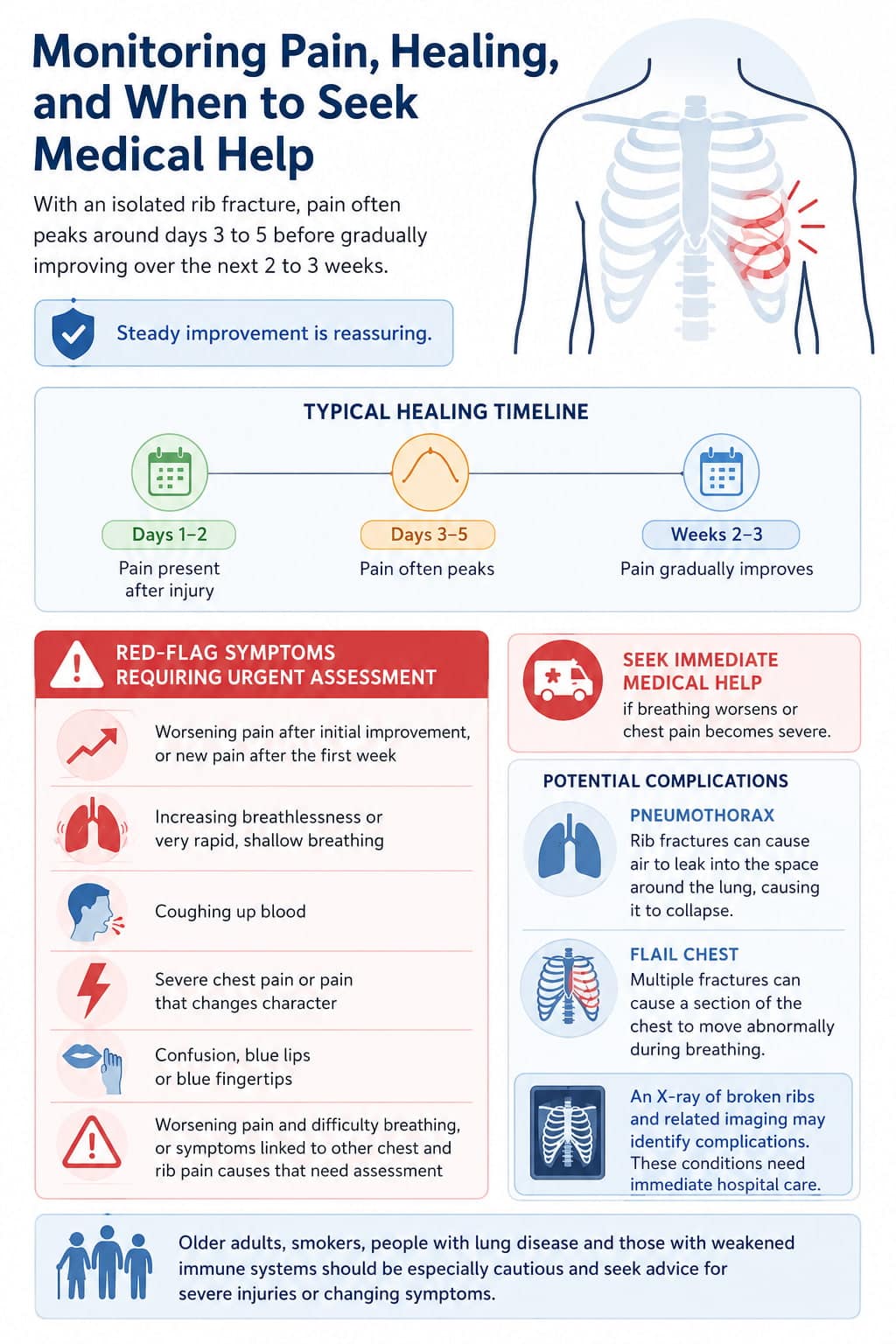
With an isolated rib fracture, pain often peaks around days 3 to 5 before gradually improving over the next 2 to 3 weeks. Steady improvement is reassuring.
Red-flag symptoms requiring urgent assessment:
Worsening pain after initial improvement, or new pain after the first week
Increasing breathlessness or very rapid, shallow breathing
Coughing up blood
Severe chest pain or pain that changes character
Confusion, blue lips or blue fingertips
Worsening pain and difficulty breathing, or symptoms linked to other chest and rib pain causes that need assessment
Seek immediate medical help if breathing worsens or chest pain becomes severe. Rib fractures can cause pneumothorax, while multiple fractures can cause flail chest, where part of the chest moves abnormally during breathing. An X-ray of broken ribs and related imaging may identify complications. These conditions need immediate hospital care.
Older adults, smokers, people with lung disease and those with weakened immune systems should be especially cautious and seek advice for severe injuries or changing symptoms.
Want a specialist opinion on your condition?
Get a clear answer from a surgeon who will be with you throughout.
When Specialist Thoracic Surgical Input May Be Needed
Most rib injuries heal without surgery. Specialist review may be appropriate for multiple displaced fractures, flail chest, associated lung or chest wall injuries, or disabling pain lasting beyond six to eight weeks. A referral to a thoracic surgeon may be recommended in these situations.
In selected cases, surgical rib fixation can stabilise the chest wall, reduce pain and improve breathing. Minimally invasive procedures, including VATS, may also treat associated problems such as pneumothorax or retained blood.
Mr Marco Scarci, a reputable London-based consultant thoracic surgeon, can assess your history, imaging, pain and breathing difficulties, including sleep disruption. If pain remains severe at night despite simple measures, or you have been told that your fractures are complex, seek specialist advice.
Living With Rib Pain at Night: Practical Tips and Recovery Expectations
Nights can be the hardest part of recovering from a rib injury, but sleep usually improves gradually over several weeks.
Practical tips:
Avoid smoking to reduce the risk of chest infection.
Stay well hydrated.
Keep daytime activity gentle but regular.
Expect some morning stiffness and increased pain after sleep, which often eases within 30 to 60 minutes.
Avoid complete bed rest. Short walks and gentle upper-body movement, as pain allows, can prevent stiffness. Follow GP or surgical advice where relevant.
Bruised ribs may feel much better within two to three weeks. More significant fractures often take six to eight weeks to heal, though occasional twinges with deep breaths or strong coughing can last longer. Remember, though, that broken ribs still have long-term effects.
Good sleep, adequate pain relief, deep breathing and timely medical review are the foundations of recovery. If symptoms do not improve as expected, Mr Marco Scarci can offer specialist advice.
Have a question about your diagnosis?
A consultation gives you a personalised plan — not a generic estimate.
Frequently Asked Questions
Is it better to sleep on the broken rib side or the uninjured side?
A semi-reclined position is often most comfortable for the first few days. As pain settles, lying on the injured side may reduce rib movement and discomfort. Follow your surgeon’s advice for multiple fractures, flail chest or recent surgery.
How long will I need to sleep propped up after a rib fracture?
Most people need an elevated position for one to two weeks. This may take longer with multiple fractures or surgery. Gradually lower the incline as deep breathing and movement become more comfortable.
Can I use a rib belt or tight bandage at night to help me sleep?
Tight chest wrapping is generally avoided because it can restrict breathing and increase the risk of complications. Don’t use a rigid rib belt at night unless your clinician specifically recommends it.
When can I go back to work and drive after a rib injury if I still cannot sleep well?
It depends on your injury, work and ability to make emergency movements without severe pain. Desk work may be possible within one to two weeks after a simple fracture, while manual work and driving may take longer. Ask your clinician when it is safe to return.
Should I worry if my rib pain feels worse at night than during the day?
Night-time pain is common because you move less and have fewer distractions. If it is gradually improving, it is usually part of the healing process. Seek advice if pain suddenly worsens or occurs with fever, breathlessness or coughing blood.
