

If you have been told that lung surgery may be needed, the question most patients ask first is whether it can be done through keyhole. For many patients, it can, and the results are excellent.
Keyhole lung surgery or video-assisted thoracoscopic surgery (VATS) is best suited to small, early-stage lung cancer and selected benign chest conditions such as persistent pneumothorax or suspicious nodules.
Ideal candidates have localised disease, good lung and heart function and limited serious medical problems, though experienced surgeons can sometimes offer VATS to higher-risk patients.
Compared with open surgery, VATS offers less pain, a shorter hospital stay (most patients are home within one to four days), faster return to normal life and smaller scars.
Lung cancer surgery can achieve an 85 to 90% cure rate for stage I disease when the tumour is removed completely, making early detection and prompt surgical assessment critical.
Not everyone is suitable: large or central tumours, extensive lymph node involvement or very poor lung function may require open surgery or non-surgical treatment.
What Is Lung Keyhole Surgery and Who Is It For?
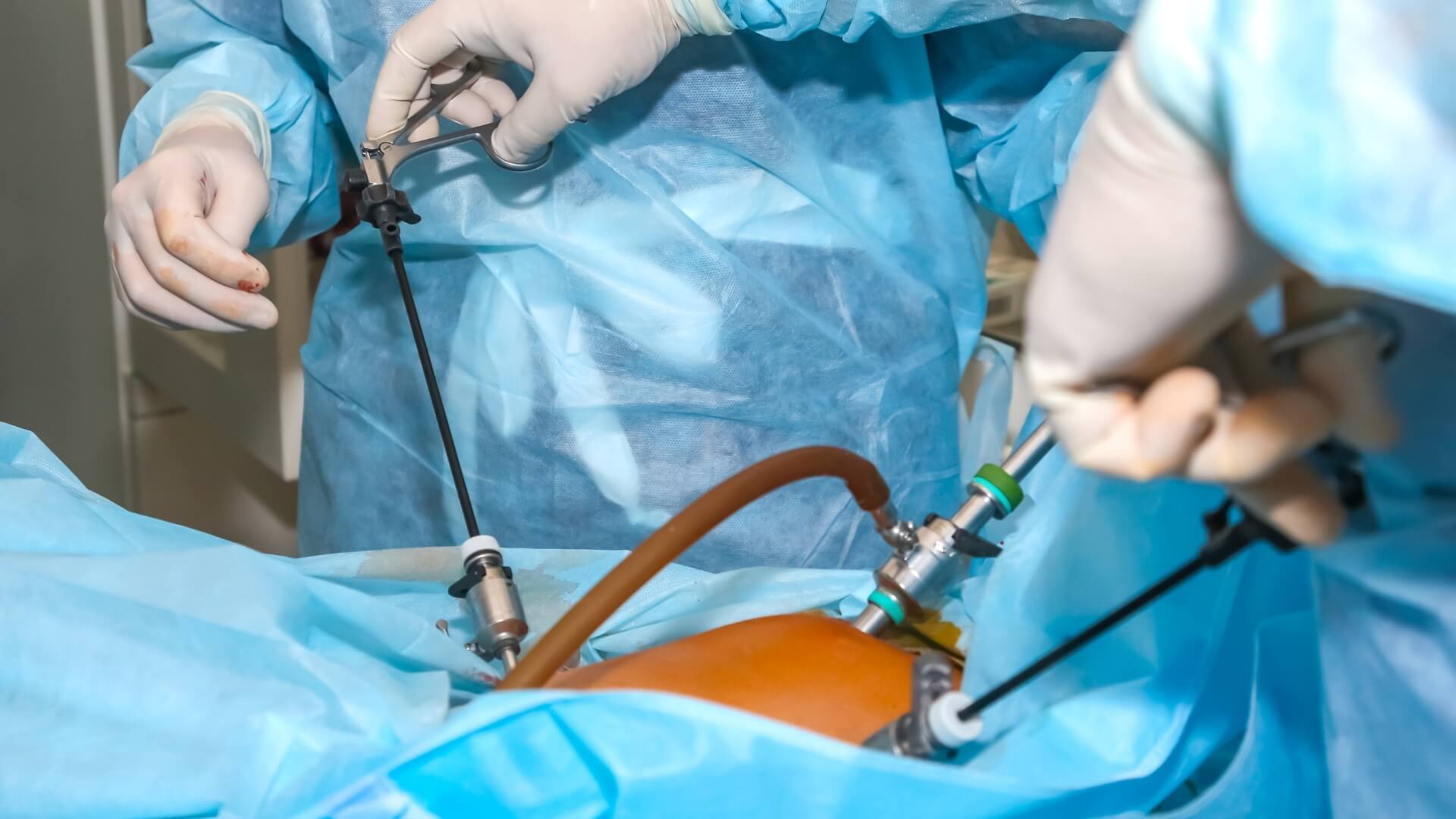
Keyhole lung surgery uses one to three small incisions between the ribs rather than a large chest opening. The two main techniques are video-assisted thoracoscopic surgery (VATS) and robotic-assisted thoracic surgery. Both allow the surgeon to operate using a camera and specialised instruments under general anaesthetic, with significantly less trauma to muscle, rib and skin than open surgery.
Compared with traditional thoracotomy, keyhole techniques are associated with lower complication rates, reduced pain and quicker discharge. VATS is considered the gold standard for early-stage lung conditions. Suitability is individual, however, and a thorough assessment by an experienced thoracic surgeon is essential before any decision is made.
Who Is the Best Candidate for Lung Keyhole Surgery?
The ideal candidate has a small, localised tumour or limited disease, typically confined to one lobe, with no or minimal spread to nearby lymph nodes. Good cardiovascular and pulmonary fitness is important, as is the absence of dense scar tissue or adhesions in the chest from previous surgery or infection.
Cancer stage is the single biggest factor in determining whether keyhole surgery is feasible. Patients with early-stage lung cancer, typically stage I and selected stage II disease, are most likely to benefit from VATS with curative intent. Lung cancer surgery can achieve an 85 to 90% cure rate for stage I, and surgery is often combined with chemotherapy for stage II to reduce the risk of recurrence.
Tumour features that favour a VATS or robotic approach include:
Size under three to four centimetres
Peripheral location, away from the hilum and major vessels
No invasion of the chest wall, vertebrae or large blood vessels
Minimal or no involvement of nearby lymph nodes
CT and PET scans assess tumour size and location before surgery, while endobronchial ultrasound (EBUS) is used to stage lymph nodes. More advanced cancers with bulky central disease or extensive nodal involvement may require open surgery or combined treatment with chemotherapy or radiotherapy before any operation. Small cell lung cancer is generally treated with chemotherapy and radiotherapy rather than surgery, though selected early cases may occasionally be considered.
Selected patients with small benign nodules, persistent pneumothorax or other thoracic conditions may also be candidates for surgery. These criteria are not absolute. Patients who do not meet every ideal characteristic may still be considered, particularly at specialist centres experienced in managing complex thoracic cases.
"After two years of being told my symptoms were anxiety, Mr Scarci identified the problem immediately. The surgery was straightforward and I was discharged after three days. I only wish I had found him sooner."
Types of Lung Operations Commonly Done via Keyhole
Several types of lung operation can be performed using keyhole techniques. The choice depends on tumour size, location, lung function and overall health.
Operation | What It Involves | Typical Indication |
Wedge resection | Removes a small wedge-shaped area of lung | Very small peripheral tumours or diagnostic biopsy |
Segmentectomy | Removes a segment of lung tissue | Tumours ≤2 cm in suitable locations; patients needing lung preservation |
Lobectomy | Removes one lobe of the lung | Standard for most early non-small cell lung cancers >2 cm |
Sleeve resection | Removes part of the airway and a lobe | Selected central tumours where the airway can be reconstructed |
Lobectomy remains the standard for many early non-small cell lung cancers, but newer evidence supports lung-sparing operations such as segmentectomy for very small tumours in suitable candidates. Wedge resection is often reserved for patients with limited lung reserve who cannot tolerate a larger resection.
Pneumonectomy (removal of the entire lung) is rarely performed by keyhole and is reserved for specific advanced cases where no lesser operation would achieve complete cancer clearance.
Have a question about your diagnosis?
A consultation gives you a personalised plan — not a generic estimate.
Assessing Lung and Heart Function Before Keyhole Surgery
Even with a minimally invasive approach, thorough pre-operative assessment is essential to confirm that the lungs and heart can safely tolerate having lung tissue removed and cope with single-lung ventilation during the operation.
Pulmonary function testing (PFT) measures forced expiratory volume (FEV1) and diffusing capacity (DLCO). Greater Manchester Cancer lung cancer surgery guidelines recommend pre-operative assessment of lung function, including predicted post-operative FEV1 and TLCO (DLCO), when considering lung resection. The guideline uses predicted post-operative values of 30% or above as part of the assessment of surgical fitness, alongside exercise capacity and the person’s overall clinical condition. Cardiovascular risk is assessed using ECGs or formal cardiac stress tests, and cardiology review with echocardiogram may be arranged where concerns exist.
Functional exercise testing such as a six-minute walk test or cardiopulmonary exercise testing helps quantify fitness. A shuttle walk above 400 metres or a VO₂ max above 15 ml/kg/min signals adequate reserve. Routine blood tests and a chest X-ray complete the work-up, and results are reviewed in a multidisciplinary team meeting bringing together radiology, oncology and anaesthetic expertise.
"Dr. Marco Scarci is a deeply knowledgeable, open-minded, and empathetic surgeon. He listens to details and solves problems to truly deliver the most optimal results. As a medical professional myself, I can tell you that finding a specialist like Dr. Scarci is very rare, and it is a privilege to have him in my corner."
Other Health Factors That Influence Suitability
Age alone is not a barrier. Fit patients in their 70s or 80s can still be strong candidates provided cardiopulmonary reserve is adequate.
Common co-morbidities and their impact:
COPD: Mild to moderate COPD does not automatically exclude keyhole surgery. Severely reduced FEV1 and DLCO (both below 30% predicted) raise risk considerably and may favour a smaller resection or non-surgical options.
Heart disease: Well-controlled conditions are usually manageable. Uncontrolled heart failure or a heart attack within the previous 30 days is a contraindication to major lung surgery.
Diabetes and obesity: These increase anaesthetic and wound-healing risk but are not absolute barriers. A minimally invasive approach can actually aid recovery in heavier patients.
Previous stroke or blood thinners: Honest discussion of medications and blood flow concerns allows the team to modify anaesthesia and surgical strategy safely.
Smoking status matters significantly. Stopping smoking several weeks before surgery lowers the risk of chest infections, poor wound healing and cardiovascular events. Being unsuitable for VATS does not exclude other options, including stereotactic radiotherapy or alternative surgical procedures.
Want a specialist opinion on your condition?
Get a clear answer from a surgeon who will be with you throughout.
How Keyhole Lung Surgery Is Performed (VATS and Robotic)
On the day of surgery, you are admitted having stopped eating and drinking from the night before, with a consent form already signed during your pre-operative visit. Under general anaesthetic, in video-assisted thoracoscopic surgery (VATS), the surgeon makes one to three small incisions, typically 1 to 4 cm each, between the ribs, through which a camera and specialised surgical tools are inserted. The lung on the operative side is gently deflated so the surgeon can see clearly, and the diseased lung tissue along with nearby lymph nodes are removed through a small incision.
In robotic-assisted thoracic surgery, the surgeon sits at a console and controls robotic arms holding the camera and instruments, providing a magnified three-dimensional view that enhances precision in complex cases. Both VATS and robotic surgery avoid the rib spreading used in open thoracotomy, which is the main source of post-operative pain in traditional approaches.
After surgery, a chest drain is placed to remove air and fluid, and most patients begin walking and practising breathing exercises the same day or the morning after surgery.
Benefits of Keyhole Surgery Compared With Open Thoracotomy
The evidence consistently favours keyhole techniques for appropriately selected patients.
Key benefits include:
Less pain: Minimally invasive surgery significantly reduces post-operative pain. Pain control typically involves nerve blocks, patient-controlled analgesia and oral painkillers rather than heavy opioid regimes.
Shorter hospital stay: Most patients are home within one to two days after smaller resections and one to four days after lobectomy.
Faster recovery: Most patients return to light work by week two and resume normal activities within weeks.
Cosmetic advantage: Scars of 3 to 5 cm sit under the arm or below the shoulder blade rather than across the whole chest.
Lower complication risk: Better early mobility lowers the risk of chest infections and blood clots.
Cancer control is comparable to open surgery in appropriately selected cases. A recent individual-patient meta-analysis found that VATS lobectomy delivered a 21% relative reduction in mortality compared with thoracotomy, with equivalent disease-free survival.
Your Journey: From Initial Consultation to Recovery

The typical pathway begins with a referral or self-referral and an initial consultation (face-to-face or virtual), where scans, breathing tests, blood tests and overall health are reviewed in detail.
Pre-operative optimisation may include:
Support to stop smoking
Prehabilitation breathing exercises and physical conditioning
Nutritional advice and medication adjustment
Additional imaging such as a repeat chest X-ray or PET scan
Immediately after surgery:
You wake in the recovery room before being transferred to a recovery unit or high dependency unit
A chest drain stays in place until any air leak resolves and fluid drainage slows
Pain control involves nerve blocks, patient-controlled analgesia and regular oral painkillers
You are encouraged to take deep breaths, practise breathing exercises and walk as early as possible
Recovery timeline:
Most patients are home within one to four days after surgery
Energy levels improve gradually over the first few weeks; some breathlessness in this period is normal
A follow-up appointment reviews pathology results, removes any remaining sutures and plans further treatment if needed
How Mr Marco Scarci Assesses and Optimises Candidates
Mr Marco Scarci is a consultant thoracic surgeon in London specialising in uniportal VATS and robotic-assisted thoracic surgery, allowing many patients, including complex or higher-risk cases, to benefit from minimally invasive approaches. All potential surgical candidates undergo multidisciplinary review combining radiology, oncology and anaesthetic input to confirm the safest and most effective plan.
Patients based in the UK or internationally are welcome to seek a second opinion or an expedited private consultation in London. If you have been told that only open surgery is possible, or simply want to know whether you are a suitable candidate for keyhole lung surgery, Mr Scarci can review your scans and tests and provide a personalised recommendation.
FAQ
Can I have keyhole lung surgery if I still smoke?
Active smoking increases the risk of chest infections, poor wound healing and heart complications. Stopping several weeks before surgery significantly improves safety. Current smokers are not automatically excluded, but surgery may be briefly delayed to allow optimisation. Complete cessation is the goal.
Is keyhole surgery possible if I have already had radiotherapy to my chest?
Previous chest radiotherapy can cause scarring that makes thoracoscopic surgery more technically challenging. An experienced thoracic surgeon can often still perform VATS or robotic surgery in selected patients, though the likelihood of conversion to open thoracotomy is higher. Individual assessment with detailed imaging review is essential.
What if I have severe COPD or very poor lung function?
Severely reduced lung function limits how much tissue can safely be removed. When both FEV1 and DLCO fall significantly below 30% of predicted, the risk of serious post-operative breathlessness rises substantially. Smaller operations such as wedge resection, or non-surgical options such as stereotactic radiotherapy, may be considered instead.
Are there weight limits for keyhole lung surgery?
Obesity does not automatically exclude keyhole lung surgery. Higher BMI increases anaesthetic risk and can make surgery more demanding technically, but a minimally invasive approach can actually aid recovery in heavier patients. Gradual weight optimisation before elective surgery is encouraged where time allows.
Can I request keyhole surgery even if my local hospital only offers open surgery?
Not all centres have the experience or equipment for advanced VATS or robotic surgery. You have every right to seek a second opinion with a specialist keyhole thoracic surgeon. After reviewing your scans and tests, some patients may be offered a minimally invasive option, while others will still be advised to have open surgery for safety and oncological reasons.
