

Being told that surgery is not an option for your lung cancer is understandably frightening. But “no surgery” does not mean “no treatment,” and it certainly does not mean “no hope.”
This article explains exactly when and why lung cancer may be considered inoperable, what that means for your care, and the range of effective non-surgical treatments now available in the UK and beyond.
- “No surgery lung cancer” usually means surgery isn’t possible or is too risky, but treatments like chemotherapy and radiation therapy may still be available.
- Non-surgical lung cancer treatments include radiotherapy options such as SABR/SBRT, drug treatments like chemotherapy, targeted therapy or immunotherapy, and other approaches such as laser therapy or bronchoscopic treatments. In some early-stage cases, they may offer a chance of cure, depending on the cancer’s characteristics.
- Inoperable lung cancer can still be treated. Modern therapies may improve survival, quality of life, and sometimes long-term disease control.
- Treatment depends on stage, cancer type, spread, lung and heart function, and overall health.
- Mr Marco Scarci, a London-based consultant thoracic surgeon, advises on surgical suitability and helps coordinate non-surgical care through MDT discussions.
What Does “No Surgery Lung Cancer” Mean?
“No surgery lung cancer” describes situations where lung cancer is either inoperable or where lung surgery would carry unacceptable risks for the patient. It is important to understand these two closely related but distinct terms: “Unresectable” means the tumour cannot be fully or safely removed by a surgical procedure, often because of its location or extent, while “Inoperable” means the patient cannot safely undergo surgery, usually because of poor lung function, heart disease, or frailty. In practice, these often overlap, but someone with a technically resectable tumour can still be medically inoperable.
Lung cancer surgery may involve removing part or all of a lung. This ranges from a wedge resection (a small piece of lung tissue) to removal of a lobe of the lung (lobectomy) or the entire lung (pneumonectomy). When a patient cannot tolerate any of these, the cancer is managed without a surgical procedure.
The distinction matters across cancer types. Non-small cell lung cancer (NSCLC) makes up approximately 80% of lung cancer cases, and surgery is a main treatment for non-small-cell lung cancer when caught early. Small cell lung cancer (SCLC) accounts for 10–15% of cases and is almost always treated without surgery because cancer cells spread early. Even when lung cancer is classified as “no surgery,” it can often be treated with radiotherapy, systemic drugs, and bronchoscopic procedures, with the goal of cure in early stages or disease control in more advanced stages.
Consider, for example, an older patient with severe COPD whose predicted lung function after removing a lobe would leave them dangerously breathless. That patient’s early-stage tumour might be perfectly treatable with stereotactic body radiation therapy, potentially achieving similar outcomes to surgery.
Want a specialist opinion on your condition?
Get a clear answer from a surgeon who will be with you throughout.
When Is Lung Cancer Not Operable?
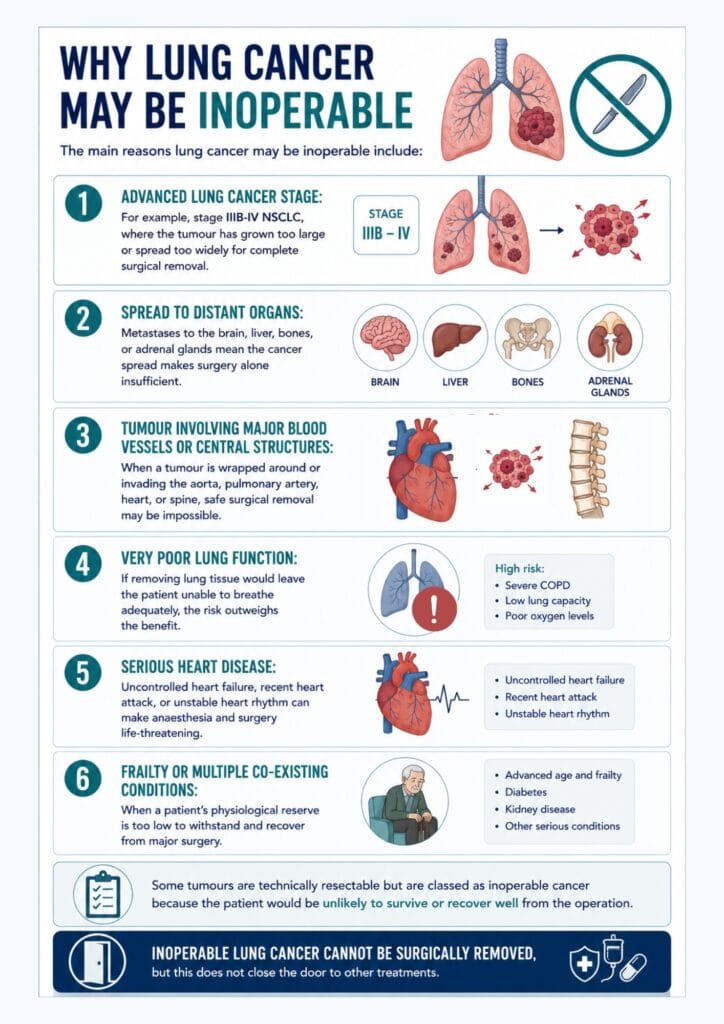
Being told your cancer is “inoperable” is based on precise clinical criteria rather than age alone.
The main reasons lung cancer may be inoperable include:
Advanced lung cancer stage: For example, stage IIIB-IV NSCLC, where the tumour has grown too large or spread too widely for complete surgical removal.
Spread to distant organs: Metastases to the brain, liver, bones, or adrenal glands mean the cancer spread makes surgery alone insufficient.
Tumour involving major blood vessels or central structures: When a tumour is wrapped around or invading the aorta, pulmonary artery, heart, or spine, safe surgical removal may be impossible.
Very poor lung function: If removing lung tissue would leave the patient unable to breathe adequately, the risk outweighs the benefit.
Serious heart disease: Uncontrolled heart failure, recent heart attack, or unstable heart rhythm can make anaesthesia and surgery life-threatening.
Frailty or multiple co-existing conditions: When a patient’s physiological reserve is too low to withstand and recover from major surgery.
Some tumours are technically resectable but are classed as inoperable cancer because the patient would be unlikely to survive or recover well from the operation. Inoperable lung cancer cannot be surgically removed, but this does not close the door to other treatments.
Studies show striking differences by stage: approximately 65% five-year survival for stage 1, dropping to around 5% for stage 4. This underscores why early diagnosis and lung cancer screening matter so much for operability.
A second opinion from a thoracic surgeon experienced in minimally invasive surgery may sometimes turn a borderline “no surgery” case into an operable one. Techniques like video-assisted thoracoscopic surgery (VATS), which is a type of keyhole surgery, and robotic-assisted approaches can allow resection through smaller incisions with less trauma, extending what is surgically possible for some patients.
Overall Health and Lung Function
Before any lung surgery is considered, patients undergo a thorough pre-operative assessment. This typically includes a lung function test (spirometry measuring FEV₁, and diffusion capacity known as DLCO or transfer factor), exercise testing such as cardiopulmonary exercise testing to measure VO₂ max, and cardiac evaluation including ECG and echocardiogram. Patients may need lung function tests before surgery to determine whether their lungs can cope with tissue removal.
If the predicted lung function after removing a lobe or the whole lung falls below safe thresholds, surgery may cause permanent breathlessness or life-threatening respiratory failure. UK guidance from NICE sets benchmarks: predicted post-operative FEV₁ or transfer factor above approximately 30%, and VO₂ max above 15 mL/kg/min for lobectomy. Below these levels, smaller operations like a wedge resection or segmentectomy may be considered, or non-surgical treatment becomes the safer path, and patients need to understand the potential risks of thoracic surgery when deciding how to proceed.
Health conditions that commonly make lung cancer inoperable include:
Severe COPD or emphysema
Advanced heart failure or recent myocardial infarction
Uncontrolled diabetes
Severe kidney disease
Significant frailty (as measured by clinical frailty scales)
Patients, including those with borderline fitness, should have a detailed risk–benefit discussion with a lung cancer surgeon to decide whether surgery is genuinely safe or whether non-surgical options may offer a better balance of benefits and risks. This assessment considers not just whether a patient can survive surgery, but whether they will have an acceptable quality of life afterwards.
Advanced Lung Cancer Stage and Cancer Spread
Lung cancer staging from I to IV reflects tumour size, lymph node involvement, and spread to other organs. Each lung cancer stage carries different implications for treatment. Stages IIIB, IIIC, IVA, and IVB NSCLC are usually considered “no surgery lung cancer.” Stage 4 lung cancer is considered inoperable.
Examples of advanced disease include:
Large tumours invading the chest wall, spine, or major blood vessels
Cancer cells found in lymph nodes near the other lung or in the mediastinum (confirmed by procedures such as EBUS or mediastinoscopy)
Metastases to brain, liver, adrenal glands, or bones, detected through imaging tests such as PET-CT or MRI
Even if the main lung tumour could theoretically be removed, widespread lung cancer cells throughout the body mean surgery alone cannot cure the disease. Systemic treatments and radiation therapy take priority as the best treatment approach.
In rare, carefully selected oligometastatic cases, for example, a patient with a single brain or adrenal metastasis, surgery may still play a role alongside stereotactic ablative radiotherapy and systemic therapy. These decisions are always made through multidisciplinary discussion.
"After two years of being told my symptoms were anxiety, Mr Scarci identified the problem immediately. The surgery was straightforward and I was discharged after three days. I only wish I had found him sooner."
Inoperable Small Cell vs Non-Small Cell Lung Cancer
Small cell lung cancer and non-small cell lung cancer behave very differently, so “no surgery” has different implications for each type. Understanding these differences helps patients and families make sense of the treatment plan their cancer team recommends.
Inoperable Small Cell Lung Cancer (SCLC)
Small cell lung cancer represents 10-15% of lung cancer cases. It is classified as “limited stage” (confined to one side of the chest) or “extensive stage” (spread beyond that). Surgery is rarely used for small-cell lung cancer because cancer cells tend to spread early, even before diagnosis.
Surgery is only considered for very rare, early, single tumours discovered incidentally (for example, T1 N0), and is always followed by chemotherapy and often radiotherapy.
Standard non-surgical treatments for SCLC include:
Platinum-based chemotherapy (typically cisplatin or carboplatin with etoposide)
Thoracic radiotherapy given concurrently with chemotherapy in limited stage disease
Prophylactic cranial irradiation to reduce the risk of brain metastases
Immunotherapy drugs in selected patients with extensive stage disease
Clinical trials are particularly important in SCLC because the disease can be aggressive, and new combinations of chemotherapy, immunotherapy, and targeted approaches are continuously being tested to improve outcomes.
Inoperable Non-Small Cell Lung Cancer (NSCLC)
Non-small cell lung cancer accounts for 85% of cases and includes several subtypes: adenocarcinoma is a subtype of non-small cell lung cancer, squamous cell carcinoma is another subtype, and large-cell carcinoma is also classified under non-small cell lung cancer.
NSCLC is staged from 0 to IV. Surgery is usually offered for stages 0–I and some stage II cases if lung cancer cells have not spread beyond the lung and nearby lymph nodes, and if the patient is fit enough. For a detailed look at different types of lung cancer surgery, including lobectomy, sleeve resection, and pneumonectomy, understanding what each involves helps put the “no surgery” decision in context and highlights the role of an expert thoracic surgeon when surgery is appropriate.
Many stage III and most stage IV NSCLC cases are inoperable because of lymph node spread in the centre of the chest or metastases to other organs. However, these can still be treated with chemoradiotherapy, targeted therapy, or immunotherapy.
Importantly, some stage III tumours may become operable after initial chemotherapy or chemoradiotherapy, a process called downstaging. The possibility of minimally invasive surgery after treatment response can be evaluated on repeat imaging.
Have a question about your diagnosis?
A consultation gives you a personalised plan — not a generic estimate.
Non-Surgical Treatment Options for Inoperable Lung Cancer
Treatment decisions for lung cancer are highly personalised based on specific factors including cancer type, stage, molecular profile, prior treatments, and overall health. The effectiveness of non-surgical treatments varies by cancer stage and type, but the options are broader and more effective than many patients realise.
The main modalities include:
External radiation therapy and stereotactic body radiation therapy (SABR/SBRT)
Chemotherapy
Targeted therapy drugs
Immunotherapy drugs
Bronchoscopic interventions, laser therapy, and photodynamic therapy
Radiofrequency ablation and cryotherapy
Palliative care approaches to relieve symptoms and improve quality of life
Specialists work closely with oncologists and respiratory physicians as part of a multidisciplinary cancer team in London to create personalised, non-surgical treatment plans when surgery is not appropriate, supported by a thoracic care team experienced in managing complex lung conditions.
Radiotherapy for Inoperable Lung Cancer
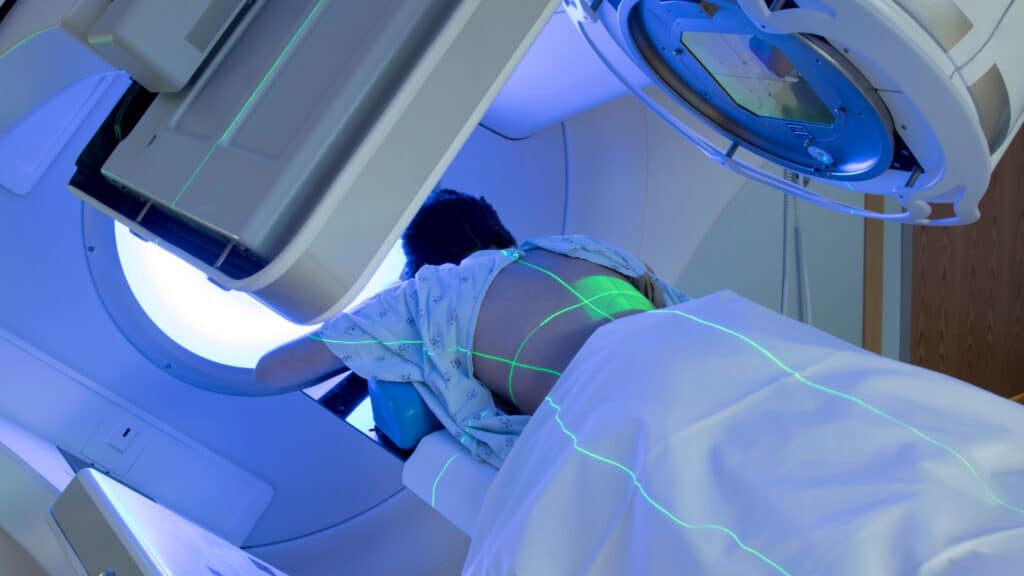
Radiation therapy uses high-energy X-rays to damage and destroy cancer cells. Modern techniques increasingly spare surrounding healthy tissue in the lung and heart, reducing side effects while maximising tumour control. There are two broad categories: external radiation therapy (where a machine directs beams from outside the body) and internal radiation therapy (where radioactive material is placed inside or near the tumour, though this is less common in lung cancer).
For early-stage lung cancer in patients unfit for surgery, stereotactic ablative radiotherapy (SABR), also known as stereotactic body radiation therapy (SBRT), is now the standard of care. This delivers high-dose, precisely focused radiation in 3–10 sessions. Early-stage inoperable tumours may achieve curative intent with non-surgical treatments like SABR. Studies show local control rates exceeding 90% at three years, approaching what surgery achieves in matched patients.
For unresectable stage III NSCLC, standard fractionated chemoradiotherapy is typically used, often followed by consolidation immunotherapy (such as durvalumab) when appropriate.
Radiotherapy can be used to control symptoms in advanced lung cancer. Palliative radiotherapy, sometimes delivered in just one or two sessions, can ease bone pain, reduce chest pain from tumour pressure, relieve trouble breathing caused by airway compression, or control bleeding. This is a valuable tool for improving daily comfort even when cure is not the goal.
Chemotherapy and Systemic Drug Treatments
Chemotherapy is a systemic cancer treatment that circulates in the bloodstream to kill cancer cells that are dividing rapidly, wherever they may be in the body. Chemotherapy is commonly used for inoperable lung cancer.
Typical use includes:
Mainstay therapy for SCLC (both limited and extensive stage)
For advanced NSCLC, often combined with immunotherapy or given before/after radiotherapy
Usual treatment duration of 4–6 cycles over 3–6 months
Side effects such as fatigue, nausea, lowered immunity (affecting bone marrow function), and infection risk are common but increasingly manageable with supportive medications and careful monitoring by the oncology team. The aim is to kill cancer cells while preserving as many healthy cells as possible, although some impact on healthy tissue is unavoidable.
Targeted Therapy and Immunotherapy
Targeted therapy drugs work by blocking specific gene changes or proteins that drive lung cancer cell growth. Through biopsy and molecular testing, your cancer doctor can identify mutations such as EGFR, ALK, ROS1, BRAF, MET, RET, NTRK, or KRAS G12C. Targeted therapies are suitable for specific mutations in lung cancer, and for patients who carry these changes, targeted therapy can be remarkably effective – sometimes controlling advanced NSCLC for years and turning it into a long-term, manageable condition.
Immunotherapy drugs such as pembrolizumab, nivolumab, atezolizumab, and durvalumab work differently. They stimulate the immune system to recognise and attack lung cancer cells that would otherwise evade detection. PD-L1 testing on a biopsy sample helps guide whether immunotherapy is likely to benefit a patient. Immunotherapy can be effective for about 30% of lung cancer patients, and research continues to expand who may benefit.
Potential immune-related side effects include inflammation of the lungs, liver, or bowel, and health professionals emphasise the importance of rapid reporting of new symptoms during treatment.
Combined therapies often improve survival rates over individual treatments. Many modern treatment plans for inoperable cancer combine chemotherapy with immunotherapy or targeted agents. These treatment options are tailored through multidisciplinary discussion and, where possible, participation in clinical trials exploring further treatment combinations.
Bronchoscopic, Laser, and Photodynamic Therapies
Bronchoscopy involves passing a flexible camera through the mouth into the airways. Beyond its role in diagnosis, including lung biopsy, bronchoscopy can also treat tumours inside the bronchial tree.
Laser therapy uses focused light energy to vapourise or shrink tumours blocking an airway. Laser therapy can shrink or destroy tumours in lung cancer patients, improving breathing and reducing cough in selected cases. Tumour ablation therapies can help unblock airways in lung cancer patients when the tumour is causing obstruction.
Photodynamic therapy (PDT) takes a different approach: a light-sensitive drug is injected and taken up preferentially by cancer cells, then activated by a laser delivered via bronchoscope to destroy cancer cells. PDT is used for small, early tumours confined to the airway surface or to relieve airway obstruction when surgery is not possible.
Other local treatments used in specialist centres include cryotherapy (freezing) and radiofrequency ablation for small lung tumours or airway problems. These can be combined with systemic therapy as part of a broader treatment plan.
Palliative and Supportive Care
Palliative care is about maximising comfort, function, and quality of life at any stage of inoperable lung cancer. It runs alongside active cancer treatment rather than replacing it.
Key elements include:
Pain control (including management of chest pain and bone pain)
Management of breathlessness and trouble breathing
Treatment of persistent cough and haemoptysis (coughing blood)
Nutritional support
Psychological support and access to support groups
Early involvement of palliative care specialists to control symptoms proactively
A thoracic surgeon may perform palliative procedures such as draining malignant pleural effusions (fluid around the lung containing cancer cells), performing talc pleurodesis to prevent fluid re-accumulation, or inserting an indwelling pleural catheter for ongoing drainage at home, similar in some respects to the pleural procedures used in pneumothorax surgery and pleurodesis.
Accepting palliative input does not mean “giving up.” It means gaining extra expert support to live as well as possible while other treatments continue, and many people find confidence in reading patient experiences of thoracic treatment when weighing their own options.
"I was diagnosed in March with a rare condition. My local hospital said it was inoperable due to the size of the mass. Mr Scarci reassured me the thymoma was resectable. I was booked for surgery the following week where he successfully removed the entire tumour."
Clinical Trials and Emerging Non-Surgical Options
A clinical trial is a carefully controlled study testing new lung cancer treatments, combinations, or approaches with the aim of improving survival and reducing side effects. Clinical trials are particularly relevant for patients with inoperable lung cancer, where standard options may be limited.
Recent and ongoing cancer research trends include:
The I-SABR trial demonstrated that combining SABR with the immunotherapy drug nivolumab in early-stage NSCLC improved four-year event-free survival to 77%, compared with 53% for SABR alone
The STARS trial 10-year data showed that SABR achieved 69% overall survival at 10 years in operable stage I NSCLC – statistically similar to surgery at 66% – raising the possibility that SABR may become a primary alternative even for some operable patients
Next-generation EGFR inhibitors, KRAS G12C inhibitors, novel immunotherapy combinations, and more precise image-guided radiotherapy are all under active investigation
As noted by the National Cancer Institute and other research bodies, advances in lung cancer treatment continue to improve outcomes for patients previously considered beyond help
Eligibility for trials depends on detailed factors: stage, previous treatments, genetic changes in the tumour, and overall health. Patients should always discuss potential trial participation with their oncology team.
Not sure about your treatment options?
Mr Scarci provides expert consultations typically within one week of contact.
Screening, Early Detection and Reducing the Risk of Inoperable Cancer
Lung cancer screening with low-dose CT scanning is now being rolled out in parts of the UK for high-risk groups, such as people aged 55–74 with a significant smoking history. The use of low-dose CT scans for lung cancer screening aims to detect lung cancer at a stage where surgery is still possible, before cancer cells have spread to nearby lymph nodes or distant organs.
Early detection via screening means smaller tumours, fewer lymph node metastases, and far more patients eligible for minimally invasive lung cancer surgery with faster recovery.
Steps you can take to improve lung health and future operability:
Stop smoking (the single most impactful risk factor you can modify)
Manage existing lung conditions such as COPD
Stay as physically active as possible
Keep vaccinations up to date (flu and pneumonia)
If you are experiencing persistent symptoms such as a cough lasting more than three weeks, unexplained weight loss, chest pain, or coughing blood, seek prompt GP review or specialist assessment. Recognising these lung cancer red flags early can make the difference between operable and inoperable disease.
Mr Scarci offers both NHS and private thoracic surgery consultations in London, including review of CT scans and second opinions on whether a lung cancer may still be operable or better managed without surgery.
How a Thoracic Surgeon Helps When Surgery Is Not an Option
Even when surgery is not recommended, a thoracic surgeon still plays an important role in diagnosis, staging, symptom control, and decision-making. The surgeon’s perspective is valuable precisely because they understand both what surgery can achieve and when it should not be attempted.
They contribute to multidisciplinary team meetings, helping to interpret imaging tests, assess resectability, and ensure that lung surgery is only offered when it provides genuine benefit. This protects patients from unnecessary risk while ensuring no surgical opportunity is missed and draws on wide experience treating a range of thoracic conditions, including lung cancer.
Non-surgical or minimally invasive procedures a thoracic surgeon may perform for inoperable cases include:
Diagnostic and staging biopsies (including EBUS-guided lymph node sampling)
Bronchoscopy with airway stent placement to treat tumours causing obstruction
Laser debulking of airway tumours
Pleural procedures for malignant effusions
Coordination of further treatment pathways with oncologists
Patients are supported through complex decisions with clear explanations of risks, benefits, and realistic goals of treatment. Whether you have been told surgery is not an option or are simply unsure, you can self-refer or be referred by your GP or oncologist to Mr Marco Scarci for a private thoracic surgery appointment in London, either face-to-face or via video.
Want a specialist opinion on your condition?
Get a clear answer from a surgeon who will be with you throughout.
Frequently Asked Questions
Does “inoperable” lung cancer mean there is no treatment at all?
“Inoperable” simply means surgery isn’t the right option for your situation, as effective alternatives like radiotherapy (including SABR), chemotherapy, targeted therapy, and immunotherapy remain available.
Can inoperable lung cancer ever become operable later on?
In selected stage III NSCLC cases, tumours can shrink significantly after chemotherapy or chemoradiotherapy (called downstaging), at which point an experienced thoracic surgeon can reassess surgical feasibility through new scans, lung function tests, and multidisciplinary review.
How long can you live with inoperable lung cancer?
Survival varies widely depending on lung cancer stage, type (NSCLC vs SCLC), genetic features of the lung cancer cells, your general health, and how well you respond to treatment. Ask your own cancer doctor and oncology team for personalised information rather than relying solely on online statistics.
Should I still see a thoracic surgeon if my cancer is described as “no surgery”?
Seeing a thoracic surgeon for a second opinion is often worthwhile even when surgery has been ruled out, as it can confirm the assessment, explore minimally invasive options like VATS and bronchoscopic treatments, and clarify all available alternatives.
Can lifestyle changes help if my lung cancer is inoperable?
While lifestyle changes cannot cure lung cancer, stopping smoking, staying active, eating well, and following pulmonary rehabilitation advice can meaningfully improve your ability to tolerate treatments, support breathing, and build resilience. Psychological support, peer support groups, and good symptom control are equally important to living as well as possible with inoperable lung cancer.
