

Back pain is one of the most common complaints worldwide, affecting around 85% of people at some point in their lives. But when that pain settles between your shoulder blades or just beneath your ribs, in the area around your lungs, it can feel more unsettling than a typical backache.
This guide is designed to help you make sense of it. Whether you’re concerned about a serious underlying cause or simply looking for practical advice on how to manage your symptoms, understanding what might be driving that pain is the first step to feeling more in control.
You’ll find clear explanations of the most likely causes, the warning signs that warrant medical attention, and guidance on when it’s safe to let your body heal on its own.
Most back pain around the lung area is caused by muscles or rib joints, and pain settles within days to a few weeks. Most back pain problems improve within 6 weeks without treatment.
Red-flag symptoms such as sudden severe chest pain, breathlessness, coughing blood, fever, or unexplained weight loss need urgent medical review.
Some pain in the upper or mid-back can be linked to lung or thoracic conditions and may need assessment by a consultant thoracic surgeon.
Muscle pain is more common than spinal pain, and exercise is one of the most effective treatments for back pain.
Stay positive, stay gently active, and seek timely medical advice rather than letting worry build silently.
What Do We Mean by “Back Pain Near the Lungs”?
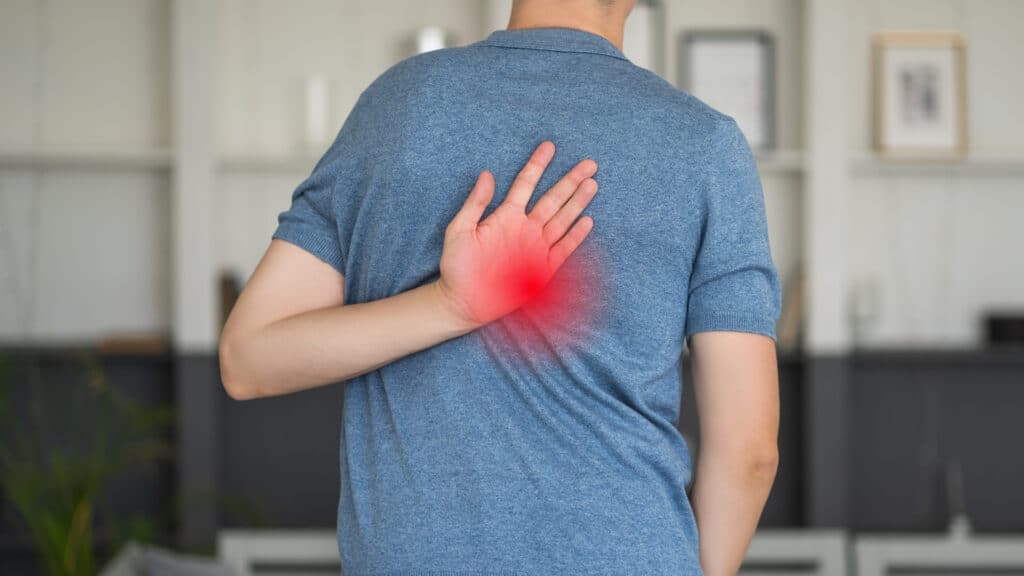
When people describe pain in the back near the lungs, they usually mean the upper or mid-back, roughly between the shoulder blades and the lower edge of the rib cage.
This area is packed with overlapping structures: the thoracic spine (the middle segment of the spine, consisting of 12 vertebrae that attach to the ribs), ribs, intercostal muscles, the pleural lining, and the lungs themselves. Because these structures sit so close together, it can be genuinely difficult to tell whether your pain is coming from back muscles, bones, joints, or something deeper.
Low back pain below the rib cage usually originates from the lumbar spine or surrounding muscles, and kidney issues can also cause low back discomfort. Pain higher up, however, may involve thoracic structures, including the rib cage and lungs.
Back pain often starts for no obvious reason, and that in itself is normal. The spine and ribs are strong. Serious disease is far less common than a simple muscular or joint cause.
Want a specialist opinion on your condition?
Get a clear answer from a surgeon who will be with you throughout.
Is It Muscle, Rib, or Spine? How to Tell the Difference
Different causes produce distinct patterns. Understanding these can help you feel less anxious and know when to act.
Muscular pain tends to present as aching or tightness after activity such as heavy lifting, prolonged sitting in one position, or sudden awkward movements. Muscle or ligament strains are common causes of back pain, and the discomfort is usually tender to the touch and worsens with certain movements. Back pain from muscles may fade after a few days, and most patients recover within one to two weeks. Muscle spasms can flare up more intensely than simple strains, producing sharp tightening that eases with rest and gentle movement.
Rib or joint pain, particularly from the costovertebral or costotransverse joints (the costovertebral joints are where each rib meets the vertebrae of the thoracic spine), often produces stabbing pains with deep breaths, coughing, or twisting. A cadaver study found that roughly 48% of costovertebral joints showed signs of arthritis, and a case series of 15 patients with costotransverse joint inflammation reported burning, paravertebral pain worsened by breathing and trunk movement.
Spinal causes include facet joint syndrome (a condition where the small joints at the back of the spine, called facet joints, become irritated or inflamed), which may last from two weeks to over a year, and herniated or bulging discs that can pressure spinal nerves and cause pain radiating around the chest wall. Spinal pain can last as long as 11 weeks. Conditions like ankylosing spondylitis or arthritis and degeneration are also common contributors to back pain. Acute back pain lasts less than six weeks. If pain persists beyond four to six weeks or spreads, it needs medical evaluation.
"After two years of being told my symptoms were anxiety, Mr Scarci identified the problem immediately. The surgery was straightforward and I was discharged after three days. I only wish I had found him sooner."
When Back Pain Near the Lungs Could Be a Lung or Thoracic Problem
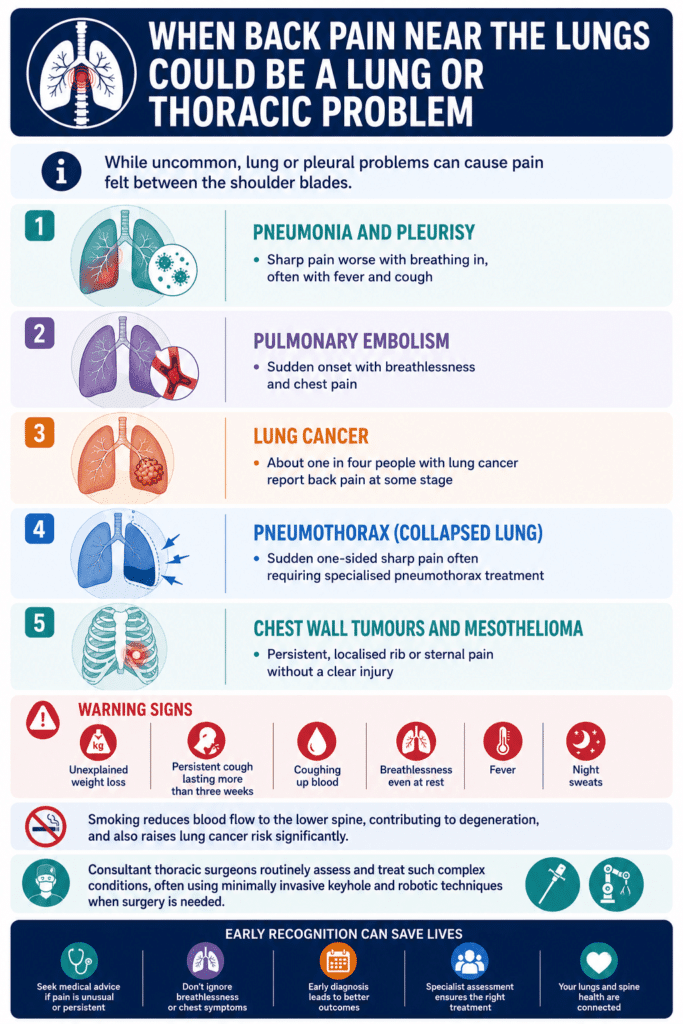
While uncommon, lung or pleural problems can cause pain felt between the shoulder blades. Key conditions include:
Pneumonia and pleurisy – sharp pain worse with breathing in, often with fever and cough
Pulmonary embolism – sudden onset with breathlessness and chest pain
Lung cancer – about one in four people with lung cancer report back pain at some stage
Pneumothorax (collapsed lung) – sudden one-sided sharp pain often requiring specialised pneumothorax treatment
Chest wall tumours and mesothelioma – persistent, localised rib or sternal pain without a clear injury
Warning signs include unexplained weight loss, a persistent cough lasting more than three weeks, coughing up blood, breathlessness even at rest, fever, or night sweats. Smoking reduces blood flow to the lower spine, contributing to degeneration, and also raises lung cancer risk significantly. Consultant thoracic surgeons routinely assess and treat such complex conditions, often using minimally invasive keyhole and robotic techniques when surgery is needed.
Red Flags: When to Seek Urgent Help
Certain symptoms alongside back pain demand same-day medical assessment. Sharp back pain may indicate a torn muscle or internal organ issue, so understanding what is urgent matters.
Call 999 immediately for:
Sudden, severe back pain or chest pain with shortness of breath or pain spreading to the jaw or left arm
Coughing blood
Signs of stroke or collapse, including sudden leg weakness
See a doctor urgently for:
Loss of bowel or bladder control: Incontinence with back pain may indicate serious nerve compression, and cauda equina syndrome can lead to permanent damage
Numbness or weakness in the legs: These are signs of serious back issues, including spinal cord involvement
Symptoms indicating a spinal infection: Severe back pain accompanied by persistent fever above 38°C, persistent night sweats, or unexplained weight loss over several weeks may indicate a spinal infection requiring urgent treatment
After a fall or accident, especially in older adults or those with osteoporosis, there is a greater risk of a rib or vertebral fracture. Use NHS 111 for urgent advice, or arrange an urgent GP or private consultation if you are worried about any serious underlying cause.
"After multiple failed consultations elsewhere, Mr Scarci identified exactly what was wrong and operated within two weeks. Recovery was smooth and I'm back to normal life."
How to Relieve Muscular and Rib-Related Back Pain Yourself
Most muscular or minor rib-related back pain is what doctors call non-specific back pain, and it settles with self-care over one to three weeks. Bed rest can prolong recovery from acute back pain, so avoid bed rest and stay gently active instead.
Staying Active
Walking, light daily activities, and keeping active with normal tasks are recommended.
Staying active with light activities like walking is beneficial.
Pain during movement is common and not harmful.
Pain Relief
Painkillers like paracetamol and ibuprofen are effective for back pain.
Follow the current 2026 clinical guideline.
Heat and Cold
Using heat or ice packs can help manage pain.
A hot water bottle on the upper back eases stiffness; ice reduces acute swelling.
Posture
Poor posture can lead to back pain.
Change positions regularly and avoid sitting or standing in one position for long periods.
Creating an ergonomic workspace can support better posture.
Specific Exercises
Gentle thoracic stretches, shoulder-blade squeezes, and breathing exercises help.
Exercise is one of the most effective ways to treat back pain.
Weight Management
Maintaining a healthy weight reduces strain on the spine.
Sedentary habits and obesity increase the risk of back pain.
Stop any stretch if pain suddenly worsens or radiates in a new pattern.
Poor lifting techniques can result in back injuries, so learn to lift with your legs and hips rather than rounding through the spine.
Have a question about your diagnosis?
A consultation gives you a personalised plan — not a generic estimate.
When to See a GP, Physiotherapist, or Thoracic Specialist
Consulting a healthcare professional is important for persistent back pain. See your doctor if pain persists beyond two to four weeks despite self-care, if it is getting steadily worse, or if it interferes with sleep or day-to-day activities. Spinal injections and surgery are not effective long-term treatments for most routine back problem cases, but an accurate diagnosis guides the right treatment.
Physiotherapists and NHS musculoskeletal services can help with posture, mobility, and strengthening, often without GP referral. Weak core muscles do not directly cause back pain, but targeted rehabilitation improves how you cope with stress on the spine and supports recovery.
Referral to a thoracic surgeon is appropriate when there are suspected chest wall tumours, unexplained persistent pain over a rib or sternum, recurrent pneumothorax, pleural disease, or known lung masses, which is why doctors may refer patients to a thoracic surgeon when chest structures are involved. Mr Scarci offers private thoracic surgery as well as NHS consultations, including virtual appointments, and can often see urgent cases within hours and routine referrals within 24-48 hours.
Back Pain, Other Conditions, and the Role of Thoracic Surgery
Back pain near the lungs can sometimes connect to medical conditions beyond the spine and muscles, making accurate diagnosis essential. Lung cancer, thymoma, mesothelioma, emphysema, and tumours on the chest wall are among the thoracic conditions treated by Mr Scarci and may present with vague back or shoulder-blade pain before more obvious respiratory symptoms appear. Back pain can also be caused by nerve irritation from tumour growth or scarring after previous thoracic surgery.
Mr Marco Scarci’s expertise in keyhole (VATS) and robotic thoracic surgery and advanced lung cancer surgery allows him to treat conditions such as lung cancer, pneumothorax, chest wall deformities, and mediastinal tumours with smaller incisions and potentially quicker recovery.
The value of a multidisciplinary approach by a thoracic surgeon, respiratory physician, physiotherapist, pain specialist, and oncologist cannot be overstated when back pain is part of a broader thoracic or oncological condition. Other conditions, such as age-related degeneration, previous rib fractures, or inflammatory disease, are rarely managed in isolation.
Not sure about your treatment options?
Mr Scarci provides expert consultations typically within one week of contact.
Staying Positive While You Recover
Long-lasting pain can be worrying, but most people improve over time, and serious disease is rare. Staying active helps you cope better with back pain, and patients who stay positive and understand that pain usually improves tend to recover faster from both low back pain and upper-back problems.
Pacing Activities
Pace your daily activities and set small goals each day.
Relaxation Techniques
Use relaxation or breathing techniques to manage stress and reduce muscle tension.

When to Seek Help
Avoid constantly prodding the painful area. It can increase sensitivity.
Remember that needing help does not mean failure; consulting a GP, physiotherapist, or thoracic specialist early is a proactive step.
Listen to your body, respect symptoms, and seek expert help if you feel concerned about your lungs or chest. Most back pain resolves, and you can return to normal activity with patience and the right support
Frequently Asked Questions
Can lung problems cause pain only in my back without any chest pain or cough?
It is possible, though uncommon, for early lung or pleural disease to present mainly as upper or mid-back pain near the shoulder blades. Problems start quietly in some cases. Be alert for additional symptoms developing over days to weeks, such as a new or changing cough, breathlessness, or unexplained fatigue. See a GP or specialist if back pain continues longer than a few weeks without an obvious muscular cause, particularly in smokers or people with a history of chest disease, as this sometimes leads to referral to a dedicated chest clinic for further tests.
How long should I wait before worrying that my back pain near the lungs is something serious?
Simple muscular pain should gradually improve within one to three weeks. Acute low back pain and upper-back strains rarely need more than six weeks to settle. If pain continues beyond four to six weeks or keeps getting worse, it deserves medical assessment. Any red-flag symptoms like weight loss, fevers, cough with blood, severe breathlessness, or sudden sharp pain should prompt immediate or same-day medical advice. Timely evaluation can either reassure you or allow earlier treatment if an underlying condition is found.
Do I need a scan for back pain near my lungs?
Most people with back pain, even near the lungs, do not need immediate X-ray or MRI scans because symptoms often settle, and scans rarely change treatment for simple strains. Doctors may arrange chest imaging, CT, or MRI when there are persistent symptoms, red flags, or known risk factors for lung or chest wall disease. Thoracic surgeons often review existing imaging and, when appropriate, request specialised thoracic scans to clarify whether the lungs, pleura, or chest wall are involved.
Can low back pain be related to my lungs at all?
Pain in the lower back below the ribs is rarely caused directly by lung disease, which usually affects areas higher in the back or chest. Low back pain is much more often due to the lumbar spine, discs, or muscles, although severe systemic illness like widespread cancer or spinal infection can sometimes cause pain in multiple spinal regions. If you have persistent lower back pain, follow standard guidance: self-care first, then GP or MSK referral if pain persists, and mention any chest or breathing symptoms at the same time.
How can I arrange to see a thoracic surgeon about my back pain and possible lung problem?
Start by seeing your GP for an initial assessment, basic tests, and imaging if required. In the UK, patients can be referred to a thoracic surgeon such as Mr Marco Scarci through NHS pathways, or they can book a private consultation directly in London or via a virtual appointment, where a typical thoracic appointment involves a detailed assessment and discussion of treatment options. Bring any previous scans, clinic letters, and a clear timeline of your symptoms to make the specialist consultation as productive as possible. Reading patient testimonials may also help you feel more prepared and reassured. Factors such as symptom duration, age, smoking history, and overall health all help the surgeon determine the best next steps, while a clear thoracic surgery cost guide for London can clarify the financial side of potential procedures.
