

A rib injury is one of the most painful bone fractures you can experience, and the first question most patients ask is whether their ribs will heal without surgery. The short answer is that most rib fractures do heal on their own, but the timeline varies depending on the type of fracture, your age and how well your recovery is managed.
This guide covers everything you need to know about rib fracture healing time, from week-by-week expectations to the warning signs that mean you need specialist help.
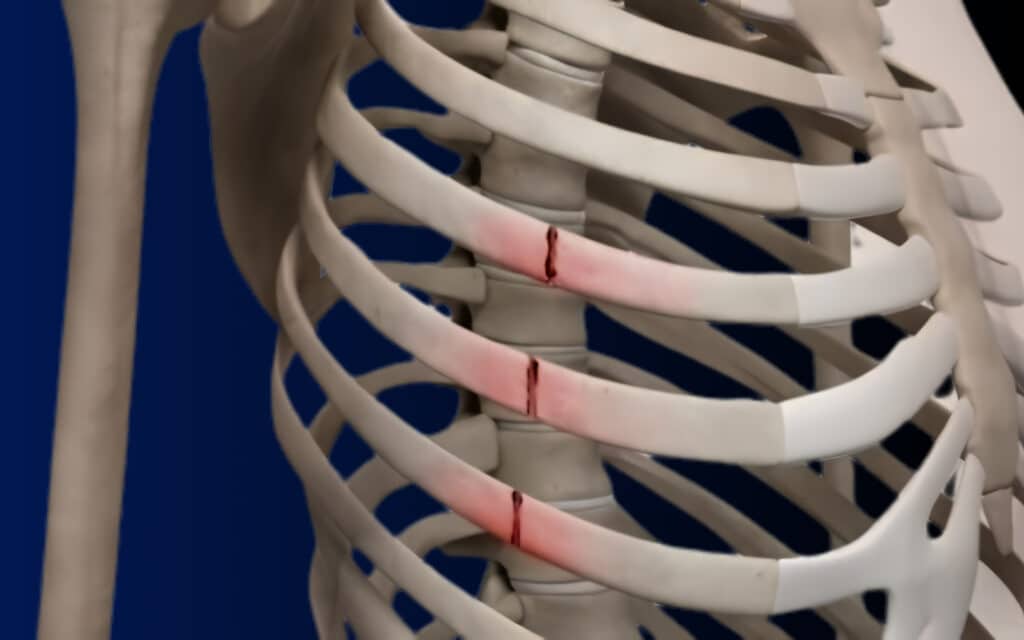
Most uncomplicated rib fractures heal on their own within approximately four to six weeks, although pain and stiffness can continue for longer. Multiple or displaced fractures generally take longer and may require 10 to 12 weeks or more.
Good pain control is essential throughout recovery. Regular pain relief allows you to breathe deeply and cough effectively, helping to reduce the risk of pneumonia and other chest infections.
Deep breathing exercises and early mobilisation reduce the risk of chest infection and help restore normal lung function.
Seek urgent assessment in an emergency department if you experience sudden breathlessness, worsening chest pain or symptoms following major trauma. A collapsed lung or injury to an internal organ requires immediate treatment.
A small number of patients benefit from specialist interventions such as a nerve block, surgical stabilisation or internal fixation, particularly when pain persists, healing is delayed, or the chest wall is unstable.
What Is a Rib Fracture And Can Broken Ribs Heal on Their Own?
Yes, most fractured ribs heal on their own without surgery. Provided the chest wall remains stable and there are no serious complications, conservative management with pain relief, rest and a gradual return to activity is sufficient for most patients.
A rib fracture is a crack or complete break in one or more of the bones forming your rib cage. Common causes include falls, contact sports injuries, forceful coughing and road traffic collisions. Rib fractures heal through three broad stages: inflammation, repair and remodelling. During the inflammatory stage, swelling and bleeding occur around the break. Over the following weeks, new bone gradually bridges the gap before being reshaped into mature bone over several months.
It helps to understand the spectrum of rib injuries. Bruised ribs involve damage to the surrounding tissue without a visible break. Non-displaced rib fractures remain aligned despite being broken. Displaced rib fractures have bone fragments that have moved out of alignment and carry a greater risk of damaging the nearby lung or other organs.
Ribs can be slower to settle than some other bones because they move constantly with every deep breath, cough or twist of the upper body.
Typical healing ranges are approximately four to six weeks for many uncomplicated fractures and 10 to 12 weeks or longer for multiple, displaced or complex fractures. Older people and patients with osteoporosis may experience a longer recovery.
Surgery is uncommon for simple rib fractures, but early specialist review is important if pain is severe or breathing is compromised.
Not sure about your treatment options?
Mr Scarci provides expert consultations typically within one week of contact.
Typical Rib Fracture Healing Timeline (Week by Week)
Rib fracture healing time is influenced by your age, the number of broken ribs, existing medical conditions and the quality of your pain control and rehabilitation. Below is a general guide for a simple rib fracture in a healthy adult.
Weeks 1-2
This is usually the most painful phase. Pain is often most severe during the first few days. Every deep breath can feel sharp, while coughing or sneezing may be particularly painful. Regular pain relief is essential during these early stages to allow normal breathing and prevent shallow respiration. Sleep is also often disrupted.
Weeks 3-4
Pain should start to ease. Walking around the house becomes easier, and you may find it possible to manage light tasks. Sudden movements, laughing and lying flat may still be uncomfortable.
Weeks 5-8
Many uncomplicated rib fractures have healed sufficiently for a gradual return to normal activities. Patients with simple fractures may be able to return to desk-based work, drive safely and begin gentle exercise if pain allows. Some tenderness or stiffness may remain.
Weeks 8-10+
Most people feel close to normal, although discomfort when twisting, lifting heavy objects or lying on the injured side may continue, particularly after multiple or displaced fractures.
If you experience ongoing daily pain, clicking or visible chest wall deformity beyond 10 to 12 weeks, this may suggest delayed healing, malunion or non-union and warrants specialist thoracic assessment.
"After two years of being told my symptoms were anxiety, Mr Scarci identified the problem immediately. The surgery was straightforward and I was discharged after three days. I only wish I had found him sooner."
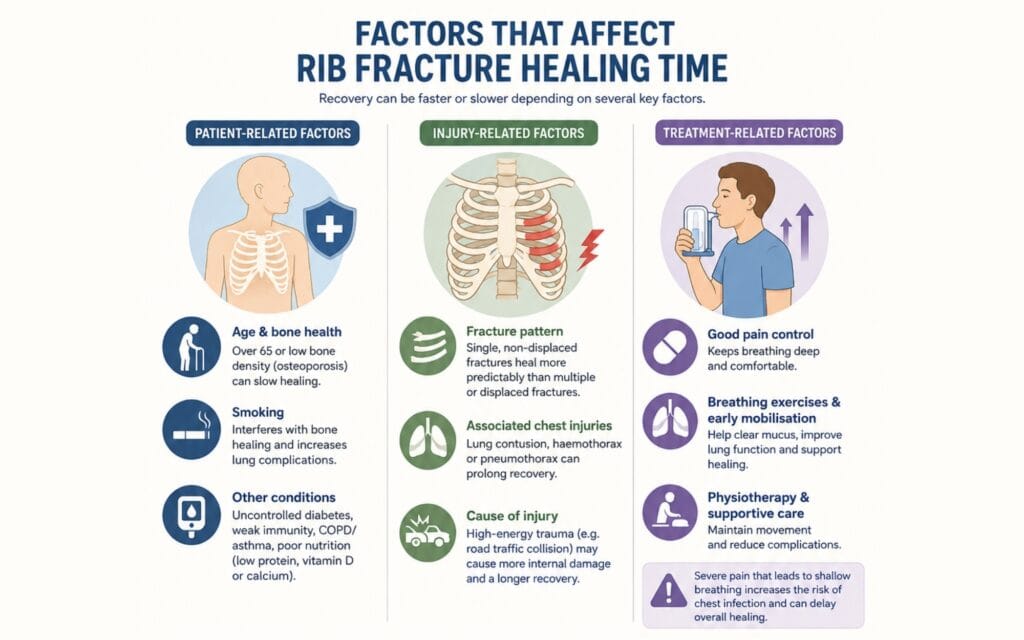
Factors That Affect Rib Fracture Healing Time
Not all rib fractures heal at the same pace. Understanding why your recovery may be faster or slower than average can help you take the right steps.
Patient-related factors:
Age can affect healing, particularly in people over 65 who may have reduced bone density or other underlying medical conditions. Osteoporosis and low bone mineral density can also extend the recovery period.
Smoking may interfere with bone healing and increases the risk of respiratory complications. If you smoke, stopping during recovery can support both lung function and the healing process.
Other factors include uncontrolled diabetes, immunosuppression, chronic lung disease such as COPD or severe asthma, and poor nutrition, particularly insufficient protein, vitamin D or calcium.
Injury-related factors:
A single non-displaced fracture usually heals more predictably than several displaced fractures. The recovery period may also be affected by associated chest injuries such as a lung contusion, haemothorax or pneumothorax.
The cause of the injury is also important. A fracture caused by a low-energy fall is different from an injury sustained in a high-speed road traffic collision, which may involve damage to the lungs, blood vessels or abdominal organs.
Treatment-related factors:
Adequate pain control, regular breathing exercises and early mobilisation all support recovery. Prolonged bed rest and poorly controlled pain can lead to shallow breathing and difficulty clearing mucus, increasing the risk of a chest infection.
Physiotherapy and other supportive treatments may also help patients maintain comfortable breathing and movement during recovery.
Severe pain that leads to shallow breathing increases the risk of chest infection and can delay overall healing.
Have a question about your diagnosis?
A consultation gives you a personalised plan — not a generic estimate.
Types of Rib Fracture and What They Mean for Healing Time
The type and pattern of fracture strongly influence whether the ribs are likely to heal on their own or require specialist input.
Simple, non-displaced fractures are the most common. The bone is cracked but remains in position. These fractures usually heal with conservative rib fracture treatment, including pain relief, breathing exercises and gradual mobilisation.
Displaced fractures occur when bone fragments move out of position. They are more unpredictable and may require closer monitoring because they can contribute to persistent pain, chest wall deformity or injury to nearby tissues. Some severely displaced fractures may require surgery.
Multiple rib fractures involve more than one broken rib and carry a higher risk of serious broken rib complications, particularly in older adults and people with existing lung disease.
When several adjacent ribs are broken in more than one place, an unstable section of the chest wall can develop. This is known as flail chest and may cause abnormal movement of the chest during breathing. It is a serious injury that requires hospital care, and some patients benefit from surgical stabilisation.
Stress fractures result from repetitive strain on the ribs and may occur in athletes or people with prolonged, forceful coughing. These injuries require appropriate rest and assessment of the underlying cause.
Non-union occurs when a fracture fails to heal properly. Persistent pain, clicking or instability beyond the expected recovery period may indicate that healing has stalled and that specialist broken rib treatment is needed.
Osteoporotic or low-impact fractures in older adults can take longer to heal and carry a greater risk of chest infection or breathing complications.
"Dr. Marco Scarci is a deeply knowledgeable, open-minded, and empathetic surgeon. He listens to details and solves problems to truly deliver the most optimal results. As a medical professional myself, I can tell you that finding a specialist like Dr. Scarci is very rare, and it is a privilege to have him in my corner."
Self-Care and Home Management While Your Ribs Heal
Most people with uncomplicated rib fractures recover at home with good self-care and clear safety-net advice from their doctor.
Pain Relief Strategies
Take regular paracetamol or anti-inflammatory medication if it is suitable for you and has been recommended by a doctor or pharmacist. Staying ahead of the pain makes it easier to breathe deeply, cough and remain mobile.
Multimodal pain management may include a short course of stronger prescribed painkillers. Other medications may occasionally be considered if muscle spasm is contributing to the discomfort.
Effective management of rib fracture pain is important because severe pain can prevent normal breathing and coughing.
Positioning Tips
Sleeping slightly upright during the first few weeks may be more comfortable. Extra pillows can support your upper body and prevent direct pressure on the injured side.
Holding a cushion or folded towel against your chest when coughing or sneezing may also support the fracture site and make these movements more manageable.
Activity Guidance
Avoid heavy lifting, strenuous activity and contact sports during the early stages of recovery.
However, complete bed rest is not usually recommended. Walking around the house several times a day promotes circulation, supports lung function and reduces the risk of blood clots and chest infection.
Aim for gentle, progressive increases in movement as pain allows. Avoid activities that cause a sharp increase in discomfort.
Deep Breathing Exercises to Practise at Home
Sit upright and breathe in slowly through your nose, filling your lungs as fully as is comfortable.
Hold the breath for two or three seconds, then breathe out slowly through pursed lips. Repeat this several times at regular intervals while awake, following any specific instructions provided by your healthcare professional or physiotherapist.
Stop and seek advice if the exercises cause severe pain, dizziness or significant breathlessness.
Avoid rib strapping or very tight bandages unless specifically prescribed. These can restrict lung expansion and increase the risk of a chest infection.
Want a specialist opinion on your condition?
Get a clear answer from a surgeon who will be with you throughout.
Preventing Chest Infection and Other Complications During Healing
Pneumonia is a recognised complication after rib fractures and can delay recovery. The relationship between winter respiratory illness and rib treatment is particularly important for older patients and those with existing lung conditions.
Poorly controlled pain affects normal breathing mechanics. Patients may take shallow breaths and avoid coughing because it hurts, allowing mucus to build up in the lungs and increasing the risk of infection.
This is why pain management is not simply about comfort. It helps patients breathe deeply, cough effectively and remain mobile.
Practical Steps to Reduce Chest Infection Risk
Perform regular deep breathing exercises and supported coughing throughout the day. Remain mobile and avoid prolonged bed rest.
Keep well hydrated unless a healthcare professional has advised you to limit fluids. Hydration can help keep airway secretions easier to clear.
Stop smoking if you currently smoke. Smoking irritates the lungs, may impair healing and increases the risk of a chest infection.
Physiotherapists play a valuable role in teaching structured breathing exercises, supported coughing and early mobilisation programmes, both in hospital and after discharge.
Other Complications That Can Slow Healing
Other complications include pneumothorax, which occurs when air leaks into the pleural space and causes part or all of the lung to collapse, and haemothorax, where blood collects around the lung.
Either condition may require a chest drain. Specialist pneumothorax treatment may be needed when an air leak is recurrent, persistent or slow to heal.
Red-flag symptoms include fever, worsening breathlessness, coughing up blood, green or brown sputum, confusion or chest pain that suddenly changes in severity or character. Seek urgent medical help if any of these symptoms develop.
When Rib Fractures Need Specialist or Surgical Treatment
While most ribs heal on their own, a minority of patients benefit from early specialist thoracic assessment.
Surgery may be considered for flail chest, severe chest wall instability, significantly displaced fractures, uncontrolled pain, non-union or associated complications. A thoracic surgeon experienced in rib fractures and related thoracic conditions can determine whether operative treatment is appropriate.
When to See a Specialist
Key reasons to seek specialist assessment include:
Several ribs are fractured;
Displaced fractures are visible on a chest X-ray or CT scan;
There is flail chest or life-threatening chest wall instability;
Pain is not improving with appropriate treatment;
Pain prevents deep breathing or coughing;
The injury followed a major road traffic collision or fall from height;
Clicking, deformity or instability persists;
You remain unable to sleep comfortably or stay mobile.
These symptoms do not always mean that surgery is required, but they indicate that your current treatment should be reviewed.
Advanced Pain Control Options
Advanced pain-control options include an intercostal nerve block using local anaesthetic, a paravertebral block or other regional anaesthetic techniques. Epidural analgesia may be considered for selected hospitalised patients with severe injuries.
The most suitable option depends on the fracture pattern, pain severity, general health and available expertise.
Surgical Rib Stabilisation
Rib stabilisation surgery is used for selected patients. Rib fracture surgery involves internal fixation with plates and screws to secure unstable or severely displaced fractures.
Surgery may be considered for an unstable chest wall, symptomatic non-union, severe displacement, chest wall deformity, respiratory compromise or persistent pain that has not responded to conservative treatment.
Early surgical fixation may benefit selected patients with flail chest or severe displacement by improving chest wall stability, breathing mechanics and mobility. However, surgery is not necessary for most uncomplicated fractures, and the decision must be based on the individual patient’s injuries and overall condition.
In London, Mr Marco Scarci offers specialist rib-fracture assessments, including review of imaging and discussion of minimally invasive or keyhole-assisted techniques where appropriate.
Not sure about your treatment options?
Mr Scarci provides expert consultations typically within one week of contact.
Rib Fracture Healing in Older Adults and High-Risk Patients
Rib fracture healing time and complication risk can be significantly different in people over 65, those with osteoporosis and patients with pre-existing heart or lung disease.
Even one or two broken ribs can cause serious problems in a frail older adult if pain prevents normal breathing or movement. Multiple fractures increase the risk of pneumonia, reduced mobility and respiratory complications.
Recovery may extend beyond eight to 12 weeks in some older or high-risk patients. More intensive pain management, physiotherapy and sometimes short hospital admissions for monitoring may be needed.
Fractures caused by forceful coughing, minor falls or low-impact injuries may reveal underlying bone weakness. Assessment and treatment for osteoporosis can help reduce the risk of future fractures.
A consultant thoracic surgeon can coordinate multidisciplinary care involving respiratory, geriatric, pain and physiotherapy specialists.
Returning to Everyday Activities, Work, and Sport

Knowing when it is safe to resume normal life is one of the most common concerns. The answer depends on your pain levels, movement, breathing and the severity of the underlying injury.
Light daily activities: Many patients with simple fractures can manage gentle household tasks within one to two weeks, provided these do not make the pain significantly worse.
Returning to work:
Activity type | Typical timeframe | Notes |
Desk-based work | 3-4 weeks | If pain control is adequate |
Physical work / heavy manual labour | 6-8+ weeks | Phased return; avoid heavy lifting until cleared |
Job involves driving | 3-4 weeks | Must perform emergency stop comfortably; check with GP and insurer |
Exercise progression:
Start with walking, then gradually progress to low-impact activities such as static cycling or gentle swimming when pain allows.
Contact sports and heavy lifting should be avoided until the fracture has healed sufficiently and you have regained a comfortable range of movement without significant pain.
A physical examination or repeat imaging may be needed before returning to high-impact activity after a complex fracture.
Pain that becomes progressively worse as activity increases is a sign to slow down. If you are not approaching comfortable function by 10 to 12 weeks, consider reassessment to rule out non-union or another complication.
Have a question about your diagnosis?
A consultation gives you a personalised plan — not a generic estimate.
How Mr Marco Scarci Can Help With Slow-Healing or Complex Rib Fractures
Mr Marco Scarci is a consultant thoracic surgeon in London who provides specialist care for patients whose rib fractures are not healing as expected or whose injuries were complex from the outset.
Patients may be able to access private or NHS consultations, including virtual consultations for UK and international patients, for expert review of painful, slow-healing or serious chest injuries.
What happens during a specialist consultation:
The consultation includes a detailed history and physical examination of the chest wall and breathing.
Mr Scarci will closely review available imaging, including chest X-rays or detailed CT scans, and discuss the treatments already tried and what options remain.
Where an initial scan has not fully explained the symptoms, it may also be helpful to understand what rib fracture X-rays can and cannot show.
Advanced management options include:
Management may include a tailored multimodal pain plan, an intercostal or paravertebral nerve block, minimally invasive chest drain insertion where needed, and surgical rib stabilisation for selected patients using internal fixation.
Keyhole techniques such as VATS may also be used for associated problems including haemothorax, pneumothorax or other complications within the chest.
The goal is to restore comfortable breathing, reduce pain, prevent long-term disability and support a safe return to normal life. If your fractures are not improving as expected, a specialist opinion can make a meaningful difference, as reflected in Mr Scarci’s patient testimonials.
FAQs About Rib Fracture Healing Time
These frequently asked questions address common concerns not fully covered in the sections above.
Can fractured ribs heal without me resting completely in bed?
Complete bed rest is usually not recommended. Gentle movement and early mobilisation help reduce the risk of chest infections, blood clots and loss of strength without preventing the ribs from healing. Avoid heavy lifting, sudden twisting and contact sports during the early stages, but short, regular walks are normally encouraged as pain allows.
Will a rib fracture give me long-term problems with breathing?
Most people regain comfortable breathing after their ribs have healed, particularly when pain is well controlled, and they continue appropriate breathing exercises. Persistent breathlessness is more likely when there has been significant lung damage, multiple displaced fractures, an untreated chest infection or an underlying respiratory condition. Breathlessness that continues after recovery should be assessed by a GP or thoracic specialist.
Do I always need an X-ray or CT scan for a suspected rib fracture?
Not every minor rib injury requires imaging because confirming a small, uncomplicated fracture may not change the initial treatment. Imaging becomes more important after high-energy trauma, when several ribs may be affected, in older or higher-risk patients, or when there are warning signs such as breathlessness, low oxygen levels or pain in the abdomen or shoulder. A CT scan provides more detail than a standard chest X-ray and may be needed when planning treatment for a complex injury.
Is it normal to still feel some pain months after my ribs have “healed”?
Some tenderness, stiffness or occasional discomfort may continue after the bone has united, particularly during strenuous activity or when lying on the injured side. However, constant daily pain, clicking, instability or visible chest wall asymmetry after several months may indicate non-union, malunion or intercostal nerve irritation and should be assessed by a specialist.
Can I fly on an aeroplane with a recent rib fracture?
A simple rib fracture does not automatically prevent flying if pain is controlled and there is no associated lung complication. However, a recent or unresolved pneumothorax usually means flying must be delayed until the lung has fully re-expanded and a healthcare professional has confirmed that air travel is safe. Discuss your travel plans with your doctor or surgeon, particularly after major trauma, chest drainage or surgery.
