

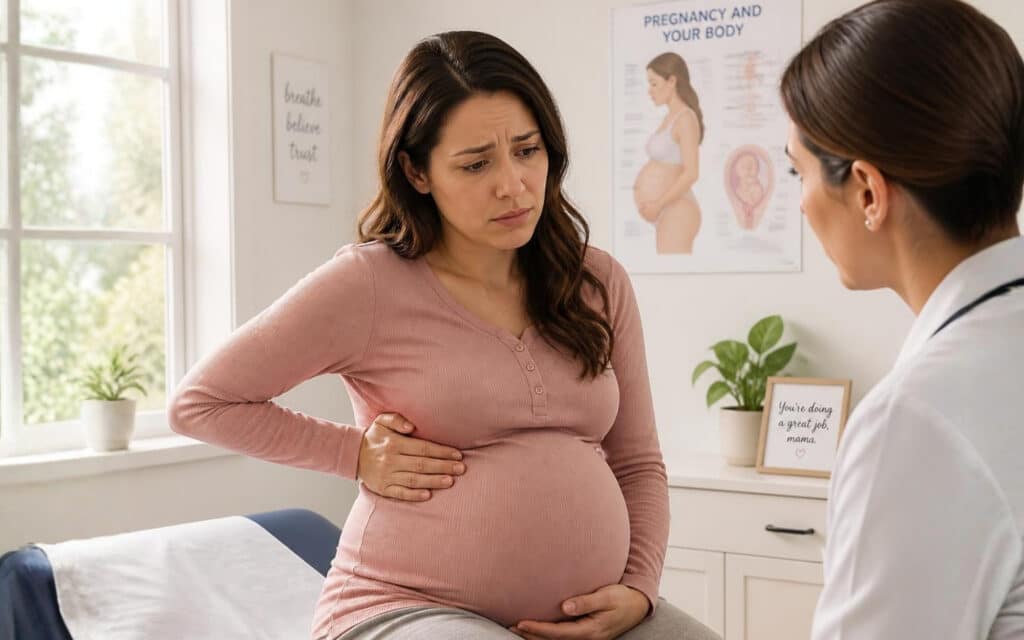
Rib pain during pregnancy may feel like soreness, aching, stiffness or sharp discomfort along the rib cage, beneath the breast, at the side of the chest or across the upper back. It is particularly common later in pregnancy as the uterus expands and the baby places more pressure on the ribs and surrounding muscles.
In many cases, rib pain during pregnancy is related to normal physical and hormonal changes. However, persistent or severe pain, particularly when accompanied by breathing difficulties, headaches or changes in vision, should be assessed by a healthcare professional.
Rib pain is common during pregnancy, particularly from around 24 weeks and during the third trimester.
Common causes include the expanding uterus, hormonal changes, postural changes, muscle tension and pressure from the baby’s movements.
Gentle stretching, posture adjustments, a supportive bra, warm compresses and breathing exercises may help relieve discomfort.
Pain beneath the ribs can sometimes originate from the gallbladder, liver, lungs or another internal organ.
Severe or persistent rib pain requires medical assessment, especially when accompanied by shortness of breath, a severe headache or changes in vision.
What Does Rib Pain During Pregnancy Feel Like?
Rib pain during pregnancy can affect one or both sides of the body, although some women notice that it is more pronounced on the right. It may feel like a dull ache, tenderness, stiffness, pressure or a sharper pain during certain movements.
The discomfort may be felt directly beneath the breast, along the side of the chest or around the upper back. It may worsen after prolonged sitting, coughing, remaining in one position for too long or towards the end of the day.
Changing position, sitting upright and avoiding slouching may help reduce pressure on the ribs and surrounding muscles. Where pain extends around the side of the body or towards the spine, understanding the possible causes of pain around the ribs and back may help explain why the discomfort is not always confined to one area.
What Causes Rib Pain During Pregnancy?
Several physical and hormonal changes can contribute to rib pain during pregnancy. More than one factor may be responsible for the discomfort.
Pressure From the Growing Uterus
As the uterus expands, it moves upwards and places increasing pressure on the diaphragm and lower rib cage. This becomes more noticeable as the pregnancy progresses and there is less space within the abdomen.
The baby’s position and movements may also contribute. Kicks beneath the ribs can leave the area feeling tender or bruised, particularly during the third trimester.
Hormonal Changes
Pregnancy hormones relax the ligaments and joints to prepare the body for childbirth. These changes can also affect the joints around the ribs, causing increased movement, tenderness or a dull ache.
Changes in Posture
As the abdomen grows, the body’s centre of gravity changes. This can place additional strain on the upper back, shoulders, chest and rib cage.
Prolonged sitting, leaning backwards or slouching may increase muscular tension and make rib pain more noticeable. Regular movement and suitable support for the back and abdomen may help reduce this strain.
Heartburn and Digestive Symptoms
Heartburn, acid reflux and constipation can cause discomfort in the upper abdomen and beneath the lower ribs. This discomfort may sometimes be mistaken for pain arising directly from the rib cage.
Digestive pain may be accompanied by burning, bloating, nausea or discomfort after eating. Symptoms that are persistent, severe or difficult to distinguish from chest pain should be discussed with a healthcare professional.
Costochondritis
Costochondritis is inflammation of the cartilage connecting the ribs to the breastbone. It can cause tenderness or sharp pain at the front or side of the chest and may become more noticeable during pregnancy.
Pain from costochondritis often becomes worse with deep breathing, coughing, sneezing or certain upper-body movements. The affected area may also feel tender when pressed.
"I was diagnosed in March with a rare condition. My local hospital said it was inoperable due to the size of the mass. Mr Scarci reassured me the thymoma was resectable. I was booked for surgery the following week where he successfully removed the entire tumour."
Musculoskeletal Rib Pain and Pain From Internal Organs
Most pregnancy-related rib pain is musculoskeletal, meaning it originates from the muscles, joints, ligaments or changes in posture. This type of pain often varies with movement, position or activity and may improve with rest or gentle changes in posture.
However, pain beneath the ribs may sometimes originate from an internal organ, including the gallbladder, liver or lungs. This is more likely when the pain is severe, persistent, unrelated to movement or accompanied by other symptoms.
Sharp pain that worsens when taking a deep breath may be described as pleuritic chest pain. Although this does not automatically indicate a serious condition, it requires prompt assessment when accompanied by sudden breathlessness, coughing up blood, dizziness or a rapid heartbeat.
A healthcare professional can assess the location and pattern of the pain and determine whether further investigation is required.
How to Relieve Rib Pain During Pregnancy
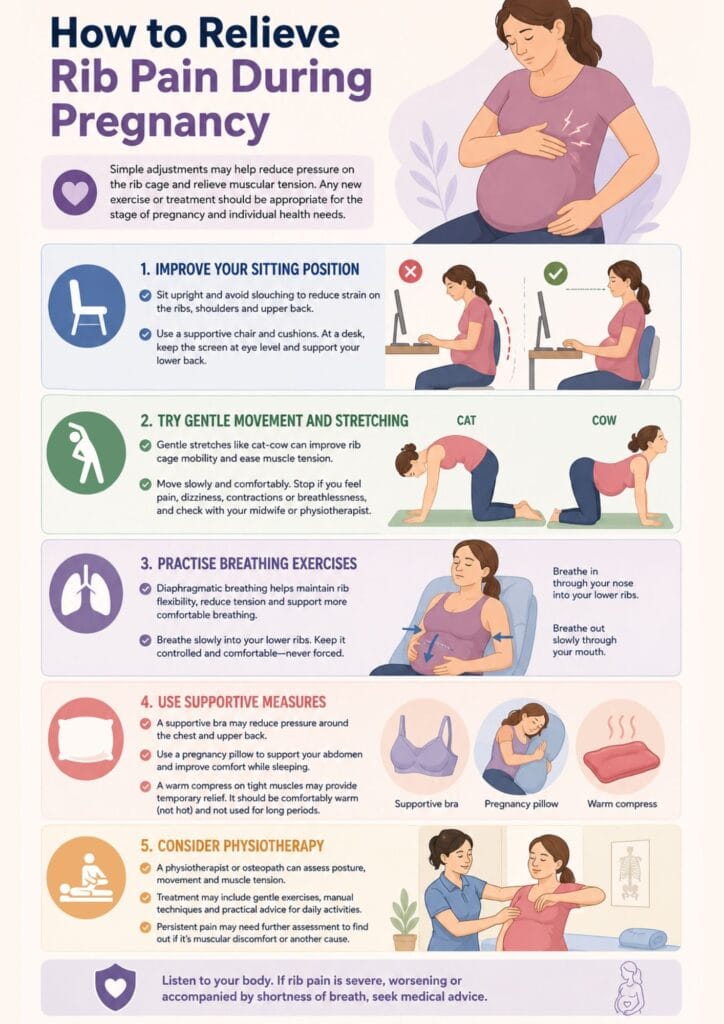
Simple adjustments may help reduce pressure on the rib cage and relieve muscular tension. Any new exercise or treatment should be appropriate for the stage of pregnancy and individual health needs.
Improve Your Sitting Position
Sitting upright and avoiding slouching may reduce strain on the ribs, shoulders and upper back. Changing position regularly can also prevent stiffness caused by remaining seated for extended periods.
A supportive chair and cushions may help maintain a more comfortable posture. When working at a desk, keeping the screen at eye level and supporting the lower back may reduce the tendency to lean forwards.
Try Gentle Movement and Stretching
Gentle stretches may improve rib cage mobility and ease tension in the surrounding muscles. Exercises such as cat-cow stretches may help mobilise the spine and gently stretch the upper back and rib cage.
Movements should remain slow and comfortable. Stop if an exercise causes pain, dizziness, contractions or breathlessness, and ask your midwife or physiotherapist whether it is suitable to continue.
Practise Breathing Exercises
Diaphragmatic breathing may help maintain rib flexibility, reduce muscular tension and support more comfortable breathing.
Slowly breathing into the lower ribs can encourage gentle movement through the rib cage without placing unnecessary strain on the upper chest. Breathing exercises should feel controlled and comfortable rather than forced.
Use Supportive Measures
A supportive bra may reduce pressure around the chest and upper back. A pregnancy pillow can also help support the abdomen and improve comfort while sleeping.
A warm compress placed over tight muscles may provide temporary relief. It should feel comfortably warm rather than hot and should not be applied for prolonged periods.
Consider Physiotherapy
A physiotherapist or osteopath experienced in pregnancy-related discomfort may assess posture, movement and muscle tension. Treatment may include gentle exercises, manual techniques and practical advice for reducing strain during daily activities.
Persistent pain may require a broader assessment to determine whether it is pregnancy-related muscular discomfort or another cause of chest and rib pain.
"I had rib pain for 6 years, was bounced around NHS without diagnosis. I was recommended to Mr Scarci — at consultation within minutes he knew what the problem was. Was offered surgery date the next week. 2 weeks post surgery I am almost back to full health."
When Should You Seek Medical Advice?
Rib pain during pregnancy is often related to normal physical changes, but it should not automatically be ignored. Contact your midwife, maternity unit, GP or another healthcare professional when the pain is severe, persistent, worsening or affecting daily activities.
Seek prompt medical assessment when rib pain occurs with:
Shortness of breath or difficulty breathing
A severe or persistent headache
Blurred vision or other changes in vision
Sudden swelling of the face, hands or feet
Chest pain
Fever or feeling generally unwell
Coughing up blood
Pain that does not change with movement or position
Severe pain beneath the right ribs
Pain beneath the ribs accompanied by a severe headache, sudden swelling or changes in vision may require urgent assessment because these symptoms can be associated with pre-eclampsia.
Sudden chest or rib pain with breathlessness, faintness or coughing up blood requires emergency medical attention.
When Might a Thoracic Assessment Be Needed?
Most rib pain during pregnancy should first be discussed with a midwife, maternity unit or GP. However, specialist assessment may be considered when pain persists after pregnancy, a structural chest wall condition is suspected, or symptoms cannot be explained by routine examinations.
A thoracic surgeon assesses conditions affecting the chest wall, ribs, lungs and pleura. Mr Marco Scarci is a consultant thoracic surgeon based in London with experience in diagnosing chest wall and rib conditions, including costochondritis, slipping rib syndrome and persistent unexplained rib pain.
Managing Rib Pain Safely During Pregnancy
Rib pain is common as pregnancy progresses and is frequently caused by pressure from the growing uterus, hormonal changes and increased strain on the upper body. Posture adjustments, gentle movement, breathing exercises and supportive measures may help make the discomfort more manageable.
However, every pregnancy is different. Pain that is severe, persistent or accompanied by other concerning symptoms should be discussed with a healthcare professional so that causes requiring treatment can be identified promptly.
Frequently Asked Questions About Rib Pain in Pregnancy
Is Rib Pain Normal During Pregnancy?
Rib pain during pregnancy is common, particularly in the third trimester as the uterus expands and the growing baby places more pressure on the rib cage. Pregnancy hormones, postural changes and extra strain through the upper body may also contribute to soreness, stiffness or a dull ache.
How Can I Relieve Rib Pain During Pregnancy?
To help relieve rib pain, try changing position regularly, avoiding slouching and using cushions or a pregnancy pillow to support the growing belly and upper body. A supportive bra, warm compress and gentle stretches may also reduce pressure and ease tension in tight muscles.
Can Breathing Exercises Help With Pregnancy Rib Pain?
Gentle breathing exercises, including diaphragmatic breathing, may support rib cage mobility and help relax the muscles around the chest and upper back. Deep breathing exercises should remain slow and comfortable and should not be forced if they make breathing feel harder.
Why Is Rib Pain Worse in the Third Trimester?
Pregnancy rib pain often becomes more noticeable in the third trimester because there is less room as the baby grows and the uterus moves upwards. This can affect breathing mechanics, place extra pressure on the ribs and diaphragm, and increase discomfort when sitting in one position for too long.
When Should I Speak to a Healthcare Provider?
Speak to a healthcare provider if the pain is severe, persistent, worsening or affecting sleep and daily activities. Seek urgent medical advice if rib pain is accompanied by shortness of breath, chest pain, a severe headache, blurred vision, sudden swelling or severe pain beneath the right ribs.
