

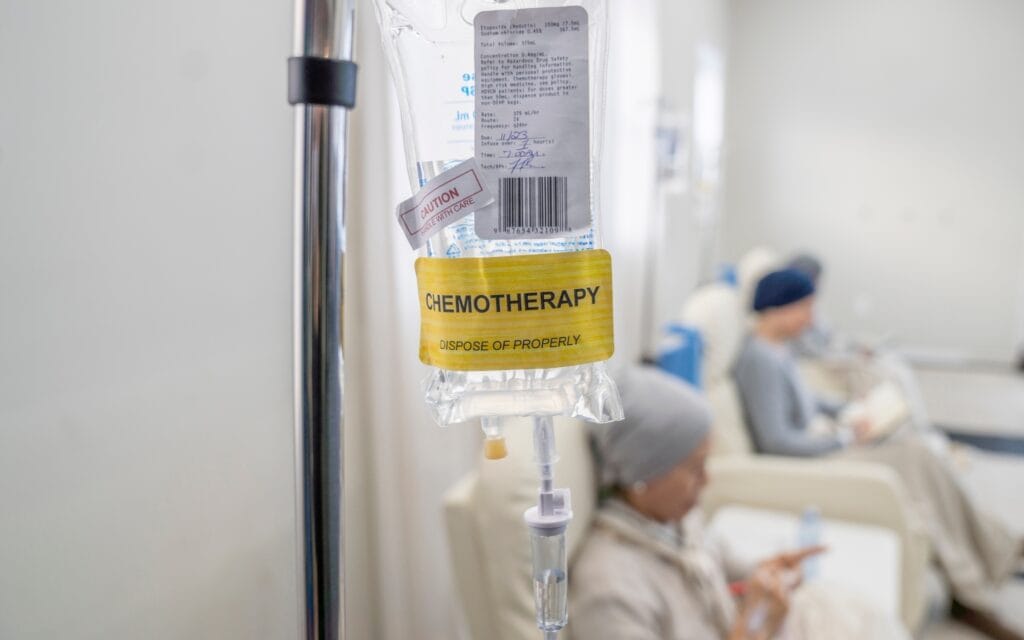
Lung cancer treatment may combine surgery with chemotherapy, radiotherapy, immunotherapy, or targeted treatment. Although surgery aims to remove the visible tumour completely, microscopic cancer cells can sometimes remain in nearby tissue or circulate elsewhere in the body. Chemotherapy given after surgery can help destroy these cells and reduce the risk of the cancer returning.
This form of treatment is known as adjuvant chemotherapy and is most commonly considered for patients with non-small cell lung cancer. Whether it is recommended depends on the cancer stage, lymph node involvement, tumour features, overall health, and recovery after surgery.
This article explains when chemotherapy may be recommended after lung cancer surgery, how soon treatment usually begins, and what factors influence the decision.
Adjuvant chemotherapy is usually recommended after lung cancer surgery for patients with stage II and stage III non-small-cell lung cancer (NSCLC), and sometimes for high-risk stage IB disease.
The aim is to destroy remaining microscopic cancer cells and lower the risk of the cancer coming back, especially when nearby lymph nodes are involved.
Chemotherapy is not routinely used after surgery for very early stage lung cancer (stage IA) or for most small cell lung cancer cases, where surgery is rarely the main treatment.
Decisions depend on age, general health, lung function, recovery from surgery, and detailed discussion with your cancer team, including your lung cancer surgeon and oncologist.
Starting chemotherapy within 4 to 12 weeks after lung surgery gives the best chance of benefit while allowing adequate recovery.
Understanding Lung Cancer Types and Stages
Decisions about chemotherapy after lung surgery depend heavily on the specific type and stage of lung cancer diagnosed.
Non-small cell lung cancer, often written as NSCLC, includes adenocarcinoma, squamous cell carcinoma, and large cell carcinoma. For many patients, understanding lung cancer surgery, diagnosis, and recovery is just as important as learning about chemotherapy. These subtypes are often treated similarly with platinum-based chemotherapy after surgery. Small cell lung cancer (SCLC) behaves differently; chemotherapy for small cell lung cancer often includes either cisplatin or carboplatin combined with other agents, but surgery is rarely the main treatment for SCLC.
Lung cancer staging runs from stage I (early stage) through to stage IV (spread to distant organs). Staging considers tumour size, whether cancer has reached lymph nodes, and whether it has spread further. This information comes from scans before surgery and the pathology report on the removed lung tissue and lymph nodes afterwards. Pathological analysis of removed tissue may indicate the need for chemotherapy based on tumour characteristics. Adjuvant chemotherapy mainly benefits patients with stage II and stage III disease, where the risk of recurrence is highest.
Want a specialist opinion on your condition?
Get a clear answer from a surgeon who will be with you throughout.
When Is Chemotherapy Recommended After Lung Cancer Surgery?
Guidelines from NICE (NG122) and major international societies generally recommend adjuvant chemotherapy for fit patients with completely resected stage II and stage III NSCLC. Adjuvant chemotherapy is recommended for patients with Stage II or III non-small cell lung cancer who have good performance status and adequate organ function.
The main situations where adjuvant chemotherapy is usually advised include:
Tumour spread to nearby lymph nodes (N1 or N2 disease)
Larger primary tumours greater than 4 cm in the chest area
High-risk features on the pathology report such as poor differentiation, lymphovascular invasion, or visceral pleural invasion
For selected high-risk stage IB patients (for example, tumours with vascular invasion or poorly differentiated histology), chemotherapy may be discussed. Recent data show that in stage IB adenocarcinoma with high-risk features, adjuvant chemotherapy significantly improved disease-free survival (HR approximately 0.47). However, adjuvant chemotherapy is not routinely recommended for very early-stage lung cancers such as stage IA.
Patients usually start adjuvant chemotherapy within 8 weeks post-surgery, though the window extends to about 12 weeks if recovery requires more time. Chemotherapy is often not recommended for patients in poor health or with serious comorbidities that would make treatment unsafe.
"I was diagnosed in March with a rare condition. My local hospital said it was inoperable due to the size of the mass. Mr Scarci reassured me the thymoma was resectable. I was booked for surgery the following week where he successfully removed the entire tumour."
Situations Where Chemotherapy May Not Be Needed After Surgery
Many early-stage lung cancer patients are cured with surgery alone and do not routinely receive more chemotherapy. Typical circumstances where adjuvant chemotherapy is usually not recommended include:
Very small stage IA NSCLC (tumours under 3 cm) with clear surgical margins and no lymph node involvement
Low-risk pathology (well-differentiated tumour, no vascular invasion)
Adequate recovery and no concerning features on the final pathology report
For some elderly patients, particularly those over 75, or those with significant heart or kidney disease, the risks of chemotherapy may outweigh the benefits. Chemotherapy after lung cancer surgery shows unclear benefits for patients over 75, and older patients face health challenges affecting chemotherapy outcomes. That said, advanced age alone is not a barrier to receiving chemotherapy, and it can be safely given to healthy elderly lung cancer patients after careful assessment.
If a tumour has a specific targetable mutation (such as EGFR), oncologists may sometimes prioritise targeted anti-cancer drugs or targeted therapy in the adjuvant setting rather than standard chemotherapy, depending on current guidelines. The decision to omit chemotherapy is always individualised and made after detailed discussion between the patient, lung cancer surgeon, and oncologist.
Have a question about your diagnosis?
A consultation gives you a personalised plan — not a generic estimate.
Adjuvant vs Neoadjuvant and Maintenance Chemotherapy
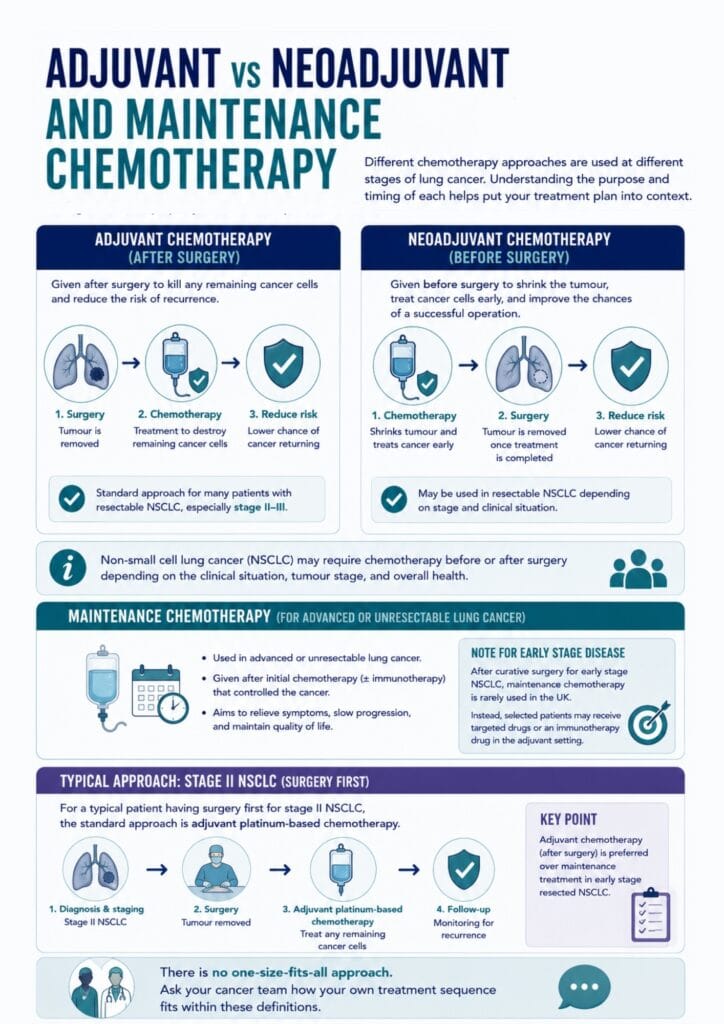
It helps to understand the key terms. Adjuvant chemotherapy is given after surgery. Neoadjuvant chemotherapy is given before surgery to shrink the tumour and treat cancer cells early, with the plan to proceed to cancer surgery once treatment is completed. Non-small cell lung cancer may require chemotherapy before or after surgery depending on the clinical situation.
Maintenance chemotherapy is more relevant in advanced or unresectable lung cancer, where ongoing treatment aims to relieve symptoms and slow progression. In early-stage disease after curative lung surgery, maintenance chemotherapy is rarely used in the UK; instead, selected patients may receive targeted drugs or an immunotherapy drug in the adjuvant setting.
For a typical patient having surgery first for stage II NSCLC, the standard approach is adjuvant platinum-based chemotherapy rather than maintenance treatment, as part of a broader plan for lung cancer surgery and what to expect. Ask your cancer team how your own treatment sequence fits within these definitions.
"I had rib pain for 6 years, was bounced around NHS without diagnosis. I was recommended to Mr Scarci — at consultation within minutes he knew what the problem was. Was offered surgery date the next week. 2 weeks post surgery I am almost back to full health."
Typical Chemotherapy Regimens Used After Lung Cancer Surgery
Adjuvant lung cancer chemotherapy usually involves a combination of chemotherapy drugs given in cycles over several months. Non-small cell lung cancer can be treated with a combination of chemotherapy drugs, and the most common UK regimens include, alongside various lung cancer surgery techniques and considerations:
Regimen | Typical Use | Key Considerations |
Cisplatin + vinorelbine | Squamous and non-squamous NSCLC | Strongest trial evidence; requires good kidney function |
Cisplatin + pemetrexed | Non-squamous NSCLC only | Better tolerated; less neutropenia |
Carboplatin-based combinations | When cisplatin not suitable | Alternative for impaired kidney function or hearing |
Chemotherapy drugs used include cisplatin or carboplatin with others, and cisplatin is often preferred because it has slightly better evidence of survival benefit. However, it has stricter requirements for kidney function and general health. | ||
Adjuvant chemotherapy generally includes 4 to 6 cycles of treatment over a few months, with each next cycle repeated every 3 weeks if blood counts recover well. Treatment cycles typically last 3 to 6 months for chemotherapy. Oncologists tailor the exact cancer drugs and doses to the patient’s age, kidney function, hearing, and other factors. |
Chemotherapy drugs used include cisplatin or carboplatin with others, and cisplatin is often preferred because it has slightly better evidence of survival benefit. However, it has stricter requirements for kidney function and general health.
Adjuvant chemotherapy generally includes 4 to 6 cycles of treatment over a few months, with each next cycle repeated every 3 weeks if blood counts recover well. Treatment cycles typically last 3 to 6 months for chemotherapy. Oncologists tailor the exact cancer drugs and doses to the patient’s age, kidney function, hearing, and other factors.
Not sure about your treatment options?
Mr Scarci provides expert consultations typically within one week of contact.
How and Where Post-Surgery Chemotherapy Is Given
Most lung cancer patients receive adjuvant chemotherapy as an outpatient at a cancer day unit rather than staying in hospital, following an initial phase of post-surgery recovery for lung cancer. Chemotherapy drugs are typically administered intravenously through one of several methods:
A short cannula in the arm for straightforward infusions
A PICC line (a small tube threaded into a large vein from the arm) for longer regimens
An implantable port or central line placed under the skin in the chest area
A typical visit involves pre-chemotherapy blood tests, review by your doctor or nurse, infusion in a chair over several hours via a thin tube, and going home the same day. Some chemotherapy drugs are available in oral tablet form, though this is less common as the main adjuvant regimen for resected NSCLC.
Practical tips: bring something to read, arrange transport home, and keep well hydrated throughout treatment days.
Benefits of Chemotherapy After Lung Cancer Surgery
Adjuvant chemotherapy offers a modest but real survival benefit for many lung cancer patients with resected stage II–III NSCLC. Studies show adjuvant chemotherapy improves overall 5-year survival rates by about 4% to 5% across all eligible patients. The LACE meta-analysis, pooling over 4,500 patients, demonstrated an overall hazard ratio for death of 0.89, translating to a 5.4% absolute survival benefit at five years. The ANITA trial showed an even larger improvement of approximately 8.6% in five-year survival for stage II–IIIA disease.
Chemotherapy after surgery aims to eliminate remaining cancer cells that may be too small to detect on scans. Even after tumour removal, microscopic cancer cells may circulate in the body, and adjuvant chemotherapy reduces lung cancer recurrence risk after surgery. It also reduces the relative risk of tumour recurrence by about 10% overall. The greatest benefit is seen in patients with lymph node involvement or larger tumours, which is why accurate pathological staging matters so much to reduce the chances of lung cancer coming back.
Want a specialist opinion on your condition?
Get a clear answer from a surgeon who will be with you throughout.
Risks and Side Effects of Adjuvant Chemotherapy
Chemotherapy drugs are powerful anti-cancer medicines used to treat cancer, and they can cause both short-term and, rarely, long-term side effects. Chemotherapy side effects depend on the drugs used and vary between patients.
Common side effects include:
Fatigue and general tiredness
Nausea or vomiting (well controlled with modern anti-sickness medicines)
Hair loss or temporary hair thinning
Loss of appetite and weight loss
Increased risk of infections due to low white blood cells
Diarrhoea or constipation
Less common but important possible side effects with typical NSCLC regimens include peripheral neuropathy (numbness or tingling in hands and feet), kidney problems with cisplatin, hearing changes, and anaemia or bruising from low blood counts. Chemotherapy can increase the risk of infections, so patients should report fever or symptoms of illness promptly. In landmark trials, grade 3–4 neutropenia occurred in up to 85% of patients, though treatment-related death was around 2%.
Most specific side effects improve after treatment ends, and oncologists may adjust doses, delay cycles, or switch drugs if needed. A specialist nurse and your health professionals team can help with symptom management throughout.
Balancing Benefits and Risks: Who Is a Good Candidate?
The decision to start chemotherapy after lung cancer surgery is highly individual. Key factors considered include:
Pathological stage (tumour size, spread, lymph nodes)
Performance status and day-to-day functioning
Lung function, kidney function, and heart health
Age and other medical conditions
Older patients may have unclear benefits from post-surgery chemotherapy, and careful assessment is essential for anyone over 75. However, chemotherapy can be safely given to healthy elderly lung cancer patients after thorough evaluation. Tools such as geriatric assessment, cardiology review, and lung function tests help doctors judge whether chemotherapy treatment is likely to be safe and worthwhile.
Choosing not to have more treatment is a valid decision in some circumstances. Supportive follow-up and surveillance with regular scans remain essential regardless.
The Role of Clinical Trials and Newer Treatments
Clinical trial research has shaped current standards for adjuvant chemotherapy and continues to explore new options for lung cancer patients. Newer treatments may combine chemotherapy with targeted therapy or immunotherapy based on tumour biology, and chemotherapy is often combined with immunotherapy for advanced non-small cell lung cancer and increasingly in the adjuvant setting, alongside advances in robotic-assisted lung cancer surgery for suitable early-stage cases.
Chemotherapy is commonly combined with immunotherapy after surgery in selected cases. NICE has recently recommended adjuvant atezolizumab after chemotherapy for PD-L1 positive stage II–IIIA NSCLC, and pembrolizumab as adjuvant treatment for high-risk patients. Targeted drugs such as osimertinib are now approved for EGFR-mutant resected NSCLC. Emerging studies like the AIM-HIGH trial are investigating gene expression profiles to better identify which early-stage patients truly benefit from additional treatment.
Suitable patients may be offered entry into a clinical trial through their oncology team. Participation is voluntary but can give access to promising treatments while contributing to future care improvements.
Recovery Timeline and Follow-Up During Chemotherapy
Adjuvant chemotherapy is usually started after the patient has recovered sufficiently from lung cancer surgery. Chemotherapy is often started within 8 weeks post-surgery, particularly after minimally invasive operations such as video-assisted thoracoscopic surgery (VATS) or robotic procedures, and slightly later after open thoracotomy. UK audit data shows the average interval is around 62 days (approximately 9 weeks).
During treatment, monitoring includes blood tests before each cycle to check white cells, red cells, and kidney function. Clinic reviews assess pain, side effects, and overall wellbeing. Most adjuvant courses finish within about 3 months, after which patients move into a surveillance phase with periodic CT scans and clinic reviews.
The lung cancer surgeon and oncologist remain involved throughout, reviewing imaging, checking surgical sites, and adjusting follow-up plans. Patients should promptly contact their team if they develop a fever, shortness of breath, chest pain, or any sudden deterioration during treatment.
How Mr Marco Scarci Supports Patients Through This Decision

As a consultant thoracic surgeon in London, Mr Marco Scarci works closely with specialist lung cancer oncologists, radiologists, and nurse specialists in a multidisciplinary team. After lung cancer surgery, he discusses pathology results in detail with patients, explaining stage, lymph node status, and whether adjuvant chemotherapy is likely to be beneficial.
His practice emphasises minimally invasive surgery, including keyhole surgery (VATS and robotic techniques) to support faster initial recovery.
Both private and NHS patients can access tailored follow-up schedules, virtual consultations, and support in understanding complex treatment choices, including the option of private thoracic surgery in London.
If you are considering surgery or seeking a second opinion about lung cancer surgery and subsequent chemotherapy, you can arrange a consultation with Mr Scarci to review your individual case.
Frequently Asked Questions
How soon after lung cancer surgery does chemotherapy usually start?
Adjuvant chemotherapy usually starts once the patient has recovered enough after surgery. Typically 4–12 weeks later. Timing depends on the surgery type, wound healing, lung function, and overall recovery. Starting too soon can be unsafe, while delays beyond 12 weeks may reduce benefit. Less invasive procedures like wedge resection or VATS lobectomy often allow chemotherapy to begin sooner.
Can I work or look after my family while having adjuvant chemotherapy?
Many people continue some normal activities, including work, during chemotherapy but often need reduced hours or flexible arrangements due to fatigue and clinic visits. Side effects typically fluctuate with the treatment cycle, so you may feel better on some days than others. Employers in the UK have duties under equality legislation to make reasonable adjustments for employees undergoing cancer treatment. Speak to your doctor or nurse about what to expect with your specific regimen.
Does everyone lose their hair with lung cancer chemotherapy?
Hair loss depends on the specific chemotherapy drugs used. Common side effects such as hair loss and fatigue affect many patients, but some regimens cause only mild thinning while others cause more noticeable loss. If hair loss occurs, it is usually temporary, and hair normally regrows in the months after treatment ends, sometimes with changes in texture or colour. Ask your specialist nurse what to expect and about options such as head coverings.
What if I decide not to have chemotherapy after my surgery?
Declining chemotherapy is a valid choice. You will still be offered regular follow-up with scans and clinic reviews to monitor for any signs of cancer returning. The main downside is a higher risk that any remaining microscopic cancer cells could grow back over time, especially in higher-stage disease. An open discussion with your surgeon and oncologist about personal priorities, other health conditions, and alternatives such as targeted therapy or close surveillance is always encouraged.
Will chemotherapy affect future treatments if my cancer comes back?
Adjuvant chemotherapy usually doesn’t prevent later treatment, but it can affect which drugs are chosen if the cancer returns. Doctors consider previous treatments, side effects, genetic test results, and overall health when planning next steps, with options like immunotherapy or targeted therapy sometimes still available.
