

An air leak after lung surgery is one of the most common complications following procedures such as lobectomy or wedge resection. For most patients, it settles within a few days. For a minority, it persists and extends the hospital stay.
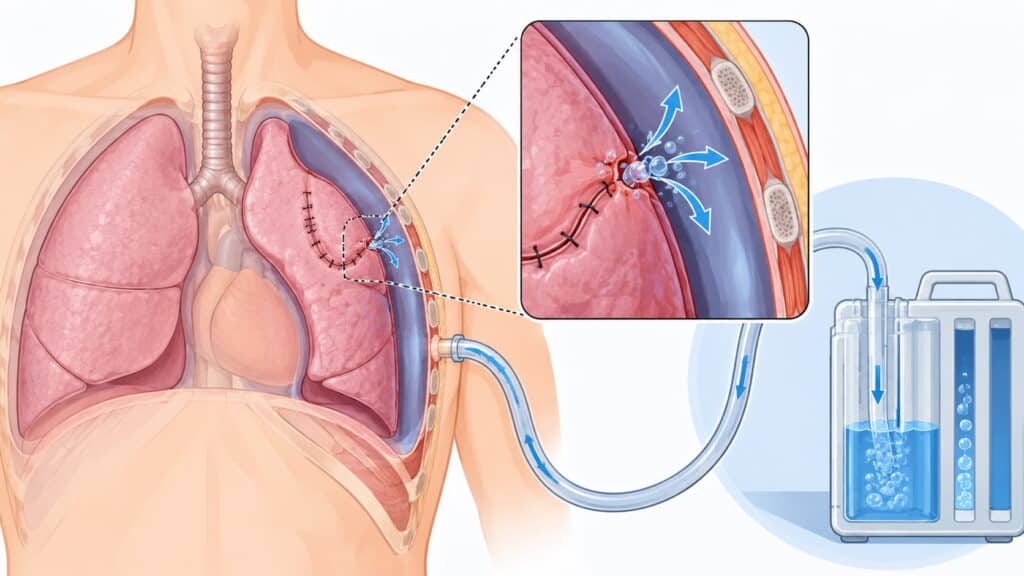
This guide covers what causes air leaks, how they are monitored, when they become a concern, and how they are prevented and managed after keyhole lung surgery.
An air leak after lung surgery means air escapes from the cut or stapled lung surface into the pleural space. Most leaks are small, expected, and resolve within a few days without additional treatment.
A prolonged air leak (PAL) is generally defined as an air leak lasting beyond postoperative day 5. Reported rates vary depending on the procedure, definition used and underlying lung condition.
Important risk factors include chronic obstructive pulmonary disease, emphysema, upper lobe resection, steroid use, poor nutrition and reduced lung function.
Air leaks are tracked through a chest tube or chest drain, sometimes connected to a digital drainage system that measures airflow in mL/min.
Sudden worsening breathlessness, fever above 38 °C, sharp chest pain at rest, rapidly increasing swelling under the skin of the neck or face, or coughing up blood requires urgent medical attention.
What Is an Air Leak After Lung Surgery?
After lung surgery, an air leak means that air is escaping from the lung surface into the pleural space instead of remaining inside the airways and alveoli. The underlying mechanism is usually an alveolar-pleural fistula: a communication between the air-containing lung parenchyma and the space around the lung. Surgical cutting and stapling of lung tissue can create these small channels, and until the tissue heals, air may continue to pass through.
This is different from a spontaneous pneumothorax, although the effect can be similar. Air collecting in the pleural space can prevent the lung from fully expanding.
Air leaks are relevant after thoracic surgery involving the lung, including lobectomy, segmentectomy, wedge resection, lung volume reduction surgery or surgery for lung cancer. In keyhole lung surgery using VATS or robotic approaches, lung tissue is commonly divided using stapling devices, and small openings along the staple line or fragile tissue can allow air to escape temporarily.
Small air leaks are common immediately after pulmonary resection. A mild air leak visible during the first hours after surgery is often expected, and most stop within a few days without treatment beyond the chest drain already in place.
Not sure about your treatment options?
Mr Scarci provides expert consultations typically within one week of contact.
Why Do Air Leaks Occur After Keyhole (VATS/Robotic) Lung Surgery?
Keyhole lung surgery, whether VATS or robotic-assisted, uses small incisions and a camera to perform operations that previously required a larger thoracotomy. Patients undergoing minimally invasive thoracic surgery often experience less pain, shorter hospital stays and a faster return to daily activity than with traditional open surgery when these approaches are appropriate.
During these procedures, lung tissue is divided with endoscopic staplers and the operating theatre team views the surgical field on a high-definition screen. At the end of the resection, the surgeon may inflate the lung under saline to look for visible bubbling along the staple line, a technique commonly referred to as a submersion or leak test.
Modern magnification and lighting make small leaks easier to identify. Detecting a small intraoperative leak does not necessarily mean that a patient will develop a clinically significant prolonged air leak.
Experienced surgeons use careful surgical techniques to minimise postoperative air leaks, including meticulous stapling, selective use of staple-line reinforcement and surgical sealants in higher-risk lungs. Keyhole surgery itself does not mean that an air leak is more dangerous, and minimally invasive approaches generally support earlier mobilisation and recovery.
"After multiple failed consultations elsewhere, Mr Scarci identified exactly what was wrong and operated within two weeks. Recovery was smooth and I'm back to normal life."
How Common Is Prolonged Air Leak After Lung Resection?
Prolonged air leak occurs in a minority of patients after lung resection, with reported rates varying according to the definition used, type of operation and patient population. Published studies commonly report rates between approximately 5% and 25%, while large modern lung-resection series often report figures closer to 5% to 10%.
PAL is generally defined as an air leak lasting beyond postoperative day 5. Some studies and individual centres have used postoperative day 7 instead, which partly explains differences between published incidence figures.
One large series of 2,384 patients undergoing lobectomy, segmentectomy or wedge resection reported PAL in 5.4% of patients. Other lobectomy cohorts have reported rates around 8%, demonstrating how the incidence changes with the operation and population being studied.
In lung volume reduction surgery for severe emphysema, prolonged air leaks are considerably more common because the lung tissue is hyperinflated, fragile and difficult to seal. For smaller wedge resections in otherwise healthy lung, PAL incidence is generally lower.
Individual risk depends on lung function tests, CT scan findings, the condition of the lung tissue and the specific type of surgery planned.
Have a question about your diagnosis?
A consultation gives you a personalised plan — not a generic estimate.
Short-Term vs Prolonged Air Leak: What’s the Difference?
A short-term air leak is usually present within the first one to three days after surgery. It gradually reduces, the remaining lung stays adequately expanded, and it has limited impact on recovery beyond requiring a chest tube for a little longer.
A postoperative prolonged air leak persists beyond postoperative day 5. PAL can substantially extend the hospital stay: large studies have reported median stays of around nine days in patients with PAL compared with approximately three days in those without it.
Digital drainage systems may also measure the airflow rate through the chest drain. Some protocols use sustained airflow thresholds such as 50 mL/min or less to help determine whether chest drain removal is safe, but these are drain-management criteria rather than the definition of prolonged air leak itself.
PAL is also associated with higher postoperative morbidity and may contribute to infection, reduced mobility and other complications. Even so, many prolonged air leaks eventually settle without another operation.
"I had rib pain for 6 years, was bounced around NHS without diagnosis. I was recommended to Mr Scarci — at consultation within minutes he knew what the problem was. Was offered surgery date the next week. 2 weeks post surgery I am almost back to full health."
Typical Symptoms and How an Air Leak Is Detected
Many patients with an air leak have no additional symptoms beyond the chest tube and visible bubbling within the drainage system. Symptoms can sometimes include increasing shortness of breath, chest tightness, cough, mild chest discomfort or subcutaneous emphysema, which can feel like crackling beneath the skin.
Detection generally relies on three main methods:
Method | What It Shows |
Water seal chamber | Visible bubbles during breathing or coughing |
Digital drainage device | Continuous airflow in mL/min and pleural pressure trends |
Serial chest X-ray | Lung expansion, residual pleural space and subcutaneous air |
Monitoring bubbling or airflow through a chest drain is the main method used to assess postoperative air leaks. Modern digital drainage systems quantify the leak objectively and can help the surgical team track whether airflow is falling over time and determine when drain removal is appropriate.
At home, new or worsening breathlessness, sudden sharp chest pain, fever, or visible neck or facial swelling should prompt immediate contact with the hospital or emergency services.
Want a specialist opinion on your condition?
Get a clear answer from a surgeon who will be with you throughout.
Risk Factors for Air Leak and Prolonged Air Leak
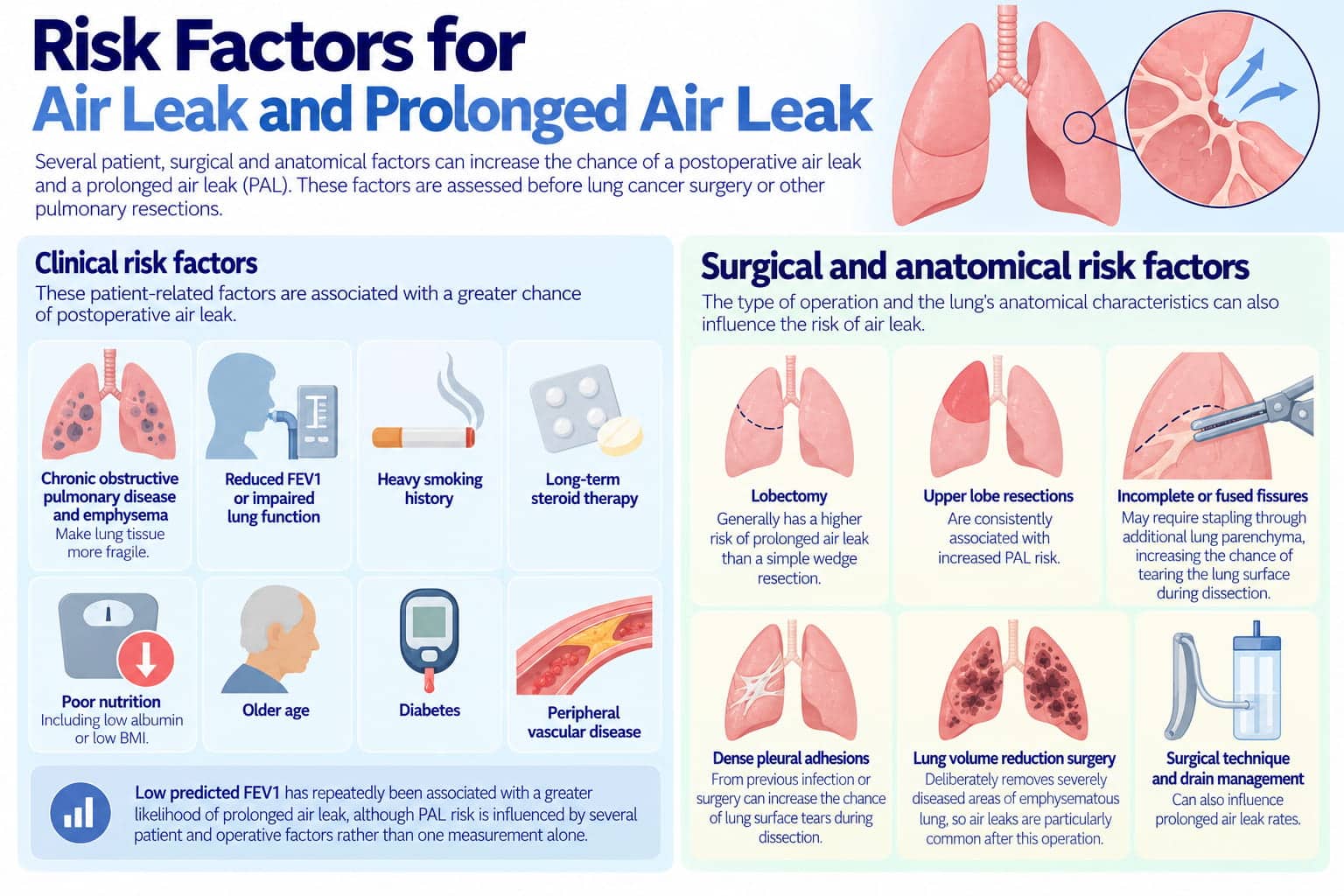
Clinical risk factors associated with a greater chance of postoperative air leak include:
Chronic obstructive pulmonary disease and emphysema, which make lung tissue more fragile
Reduced forced expiratory volume (FEV1) or otherwise impaired lung function
Heavy smoking history
Long-term steroid therapy
Poor nutrition, including low albumin or low BMI
Older age
Diabetes and peripheral vascular disease
Low predicted FEV1 has repeatedly been associated with a greater likelihood of prolonged air leak, although PAL risk is influenced by several patient and operative factors rather than one measurement alone.
Surgical and anatomical risk factors also play an important role. Lobectomy generally has a higher risk of prolonged air leak than a simple wedge resection, while upper lobe resections are consistently associated with increased PAL risk. Incomplete or fused fissures may require stapling through additional lung parenchyma, while dense pleural adhesions from previous infection or surgery can increase the chance of tearing the lung surface during dissection.
Lung volume reduction surgery deliberately removes severely diseased areas of emphysematous lung, so air leaks are particularly common after this operation. Surgical technique and postoperative drain-management protocols can also influence PAL rates.
These factors are assessed before lung cancer surgery or other pulmonary resections so that patients can understand their individual risk.
Technical Aspects During Surgery That Influence Air Leaks
Several choices made in the operating theatre can affect whether a postoperative air leak develops and how long it persists.
Stapling devices are available with different cartridge thicknesses and optional buttressing materials. Reinforced stapling can help distribute pressure more evenly along the staple line in selected fragile lungs. Biological glues and polyethene glycol-based surgical sealants may also be used selectively to help control intraoperative air leaks.
The pleural tent technique, in which the parietal pleura is mobilised and placed over the remaining lung, can help reduce residual pleural space after selected upper-lobe resections. A fissureless lobectomy avoids opening the fissure directly and may reduce the amount of raw lung parenchyma exposed during surgery.
These techniques add cost or complexity and are therefore not required for every operation. The approach is individualised according to factors such as emphysema severity, previous cardiothoracic surgery, pleural adhesions and the quality of the lung tissue.
Not sure about your treatment options?
Mr Scarci provides expert consultations typically within one week of contact.
Chest Tubes: Why You Need Them and How They Help
Almost every patient leaves the operating theatre after lung surgery with at least one chest tube (also called a chest drain) connected to a collection system. The tube sits in the pleural space and serves three purposes: draining air, draining fluid, and allowing the surgical team to monitor any ongoing leak.
Initial management typically uses low-grade suction (around −20 cmH₂O) to pull the lung against the chest wall. Once the air leak diminishes, many surgeons switch to water seal (no suction), which allows the pleural surfaces to rest against each other and promotes sealing of small leaks.
Digital drainage systems record airflow in mL/min and pleural pressure in real time, removing the subjectivity of watching for bubbles. Digital drainage systems improve management of postoperative air leaks by supporting earlier, evidence-based drain removal and patient mobilisation. Research published in J Thorac Dis (Thorac Dis) shows these systems reduce chest tube duration by roughly half a day to one day on average compared with analogue underwater-seal devices (JTD).
The duration of chest tube placement is linked directly to the presence and severity of postoperative prolonged air leak. Drain removal happens only once it is safe: sustained low airflow, full lung expansion on X-ray, and no worsening subcutaneous emphysema.
How Air Leaks Are Managed Immediately After Surgery
The usual pathway after lung surgery begins in the post-anaesthesia care unit or, where necessary, a high-dependency setting. Nursing staff monitor breathing, oxygen levels, chest tube output and air-leak status at regular intervals.
Most early air leaks are managed conservatively. The core elements include:
Monitoring the air-leak trend, with a steadily decreasing leak being reassuring
Adequate pain relief so the patient can breathe deeply and cough effectively
Chest physiotherapy, incentive spirometry and breathing exercises
Early mobilisation, including sitting upright and walking as soon as it is safe
Adequate pain relief and breathing exercises support recovery by enabling good ventilation, coughing and lung expansion. Nurses and physiotherapists encourage these measures from the early postoperative period.
Regular clinical reviews consider symptoms, chest imaging and drain measurements. The team then decides whether to continue current management, alter drainage settings or remove the chest tube.
In selected stable patients, it may be possible to go home with a portable one-way chest drain system under close outpatient supervision. This requires clear instructions, appropriate support and planned follow-up.
Have a question about your diagnosis?
A consultation gives you a personalised plan — not a generic estimate.
Options for Treating Prolonged Air Leak
When an air leak persists beyond approximately five days, the team may consider additional treatment depending on the severity of the leak, lung expansion and the patient’s clinical progress.
Autologous Blood Patch
An autologous blood patch involves introducing the patient’s own blood through the chest tube into the pleural space. The blood forms a clot around the leaking area and promotes sealing of the lung surface.
Autologous blood pleurodesis is relatively simple and can be repeated when appropriate. It may resolve persistent air leaks and reduce the need for more invasive treatment.
Chemical Pleurodesis
Chemical pleurodesis involves introducing an agent through the chest drain to produce controlled inflammation and encourage the pleural surfaces to adhere. Agents can include talc or other substances selected according to the clinical situation and local protocol.
Pleurodesis is usually considered when the lung is sufficiently expanded, and the treating team believes pleural adhesion is appropriate.
Endobronchial Valves
If the airway supplying a persistent leak can be identified, endobronchial valves may be positioned bronchoscopically to reduce airflow through that part of the lung. The valves allow air and secretions to leave the affected segment while reducing airflow towards the leak.
This approach is generally reserved for selected cases and is usually performed in specialised centres.
Reoperation
A return to theatre to repair a persistent leak or revise the staple line is uncommon. It may be considered when conservative management and less invasive treatments have failed or where a clear surgically correctable problem exists.
Potential Complications of Air Leaks
While most air leaks are self-limiting, prolonged air leaks can have significant consequences.
Complication | Detail |
Prolonged hospital stay | Chest drainage and inpatient monitoring may be required for longer |
Pulmonary infection | PAL is associated with pneumonia and pleural infection |
Blood clots | Reduced mobility may increase venous thromboembolism risk |
ICU readmission | More complex postoperative courses can require higher-level care |
Atrial fibrillation | Postoperative arrhythmias may occur alongside other complications |
Respiratory difficulty | Persistent pleural air may interfere with full lung expansion |
Higher overall morbidity | PAL is associated with increased postoperative complications |
Non-life-threatening effects also matter. Persistent pain at the chest tube site, anxiety, disturbed sleep and restriction of movement can make recovery more difficult.
Close monitoring, early physiotherapy, appropriate venous thromboembolism prevention and treatment of infection when indicated help reduce these risks. Air leaks after lung surgery are a recognised adverse event, and their management is incorporated into postoperative planning from the outset.
Recovery at Home With or After an Air Leak
After uncomplicated keyhole lung surgery without a prolonged air leak, hospital stay is often only a few days. With a postoperative prolonged air leak, the stay may be longer, although selected stable patients can sometimes be discharged with a portable chest drain.
If you go home with a chest drain, you should receive clear instructions about drain care, who to contact if anything changes and when you will be reviewed by the thoracic surgery team.
Practical self-care measures include:
Avoid heavy lifting until cleared by your surgeon
Walk several times a day, increasing distance gradually
Continue breathing exercises and coughing techniques as instructed
Keep the drainage site clean and dry
Do not interfere with chest tube connections
Seek urgent medical review for suddenly worsening breathlessness, new chest pain at rest, high temperature with chills, rapidly increasing subcutaneous swelling, or a blocked, disconnected or non-draining chest tube.
Scheduled follow-up appointments remain important. Chest imaging, the surgical wound and any residual leak can be reviewed as part of follow-up care after lung surgery.
Living With Reduced Lung Volume After Surgery
Even after an air leak has healed and the chest tube is removed, many patients notice breathlessness or reduced exercise tolerance for weeks or months. Recovery depends on the amount of lung removed, underlying lung disease and overall fitness.
After lung resection or lung volume reduction surgery, compensation occurs through expansion of remaining lung tissue, changes in diaphragm mechanics and cardiovascular adaptation. Structured pulmonary rehabilitation can support exercise tolerance and quality of life.
Helpful lifestyle measures include smoking cessation, regular low-impact aerobic activity, good nutrition, maintaining a healthy weight and optimising inhaler treatment in patients with COPD.
Long-term problems such as chronic breathlessness, nerve-related chest wall pain or anxiety about cancer recurrence should be discussed with the surgeon or GP. Many patients return to work, travel and normal daily activities after recovery, including following major thoracic surgery for lung cancer.
Pre-Surgery Planning: Reducing Your Risk of Air Leak
Some risk factors, such as the severity of emphysema or the anatomy of the lung fissures, cannot be removed. However, overall surgical risk can often be reduced by optimising health before surgery.
Practical prehabilitation measures can include:
Stop smoking before surgery where possible
Complete recommended pulmonary rehabilitation or breathing exercises
Improve nutrition if underweight or malnourished
Optimise diabetes, blood pressure and other chronic conditions
Detailed imaging and lung function tests, including spirometry measuring forced expiratory volume and gas transfer testing such as DLCO, help the thoracic surgeon select the most appropriate operation.
For some people with early lung cancer, a segmentectomy rather than a full lobectomy may be oncologically appropriate. The decision depends on tumour characteristics, staging, anatomy and physiological reserve, rather than air-leak risk alone.
Pre-operative consultation is also an opportunity to discuss individual PAL risk, recovery expectations and what support would be available if an air leak persisted.
How Mr Marco Scarci Manages Air Leaks in His Thoracic Surgery Practice
Mr Marco Scarci is a London-based consultant thoracic surgeon specialising in minimally invasive lung surgery, including keyhole lobectomy, segmentectomy and lung volume reduction surgery. Preventing and managing air leaks begins with pre-operative assessment of lung function, CT imaging, and individual clinical risk factors.
During surgery, his approach may include meticulous stapling, intraoperative leak testing and selective use of sealants or reinforcing materials when appropriate. VATS or robotic-assisted techniques may be used where clinically suitable, while postoperative management incorporates careful monitoring of chest-drain output and air-leak trends.
His enhanced recovery approach prioritises early mobilisation, effective pain control and chest physiotherapy to support lung expansion and recovery. Follow-up continues after hospital discharge, including assessment of breathlessness, chest-drain concerns and overall progress.
Patients concerned about air leak after lung surgery, or those planning surgery for lung cancer or emphysema, can discuss their individual risk and postoperative management during consultation.
When to Seek Urgent Medical Help
Patients and families should know which symptoms require urgent medical attention after lung surgery.
Call 999 or attend A&E immediately if you experience:
Sudden or rapidly worsening shortness of breath
Significant chest pain at rest
Coughing up blood
High fever with chills and feeling acutely unwell
Confusion or fainting
Rapid neck or facial swelling caused by air beneath the skin
Bring your discharge summary if you have recently undergone surgery.
For non-urgent concerns, such as gradually increasing mild breathlessness, questions about drain output or discomfort around the wound, contact the thoracic surgery team or hospital helpline.
Any sudden change in a home chest drain, including blockage, disconnection, loss of drainage or a major change in bubbling, should be treated as urgent rather than waiting to see whether it resolves.
Frequently Asked Questions
How long does an air leak usually last after keyhole lung surgery?
Many small air leaks stop within the first 2 to 4 days after VATS or robotic lung resection, allowing the chest tube to be removed before discharge. If the leak persists beyond 5 to 7 days, it is classified as prolonged, but it can still settle over the following days with conservative treatment. This is more common in patients with emphysema or after upper lobectomy. The surgical team reviews progress daily and discusses options if the leak does not improve.
Can I fly on an aeroplane if I recently had an air leak?
Patients should not fly until the surgeon confirms that the lung is fully expanded and the air leak has resolved on imaging. For uncomplicated cases, the typical minimum wait is at least 2 weeks after chest tube removal. If there was a prolonged air leak or a residual pneumothorax, the delay is longer. Obtain written clearance from your thoracic surgeon before booking flights, especially for long-haul travel.
Does having a prolonged air leak mean my surgery has failed?
No. A prolonged air leak reflects how fragile the lung tissue is and how it responded to resection. The underlying goal of the operation, whether removal of lung cancer, reduction of hyperinflated emphysematous lung, or treatment of a collapsed lung, is usually fully achieved regardless of the air leak. PAL is a known, common complication factored into risk discussions and postoperative planning from the outset.
Is there anything I can do personally to help an air leak heal faster?
Yes. Adhere to the breathing exercises (incentive spirometry) and coughing techniques taught by physiotherapists. Walk regularly. Do not smoke. Take prescribed inhalers correctly. Maintain good nutrition and hydration to support tissue healing. Follow chest tube care instructions if at home, and avoid activities such as heavy lifting or strenuous sports that have not been cleared by your surgical team.
Will an air leak affect my long-term breathing capacity?
The long-term breathing impact depends mainly on the amount of lung removed and the severity of underlying disease (such as COPD or emphysema), not the temporary air leak itself. Once the leak has healed and the chest has recovered, many patients notice steady improvement in exercise tolerance over several months. Anyone worried about persistent breathlessness after 3 to 6 months should request a review with lung function tests and possible referral to pulmonary rehabilitation.
