

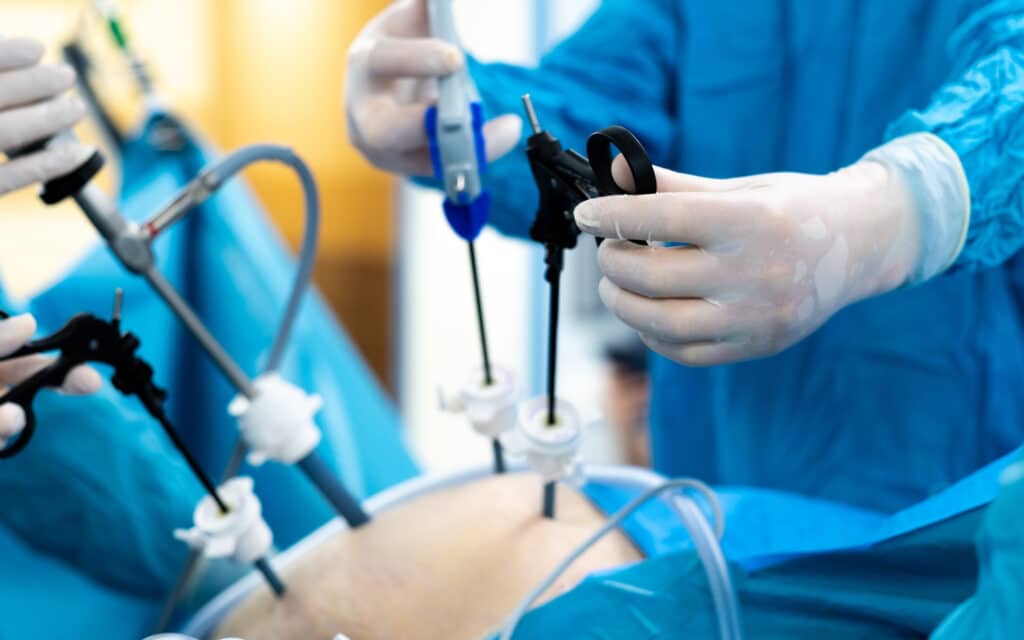
Thoracic surgery has changed dramatically over the past three decades. Where once a large open incision was the only option, today most patients with conditions affecting the lungs, chest wall, or mediastinum can be treated through small keyhole cuts using advanced camera and instrument systems.
This guide explains what minimally invasive thoracic surgery involves, the conditions it treats, and the specific benefits it offers over traditional approaches. It also covers what to expect before, during, and after the procedure, and when open surgery may still be the better choice.
Minimally invasive thoracic surgery enables surgeons to operate inside the chest through small incisions instead of performing a traditional open thoracotomy.
VATS and robotic-assisted surgery are the two main minimally invasive approaches. Both use a camera and specialised instruments to support precise surgical treatment.
Suitable patients can recover more comfortably and quickly with minimally invasive surgery. Compared with open surgery, it is associated with less pain, lower blood loss and fewer complications.
Clinical evidence supports the benefits of VATS for lung surgery. In the UK VIOLET trial, patients undergoing VATS lobectomy left hospital approximately one day earlier and experienced significantly fewer in-hospital complications.
Minimally invasive thoracic surgery can treat a broad range of chest conditions. These include early-stage lung cancer, a collapsed lung (pneumothorax), mediastinal and chest-wall tumours, and selected cases of emphysema and mesothelioma.
What Is Minimally Invasive Thoracic Surgery?
Minimally invasive thoracic surgery describes operations inside the chest cavity performed through several small cuts, typically 1 to 4 cm each, placed between the ribs. A camera and fine instruments are passed through these ports, allowing the surgeon to perform procedures while watching a high-definition screen. The muscles between the ribs are gently parted rather than divided, and no rib spreading is needed.
This stands in contrast to traditional open surgery, or thoracotomy, which often requires 6–8-inch incisions along the side of the chest. Open thoracotomy involves rib spreading and more extensive muscle dissection, which contributes to greater pain and longer recovery.
There are two main minimally invasive approaches: video-assisted thoracoscopic surgery, known as VATS, and robotic thoracic surgery. Both aim to achieve the same surgical goals as open techniques while causing less tissue trauma.
During VATS, a thoracoscope, which is a small camera on a thin tube, is inserted through one of the ports. This provides a magnified view of the lungs, pleura, mediastinum, and chest wall on a monitor, guiding the surgeon’s movements. In robotic surgery, a 3D high-definition camera delivers even greater magnification and depth perception, with the surgeon controlling wristed instruments from a console.
Common operations performed this way include:
VATS lobectomy for lung cancer;
VATS pleurodesis for recurrent pneumothorax;
robotic thymectomy for thymoma.
Minimally invasive techniques can also be used for various procedures including lung cancer surgery, biopsies, and chest wall repairs.
How Minimally Invasive Thoracic Surgery Works: VATS and Robotic Techniques
VATS Step by Step
The patient receives general anaesthesia, and a breathing tube is placed to allow one-lung ventilation, deflating the lung on the operated side to create working space inside the thoracic cavity. The surgeon then makes two to four small incisions between the ribs.
A thoracoscope is inserted through one port, and specialised instruments are passed through the others. Surgeons use the thoracoscope to visualise the chest cavity throughout the operation, guiding every step on a high-definition monitor.
Video-assisted thoracoscopic surgery was pioneered in 1991, and the first VATS lobectomy was successfully performed that same year. Since then, the technique has been refined into multi-port and uniportal variants. Mr Scarci uses advanced multi-port and uniportal techniques where appropriate to reduce surgical trauma further.
Robotic Surgery Step by Step
In robotic thoracic surgery, using systems such as the da Vinci surgical system, small port incisions are placed similarly to VATS. Robotic arms carrying wristed instruments are docked to these ports.
The surgeon sits at a console in the operating room, controlling every movement of the instruments while viewing the operative field through a 3D high-definition camera with up to 10x magnification.
In both VATS and robotic surgery, there is no rib spreading, and muscles are gently parted rather than cut. This underpins the core benefits: less pain, less blood loss, and faster recovery.
At the end of the operation, a chest drain is usually placed through one of the incision sites to remove air and fluid from the pleural space, typically removed after one to three days in uncomplicated cases.
Have a question about your diagnosis?
A consultation gives you a personalised plan — not a generic estimate.
Conditions Treated with Minimally Invasive Thoracic Surgery
A wide range of thoracic conditions can now be managed with minimally invasive techniques, often avoiding the need for a large incision.
Lung cancer
Minimally invasive thoracic surgery treats lung cancer effectively, particularly early-stage non-small cell lung cancer. Operations include lobectomy, segmentectomy, and wedge resection, together with lymph node dissection for accurate staging. Lobectomy for lung cancer is one of the most commonly performed minimally invasive thoracic procedures.
Pneumothorax (collapsed lung)
Recurrent or spontaneous pneumothorax is treated with VATS bleb or bulla resection and pleurodesis, sealing the pleural space to prevent further episodes. Patients experiencing a collapsed lung should understand pneumothorax symptoms, diagnosis, and treatment options, and hospital stay is often just one to three nights.
Emphysema
In selected patients with severe upper-lobe-predominant emphysema, VATS lung volume reduction surgery can improve breathing and exercise capacity while avoiding the greater trauma of open surgery.
Mesothelioma
VATS biopsy provides tissue for diagnosis, and in selected cases, pleurectomy or decortication can be performed as part of multimodality treatment, reducing surgical trauma in patients who are often already frail.
Mediastinal tumours and thymoma
Mediastinal tumours can be removed using robotic-assisted surgery, and video-assisted thoracoscopic surgery is used for thymectomy procedures, offering enhanced precision near the phrenic nerve and great vessels.
Chest wall tumours, rib fractures, and deformities
Minimally invasive surgery can treat chest wall deformities such as pectus excavatum, as well as chest wall tumours and complex rib fracture stabilisation.
Hyperhidrosis
Thoracoscopic sympathectomy is a minimally invasive approach for severe palmar or axillary sweating that has not responded to other treatments.
For a typical patient, such as someone with early-stage lung cancer undergoing a VATS lobectomy, this can mean leaving hospital within three to four days with smaller scars and manageable discomfort, rather than spending a week or more in hospital with a large surgical wound.
"Dr. Marco Scarci is a deeply knowledgeable, open-minded, and empathetic surgeon. He listens to details and solves problems to truly deliver the most optimal results. As a medical professional myself, I can tell you that finding a specialist like Dr. Scarci is very rare, and it is a privilege to have him in my corner."
Key Benefits: Less Pain, Less Blood Loss, Faster Recovery
The benefits of minimally invasive thoracic surgery are experienced both during the operation and throughout recovery, and they are well documented in clinical studies.
Less Pain
Minimally invasive surgery reduces postoperative pain significantly. Smaller incisions mean less muscle division and no rib spreading, which is the main source of severe post-thoracotomy pain. In the VIOLET randomised controlled trial, patients undergoing VATS lobectomy reported reduced postoperative pain from day two onwards and used approximately 10% less analgesia than those who had open thoracotomy. Reduced postoperative pain also translates to easier breathing and coughing after surgery, lowering the risk of chest infections and chronic pain syndromes.
Less Blood Loss
Smaller incisions lead to less blood loss during surgery. The magnified visuals provided by the thoracoscope or robotic camera allow accurate sealing of blood vessels using precise energy devices and staplers, often reducing the need for blood transfusion compared with open procedures that use larger incisions.
Faster Recovery
Patients experience faster recovery and earlier discharge after surgery. In the VIOLET trial, median hospital stay was four days for VATS versus five days for open lobectomy. In the ESTS propensity-matched analysis, the difference was even greater: 7.8 versus 9.8 days. Many patients resume office-based work within three to four weeks following minimally invasive lung surgery, subject to individual factors.
Fewer Complications
Minimally invasive techniques are associated with fewer postoperative complications. Large published series show lower rates of wound infection, pneumonia, atrial fibrillation, and prolonged air leak compared with open invasive thoracic surgery. In the VIOLET trial, in-hospital complications were reduced by approximately 26% in the VATS group.
While these benefits are significant, they depend on the patient’s overall health, the complexity of the condition, and the experience of the surgeon. Improved patient outcomes are most reliably achieved when an experienced thoracic surgeon selects the right approach for each individual case.
Want a specialist opinion on your condition?
Get a clear answer from a surgeon who will be with you throughout.
Minimally Invasive Thoracic Surgery for Lung Cancer
Lung cancer is the most common reason for major thoracic surgery in the UK. Since the 2010s, minimally invasive lobectomy has become the standard approach for many early-stage non-small cell lung cancers. Minimally invasive surgery is often preferred for early-stage lung cancer and other less complex thoracic conditions.
Types of Lung Surgery
The main operations performed minimally invasively for lung cancer include lobectomy (removal of a lobe), segmentectomy (removal of a segment), and wedge resection (removal of a small peripheral portion of lung tissue). Each of these can be combined with systematic lymph node dissection or sampling for accurate cancer staging.
Oncological Equivalence
Evidence indicates that VATS and robotic lobectomy can achieve cancer outcomes comparable with open surgery for appropriately selected patients. This includes complete tumour removal, lymph-node assessment, overall survival and long-term disease control. An individual patient data meta-analysis of randomised controlled trials found similar overall and disease-free survival for VATS and open thoracotomy in early-stage lung cancer, while VATS offered additional functional and recovery benefits.
Value in Higher-Risk Patients
Minimally invasive techniques are particularly valuable in older patients or those with other health problems such as mild heart failure or chronic obstructive pulmonary disease, where reducing surgical trauma can be critical to a safe recovery.
A Typical Scenario
Consider a patient diagnosed with stage I right upper lobe lung cancer. They undergo a VATS lobectomy in a London hospital, stay three to four nights, walk the day after surgery, and begin gentle home exercise within two weeks. By four weeks, most patients are returning to normal activities.
"I was diagnosed in March with a rare condition. My local hospital said it was inoperable due to the size of the mass. Mr Scarci reassured me the thymoma was resectable. I was booked for surgery the following week where he successfully removed the entire tumour."
Robotic Thoracic Surgery: Extending the Surgeon’s Capabilities
Robotic thoracic surgery is a type of minimally invasive surgery in which the surgeon controls robotic instruments from a console. It is not a “robot operating on its own” – every movement of the instruments is controlled in real time by the consultant surgeon.
Key Advantages
Robotic systems offer several technical advantages:
3D high-definition imaging that improves surgical visualisation with up to 10x magnification
Tremor filtration, removing natural hand tremor from instrument movements
Wristed instruments that articulate with seven degrees of freedom, exceeding the range of the human wrist
Enhanced precision and enhanced dexterity in a confined space, enabling precise movements near vital structures
The da Vinci Surgical System, which was FDA cleared in 2000, remains the most widely used platform. Robotic-assisted surgery employs a 3D high-definition camera that provides depth perception unavailable in standard VATS. Advanced imaging technology such as indocyanine green fluorescence aids in identifying vascular structures during complex procedures.
Applications
These features help particularly in complex procedures such as segmentectomy for small lung cancers, mediastinal tumour removal, and thymectomy for myasthenia gravis and thymoma, where surgical precision near the heart, great vessels, and phrenic nerve is essential.
Comparison with VATS
Robotic systems and VATS share the benefits of small incisions and fewer complications. A single-centre study of 619 patients found that robotic surgery achieved higher disease-free survival at five years (90.3% versus 77.6%) and harvested more lymph node stations than VATS, though these results require confirmation in larger randomised trials.
Learning Curve and Training
Robotic surgery training requires 20 to 80 cases for proficiency, while surgeons may need to perform 30 to 50 VATS cases to reach comparable competence. Simulation-based training is essential for mastering these techniques, and structured curricula are vital for comprehensive training.
Robotic thoracic surgery is available in selected private hospitals and some NHS centres, and many patients choose private minimally invasive thoracic surgery in London for faster access and tailored care.
Not sure about your treatment options?
Mr Scarci provides expert consultations typically within one week of contact.
Comparing Minimally Invasive and Open Thoracic Surgery
Both minimally invasive and open thoracotomy have a place in modern thoracic surgery. The goal is always to match the method to the patient’s anatomy and condition.
Feature | Minimally Invasive | Open Thoracotomy |
Incision size | 1-4 cm ports | 6-8 inches |
Rib spreading | No | Yes |
Hospital stay (lobectomy) | 3–5 days typically | 5–10 days typically |
Postoperative pain | Lower | Higher |
Cosmetic outcomes | Smaller scars | Larger scar |
Recovery time | 3–4 weeks to desk work | 6–8 weeks typically |
Cancer control | Equivalent for early stages | Equivalent |
Open procedures may improve cosmetic outcomes less favourably, but they remain necessary when safety or cancer clearance demands them. Conversion to open surgery may be necessary in the event of complications during minimally invasive thoracic surgery, such as unexpected bleeding or difficult anatomy, and this is a sign of good surgical judgment, not failure.
Who Is a Candidate for Minimally Invasive Thoracic Surgery?
Suitability for minimally invasive thoracic surgery is assessed individually. Surgeons evaluate patient eligibility for minimally invasive surgery based on several factors.
Assessment Criteria
The main factors considered include:
Lung function (spirometry, gas transfer tests)
Heart health, including any history of heart failure or arrhythmias
Previous chest surgery or radiotherapy, which may cause adhesions
Tumour size, position, and relationship to major vessels
General fitness, body habitus, and medical history
Most patients with early-stage lung cancer, recurrent pneumothorax, small mediastinal tumours, and many chest wall lesions can be treated using minimally invasive techniques. However, minimally invasive surgery may not be suitable for large or centrally located tumours that invade adjacent structures, where open surgery offers safer access.
The Decision Process
Imaging (CT, PET-CT, MRI) and multidisciplinary team discussions in UK practice guide the decision between a minimally invasive approach and open thoracotomy. Mr Scarci offers second opinions and virtual consultations for UK and overseas patients who want to understand whether a minimally invasive option is possible.
When minimally invasive surgery is not recommended, it is because open surgery offers a better chance of complete treatment and long-term control, not because of lack of skill or equipment.
Have a question about your diagnosis?
A consultation gives you a personalised plan — not a generic estimate.
Minimally Invasive Thoracic Surgery in Patients with Heart or Lung Disease
Many people needing thoracic surgery also have conditions affecting their baseline fitness, such as COPD, previous heart attacks, or heart failure. These conditions increase surgical risk but do not necessarily rule out an operation.
Why Minimally Invasive Techniques Help
Reduced surgical trauma means less impact on breathing, a lower risk of postoperative respiratory failure, and often better tolerance than a large open thoracotomy. For patients with limited lung reserve, the smaller physiological insult of a minimally invasive approach can be the difference between a safe recovery and a prolonged hospital stay.
Cardiac Considerations
Patients with significant cardiac history require careful pre-operative cardiac assessment, optimisation of medication, and close intra-operative monitoring. Where overall risk for a major resection is very high, minimally invasive approaches may still allow limited surgery or diagnostic biopsies that guide non-surgical treatments such as chemotherapy, immunotherapy, or radiotherapy.
Collaborative Care
At specialist centres in London, including Mr Scarci’s practice, thoracic surgeons work closely with cardiologists and respiratory physicians to tailor minimally invasive surgery to patients with complex medical backgrounds. Decisions are always individualised, balancing the potential benefit of removing lung cancer against the risks posed by co-existing heart or lung disease.
Why Choose Mr Marco Scarci for Minimally Invasive Thoracic Surgery in London?
Mr Marco Scarci is a consultant thoracic surgeon in London specialising in minimally invasive and keyhole thoracic procedures for lung, pleural, mediastinal, and chest wall conditions. He offers both private and NHS care.
Areas of Expertise
His practice covers the full spectrum of minimally invasive thoracic surgery:
VATS and robotic lung cancer surgery (lobectomy, segmentectomy, wedge resection)
Pneumothorax management
Chest wall deformities and tumours
Thymoma and mediastinal masses
Emphysema surgery
Hyperhidrosis
Complex rib fractures
Experience and Credentials
With over 5,000 minimally invasive procedures performed, more than 170 peer-reviewed publications, and consistently positive patient testimonials about his thoracic care, Mr Scarci brings high-volume experience to every case. He trained in Italy, Malta, and the UK, with a fellowship in minimally invasive thoracic surgery in Toronto.
He has been a consultant since 2011 and has authored or edited four surgical textbooks. Mentorship from experienced surgeons enhances training effectiveness, and Mr Scarci is actively involved in teaching advanced VATS and robotic techniques to the next generation of thoracic surgeons.
Patient-Centred Approach

Consultations are thorough and unhurried, with clear explanations of all options, including when open surgery is the safer choice. Virtual consultations are available for UK and international patients. He operates at hospitals equipped with modern theatres, advanced imaging technology, and robotic surgery platforms, supported by specialist thoracic anaesthetists and critical care teams.
If you are considering minimally invasive thoracic surgery or seeking a second opinion, contact Mr Scarci’s practice for an assessment tailored to your specific diagnosis and circumstances.
Want a specialist opinion on your condition?
Get a clear answer from a surgeon who will be with you throughout.
Frequently Asked Questions about Minimally Invasive Thoracic Surgery
How should I prepare for minimally invasive thoracic surgery?
Stopping smoking, staying active, eating well and following personalised medication advice can help support recovery. Pre-operative tests are used to plan the safest approach, and patients should arrange practical support at home after discharge.
Will I have visible scars after minimally invasive thoracic surgery?
Minimally invasive surgery uses several small incisions that are often placed in less visible areas. Scars usually fade over time, and wound care can help support healing and appearance.
Can minimally invasive thoracic surgery be done as day surgery?
Major thoracic procedures usually require an inpatient stay for monitoring and recovery. Some minor procedures may involve a short or overnight stay, but same-day discharge is uncommon.
Is minimally invasive thoracic surgery available on the NHS as well as privately?
VATS is available in many NHS thoracic units, while robotic surgery is generally offered at a smaller number of specialist centres. Private care may offer more flexibility around scheduling, hospital choice and robotic access.
How much does private minimally invasive thoracic surgery cost in London?
Fees vary by procedure, hospital, insurance cover and individual requirements. Patients can request a personalised quote and discuss payment or finance options with the practice before treatment.
