

A broken rib is one of the most common injuries seen in emergency departments across the UK, yet reliable information on what happens next (how long recovery actually takes, what you can do at home, and when you need specialist help) can be surprisingly hard to find.
This guide covers everything from first-day self-care to surgical options for complex fractures.
Most rib fractures heal in 6-8 weeks with good pain control and breathing exercises, though bruised ribs often settle within 2-4 weeks. Full recovery is expected by 8 to 10 weeks.
Patients should seek immediate care for worsening shortness of breath or severe chest pain, coughing up blood, or signs of a collapsed lung after a chest injury.
Bruised or broken ribs in elderly patients or those with multiple rib fractures carry significantly higher risks, including 10-15% mortality, and often benefit from early thoracic surgeon input.
Modern surgical options such as titanium rib plating and internal fixation can dramatically improve outcomes in selected patients, especially those with flail chest or displaced rib fractures.
Mr Marco Scarci, a consultant thoracic surgeon in London, provides rapid-access assessment, minimally invasive surgery, and comprehensive aftercare for rib injuries and chest wall injuries.
What is a broken rib, and how is it different from a bruise?
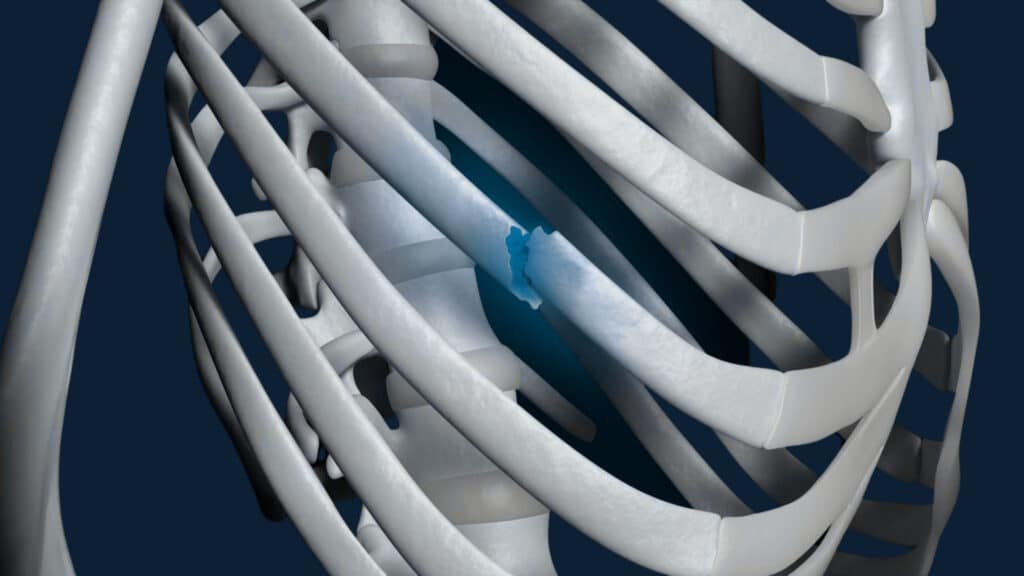
A rib fracture is a break or crack in one of the curved bones that form your rib cage. Bruised ribs, by contrast, involve damage to the surrounding muscles and soft tissues while the bone itself stays intact. Understanding the difference helps ensure proper care during recovery.
Broken or bruised ribs usually follow a clear event: a car accident, a fall, a blow during contact sports, or even a bout of severe coughing. Both can produce intense chest pain initially, making them difficult to tell apart without imaging.
A few definitions are worth clarifying. “Broken rib,” “rib fracture,” and “fractured rib” all mean the same thing. Non-displaced rib fractures remain aligned despite being broken, while displaced rib fractures have bone fragments out of alignment. Multiple rib fractures involve three or more consecutive ribs. Flail chest occurs with three or more ribs broken in two places, creating a segment of the chest wall that moves paradoxically with breathing. Stress fractures result from repetitive strain on the ribs rather than a single impact.
Most single, non-displaced fractures heal naturally without surgery. Ribs cannot be put in a cast (they move with every breath), so treatment for fractured ribs focuses on pain control and protecting lung function.
Have a question about your diagnosis?
A consultation gives you a personalised plan — not a generic estimate.
Symptoms of bruised or broken ribs
The hallmark of a fractured rib is a sharp, stabbing pain in your chest on one side, made worse by deep breaths, coughing, laughing, or twisting your upper body. Many people also notice the pain intensifying at night, particularly when rolling over in bed.
Typical symptoms include:
Localised tenderness when pressing the affected ribs
Visible swelling or bruising over the chest area
Difficulty taking a full breath because of pain
A catching or grinding skin feeling over the fracture site
Symptoms of bruised ribs and fractured ribs overlap considerably, and pain severity alone does not reliably distinguish one from the other. Since the symptoms are very similar, pain severity by itself can’t reliably distinguish between them, making proper assessment important.
Signs suggesting a more serious injury include worsening breathlessness, chest tightness, coughing up blood, or a visible chest deformity. Coughing up yellow or green mucus alongside a high temperature may indicate a bacterial infection. In many uncomplicated cases, a chest X-ray is not strictly necessary, but imaging matters if there is concern about a collapsed lung or internal bleeding.
A rough week-by-week picture:
Phase | Timeframe | What to expect |
|---|---|---|
Acute pain | Days 1–10 | Worst pain; strong pain relief needed; limited mobility |
Early improvement | Weeks 2–4 | Pain begins to ease; gentle walks tolerable; deep breathing less painful |
Consolidation | Weeks 4–6 | Most daily activities manageable; pain should improve within this window |
Late recovery | Weeks 6–8+ | Return to most normal routines; residual discomfort with exertion or cold weather |
Healing takes longer – often 8–12 weeks or more – with multiple fractures, flail chest, osteoporotic bone, underlying lung disease, or in elderly patients. Smoking, poorly controlled pain, diabetes, and malnutrition also slow recovery. | ||
Persistent or worsening pain beyond 8–12 weeks warrants specialist review for nonunion, malunion, or nerve injury. For more detail on what can happen when healing stalls, see Long-Term Effects of Broken Ribs. |
Pain that remains severe, localised, or mechanically “clicky” beyond 12 weeks should trigger referral to a chest wall specialist.
"I had rib pain for 6 years, was bounced around NHS without diagnosis. I was recommended to Mr Scarci — at consultation within minutes he knew what the problem was. Was offered surgery date the next week. 2 weeks post surgery I am almost back to full health."
Self-care for bruised or broken ribs at home
Most isolated rib injuries can be managed safely at home with structured self-care, confident pain management, and regular review by your GP.
Pain Management
Take paracetamol and NSAIDs such as ibuprofen regularly, rather than waiting for pain to build.
Pain relief is crucial for deep breathing and coughing. Without adequate analgesia, you breathe shallowly and risk a chest infection.
Speak to your doctor if over-the-counter options are not enough.
First 48-72 Hours
Apply an ice pack (or a bag of frozen peas) wrapped in a tea towel to the painful area for 15-20 minutes several times daily to reduce swelling.
Rest in a comfortable position, but avoid prolonged bed rest.
After around day 4, many patients switch to gentle heat if it feels more soothing.
Breathing Exercises
Take slow, deep breaths every hour while awake.
Regular deep breathing exercises help prevent pneumonia.
When you need to cough or sneeze, press a folded towel or pillow firmly against the affected ribs to ease pain and support the chest wall.
Watch for clear mucus changing to green mucus, which may signal infection.
Activity and Rest
Engage in light activity like walking to promote blood circulation and prevent lung congestion.
Gentle arm and shoulder movements are fine from day one.
Avoid heavy tasks. Do not lift heavy objects, play contact sports, or do anything that makes pain significantly worse in the first few weeks.
Sleep Tips
Prop your upper body up with pillows for the first few nights.
Lie on the uninjured side when possible.
Avoid positions that cause sudden jolts.
What to Avoid
Do not tightly strap or bind the chest.
Avoiding tight wrapping of the chest helps maintain deep breathing and reduces the risk of chest infection, especially in older adults.
Want a specialist opinion on your condition?
Get a clear answer from a surgeon who will be with you throughout.
When is a broken rib an emergency?
Although most rib fractures are straightforward, some are associated with life-threatening complications requiring immediate hospital care.
Go to the emergency department or call 999 if you experience:
Sudden or worsening breathlessness at rest, blue lips or fingertips
Severe chest pain that does not ease with rest or pain relief
Coughing up blood
Confusion or dizziness following a serious accident involving chest trauma
Visible chest deformity or a section of the rib cage breaks free and moves opposite to normal breathing
Significant abdominal pain or tenderness under the ribs may signal liver or spleen injury in trauma patients. Recognising serious broken rib symptoms is essential. Pneumothorax occurs when sharp bone fragments puncture the lung, causing a collapsed lung. Haemothorax can occur from rib fractures, lacerating blood vessels, or filling the pleural cavity with blood. Both may need urgent chest drain insertion.
Flail chest is a surgical emergency requiring immediate intervention and often demands intensive care support. Do not wait for a routine GP appointment if any of these signs appear after a severe injury.
"After two years of being told my symptoms were anxiety, Mr Scarci identified the problem immediately. The surgery was straightforward and I was discharged after three days. I only wish I had found him sooner."
Medical assessment and non-surgical treatment
In hospital, assessment includes a detailed injury history, examination of the chest wall and affected ribs regularly, breathing assessment, and monitoring of oxygen levels.
Imaging is guided by clinical suspicion. A chest X-ray helps identify pneumothorax or haemothorax, while a CT scan is used for high-energy trauma, multiple rib fractures, or suspected injuries to internal organs, the spine, or abdominal structures. If you have questions about imaging results, your physician can explain what the X-rays show.
Non-surgical rib fracture management involves:
Stepped pain control: paracetamol, NSAIDs, opioids where necessary
Regional techniques: intercostal nerve blocks can provide significant pain relief, as can a serratus anterior plane block, erector spinae plane block, or nerve block with local anaesthetic, often used when oral analgesics are insufficient
Pulmonary care: breathing exercises, physiotherapy, incentive spirometry, and early mobilisation to prevent pneumonia
Close monitoring for elderly patients, those with underlying lung disease, or anyone with rib fractures diagnosed as multiple or displaced
- In many cases, especially simple or single bone fractures, careful pain control and observation are sufficient and surgery is not required. Most rib fractures heal with conservative care alone.
Not sure about your treatment options?
Mr Scarci provides expert consultations typically within one week of contact.
Surgical treatment: When are rib fractures fixed with plates?
Surgical stabilisation of rib fractures (SSRF) involves realigning the broken ribs and securing them with titanium plates and screws through internal fixation. Surgery is rare for rib fractures unless internal organs are damaged, but displaced rib fractures are more likely to require surgery.
Main indications for rib fracture surgery:
Flail chest with displacement
Multiple displaced fractures causing respiratory failure despite adequate analgesia
Persistent acute pain unresponsive to optimal medical therapy
Nonunion beyond 8-12 weeks – surgery is indicated for nonunion after 8-12 weeks of healing
Rib fractures associated with recurrent pneumothorax or haemothorax
Evidence from systematic reviews and dedicated resources on broken rib symptoms and treatment shows that SSRF in flail chest reduces mechanical ventilation time by roughly 4.5 days, ICU stay by 3.4 days, and lowers pneumonia and mortality rates. Titanium rib plating can significantly improve recovery outcomes in the right patients.
The procedure typically involves an incision over the affected ribs, careful tissue mobilisation, fixation with low-profile plates, and sometimes VATS to inspect the lung and pleural cavity. Adjuncts such as intercostal nerve cryoablation and chest drain placement may be used.
Those seeking treatment should consult with specialists like Mr Marco Scarci, who has extensive experience in rib plating and chest wall reconstruction in London, using modern fixation systems and minimally invasive approaches where appropriate.
Risks and complications of rib fractures
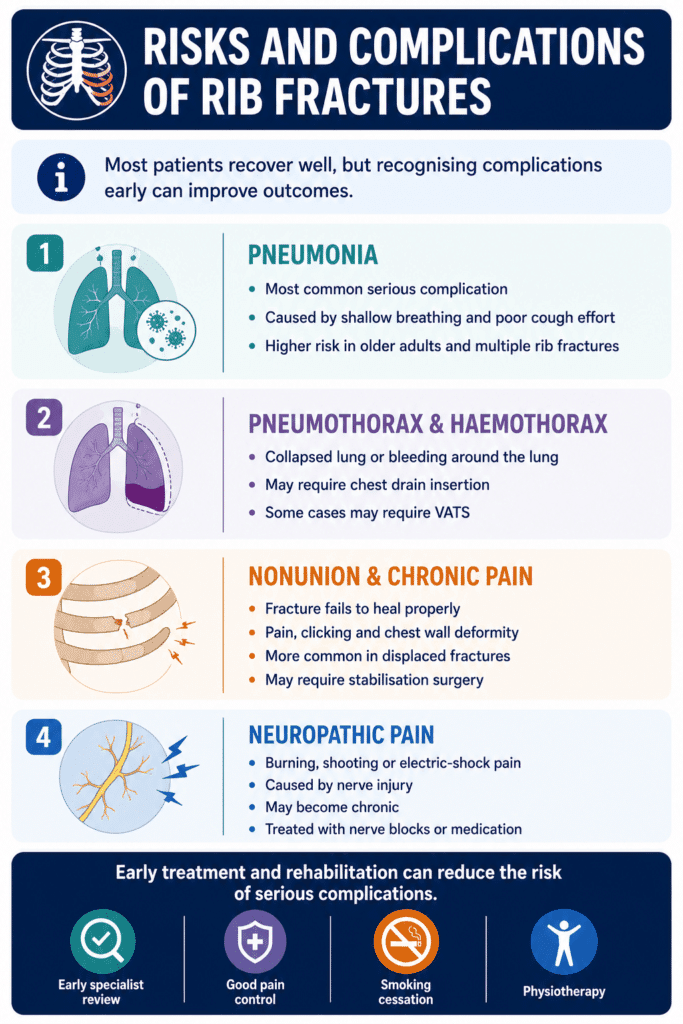
Most patients recover without major problems, but awareness of potential complications allows earlier intervention.
Pneumonia
Pneumonia is the most common serious complication of rib fractures, driven by shallow breathing and poor cough effort. The increased risk is particularly significant in elderly patients and those with multiple fractures, with studies showing pneumonia rates of 30-35% in older adults with several broken ribs.
Pneumothorax and Haemothorax
A collapsed lung or bleeding into the chest cavity may require chest drain insertion or VATS to evacuate blood and prevent trapped lung.
Nonunion and Chronic Pain
Nonunion is a fracture that fails to heal properly, causing pain, clicking sensations, and chest wall deformity. Research suggests 43% of patients with multiple fractures show at least one radiographic nonunion at six months. Displaced fractures carry a much higher rate than non-displaced ones. Management may involve surgical stabilisation and sometimes bone grafting.
Neuropathic Pain
Burning, shooting, or electric shock-like pain from intercostal nerve injury can develop into chronic pain. Treatment options include nerve blocks, medications, and, in selected cases, nerve procedures.
Timely specialist review, optimal pain control, smoking cessation, and good physiotherapy significantly reduce the likelihood of these life-threatening complications, especially when coordinated by an expert thoracic care specialist.
Have a question about your diagnosis?
A consultation gives you a personalised plan — not a generic estimate.
Special considerations: Elderly patients and complex chest wall injuries
Elderly Patients
Older adults, especially those over 65, have more fragile bones and less respiratory reserve. Even a low-impact fall or severe coughing episode can produce fractures that would barely trouble a younger person. Elderly patients with multiple rib fractures face 10-15% mortality rates, with each additional broken rib increasing the odds of dying by roughly 19%.
Even “minor” fractures in this group can quickly lead to pneumonia and respiratory failure if pain management is not aggressive and if breathing exercises are neglected. Priorities include early strong pain control (often regional techniques), prompt physiotherapy, close monitoring of oxygen levels, and a low threshold for hospital admission.
Complex Chest Wall Injuries
Complex patterns such as flail chest and multiple fractures involving displacement are more likely to require intensive care and early surgical stabilisation. Mr Marco Scarci’s practice places particular emphasis on tailored care for older and frail patients, balancing effective treatment with gentle, minimally invasive techniques.
How Mr Marco Scarci can help with rib fractures and chest wall injuries

Mr Marco Scarci is a consultant thoracic surgeon based in London, offering both NHS and private care with a focus on minimally invasive thoracic surgery and chest wall reconstruction. His broader thoracic surgery practice in London covers complex lung, pleural, and chest wall conditions.
Cases that particularly benefit from direct specialist assessment include:
Multiple or displaced rib fractures after a car accident or serious accident
Flail chest
Persistent pain after 8-12 weeks, suggesting nonunion
Chronic pain from an old fractured rib
The private pathway typically involves an initial face-to-face or virtual consultation, review of existing imaging, arrangement of a CT scan if needed, and development of an individualised treatment plan. Treatments available include optimised medical pain management, nerve blocks, epidural analgesia, titanium rib plating, VATS-assisted procedures, and long-term follow-up.
Rapid-access appointments are available for UK and international patients. If your recovery is not progressing as expected, or you are concerned about ongoing pain in your chest, contact Mr Scarci’s team to discuss next steps.
Want a specialist opinion on your condition?
Get a clear answer from a surgeon who will be with you throughout.
Frequently Asked Questions about Broken Rib Treatment
Can I fly with a broken rib?
Short domestic flights are often safe once pain is reasonably controlled and breathing is comfortable at rest. Long-haul flights soon after injury can increase the risk of complications, particularly if you have had a pneumothorax or haemothorax. Seek medical clearance before flying. Airlines may request a doctor’s letter if the injury is recent.
When can I drive again after a rib fracture?
You should only drive when you can safely perform an emergency stop, turn the steering wheel sharply, and check blind spots without significant pain. For most patients with a simple broken rib, this is usually around 3-4 weeks, but it may be longer with multiple fractures or following rib plating surgery. Check with your insurer and treating doctor before getting behind the wheel.
Is it normal to feel clicking or popping in my ribs as they heal?
Mild, occasional clicking in the early weeks can occur as soft tissues heal. Persistent or painful clicking may indicate a mobile fracture or nonunion. Any ongoing mechanical sensation or visible chest wall movement should be assessed by a specialist. Imaging, such as CT scans or X-rays, can clarify whether internal fixation is appropriate.
Do broken ribs always show on an X-ray?
No. Small hairline fractures and cartilage injuries may not appear on a standard chest X-ray, especially in the first few days. Doctors often rely on history and examination when treatment would not change. Persistent, unexplained pain despite a “normal” X-ray should prompt further evaluation with more detailed imaging.
Will the metal plates in my ribs need to be removed later?
Titanium plates used for rib fixation are designed to stay in place permanently and are well tolerated by most patients. Removal is only considered if plates cause ongoing discomfort, infection, or interfere with future procedures, which is relatively uncommon. You can usually pass through airport security without issues, but you should inform medical staff about your implants before any future imaging or surgeries.
