

A Stage III lung cancer diagnosis can be overwhelming. Surgery is still possible for some people, but it depends on the cancer’s exact stage, lymph node involvement, overall fitness and whether all visible disease can be removed safely.
This article explains when surgery may be appropriate, how doctors decide and what treatment options are available when surgery is not suitable.
Surgery may be suitable for selected people with Stage IIIA non-small cell lung cancer and, less commonly, Stage IIIB disease. It is not usually recommended for Stage IIIC disease.
The decision depends on the cancer type, TNM stage, lymph nodes involved, lung and heart function and general health.
Many people with Stage III lung cancer are treated with chemoradiotherapy and immunotherapy rather than surgery.
Even if surgery is not possible, treatments such as radiotherapy, immunotherapy, targeted therapy and clinical trials may control the cancer and improve quality of life.
What Does Stage III Lung Cancer Mean?
Stage III lung cancer is also known as locally advanced lung cancer. This means the cancer has spread from the original tumour to nearby tissues or lymph nodes within the chest, but not to distant parts of the body such as the brain, bones or liver.
Lung cancer is staged from I to IV. Stage III falls between early-stage disease and Stage IV, when cancer has spread to distant organs.
In non-small cell lung cancer, Stage III is divided into Stage IIIA, IIIB and IIIC. The tumour may be larger or have grown into nearby structures, such as the chest wall or major airways. Cancer has also often spread to lymph nodes in the mediastinum, the area between the lungs.
Small cell lung cancer is staged differently, as either limited-stage or extensive-stage disease. Surgery is rarely used because this type of lung cancer can spread through the bloodstream early, even when scans suggest that it is localised.
Not sure about your treatment options?
Mr Scarci provides expert consultations typically within one week of contact.
Understanding the TNM System in Stage III Disease
The TNM system helps determine treatment:
T (Tumour): The tumour’s size and whether it has invaded nearby structures, such as the chest wall, diaphragm, pericardium or main bronchus.
N (Nodes): Whether cancer has spread to lymph nodes. Stage III commonly involves N2 nodes on the same side of the chest or N3 nodes on the opposite side or above the collarbone.
M (Metastasis): Whether cancer has spread to distant organs. Stage III is M0, meaning no distant spread has been found.
Accurate staging usually requires CT, PET-CT and brain imaging. A chest X-ray may identify an abnormality, but EBUS-TBNA or mediastinoscopy is often needed to sample mediastinal lymph nodes before treatment is planned.
Stage IIIA, IIIB and IIIC: How Are They Different?
The substage affects whether surgery may be appropriate.
Stage IIIA
Stage IIIA lung cancer often affects one side of the chest and may involve a larger tumour or limited spread to nearby lymph nodes. It is the Stage III group most likely to be considered for a combination of treatments, which may include surgery.
Stage IIIB
Stage IIIB lung cancer usually involves more extensive local spread or lymph node involvement. Treatment commonly begins with non-surgical therapies, with surgery considered only for carefully selected patients who respond well to initial treatment.
Stage IIIC
Stage IIIC generally includes T3 or T4 tumours with N3 disease. Surgery is not normally recommended. Treatment usually combines systemic therapy and radiotherapy.
Can You Have Surgery for Stage III Lung Cancer?
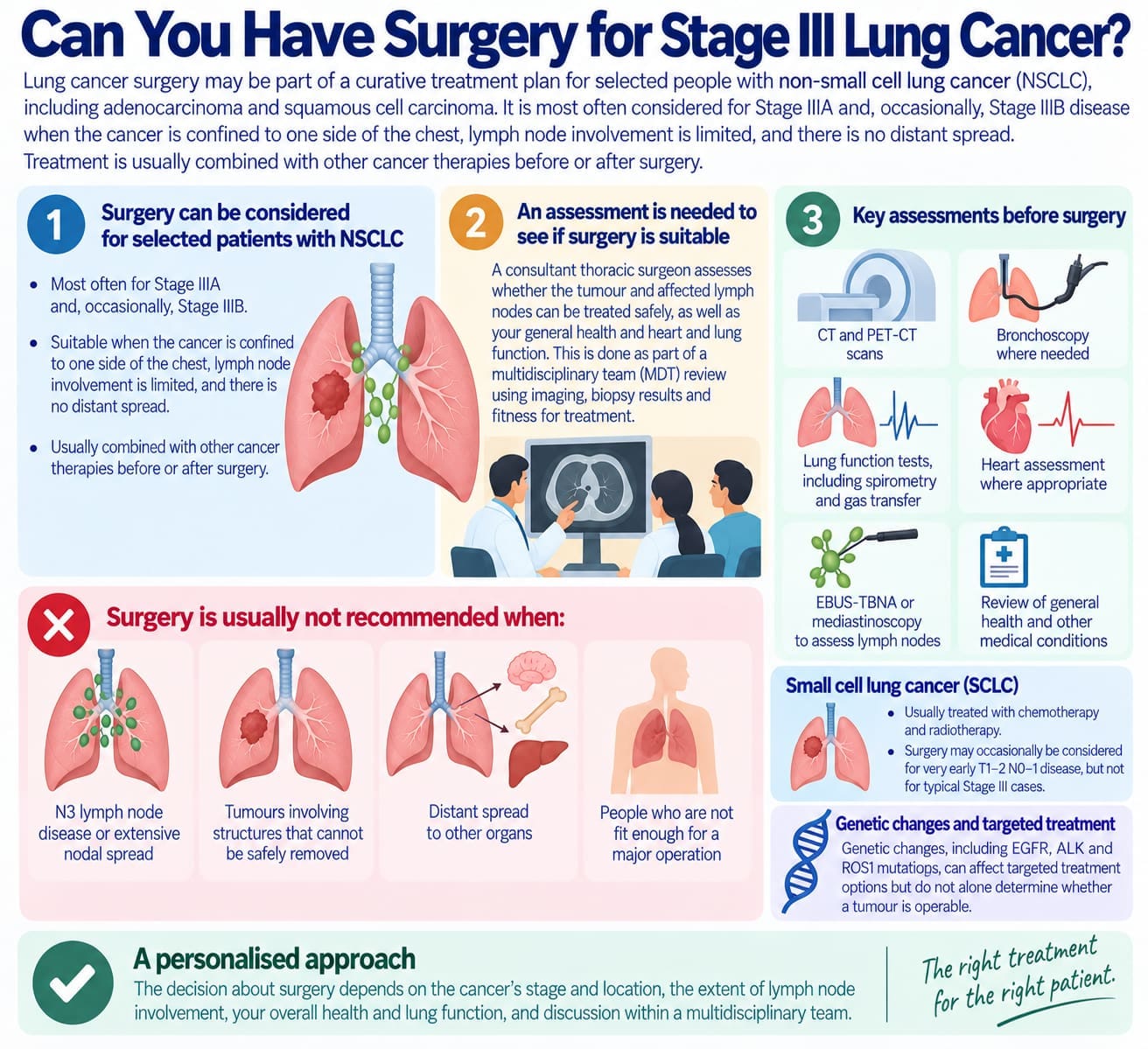
Lung cancer surgery may be part of a curative treatment plan for selected people with non-small cell lung cancer (NSCLC), including adenocarcinoma and squamous cell carcinoma. It is most often considered for Stage IIIA and, occasionally, Stage IIIB disease when the cancer is confined to one side of the chest, lymph node involvement is limited, and there is no distant spread. Treatment is usually combined with other cancer therapies before or after surgery.
Whether surgery is suitable depends on whether the tumour and affected lymph nodes can be treated safely, as well as your general health and heart and lung function. A consultant thoracic surgeon, such as Mr Marco Scarci, assesses these factors as part of a multidisciplinary team review, using imaging, biopsy results and fitness for treatment to recommend the most appropriate care plan.
Key assessments include:
CT and PET-CT scans
Bronchoscopy where needed
Lung function tests, including spirometry and gas transfer
Heart assessment where appropriate
EBUS-TBNA or mediastinoscopy to assess lymph nodes
Review of general health and other medical conditions
Surgery is not usually recommended for N3 lymph node disease, extensive nodal spread, tumours involving structures that cannot be safely removed or people who are not fit enough for a major operation. In these cases, chemoradiotherapy followed by immunotherapy may offer the best chance of long-term control.
Small cell lung cancer (SCLC) is usually treated with chemotherapy and radiotherapy. Surgery may occasionally be considered for very early T1–2 N0–1 disease, but not for typical Stage III cases. Genetic changes, including EGFR, ALK and ROS1 mutations, can affect targeted treatment options but do not alone determine whether a tumour is operable.
"After multiple failed consultations elsewhere, Mr Scarci identified exactly what was wrong and operated within two weeks. Recovery was smooth and I'm back to normal life."
Stage IIIA NSCLC: When Surgery Is Most Likely
Stage IIIA NSCLC covers a wide range of disease. Some tumours can be removed despite being locally advanced, while others have limited N2 lymph node involvement that may respond to treatment before surgery.
Treatment may include:
Chemotherapy or chemo-immunotherapy before surgery
Repeat CT and PET-CT scans
Surgery if the cancer responds and remains removable
Further treatment after surgery where appropriate
Pre-surgery treatment can shrink the tumour, reduce lymph node disease and improve the chance of complete removal. A strong pathological response is associated with better long-term outcomes. N2 disease may also be discovered during or after surgery, leading to chemotherapy, immunotherapy or other treatment.
VATS or robotic surgery may be suitable for some Stage IIIA cases, while open surgery may be safer for more complex tumours.
Selected Stage IIIB NSCLC: Borderline Cases for Surgery
Most Stage IIIB non-small cell lung cancers are considered unresectable and are treated with definitive chemoradiotherapy.
However, surgery may be considered in selected circumstances:
Pancoast tumours that respond well to induction chemoradiotherapy
T3 or T4 tumours that shrink substantially with treatment
Cases where repeat staging shows previously involved lymph nodes have cleared
These can be complex operations involving the chest wall or nearby structures. They should be performed by experienced thoracic teams after detailed MDT discussion.
Why Surgery Is Not Used for Stage IIIC or N3 Disease
N3 disease means cancer has reached lymph nodes on the opposite side of the chest or above the collarbone. This suggests more widespread disease within the chest, even when scans show no distant metastases.
Surgery has not shown good results for most people with N3 disease. NICE guidance (NG122) generally supports chemoradiotherapy and immunotherapy rather than surgery in this situation.
Radiotherapy can treat the primary tumour and affected lymph nodes while preserving as much healthy lung as possible. Not having surgery does not mean there are no active treatment options. Combined treatment may still aim for long-term control or cure.
You should discuss all treatment alternatives with your MDT when surgery is not an option.
Types of Lung Resection for Stage III Lung Cancer
When surgery is appropriate, the type of operation depends on the tumour’s position and extent. These different types of lung cancer surgery may be considered:
Lobectomy: Removal of the lobe containing the tumour. This is the most common operation.
Bilobectomy: Removal of two lobes of the right lung.
Sleeve resection: Removal of a lobe and part of the main airway, followed by reconnection of the airway.
Wedge resection: Removal of a small wedge of lung. This is uncommon in Stage III disease.
Segmentectomy: Removal of one anatomical segment of a lobe, usually where lung function is limited.
Pneumonectomy: Removal of an entire lung. This carries greater risks and is reserved for carefully selected cases.
Lymph nodes are removed or sampled during surgery to confirm the final stage and guide further treatment. The aim is an R0 resection, meaning no cancer remains at the surgical margins.
Keyhole (VATS and Robotic) vs Open Surgery in Stage III
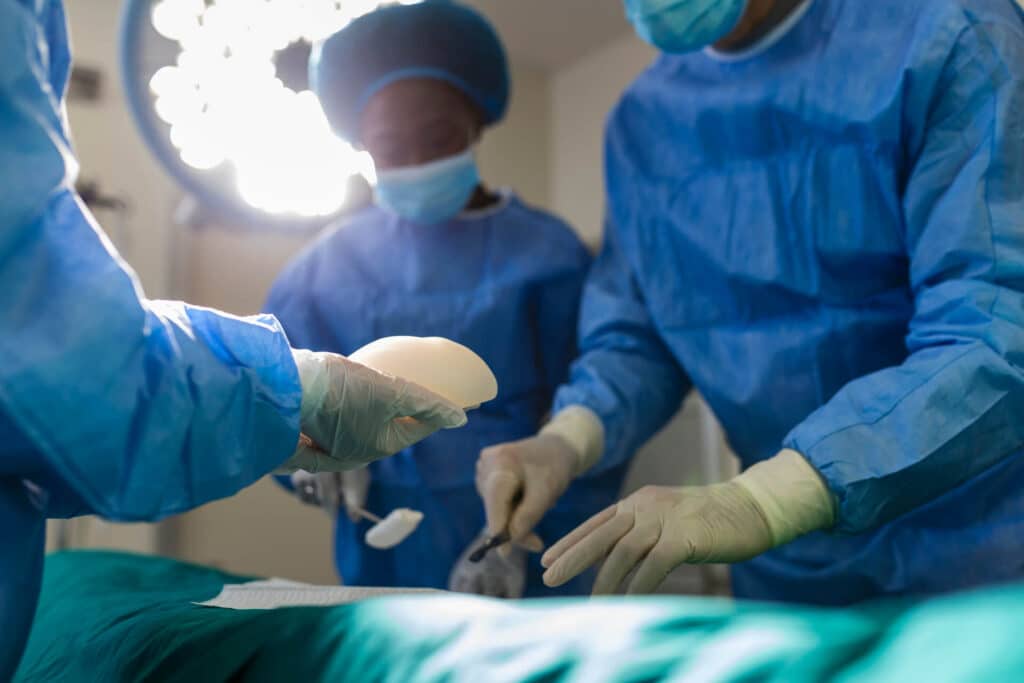
Minimally invasive surgery is preferred when it can safely achieve complete cancer removal. Keyhole surgery, including VATS and robotic-assisted surgery, uses small incisions, a camera and specialised instruments. It usually causes less pain and allows a quicker recovery. Robotic-assisted lung cancer surgery can also offer additional precision when working in confined areas.
Open surgery (thoracotomy) uses a larger incision between the ribs, giving the surgeon direct access for complex resections. It may be necessary for tumours involving the chest wall, major blood vessels or deeper structures.
Keyhole surgery can mean smaller scars, a shorter hospital stay and a faster return to normal activity. However, the most appropriate approach is the one that offers the safest complete resection.
Treatments Before Surgery: Neoadjuvant Therapy
Neoadjuvant therapy is treatment given before surgery and is increasingly used for suitable Stage II and III non-small cell lung cancers. It may involve platinum-based chemotherapy, chemotherapy combined with immunotherapy or, in selected cases, chemoradiotherapy. The aim is to shrink the tumour, reduce lymph node involvement, treat microscopic cancer cells early and increase the chance of complete removal. Treatment usually lasts several weeks, followed by repeat scans to confirm whether surgery remains appropriate.
A Swiss cohort study reported encouraging long-term outcomes for selected patients receiving chemo-immunotherapy before surgery. However, results vary greatly by cancer stage, biology, response to treatment and fitness for surgery.
Treatments After Surgery: Adjuvant and Peri-operative Therapy
Adjuvant therapy is treatment given after surgery to reduce the risk of recurrence from cancer cells that cannot be detected on scans. It may include platinum-based chemotherapy, EGFR-targeted treatment such as osimertinib for eligible tumours, immunotherapy for selected patients or post-operative radiotherapy in specific high-risk situations.
Peri-operative treatment combines therapy before and after surgery. The exact plan depends on pathology results, molecular testing, recovery and current national guidance.
Balancing Risks and Benefits of Stage III Lung Cancer Surgery
Surgery can offer long-term control or cure as part of combined treatment. It may remove the visible tumour and affected lymph nodes, relieve symptoms such as recurrent infection or bleeding, and provide more accurate staging from the surgical specimen.
However, it also carries significant risks, including pneumonia, prolonged air leak, irregular heartbeat, reduced lung function and lower exercise capacity. Recovery can be longer after open surgery or pneumonectomy, particularly for people with existing lung disease.
Lung function tests, cardiopulmonary exercise testing and anaesthetic assessment help estimate individual risk. The MDT should clearly explain the likely benefits, uncertainties, and alternatives.
Preparation Before Stage III Lung Cancer Surgery
Preparing for surgery, sometimes called prehabilitation, can support recovery. This may involve using inhalers correctly, practising breathing exercises, stopping smoking to reduce the risk of chest infection and improve healing, and building fitness through walking or supervised exercise. A balanced diet with enough protein can also support recovery.
Pre-operative tests and assessments include blood tests, spirometry and gas transfer testing to assess lung function, an ECG and echocardiogram where needed, and an anaesthetic assessment.
You may also receive advice about fasting, medications, transport home and support after discharge.
What to Expect During and Immediately After Surgery
On the day of surgery, you will meet the anaesthetist before having a general anaesthetic. A lobectomy often takes two to four hours, while complex procedures may take longer.
In the first 24 to 72 hours, you may have:
Chest drains to remove air and fluid while the lung re-expands
Intravenous drips for fluids and medication
Urinary catheter, usually removed within 24 hours
Pain relief through nerve blocks, epidural, PCA pump or tablets
You will usually be encouraged to sit out of bed, walk and practise breathing exercises as early as possible. Programmes for enhanced recovery after surgery aim to reduce complications and speed recovery.
Pain, Breathing and Recovery in the First Weeks
Pain control is essential after surgery because it helps you breathe deeply, cough and move safely. Treatment is gradually reduced as you recover.
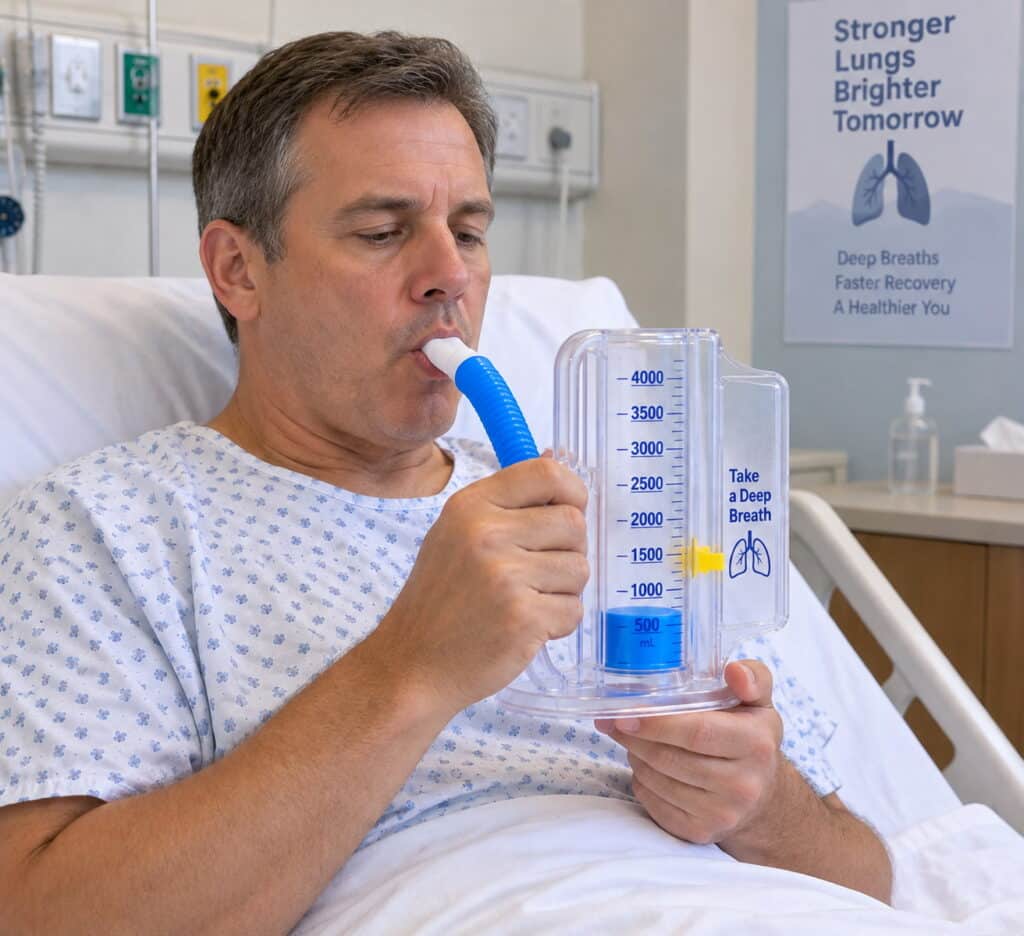
Fatigue and breathlessness are common after lung surgery. Physiotherapists can teach breathing exercises and a gradual return to activity.
Hospital Stay by Surgery Type
Type of surgery | Typical stay (uncomplicated) |
Keyhole (VATS) lobectomy | 3–5 days |
Open lobectomy | 5–7 days |
Pneumonectomy | 7–10 days or longer |
During your stay, drains, drips, and oxygen support are gradually reduced as your condition improves.
At home, expect:
Fatigue for several weeks
No heavy lifting for 4–6 weeks
A gradual return to walking and light exercise
Around 6–12 weeks away from work, depending on your role
Contact the hospital promptly if you develop fever, worsening breathlessness or wound redness.
Clinical Trials and Emerging Options for Stage III Lung Cancer
Clinical trials test new treatments and combinations of existing therapies. Research is exploring chemo-immunotherapy before surgery, improved treatment after chemoradiotherapy, biomarker-led approaches and options for unresectable Stage IIIB and IIIC disease.
Ask your MDT whether a suitable trial is available locally or through a regional specialist centre. Participation is voluntary and should be discussed carefully.
Living With and Beyond Stage III Lung Cancer
Stage III lung cancer can affect physical health, emotions, relationships and work. Common concerns include fear of recurrence, fatigue, breathlessness, scars and reduced fitness.
Support is available through:
Lung cancer nurse specialists
Pulmonary rehabilitation
Dietetic and psychological support
Macmillan Cancer Support and the Roy Castle Lung Cancer Foundation
Stopping smoking remains one of the most important steps for recovery and long-term health.
At Mr Scarci’s practice, private patients are signposted to appropriate support services. Patients and families are encouraged to discuss goals, expectations, and advance care planning sensitively with their team, even when treatment has been given with curative intent.
Frequently Asked Questions About Surgery for Stage III Lung Cancer
Is surgery always the best option if my Stage III lung cancer can technically be removed?
No. A tumour may be technically removable, but surgery may not offer the best balance of benefit and risk. The MDT compares surgery plus systemic treatment with chemoradiotherapy and immunotherapy before recommending the most suitable approach.
How long will I need to stay in hospital after Stage III lung cancer surgery?
After an uncomplicated keyhole lobectomy, many people stay for 3–5 days. Open surgery or pneumonectomy may require 5–10 days or longer. Discharge depends on pain control, lung expansion, mobility and support at home.
Will I need oxygen at home after my operation?
Most people do not need long-term oxygen after a lobectomy. It may be required temporarily for people with severe existing lung disease or reduced lung function after surgery. The team will arrange equipment and training if needed.
Can Stage III lung cancer come back even after successful surgery?
Yes. Recurrence can happen in the chest or elsewhere in the body, which is why follow-up scans and additional treatment may be advised. Risk depends on tumour size, lymph node involvement, tumour biology and whether surgery achieved clear margins.
How can I seek a second opinion about surgery for my Stage III lung cancer?
You can ask your GP, lung cancer team or oncologist for a referral to another thoracic surgeon or specialist centre. A second opinion can be particularly helpful for complex Stage III cases. Mr Marco Scarci can provide specialist assessment for patients seeking further advice on whether surgery may be appropriate.
