

Choosing a keyhole chest surgery specialist is one of the most important decisions a patient can make. A surgeon’s procedure volume, published outcomes, and fellowship training in minimally invasive techniques all affect complication rates, recovery speed, and long-term results.
This guide explains what keyhole thoracic surgery involves, which conditions it treats and how to compare specialists in London and across the UK.
- Keyhole (minimally invasive) chest surgery uses 1 to 3 small incisions of 1 to 4 cm each, replacing the 10 to 20 cm incision and rib spreading of open thoracotomy.
- Most patients have less pain, shorter hospital stays (median 4 days against 6 for open lobectomy) and return to desk work within 2 to 4 weeks.
- When choosing a specialist, ask for procedure-specific annual volumes, conversion rates from keyhole to open surgery, complication rates and verified patient reviews.
- Virtual consultations are available for patients outside London or overseas, so scans can be reviewed before any travel.
What Is Keyhole Chest Surgery? (Thoracic vs Keyhole Heart Surgery)
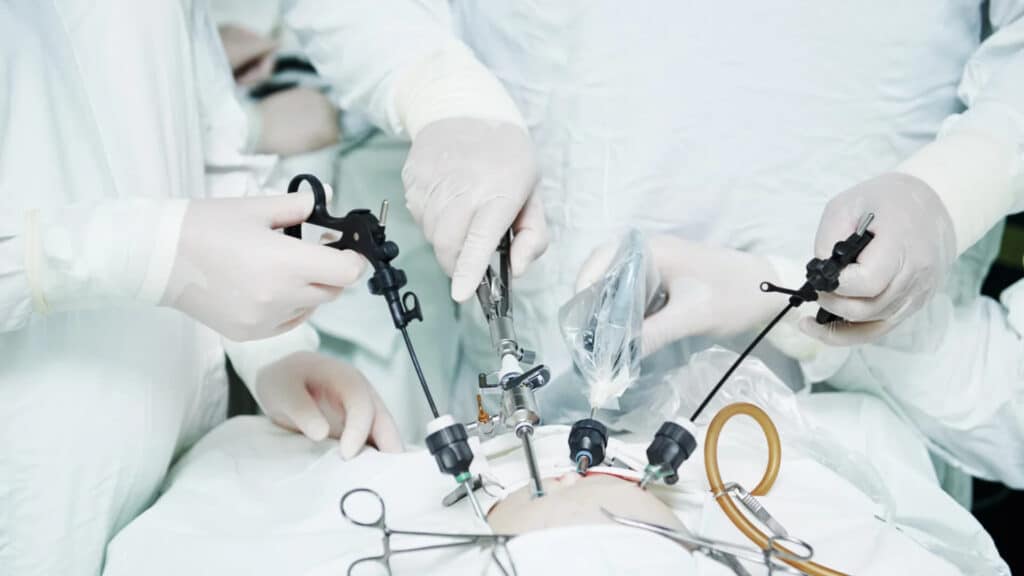
Keyhole chest surgery, also called minimally invasive thoracic surgery, treats the lungs, pleura, chest wall and mediastinum through 1 to 3 small incisions. Surgeons pass a thoracoscope (a thin camera) and specialised instruments through these incisions and view the surgical field on a high-definition screen. The two main platforms are VATS (video-assisted thoracoscopic surgery) and robotic-assisted surgery.
Cardiothoracic surgery covers both heart surgery (such as mitral valve repair surgery, aortic valve replacement and triple bypass grafting) and thoracic surgery. This article focuses on the thoracic side, which centres on the lungs, chest wall and oesophagus rather than the heart chambers.
Traditional open thoracotomy spreads the ribs and divides muscle, causing more pain and a slower recovery. Keyhole techniques are now standard for many lung cancer operations, collapsed lung repair and selected chest wall conditions, making them a key part of modern lung cancer treatment. Most consultants complete fellowship training in minimally invasive approaches.
Want a specialist opinion on your condition?
Get a clear answer from a surgeon who will be with you throughout.
Why Patients Prefer Minimally Invasive (Keyhole) Chest Surgery
Less tissue damage means less pain, fewer complications and a shorter recovery. Muscles and ribs are spared rather than cut, so most patients manage with oral painkillers within a day or two instead of intravenous opioids. A UK high-volume centre study compared 469 VATS lobectomies with 1,237 open lobectomies:
| Metric | VATS | Open Thoracotomy |
| Median hospital stay | 4 days | 6 days |
| In-hospital mortality | 0.21% | 2.26% |
| Critical care readmission | 2.63% | 5.58% |
| Prolonged air leak | 4.48% | 6.47% |
Scarring is typically around 3 inches long, and because the breastbone is not divided, there is no risk of bone infection from sternotomy. Simpler procedures such as pleural biopsies or pneumothorax repair can mean recovery in days. For VATS lung resections, most patients return to desk work in 6 to 8 weeks and longer for heavier activity.
Conditions Treated with Keyhole Thoracic Surgery
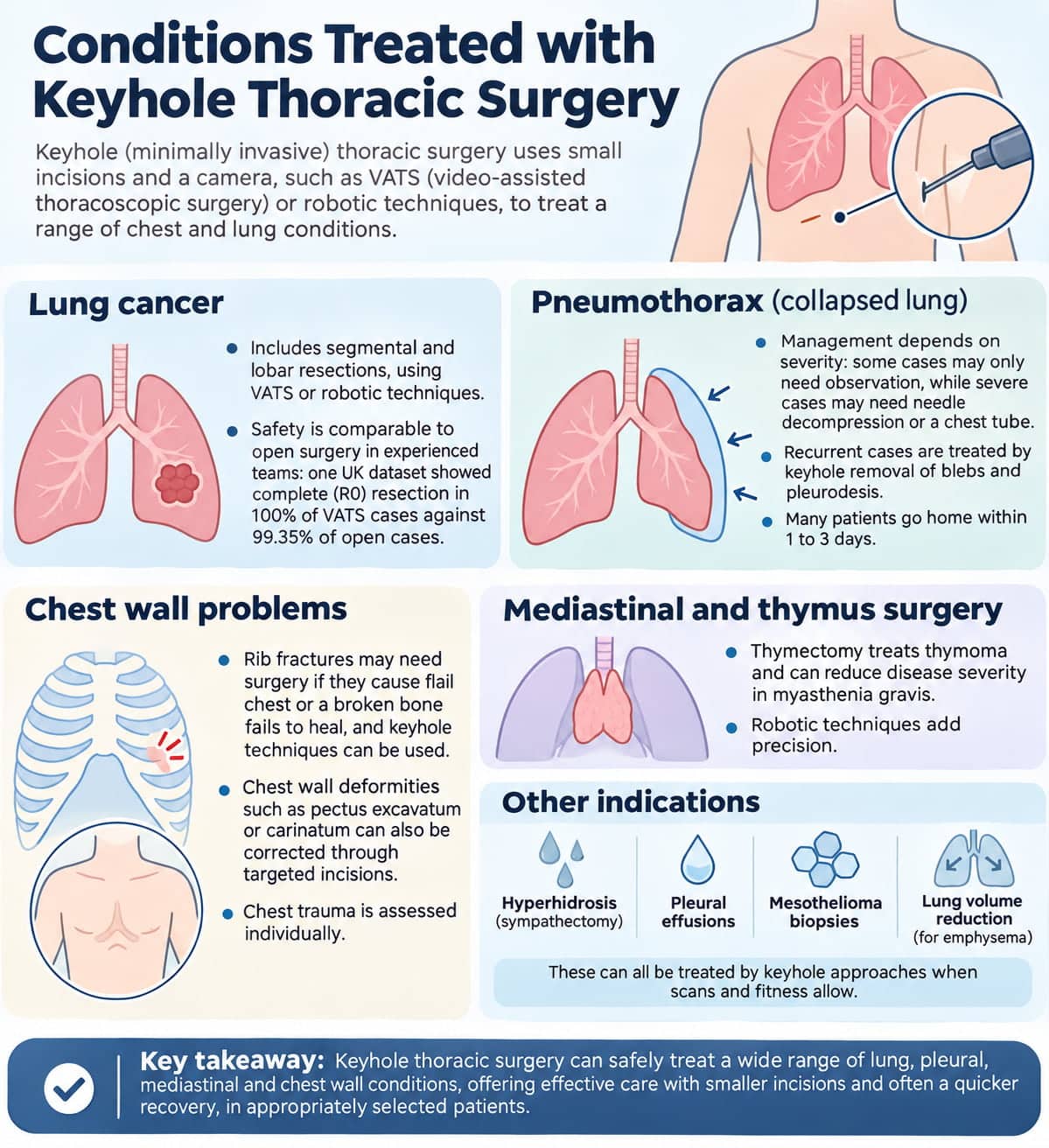
Lung cancer
Lung cancer surgery includes segmental and lobar resections, using VATS or robotic techniques. Safety is comparable to open surgery in experienced teams: one UK dataset showed complete (R0) resection in 100% of VATS cases against 99.35% of open cases.
Pneumothorax
Depending on the severity, some cases may only need observation, while severe cases may need needle decompression or a chest tube. Recurrent pneumothorax cases are treated by keyhole removal of blebs and pleurodesis, and many patients go home within 1 to 3 days.
Chest wall problems
Rib fractures may need surgery if they cause flail chest or a broken bone fails to heal, and keyhole techniques can be used. Chest wall deformities such as pectus excavatum or carinatum can also be corrected through targeted incisions. Chest trauma is assessed individually.
Mediastinal and thymus surgery
Thymectomy surgery treats thymoma and can reduce disease severity in myasthenia gravis. Robotic techniques add precision.
Other indications
Hyperhidrosis (sympathectomy), pleural effusions, mesothelioma biopsies and lung volume reduction for emphysema can all be treated by keyhole approaches when scans and fitness allow.
Not sure about your treatment options?
Mr Scarci provides expert consultations typically within one week of contact.
Keyhole Heart Surgery vs Keyhole Chest Surgery: How Are They Different?
Keyhole heart surgery covers procedures inside the heart, such as mitral valve repair, aortic valve replacement or coronary bypass. These treat a heart condition and are led by a heart surgeon. Open heart surgery, the traditional alternative procedure, splits the breastbone and uses a heart-lung bypass machine.
Keyhole thoracic surgery focuses on the lungs, pleura, chest wall and mediastinum. It does not enter the heart chambers or need cardiopulmonary bypass.
Some cardiothoracic surgeons in Great Britain are dual trained, but most work is predominantly cardiac or thoracic. Some specialists may focus on cardiac procedures, while thoracic specialists treat lung tumours, collapsed lungs and chest wall deformities. If your diagnosis involves the lungs, mediastinum or chest wall, a thoracic surgery specialist is the right choice.
How to Choose a Keyhole Thoracic Specialist: Surgical Volume and Outcomes
This is the section that matters most. Judge a surgeon on qualifications, experience and outcomes against concrete benchmarks.
Surgical volume
High volume surgeons generally achieve lower complication rates. Rather than asking for lifetime totals, ask about annual volumes for your condition, such as VATS lobectomies, thymectomies or chest wall reconstructions.
Outcomes data
Ask about personal complication and conversion rates. In a propensity-matched study, 5 of 74 VATS lobectomies (about 6.7%) converted to open thoracotomy, a useful benchmark.
Measurable metrics to request:
- Conversion rate from keyhole to open
- Major complication rate (bleeding, pneumonia, prolonged air leak)
- Median length of hospital stay by procedure type
- Readmission rate within 30 days
- R0 resection rate for cancer operations
Credentials
Look for formal fellowship training in minimally invasive thoracic surgery, GMC registration, membership of the Society for Cardiothoracic Surgery in Great Britain and Ireland (SCTS) and consultant status at a recognised NHS trust. Royal College (FRCS) and board qualifications (FEBTS, FCCP) add verification.
Team structure
Ask whether your case will be discussed by a multidisciplinary team of oncologists, radiologists and pathologists, often guided by a clinical lead, before a plan is finalised.
Patient reviews
Independent platforms such as PHIN (Private Healthcare Information Network) publish verified feedback.
Have a question about your diagnosis?
A consultation gives you a personalised plan — not a generic estimate.
What to Expect from a Consultation with a Keyhole Chest Surgery Specialist

Before your initial consultation, gather recent CT scans, chest X-rays, lung function tests (FEV1, diffusion capacity) and referral letters. This allows a meaningful assessment at the first visit.
The surgeon will review your symptoms, smoking history, fitness and other conditions, examine your imaging personally and advise whether keyhole or open surgery is safer for you.
Virtual consultations suit patients outside London or overseas, allowing early diagnosis discussions and treatment planning before travel. Some pre-operative assessments and examinations must still be done in person.
Risks, Safety and When Open Surgery May Still Be Required
Keyhole techniques reduce but do not eliminate risk. Common risks include bleeding, wound infection, blood clots, anaesthetic complications and pneumonia. Surgeons may also convert to open thoracotomy if visibility is poor, bleeding occurs, or a tumour proves more extensive than scans suggested.
In the propensity-matched study, operative mortality was 1.4% for VATS against 1.6% for thoracotomy. In the larger UK study, VATS in-hospital mortality was 0.21%.
Open surgery can be safer from the outset for very large chest wall tumours, complex repeat operations with dense scar tissue, advanced mesothelioma needing complete pleural removal or central tumours abutting major vessels. A good consultant will say openly if keyhole surgery is not in your best interest.
Costs, Medical Insurance and Accessing Private Keyhole Surgery
Private fees usually cover the surgeon, the anaesthetist and a hospital package for theatre, ward stay and routine aftercare.
With medical insurance, confirm in advance that your surgeon and hospital are recognised providers, check shortfall arrangements with your insurer and request a pre-authorisation code before scheduling. Self-pay patients can request a fixed price package covering pre-assessment, surgery and follow-up. Initial consultations typically cost £300 to £500, with follow-ups at £225 to £300.
NHS pathways also offer minimally invasive surgery for eligible patients, though waiting times are longer and choice of surgeon is limited.
Why Choose Mr Marco Scarci and How to Book a Consultation
Mr Marco Scarci focuses entirely on thoracic surgery, with deep expertise in lung cancer surgery, pneumothorax repair and chest wall deformity correction. He is widely recognised in the UK and internationally for single-incision VATS and robotic approaches, offering consultant-led care from first consultation to follow-up, so you stay in the best hands.
To book, contact the practice by phone or online form and say whether you prefer an in-person or virtual appointment. A referral is helpful, but self-referral is possible for self-pay patients. International patients should share scans in advance.
Prepare questions about:
- Whether keyhole surgery suits your condition
- Expected recovery time
- The surgeon’s complication and conversion rates
- Costs and alternatives
Frequently Asked Questions About Keyhole Chest Surgery
Am I suitable for keyhole chest surgery?
Suitability for keyhole chest surgery depends on tumour size and position, previous chest surgery, lung function and other conditions. Complex cases may require open surgery. Your consultant will review your scans, tests and medical history before advising.
How soon can I return to work and normal activities?
Desk workers may return within 2–4 weeks, while manual workers may need 6–8 weeks. Driving usually resumes after 2–3 weeks. Recovery varies, with exercise and breathing guidance provided before discharge.
Is keyhole thoracic surgery more expensive than open surgery?
Fees are usually similar, but shorter hospital stays and fewer complications may reduce overall costs. Request an itemised quote and check your insurance cover. The team can assist with pre-authorisation.
Will I experience much pain after keyhole chest surgery?
Pain is generally less than after open surgery. Most patients manage with oral painkillers within a day or two. Your anaesthetic team will plan individual pain relief, which may include nerve blocks.
Can I have a virtual consultation from outside London or overseas?
Yes, in many cases. Your scans and symptoms can be reviewed remotely, but final examinations and pre-operative assessments require an in-person visit. Prepare digital copies of your scans and medical reports for secure sharing.
