

Lung cancer and pneumonia can occur at the same time, making symptoms harder to interpret and diagnosis more complex. This overlap can delay appropriate treatment and increase the risk of serious complications.
Understanding the warning signs, diagnostic process and available treatment options can help patients, carers and families make informed decisions and seek timely medical support.
If you have lung cancer and develop a fever, worsening cough or new breathlessness, seek same-day advice from your GP, oncology team, NHS 111, A&E or an emergency advice line.
Treatment may include antibiotics, oxygen and temporary changes to chemotherapy, radiotherapy or planned surgery.
Pneumonia can delay cancer treatment, so prompt assessment with imaging and blood tests is important.
Pneumonia that persists or repeatedly affects the same area of lung, particularly in smokers and people over 50, needs further investigation.
In complex cases, a thoracic surgeon such as Mr Marco Scarci can advise whether bronchoscopy, biopsy or minimally invasive surgery is needed.
Understanding Lung Cancer and Pneumonia
Lung cancer is caused by abnormal cells growing in the lung. Common symptoms include a persistent cough, breathlessness, chest pain, tiredness and unexplained weight loss. In the UK, lung cancer remains one of the leading causes of cancer death.
Pneumonia is an infection of the lung tissue, caused by bacteria, viruses or fungi. It can cause fever, cough, phlegm, chest pain and shortness of breath.
Pneumonia does not cause lung cancer. However, a tumour may narrow or block an airway, allowing mucus and bacteria to build up behind it. This is known as post-obstructive pneumonia. Having both conditions can reduce lung function and may postpone cancer treatment.
It’s highly recommended that you consult a thoracic specialist, such as Mr Marco Scarci, to determine the cause of your symptoms and whether further investigation or treatment, such as minimally invasive surgery, is needed.
How Lung Cancer Can Mimic or Mask Pneumonia
Lung cancer and pneumonia can cause similar symptoms, including cough, fatigue, chest pain and breathlessness. They can also look alike on a chest X-ray or CT scan.
Pneumonia usually develops quickly and may cause fever. Lung cancer often develops more gradually. However, the distinction is less clear when both are present.
If shadowing on a chest X-ray does not clear after treatment, further assessment may be needed. NICE guideline NG250 recommends follow-up imaging for people at higher risk, including smokers, people over 50 and those with persistent symptoms.
PET-CT scans can also be difficult to interpret because infection, inflammation and cancer may all show increased uptake. A biopsy may be needed to confirm the diagnosis. Recurrent pneumonia in the same part of the lung should prompt referral through a lung cancer screening or thoracic pathway.
Why Pneumonia Is a Serious Risk Factor in Lung Cancer Patients
People with lung cancer are more vulnerable to pneumonia. This may be because of:
Airway blockage caused by a tumour
Reduced lung capacity after surgery or radiotherapy
A weakened immune system during chemotherapy
Treatment-related inflammation of the lungs
Pneumonia can lead to emergency admission, delayed treatment and a slower recovery after surgery. It may be particularly serious for people with existing lung disease, including pulmonary fibrosis.
Vaccination can reduce the risk of some infections. The UK pneumococcal vaccination programme includes people at clinical risk, including some people with cancer. Flu and COVID-19 vaccines should also be discussed with the oncology or respiratory team.
Recognising Symptoms When Lung Cancer Combines With Pneumonia
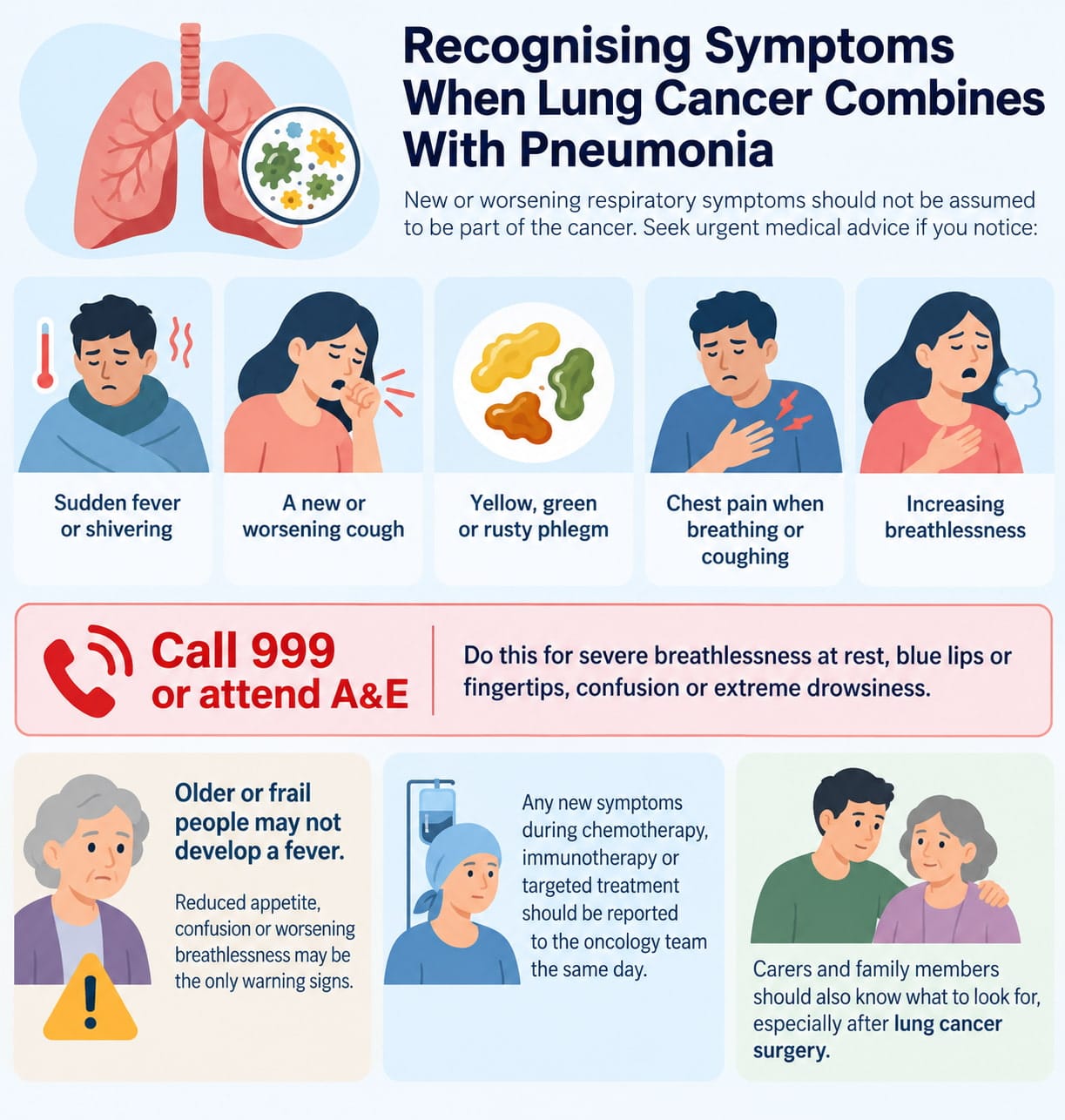
New or worsening respiratory symptoms should not be assumed to be part of the cancer. Seek urgent medical advice if you notice:
Sudden fever or shivering
A new or worsening cough
Yellow, green or rusty phlegm
Chest pain when breathing or coughing
Increasing breathlessness
Call 999 or attend A&E for severe breathlessness at rest, blue lips or fingertips, confusion or extreme drowsiness.
Older or frail people may not develop a fever. Reduced appetite, confusion or worsening breathlessness may be the only warning signs. Any new symptoms during chemotherapy, immunotherapy or targeted treatment should be reported to the oncology team the same day.
Carers and family members should also know what to look for, especially after lung cancer surgery.
Diagnostic Pathway: Distinguishing Infection From Cancer Progression
Clinicians need to establish whether changes in the lung are caused by infection, cancer progression or both.
First-line assessments include:
Medical history and examination
Oxygen saturation measurement
Blood tests, including full blood count and inflammatory markers
Chest X-ray or CT scan
A chest X-ray can identify infection, fluid around the lung or a mass. A CT scan provides more detail and can show airway blockage, tumour growth, consolidation and signs of interstitial lung disease.
Further tests may include sputum culture, viral testing, bronchoscopy, CT-guided biopsy or other tissue sampling. A biopsy is often needed before major treatment decisions are made.
Treatment Strategies When Lung Cancer and Pneumonia Coexist
The infection must be treated promptly while the cancer plan is reviewed. Moderate or severe pneumonia may require hospital admission, intravenous antibiotics and oxygen.
Supportive treatment may include fluids, pain relief, physiotherapy and early mobilisation. Chemotherapy, immunotherapy or targeted treatment may be paused until the infection improves.
If surgery is planned, it is usually delayed until pneumonia has resolved and lung function is stable. Where a tumour is blocking an airway, treatment may include bronchoscopy to remove or reduce the blockage, insert a stent or obtain a biopsy.
Care should be coordinated through a multidisciplinary team, including oncologists, respiratory physicians, radiologists and thoracic surgeons.
When Is Thoracic Surgery Considered in the Context of Pneumonia?

Pneumonia does not automatically rule out surgery, but it may affect the timing and type of operation.
For early-stage lung cancer, treatment may involve lobectomy, segmentectomy or wedge resection. Surgery is usually postponed until the infection is controlled.
Video-assisted thoracoscopic surgery (VATS) and robotic approaches to lung cancer surgery may reduce pain and support recovery compared with open surgery for suitable patients. Before surgery, patients may need repeat CT imaging, lung function tests and cardiac assessment.
Surgery may also treat complications of pneumonia, including empyema, persistent air leaks or damaged lung tissue. Other thoracic conditions may require similar specialist assessment.
In some cases of advanced lung cancer, surgery is not suitable. Less invasive treatment may still help relieve symptoms or manage complications.
Living With Lung Cancer After an Episode of Pneumonia
Recovery can take time, both physically and emotionally. Gradually increasing activity, breathing exercises, good nutrition and smoking cessation can support recovery.
Long-term care may include:
Flu, COVID-19 and pneumococcal vaccination where appropriate
Regular imaging and lung function checks
Prompt review of new respiratory symptoms
Psychological support, counselling or palliative care
Support groups for people living with lung cancer can help patients and families manage the practical and emotional effects of treatment. Seeking a second opinion can also provide further information about the available treatment options, including whether private thoracic surgery may be appropriate.
How Mr Marco Scarci Can Help Patients With Lung Cancer and Pneumonia
When lung cancer and pneumonia occur together, specialist thoracic input can help determine whether further investigation or surgery is appropriate. This may include treating airway obstruction, empyema or related emergencies such as pneumothorax.
Mr Marco Scarci is a consultant thoracic surgeon based in London who provides NHS and private care. He offers assessment, second opinions and treatment planning for lung cancer and other thoracic conditions, including keyhole VATS and robotic surgery. Patients can book a consultation to discuss imaging, treatment options and the appropriate timing of surgery.
Frequently Asked Questions
Below are answers to common questions about lung cancer and pneumonia.
Can pneumonia be the first sign of lung cancer?
Yes. Pneumonia that does not fully clear, or repeatedly returns in the same area of the lung, can lead to further tests and sometimes a lung cancer diagnosis. This may include lung cancer surgery to remove the affected area.
NICE recommends follow-up chest X-rays for higher-risk patients, including smokers and adults over 50 with persistent symptoms.
Is it safe to have chemotherapy if I recently had pneumonia?
Chemotherapy is usually delayed until the infection has improved, blood tests are stable and the patient is well enough to continue treatment. The decision is individual and balances recovery from infection against the risk of cancer progression.
How long after pneumonia can I have lung cancer surgery?
This depends on the severity of the infection, CT findings and lung function. Surgery is often delayed for several weeks after clinical recovery. The exact timing is decided after reassessment.
Will a CT scan always show the difference between lung cancer and pneumonia?
No. CT scans provide more detail than chest X-rays but cannot always distinguish cancer from infection or inflammation. PET-CT, bronchoscopy or biopsy may be needed to confirm the diagnosis.
Should I see a thoracic surgeon even if my lung cancer is advanced?
Possibly. Surgery may not be suitable for advanced cancer, but a thoracic surgeon can assess whether a targeted procedure could help. This may include relieving airway obstruction or draining infected fluid to improve symptoms and support other treatment.
