

Facing thoracic surgery is rarely something you expect, and the weeks between hearing “you may need an operation” and actually scheduling one can feel overwhelming. Whether your surgeon is recommending an operation for lung cancer, a recurrent collapsed lung, or a chest wall condition, the questions you ask now will shape your understanding, your preparation, and ultimately your recovery.
This guide walks you through the most important questions before thoracic surgery, covering everything from diagnosis and alternatives to risks, recovery, and long-term follow-up.
Patients must understand exactly why surgery is being recommended, what non-surgical alternatives exist, including chemotherapy, radiotherapy and immunotherapy for cancer treatments, and what results can realistically be expected for their specific diagnosis.
For conditions like lung cancer, asking detailed questions about lung cancer surgery technique, risks to blood vessels, and the impact on breathing capacity is essential before agreeing to any planned operation.
You should feel comfortable asking your healthcare provider about the surgeon’s experience, expected hospital stay, pain control options, and enhanced recovery pathway in plain language, not medical terms.
Lifestyle preparation matters: stopping smoking, following a healthy diet, and doing light exercise in the weeks before surgery can significantly improve recovery and long-term outcomes.
Understanding Why Thoracic Surgery Is Being Recommended

The first and most important conversation is about why lung cancer surgery is being recommended now for your specific medical condition. A stage I peripheral lung cancer in someone with good lung function is a very different situation from a large central tumour close to major blood vessels, and the urgency, risks and alternatives change accordingly.
Patients should ask their thoracic surgeon about their exact diagnosis and make sure they understand the surgery’s purpose. Useful questions include:
“What exact problem are you trying to fix with this operation?”
“What stage is my lung cancer or other lung disease, and has it spread?”
“What happens if I delay or decline this operation? Will my condition get worse?”
Your surgeon should relate the planned operation to recent scan findings, including CT, PET-CT or MRI, and to your lung function test results such as FEV₁ and DLCO. For example, a small peripheral tumour in the right lung may be straightforward to remove with keyhole surgery, while a tumour invading the chest wall or sitting near the airway may require a more complex open approach.
It is critical to understand what might happen if surgery is delayed or not performed. In early-stage lung cancer, the window for curative surgery can narrow if the disease progresses. Request information in plain English rather than only technical terms, and consider bringing a family member to help capture what is said.
Have a question about your diagnosis?
A consultation gives you a personalised plan — not a generic estimate.
Clarifying the Goals and Expected Benefits of Surgery
Every thoracic procedure should have clearly defined goals. Some operations aim to cure lung cancer. Others aim to prevent a lung collapse from recurring, remove infection, or relieve persistent chest pain or breathlessness. The distinction matters because it shapes what you can realistically expect afterwards.
Ask whether the operation is intended to cure the disease, control it or improve symptoms. It is also reasonable to ask how your breathing and daily life may change at 3, 6 and 12 months, and whether your surgeon can provide a realistic estimate of how much the procedure may improve long-term survival.
A curative lobectomy for early-stage lung cancer is very different from palliative surgery to drain a recurrent pleural effusion. Data from the National Lung Screening Trial show that patients with pathologic stage IA non-small-cell lung cancer who underwent lobectomy had a 10-year overall survival of approximately 58%, with lung cancer-specific survival of around 74%.
Thoracic surgery can improve long-term survival rates for lung cancer, but realistic expectations depend on tumour stage, lymph node involvement and overall health. The impact of surgery on long-term lung function and quality of life should also be discussed clearly.
"I had rib pain for 6 years, was bounced around NHS without diagnosis. I was recommended to Mr Scarci — at consultation within minutes he knew what the problem was. Was offered surgery date the next week. 2 weeks post surgery I am almost back to full health."
Exploring Non-Surgical and Less Invasive Alternatives
Patients should always ask whether non-surgical treatment approaches exist. For lung cancer, alternatives may include stereotactic body radiotherapy (SBRT), chemotherapy, immunotherapy or targeted therapy, depending on tumour stage, molecular profile and overall fitness.
Chemotherapy may replace surgery for some lung cancer patients, while radiotherapy can be an alternative to lung surgery, particularly when other health conditions make an operation too risky.
For non-cancer diagnoses, inhaled medicines remain primary treatments for COPD and emphysema, while pulmonary rehabilitation is an important part of COPD management. Recurrent pleural effusions can sometimes be managed through less invasive procedures without major lung resection.
Questions may include:
“Could radiotherapy or immunotherapy control my lung cancer instead of surgery?”
“Would a chest tube and talc pleurodesis work instead of major lung resection?”
“Could keyhole surgery replace open surgery in my case?”
Minimally invasive surgery, including VATS and robotic-assisted approaches, often allows smaller incisions, a shorter hospital stay and faster recovery. Minimally invasive techniques can also reduce post-operative pain and support faster healing after surgery.
However, not every tumour or patient is suitable. Central tumours, previous chest operations or extensive adhesions may mean open thoracotomy remains the best treatment.
Mr Marco Scarci, a consultant thoracic surgeon in London specialising in minimally invasive and keyhole thoracic surgery, can explain when a keyhole approach is appropriate and when an open thoracotomy remains the safer option.
Want a specialist opinion on your condition?
Get a clear answer from a surgeon who will be with you throughout.
Questions About the Type of Thoracic Operation You Will Have
Thoracic surgery covers a wide range of thoracic procedures, from small lung-sparing resections to removal of an entire lung. Your surgeon should explain exactly which procedure is planned, how much lung tissue will be removed and whether lymph nodes or nearby structures are involved.
Important questions include whether you are having a wedge resection, segmentectomy, lobectomy or pneumonectomy; whether lymph nodes need to be removed for staging; and whether the operation will take place close to major blood vessels or the airway.
The main types of lung cancer surgery differ as follows:
Procedure | What It Removes | Typical Use |
Wedge resection | A small portion of a lung lobe | Small, peripheral tumours |
Segmentectomy | A defined anatomical segment of lung tissue | Small tumours where preserving lung function is important |
Lobectomy | An entire lobe of the lung | Standard operation for many operable lung cancers |
Pneumonectomy | An entire lung | Large or central tumours not manageable by lobectomy |
The surgeon decides between lung-sparing surgery such as segmentectomy and more extensive resections based on tumour size, location and its relationship to vital structures.
Video-assisted thoracoscopic surgery (VATS) uses small incisions for thoracic procedures, while robotic-assisted thoracoscopic surgery (RATS) can enhance precision during selected operations. The choice between VATS ports, robotic ports and a standard thoracotomy affects pain, scarring and how quickly you return to normal activity.
"After multiple failed consultations elsewhere, Mr Scarci identified exactly what was wrong and operated within two weeks. Recovery was smooth and I'm back to normal life."
Assessing Your Surgeon’s Experience and the Hospital Team
Outcomes in thoracic surgery can be influenced by surgeon and centre experience. Patients should understand how often their surgeon and hospital perform the planned operation and who will be responsible for care before, during and after surgery.
A large English study found increased survival in hospitals performing more than 150 lung cancer resections per year compared with centres carrying out fewer than 70, after adjustment for case mix.
Questions to ask include:
“How many thoracic operations like mine do you perform each year?”
“What are your complication and mortality rates for this procedure?”
“Who will actually be in the operating theatre, and who leads my post-operative care?”
You should know whether your surgeon is a dedicated thoracic surgeon, whether trainees may be involved and who forms the wider surgical and care team. This can include anaesthetists, intensive care doctors, specialist nurses, respiratory therapists and physiotherapists.
Understanding Risks, Complications, and How They Are Managed
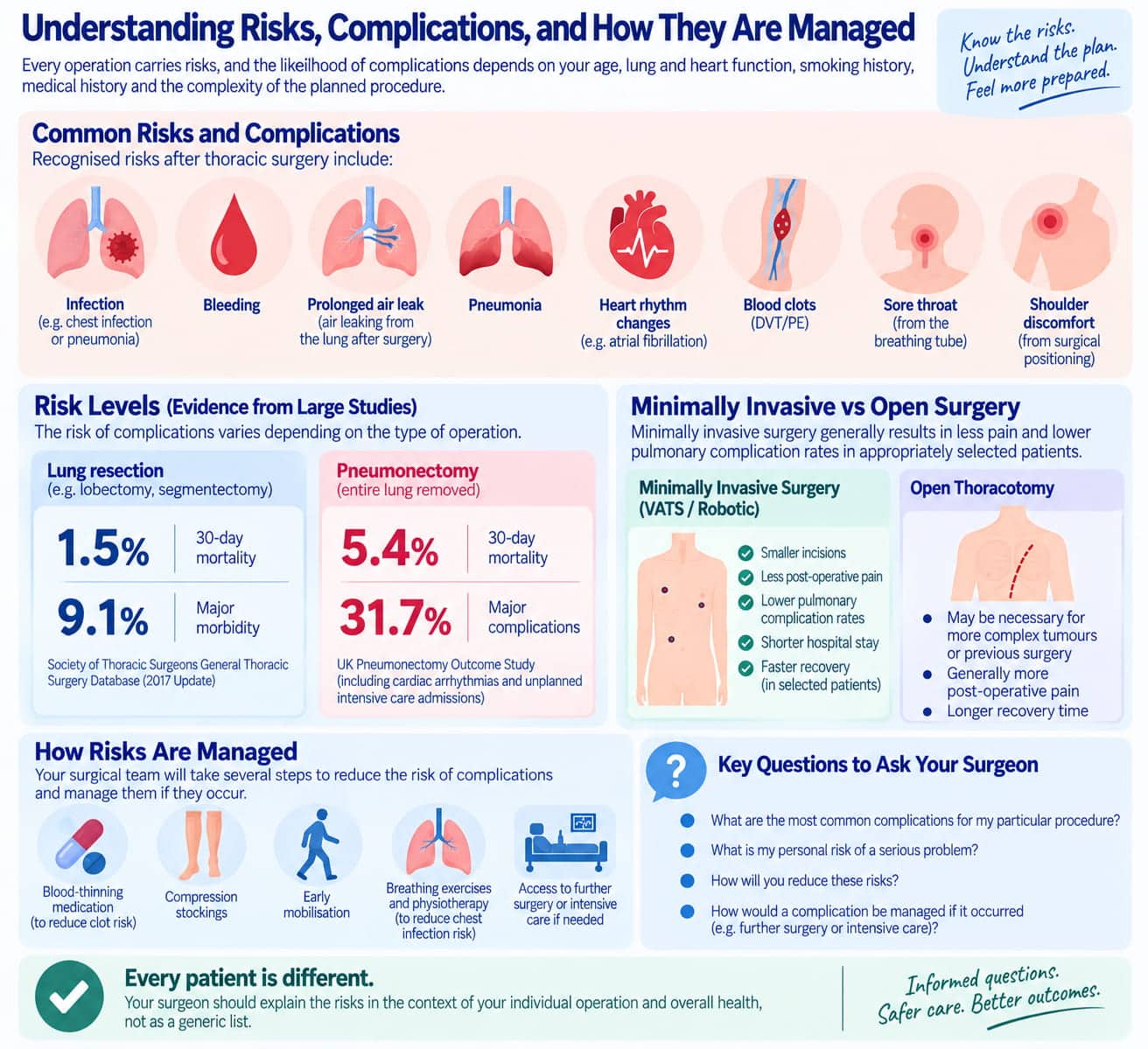
Every operation carries risks, and the likelihood of complications depends on age, lung and heart function, smoking history, medical history and the complexity of the planned procedure.
Recognised risks include infection, bleeding, prolonged air leak, pneumonia, heart rhythm changes and blood clots. Sore throat and shoulder discomfort are also common after thoracic surgery because of the breathing tube and surgical positioning.
The potential risks of thoracic surgery should be explained in the context of your individual operation rather than as a generic list.
Ask your surgeon which complications are most common for your particular procedure, what your personal risk of a serious problem is, and what steps will be taken to minimise those risks. You should also understand how a complication would be managed if it occurred, including whether further surgery or intensive care might be required.
For lung resection, the Society of Thoracic Surgeons General Thoracic Surgery Database reported an overall 30-day mortality of 1.5% and major morbidity of 9.1% in its analysed cohort. Pneumonectomy carries a higher risk. The UK Pneumonectomy Outcome Study reported 30-day mortality of 5.4% and major complications in 31.7% of patients, including cardiac arrhythmias and unplanned intensive care admissions.
Minimally invasive surgery generally results in less post-operative pain and lower pulmonary complication rates than open thoracotomy in appropriately selected patients. Enhanced recovery protocols, blood-thinning medication, compression stockings and early mobilisation can also reduce the risk of blood clots and chest infection.
Pre-operative Tests, Fitness Assessment, and Suitability for Surgery
The pre-assessment visit, usually one to three weeks before surgery, is where your healthcare provider determines whether your body can safely tolerate the planned operation.
Typical diagnostic procedures and tests include:
Blood tests, including full blood count, kidney and liver function, and clotting tests
ECG and echocardiogram where heart disease is suspected
Lung function tests, including spirometry (FEV₁) and gas transfer (DLCO)
CT or PET-CT scans to confirm staging and assess possible cancer spread
Chest X-ray if one has not been performed recently
Patients with FEV₁ or DLCO below 60% of predicted values may be considered at higher risk and can require more detailed assessment. In some cases, the surgeon may adapt the operation, for example choosing a segmentectomy instead of a lobectomy or considering a VATS approach to preserve lung function and reduce pulmonary complications.
The anaesthetic plan is also reviewed during pre-assessment. Patients should ask whether their lungs are strong enough for the operation, whether a cardiology review is needed and what can be done before surgery to improve fitness.
Modern risk assessment is not based on one score alone. Research using English lung cancer surgery data found that existing mortality prediction tools perform poorly when attempting to discriminate individual perioperative risk, which is why formal scores need to be combined with clinical judgement.
Not sure about your treatment options?
Mr Scarci provides expert consultations typically within one week of contact.
Preparing Your Body: Lifestyle, Smoking, and Healthy Diet
Patients can actively improve their outcomes through prehabilitation in the weeks before surgery. Smoking cessation, regular light exercise, breathing exercises and adequate nutrition can all form part of preparation.
Stopping smoking is particularly important. ERAS/ESTS recommendations advise stopping smoking at least four weeks before surgery where possible. Even when the available preparation period is shorter, stopping is still worthwhile.
Walking for 20–30 minutes most days, stair climbing where appropriate, and gradually increasing activity can build cardiopulmonary reserve. Deep-breathing exercises practised before the operation can also support lung expansion during recovery.
A healthy diet rich in protein, vegetables, whole grains and adequate calories supports wound healing. Patients at nutritional risk should be identified before surgery. ERAS/ESTS guidance recommends nutritional screening and notes that patients at risk of malnutrition may receive 5–7 days of oral supplements before surgery.
Medication Management and Existing Medical Conditions
Heart disease, diabetes, blood-thinning medicines and other long-term health conditions need careful planning before thoracic surgery.
Important questions include:
“Should I stop my blood thinners or antiplatelet medicines, and if so, when?”
“How will my diabetes, heart or kidney disease be managed around surgery?”
“Should I bring all my regular medicines, including certain medicines bought over the counter?”
Never stop important medicines such as anticoagulants, beta-blockers or inhalers without explicit instructions from your healthcare provider.
The anaesthetist will review all medication during pre-assessment, including blood pressure medicines, herbal supplements and other over-the-counter preparations. Some supplements can influence bleeding risk or interact with anaesthetic drugs.
Keep an up-to-date list of all medicines, doses and allergies. Anaemia should also be identified and treated where possible before surgery because it can increase the risk of complications.
If you use medication for constipation, mention this to the care team as well, because post-operative opioid painkillers can make constipation considerably worse.
Have a question about your diagnosis?
A consultation gives you a personalised plan — not a generic estimate.
What to Expect From Anaesthesia and Pain Control
Thoracic surgery is normally performed under general anaesthesia. A breathing tube is placed while you are asleep, and one-lung ventilation is often used to allow the surgeon to operate safely within the chest.
Before surgery, ask who your anaesthetist will be and whether you will meet them beforehand. You should also discuss the available options for pain relief, including epidural analgesia, regional nerve blocks and patient-controlled analgesia, as well as the side effects you might experience from the anaesthetic.
Good pain control is important because it allows you to take deep breaths, cough effectively and mobilise early, all of which can reduce the risk of pneumonia and blood clots.
Patient-controlled analgesia may allow you to administer small doses of pain relief when needed. Common temporary effects after general anaesthesia and thoracic surgery can include sore throat from the breathing tube, nausea, drowsiness and shoulder discomfort.
Report pain early rather than trying to tolerate it, as effective pain management is an important part of enhanced recovery.
The Day of Surgery and Your Time in Theatre
On the day of surgery, the typical timetable involves early arrival at the ward, final safety checks and transfer to the operating theatre.
Patients are usually asked to stop eating solid food at least six hours before surgery, while clear fluids may be allowed until approximately two hours beforehand under modern enhanced recovery protocols, depending on the anaesthetic team’s instructions.
Questions worth asking in advance include:
“What time will my surgery start and how long is it expected to last?”
“Where will my family or friends wait, and how will they receive updates?”
“Will I go to intensive care, a high-dependency unit or a standard hospital room afterwards?”
A lobectomy commonly takes several hours, although the exact duration depends on complexity and surgical approach.
While you are asleep, monitoring equipment and other lines may be placed, including an intravenous drip, an arterial line for blood pressure monitoring and, for some operations, a urinary catheter. Knowing what to expect can make waking in the recovery room less surprising.
Want a specialist opinion on your condition?
Get a clear answer from a surgeon who will be with you throughout.
Chest Tubes, Drains, and Your Early Hospital Stay
Most thoracic patients wake with at least one chest tube or chest drain to remove air and fluid from the space around the lung while it re-expands.
Chest tubes commonly remain in place for around 1–3 days after surgery in uncomplicated cases, although the exact timing depends on the amount of fluid draining and whether an air leak persists.
Before surgery, ask how many chest tubes you are likely to have, where they will be positioned and when they are normally removed. It is also reasonable to ask whether removal will be painful and how discomfort is managed.
During the first 24–72 hours, the care team monitors breathing, oxygen levels, pain control, fluid balance and mobility. Patients are encouraged to sit out of bed early, practise breathing exercises with physiotherapists and gradually reduce oxygen support where possible.
The expected hospital stay depends on the operation and recovery. Many patients undergoing uncomplicated keyhole lung surgery may leave hospital within approximately 2–5 days, while open operations or complications such as prolonged air leak and chest infection can result in a longer stay.
Enhanced Recovery, Mobilisation, and Breathing Exercises
Enhanced recovery after surgery (ERAS) protocols are widely used in thoracic surgery to support faster recovery while maintaining safety. The aim is to help patients begin moving, breathing deeply and eating as soon as clinically appropriate.
Ask when you will first be helped out of bed, which breathing exercises you should practise and what support will be available if pain or weakness makes movement difficult.
Walking is encouraged regularly after surgery, and breathing exercises help maintain lung expansion. Some patients may also use incentive spirometry as part of respiratory physiotherapy.
A typical early recovery progression may look like this:
Day | Target |
Day 1 | Sit out of bed and stand with support |
Day 2 | Walk to the bathroom and along the corridor |
Day 3 | Walk around the ward and practise stairs if appropriate |
Day 4+ | Longer walks and preparation for discharge |
Your specialist nurse, physiotherapists and respiratory team will adapt these milestones to your condition, operation and overall progress.
Not sure about your treatment options?
Mr Scarci provides expert consultations typically within one week of contact.
Going Home: Recovery Timeline, Activity, and Driving
Much of the healing after thoracic surgery happens at home. Patients need to understand activity restrictions, pain management and warning signs before discharge, with a clear plan for the next 6–12 weeks.
Ask how long fatigue or breathlessness may last, when it is safe to shower or lift objects, when you can return to work and when driving is appropriate.
Typical recovery after uncomplicated keyhole lung surgery may include:
Weeks 1–2: walking around the home, short outdoor walks and basic self-care
Weeks 3–4: longer walks and light household tasks
Weeks 4–6: gradual return to more normal activity and sedentary work
3 months+: many patients approach full recovery, although physically demanding work may take longer
Driving should only resume when you are no longer impaired by strong painkillers and can safely perform an emergency stop without pain or hesitation. Your surgeon and motor insurer may provide additional requirements.
Do not compare your recovery directly with someone else’s. Any sudden increase in breathlessness, new chest pain, fever, wound concerns or other significant deterioration should prompt contact with your healthcare provider.
Diet, Sleep, and Emotional Wellbeing After Thoracic Surgery
Appetite, sleep and mood often change temporarily after major surgery. Reduced appetite is common in the first few weeks, and some patients find smaller, more frequent meals easier to manage.
A healthy diet rich in protein supports wound healing and immune function. Useful foods can include eggs, fish, beans, dairy products, vegetables and whole grains. Alcohol intake should be limited, particularly while taking strong painkillers.
Constipation is a common side effect of opioid medicines. If bowel movements become difficult, discuss laxatives, hydration, and dietary measures with the care team rather than letting symptoms worsen.
Sleep can also be disrupted by discomfort, altered sleeping positions and anxiety. Ask which positions are safest and most comfortable following your particular procedure.
Emotional support matters as well. Anxiety, low mood and fear of recurrence can occur after cancer treatment. Support groups, counselling and psycho-oncology services may help when emotional symptoms persist. Overall health includes mental wellbeing as well as physical recovery.
Have a question about your diagnosis?
A consultation gives you a personalised plan — not a generic estimate.
Follow-Up Appointments and Long-Term Monitoring
Follow-up appointments are an important part of thoracic care. After lung cancer surgery, regular imaging and clinic reviews help check for recurrence, monitor lung function and determine whether additional cancer treatments or rehabilitation are necessary.
Questions to ask include:
“When is my first follow-up appointment and how often will I be reviewed?”
“What scans or other procedures will I need during the first year?”
“Which symptoms between appointments should trigger an urgent review?”
Long-term follow-up after lung cancer surgery commonly involves repeated CT imaging, although the exact schedule depends on tumour stage, pathology, local protocols and any additional treatment.
Lung function testing and review with the surgical and oncology teams may also form part of monitoring.
Costs, Insurance, and Private vs NHS Care
Patients considering private thoracic surgery in London should clarify the full cost of care before scheduling an operation.
Ask what is included in the surgeon’s fee, anaesthetic fee and hospital charges, whether scans and follow-up consultations are covered by your insurance policy, and what happens financially if a complication results in a longer hospital stay.
Patients with private medical insurance should contact their insurer in advance using procedure codes supplied by the surgeon’s office. Self-funding patients should receive a written estimate covering the operation, anaesthesia and hospital stay.
Where relevant, thoracic surgery finance options may allow self-funding patients to spread the cost of treatment.
Waiting times can also influence decisions about NHS and private pathways. The 2026 National Lung Cancer Audit reported that 88% of early-stage NSCLC patients waited longer than 49 days from referral to surgery in England during the audited period.
Deciding Whether to Go Ahead: Second Opinions and Timing
Seeking a second opinion before major thoracic surgery is common and can be constructive, particularly when decisions about lung cancer treatment, surgery close to vital structures or borderline fitness feel overwhelming.
Questions worth asking include:
“How urgent is this operation, and could waiting 4–6 weeks change my outcome?”
“Would you support me if I wanted to speak to another thoracic surgeon before deciding?”
“Is emergency surgery a possibility, or do I have time to think?”
For early-stage lung cancer, surgery is usually recommended within a defined timeframe but is not generally an emergency operation. Some conditions, such as active bleeding, severe infection, or rapidly progressing disease, can require more urgent treatment.
A second opinion can help confirm the proposed operation, identify alternatives or provide reassurance that the existing plan is appropriate.
Frequently Asked Questions (FAQs)
Will thoracic surgery cure my lung cancer?
For early-stage non-small-cell lung cancer, surgery can offer a strong chance of long-term control or cure, particularly when the tumour can be fully removed with clear margins. Your outlook depends on factors including cancer stage, tumour size, lymph node involvement and overall health, and your surgeon will explain whether any further treatment may be recommended after surgery.
How soon can I fly after thoracic surgery?
Flying is usually postponed after lung or pneumothorax surgery because any remaining air in the chest can expand during a flight. Your surgeon will advise when it is safe to travel, typically after follow-up imaging confirms that the lung has re-expanded appropriately.
Can I have thoracic surgery if I already have COPD or poor lung function?
Many people with COPD, emphysema or reduced lung function can still have thoracic surgery safely, following detailed breathing tests and an individual risk assessment. In some cases, a smaller operation or minimally invasive approach may be recommended to preserve as much lung function as possible.
Will I need help at home after I leave the hospital?
Most patients can manage basic personal care after leaving hospital, but help with shopping, housework, childcare and other heavier tasks is often useful for the first two to three weeks. Planning transport, meals, medicines and any support you may need before surgery can make recovery at home easier.
How do I book a consultation with Mr Marco Scarci?
You can arrange a private consultation in London or a virtual video appointment to discuss your diagnosis, scans and whether thoracic surgery may be suitable. Bring relevant imaging, medical reports, a current medication list and any questions you have about treatment options, risks, recovery and timing.
