

Thoracic outlet syndrome treatment starts with understanding exactly what is happening inside your body and which structures are under pressure. Whether you are dealing with nerve pain radiating down your arm, unexplained swelling or a cold, pale hand, the path to relief depends on accurate diagnosis and the right treatment plan.
This guide covers the full spectrum of options, from specialist physical therapy through to decompression surgery, and explains when and why surgery may be the best route forward.
Thoracic outlet syndrome is usually treated first with specialist physical therapy, with surgery reserved for severe or vascular cases that fail to respond.
There are three main types: neurogenic, venous and arterial thoracic outlet syndrome, and correct diagnosis determines the right treatment plan.
Untreated vascular thoracic outlet syndrome can cause dangerous blood clots or loss of blood flow to the affected arm and may require urgent specialist assessment.
Minimally invasive and keyhole surgical approaches are available where appropriate, and most patients can return to normal daily activities and sport with early diagnosis and expert care.
What Is Thoracic Outlet Syndrome?

Thoracic outlet syndrome (TOS) describes compression of nerves and blood vessels as they pass through the thoracic outlet. a narrow space between the collarbone and first rib at the base of the lower neck. This corridor carries the brachial plexus nerves, subclavian artery and subclavian vein from the neck down into the arm.
Compression can result from an extra rib (a cervical rib, present in roughly 1 to 3% of the population), enlargement of the anterior scalene muscle, healed fractures with bony overgrowth, or habitual poor posture and repetitive overhead activity. Symptoms typically affect one side, though bilateral involvement can occur. The condition most commonly presents between ages 20 and 50 and is slightly more frequent in women.
Many patients are initially misdiagnosed with cervical spine or shoulder problems because TOS symptoms can mimic those conditions. A thoracic surgeon or vascular specialist is often needed for accurate assessment.
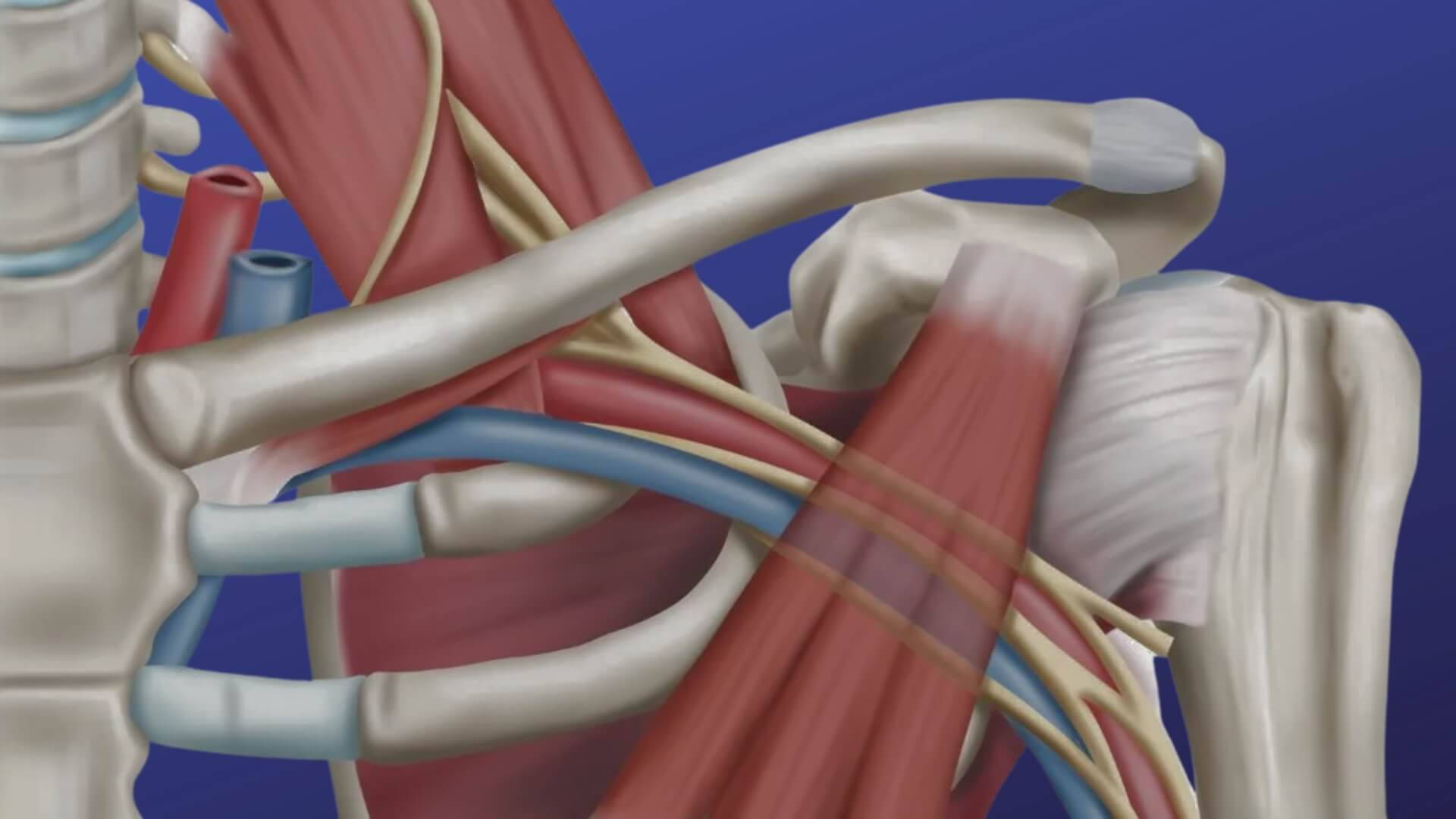
Types of Thoracic Outlet Syndrome
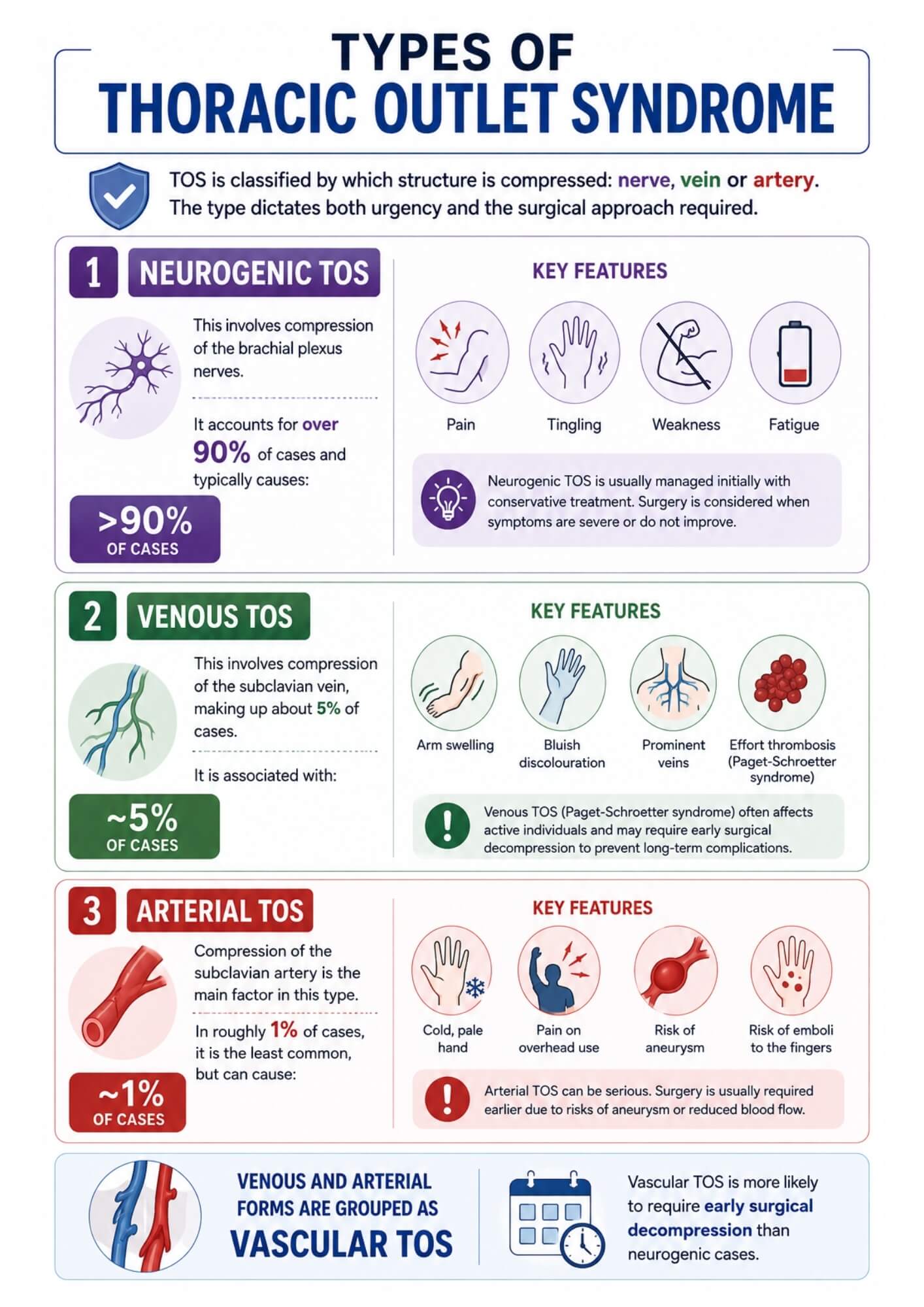
TOS is classified by which structure is compressed: nerve, vein or artery. The type dictates both urgency and the surgical approach required.
Neurogenic TOS
This involves compression of the brachial plexus nerves. It accounts for over 90% of cases and typically causes pain, tingling, weakness and fatigue in the arm and hand.
Venous TOS
This involves compression of the subclavian vein, making up about 5% of cases. It is associated with arm swelling, bluish discolouration, prominent veins and effort thrombosis (Paget-Schroetter syndrome).
Arterial TOS
Compression of the subclavian artery is the main factor in this type. In roughly 1% of cases, it is the least common, but can cause a cold, pale hand, pain on overhead use and a risk of aneurysm or emboli to the fingers.
Venous and arterial forms are grouped as vascular TOS and are more likely to require early surgical decompression than neurogenic cases.
Symptoms: When to Suspect Thoracic Outlet Syndrome
Symptoms vary depending on whether nerves, veins or arteries are compressed. Patterns of pain, swelling and colour change help doctors distinguish between types.
Neurogenic TOS symptoms include:
Neck, shoulder or arm pain
Pins and needles or numbness in the hand and fingers, especially the ring and little fingers
Arm weakness and tingling
Symptoms worsening when the arm is elevated, such as when drying hair, hanging washing or driving
Occasional wasting of the thumb muscle pad in advanced cases
Venous TOS symptoms include sudden or gradual swelling of one arm, bluish or purplish skin, visible distended veins across the shoulder and chest, and aching pain often following intense upper body activity such as weightlifting or rowing.
Arterial TOS symptoms include a cold, pale hand during overhead motions, reduced or absent pulse in certain arm positions, pain or cramping and possible small black or blue spots on the fingers from tiny emboli.
Red flags requiring same-day or emergency assessment include rapidly increasing arm swelling, severe pain with colour change, sudden weakness or loss of function, or symptoms suggesting blood clots or stroke.
Want a specialist opinion on your condition?
Get a clear answer from a surgeon who will be with you throughout.
Causes and Risk Factors
The underlying cause of TOS can be present from birth or acquired through injury, posture or overuse.
Congenital factors
Thoracic outlet syndrome can result from several anatomical abnormalities, including a cervical rib or an unusually shaped first rib, a fibrous band connecting an incomplete cervical rib to the first rib, or an abnormal course of the scalene muscle that narrows the thoracic outlet.
Acquired causes
Thoracic outlet syndrome can also develop as a result of acquired conditions or injuries, including clavicle or first-rib fractures that heal with excessive bony growth, whiplash injuries from car accidents or similar trauma, bodybuilding or heavy resistance training that causes muscle hypertrophy and compresses nerves or blood vessels, and previous neck or chest surgery that results in scar tissue formation.
Posture and occupational risk factors
The condition may also be associated with certain occupational and lifestyle factors, including prolonged desk work that promotes forward head posture and tight chest muscles, repetitive overhead movements such as those involved in warehouse work, painting, or hairdressing, and carrying heavy backpacks that place pressure on the upper body.
Rarer causes include tumours at the lung apex, pregnancy-related postural change and significant chest wall abnormalities.
"I had rib pain for 6 years, was bounced around NHS without diagnosis. I was recommended to Mr Scarci — at consultation within minutes he knew what the problem was. Was offered surgery date the next week. 2 weeks post surgery I am almost back to full health."
How We Diagnose Thoracic Outlet Syndrome
There is no single test to diagnose TOS. Diagnosis combines history, physical examination and targeted investigations. Diagnostic uncertainty is common in neurogenic TOS due to overlapping symptoms with conditions such as cervical radiculopathy or carpal tunnel syndrome.
Clinical history
Onset, triggers, which arm positions worsen symptoms, occupational and sports activities, previous trauma or surgery and family history of cervical ribs or clotting problems.
Physical examination
Inspection of posture, shoulder height and muscle wasting. Palpation of the supraclavicular fossa. Assessment of sensation and strength. Special manoeuvres (Adson’s test, Roos/EAST test) that reproduce symptoms or alter pulses in the affected arm.
Imaging tests
Chest and neck X-ray to identify cervical ribs or abnormal first ribs
CT or CT angiography for bones and blood vessel compression
MRI, MRA or MRV to assess soft tissues, the brachial plexus and dynamic compression
Vascular investigations
Duplex ultrasound of the subclavian vein and artery in neutral and provocative positions. Venography and arteriography can assess narrowed segments, aneurysms and blood clots.
Nerve-focused tests
Electromyography (EMG) and nerve conduction studies document neurogenic TOS and help rule out conditions that produce similar symptoms, including peripheral nerve entrapments.
Diagnostic injections
Some centres use local anaesthetic block of the anterior scalene muscle or pectoralis minor to confirm the compression site.
Not sure about your treatment options?
Mr Scarci provides expert consultations typically within one week of contact.
Conservative (Non-Surgical) Treatment Options
Most patients with neurogenic TOS start with conservative treatment for several months before surgery is considered, unless there is significant vascular compromise.
Activity modification
Avoiding or reducing overhead lifting, heavy loads and repetitive tasks. Ergonomic adjustments like workstation setup, using headsets rather than cradling phones and improved posture throughout the day are all important.
Medication
NSAIDs manage pain and inflammation. Neuropathic agents such as amitriptyline or gabapentin help with nerve pain. Muscle relaxants such as tizanidine or cyclobenzaprine address associated spasm. For venous or arterial forms, blood thinners may be required.
Targeted injections
Corticosteroid injections can relieve stubborn nerve compression. Botulinum toxin injections into the scalene muscle or pectoralis minor may relieve symptoms in selected patients, though evidence remains mixed.
Regular follow-up is essential to monitor progress and identify any deterioration in nerve or vascular function that might shift the treatment plan towards surgery.
Specialist Physical Therapy and Rehabilitation
Expert physical therapy is the cornerstone of treatment for most neurogenic TOS patients and often avoids the need for surgery entirely.
Goals
Improve posture, increase space in the thoracic outlet, correct muscle imbalance and teach safer movement patterns for work and sport.
Programme components
Education about positions to avoid, including sustained overhead arm elevation and sleeping with arms above the head
Postural exercises and strategies for good posture at work and rest
Stretching of tight muscles: anterior and middle scalene, levator scapulae and pectoralis minor through doorway and corner stretches
Strengthening exercises for scapular stabilisers (lower trapezius, rhomboids, serratus anterior), deep neck flexors and core muscles
Modalities where appropriate: heat or ultrasound before stretching; TENS for pain relief
Frequency is typically 2 to 3 supervised sessions per week initially, plus daily home exercises. Meaningful improvement often takes 8 to 12 weeks or longer, and patient adherence is key.
When Is Surgery for Thoracic Outlet Syndrome Needed?
Surgery is reserved for carefully selected patients where conservative measures have failed, or there is an immediate threat to nerve or vascular function.
Neurogenic TOS indications
Surgery may be considered for neurogenic thoracic outlet syndrome when disabling pain or weakness persists despite at least 3 to 6 months of structured physical therapy and lifestyle changes. It may also be indicated when there is progressive muscle wasting or documented nerve damage on electromyography (EMG).
Venous TOS indications
Surgery may be indicated for venous thoracic outlet syndrome in cases of effort thrombosis of the subclavian vein, also known as Paget-Schroetter syndrome. Other indications include recurrent deep vein thrombosis (DVT) in the affected arm despite anticoagulation and chronic venous obstruction that causes persistent swelling.
Arterial TOS indications
Surgery may be necessary for arterial thoracic outlet syndrome when a subclavian artery aneurysm develops, or emboli travel to the hand. Other indications include acute vascular insufficiency that threatens blood flow to the arm and severe dynamic compression of the subclavian artery.
Decision-making is individualised and involves imaging review, risk-benefit discussion and multidisciplinary input.
"After multiple failed consultations elsewhere, Mr Scarci identified exactly what was wrong and operated within two weeks. Recovery was smooth and I'm back to normal life."
What Is Thoracic Outlet Syndrome Surgery?
Thoracic outlet syndrome surgery involves operative decompression, which is removing pressure from the brachial plexus nerves and blood vessels by widening the thoracic outlet. This typically means removing structural causes of compression, most commonly the first rib, tight scalene muscles or both.
Common surgical approaches
Transaxillary first rib resection (through the armpit) is preferred by many thoracic surgeons for its direct access and cosmetically favourable incision.
Supraclavicular approach (above the collarbone) provides access to the brachial plexus, scalene muscles and subclavian artery; useful when a cervical rib or arterial repair is needed.
Infraclavicular or combined approaches for complex anatomy or vascular reconstruction.
In vascular TOS, decompression is often combined with vascular surgery, including venous patch angioplasty or arterial grafting. Surgery is performed on one side at a time; bilateral disease is staged rather than treated simultaneously.
Where appropriate, minimally invasive and keyhole thoracic surgery techniques for TOS, including first rib resection, reduce post-operative pain, hospital stay and scarring compared with traditional open surgery. In a study of 67 robotic first rib resections, median hospital stay was 3 days, with 97.5% of neurogenic patients reporting complete symptom relief by 6 months.
Have a question about your diagnosis?
A consultation gives you a personalised plan — not a generic estimate.
First Rib Resection, Rib Removal and Decompression Techniques

Rib resection is the most widely used operation for thoracic outlet syndrome when bone and muscle crowd the space under the clavicle.
Steps of first rib resection
The procedure begins with careful dissection to protect the brachial plexus and blood vessels, followed by division or removal of the anterior scalene, middle scalene and subclavius muscles. Part or all of the first rib is then removed to create more space in the thoracic outlet.
Cervical rib resection (when an extra rib is present)
Identification, detachment from surrounding tissues and complete excision to eliminate mechanical compression.
Adjunct procedures
In neurogenic TOS, adjunct procedures may include pectoralis minor tenotomy to release compression beneath that muscle and neurolysis to free scarred brachial plexus nerves. In vascular TOS, patch repair or bypass of damaged vessels may also be required.
The procedure is performed under general anaesthetic in a specialist thoracic or vascular centre. Typical hospital stay ranges from 2 to 5 days.
Key risks
Nerve injury, pneumothorax, bleeding, damage to blood vessels, lymph leak and persistent or recurrent symptoms. In large published series, overall major complication rates sit at around 3.5%. Choosing an experienced thoracic surgeon reduces these risks considerably.
Recovery, Rehabilitation and Long-Term Outlook After TOS Surgery
Recovery from TOS surgery is staged, and long-term outcome is best when surgery is combined with continued physiotherapy and lifestyle adjustments.
Immediate post-operative period:
Multimodal pain management
Chest X-ray to check the lungs
Gentle hand and elbow movement within 24 hours
Early recovery at home:
Wound care and monitoring for signs of infection
No heavy lifting (no more than 2 to 3 kg) or overhead activity for 4 to 6 weeks
Walking and light activity to reduce clot risk
Rehabilitation phase: Supervised physiotherapy restarts from 2 to 4 weeks post-operatively to restore posture, shoulder range of motion and strength, progressing over several months.
Realistic timelines:
Vascular symptoms (swelling, discolouration) often improve quickly after decompression
Nerve-related symptoms may improve gradually over 6 to 12 months
Return to desk work: often 2 to 4 weeks
Heavy manual work or competitive sport: typically 3 to 6 months
Expected outcomes: In modern series, 93 to 96% of patients report improved or resolved symptoms over 10 years. Venous and arterial TOS produce the most dramatic results when treated early. Ongoing posture management and strengthening exercises minimise recurrence.
Want a specialist opinion on your condition?
Get a clear answer from a surgeon who will be with you throughout.
Living With Thoracic Outlet Syndrome Without Surgery
Not all patients require or choose surgery. Many live well through long-term self-management and periodic specialist review.
Daily posture advice
Good posture is essential for managing symptoms day to day. Keep the chest open and avoid slumped shoulders, take regular short breaks from computer work, and ensure your workstation is set up correctly with the monitor at eye height, keyboard at elbow level and a supportive chair.
Safe exercise choices
Low-impact cardiovascular activities (walking, cycling or swimming with a modified stroke), Pilates or yoga focusing on alignment, and continued home strengthening exercises for scapular and core muscles.
Activities to limit
Repetitive overhead work, heavy weightlifting above shoulder height and sports with extreme arm positions, unless guided by a specialist physiotherapist.
Psychological aspects
Chronic pain affects sleep and mood. Referral to pain management or psychological support can improve coping and quality of life.
Any new swelling, colour change or rapid deterioration in strength should prompt urgent review, as it may signal a shift to vascular TOS or more severe nerve compression.
Why Choose a Specialist Thoracic Surgeon for Thoracic Outlet Syndrome?
Thoracic outlet syndrome requires a genuinely multidisciplinary approach, combining accurate diagnosis, careful imaging review, conservative management and, where necessary, surgical expertise. Outcomes are significantly better when surgery is performed by a thoracic surgeon experienced in first rib resection and minimally invasive decompression techniques, working closely with vascular surgeons, neurologists, radiologists and specialist physiotherapists.
Mr Marco Scarci is a consultant thoracic surgeon in London offering comprehensive TOS assessment and treatment through both NHS and private pathways, with options for virtual consultation for UK and international patients, second opinions and management of complex or previously operated cases. If you suspect thoracic outlet syndrome or have persistent symptoms despite previous treatment, arranging a specialist consultation is the most important next step.
FAQ
How long should I try physical therapy before considering surgery?
For neurogenic TOS without vascular findings, complete at least 3 to 6 months of structured physical therapy before considering surgery. Surgery may be brought forward if neurological deficit is clearly progressing. In venous or arterial TOS with blood clots or severe arterial compromise, urgent decompression may be needed without delay.
Can thoracic outlet syndrome come back after surgery?
Recurrence is possible but uncommon when surgery is performed by an experienced specialist and followed by rehabilitation and posture management. Scar tissue or incomplete removal of compressive structures are the main causes. Some patients respond to renewed physiotherapy; a smaller group may need revision surgery.
Is thoracic outlet syndrome surgery high risk?
It is major but routinely performed surgery in specialist centres. Typical risks include pneumothorax, bleeding, infection, nerve or vessel injury and incomplete symptom relief. Careful planning and post-operative monitoring minimise complications. Discuss your individual risk profile with your surgeon at consultation.
Will I need blood thinners for venous or arterial TOS?
If clots have formed in the subclavian vein or artery, anticoagulation is usually required for 3 to 6 months. In some venous TOS cases, thrombolysis followed by early decompression is recommended. Medication decisions are individual and based on imaging and clotting risk.
Can I fly or engage in sports if I have thoracic outlet syndrome?
Most people with mild, stable neurogenic TOS can fly and participate in low-impact sport provided symptoms are well controlled. Those with recent clots or awaiting vascular surgery should seek specific advice. After surgery, return to flying and sport is staged and guided by the surgical and physiotherapy team.
