

Slipping rib syndrome is frustrating because it is so often unrecognised, not because it is dangerous. Patients describe months or years of sharp rib pain, normal scans and a growing list of specialists with no answer.
This article explains the numbers, the anatomy, the diagnostic pathway and the treatment options.
- Slipping rib syndrome is a treatable cause of intermittent sharp stabbing pain in the lower chest or upper abdomen. It is caused by abnormal motion of one or more ribs, usually ribs 8 to 10, and irritation of the intercostal nerves.
- Symptoms often mimic heart, lung or digestive problems, so patients can wait years for a diagnosis despite normal scans and blood tests.
- Diagnosis is mainly clinical, relying on physical examination (including the hooking manoeuvre) and sometimes dynamic ultrasound and an intercostal nerve block.
- Most patients start with conservative treatment. Minimally invasive surgery by an experienced thoracic surgeon is highly effective when pain is severe or persistent.
What Is Slipping Rib Syndrome?

Slipping rib syndrome, also known as rib tip syndrome, clicking rib syndrome or Cyriax syndrome, occurs when the cartilaginous tip of a lower false rib becomes hypermobile. The tip slips under the rib above, compressing the intercostal nerve and surrounding soft tissues.
The result is sharp, stabbing pain in the lower chest, usually just beneath the rib cage on one side. It may spread to the upper abdomen or back and often arrives in sudden bursts triggered by specific movements.
This is musculoskeletal chest pain, a chest wall problem rather than a disease of the heart or lungs. Even so, any new or severe chest pain should be assessed urgently to rule out serious causes. The condition can affect younger patients as well as older adults, in both men and women.
How Common Is Slipping Rib Syndrome? (Epidemiology and Underdiagnosis)
Slipping rib syndrome is officially classed as rare, but it is almost certainly underdiagnosed. Many clinicians have never been taught to look for it, and the symptoms overlap with cardiac, pulmonary and gastrointestinal conditions. The available data are limited but useful:
| Setting | Estimated prevalence |
| General medicine clinics | ~1% of diagnoses |
| Gastroenterology clinics (unexplained upper abdominal pain) | Up to 5% |
| Athletes with rib pain (sports medicine sample) | ~15% (54 of 362 athletes) |
Cases span ages from 7 to over 80. A large surgical cohort of 449 patients found that 71% were female, with a mean age of 42, while paediatric studies show a female predominance of around 77%, possibly linked to joint laxity. About 23% of patients may have bilateral pain, with both sides of the rib cage involved.
Patients form a recognisable subgroup in any rib injury clinic, which suggests the condition is more common than statistics imply. Growing awareness among GPs, sports doctors, physiotherapists and emergency physicians is improving detection.
Rib Anatomy: False Ribs, Floating Ribs, and the Rib Cage
The rib cage has 12 pairs of ribs protecting the heart, lungs and upper abdominal organs. Rib anatomy explains why some ribs are vulnerable:
True ribs (1 to 7)
They attach directly to the sternum through their own costal cartilage and are firmly anchored.
False ribs (8 to 10)
They connect indirectly through the costal cartilage of rib 7, joined by flexible interchondral joints. This is where problems arise.
Floating ribs (11 and 12)
They attach only to the spine and have no front connection.
Slipping rib syndrome affects ribs 8 to 10 because their looser rib cartilage allows excessive rib movement. Costal cartilage attachment of the 10th rib is partially mobile in approximately 90% of specimens, and in over half it functions as a fully floating rib. Floating ribs do not usually cause classic slipping rib syndrome. Problems at that level are called twelfth rib syndrome.
How Slipping Rib Syndrome Develops: Pathophysiology and Causes
Slipping rib syndrome occurs when the attachments between a lower false rib and the rib above become loose, torn or malformed, allowing the rib tip to partially dislocate, move excessively and irritate the intercostal nerve. During certain movements, it may slide beneath the rib above, compressing the nerve and causing pain.
Common causes include sports injuries, falls, road accidents, repetitive twisting, persistent coughing, heavy lifting, congenital cartilage weakness and previous surgery. Some patients develop symptoms without a clear trigger, as repeated micro-trauma or hypermobile cartilage can cause gradual nerve irritation, burning, tingling and hypersensitivity.
Risk Factors for Slipping Rib Syndrome
Several factors can increase the likelihood of slipping rib syndrome, including direct lower chest injuries from sports, falls or seatbelt trauma; repetitive torso rotation in activities such as rowing, gymnastics, dance, cricket and tennis; and generalised joint hypermobility. Previous rib injuries or chest wall and upper abdominal surgery, including gallbladder or liver surgery, can also contribute.
Rapid adolescent growth may increase susceptibility in younger patients. The condition affects both sedentary and active people, so the absence of a clear injury does not rule it out. Pregnancy and significant weight loss may also contribute by changing posture and chest wall mechanics.
Knowing these risk factors helps clinicians examine the chest wall rather than focusing only on internal organs.
Symptoms and Clinical Presentation
Understanding what slipping rib syndrome feels like can help patients recognise its characteristic symptoms. Slipping rib syndrome typically causes intermittent or persistent sharp, stabbing or burning pain in the lower chest or upper abdomen, often on one side. Symptoms may include clicking or popping sensations, tenderness, muscle spasms and pain worsened by twisting, reaching, deep breathing, coughing or certain movements. Discomfort can range from mild to debilitating and may spread to the back or side.
Because symptoms resemble gallbladder disease, ulcers, irritable bowel syndrome, costochondritis or cardiac conditions, patients often undergo multiple investigations before diagnosis. Pain may begin suddenly or develop gradually over months.
Diagnosing Slipping Rib Syndrome and Ruling Out Other Conditions
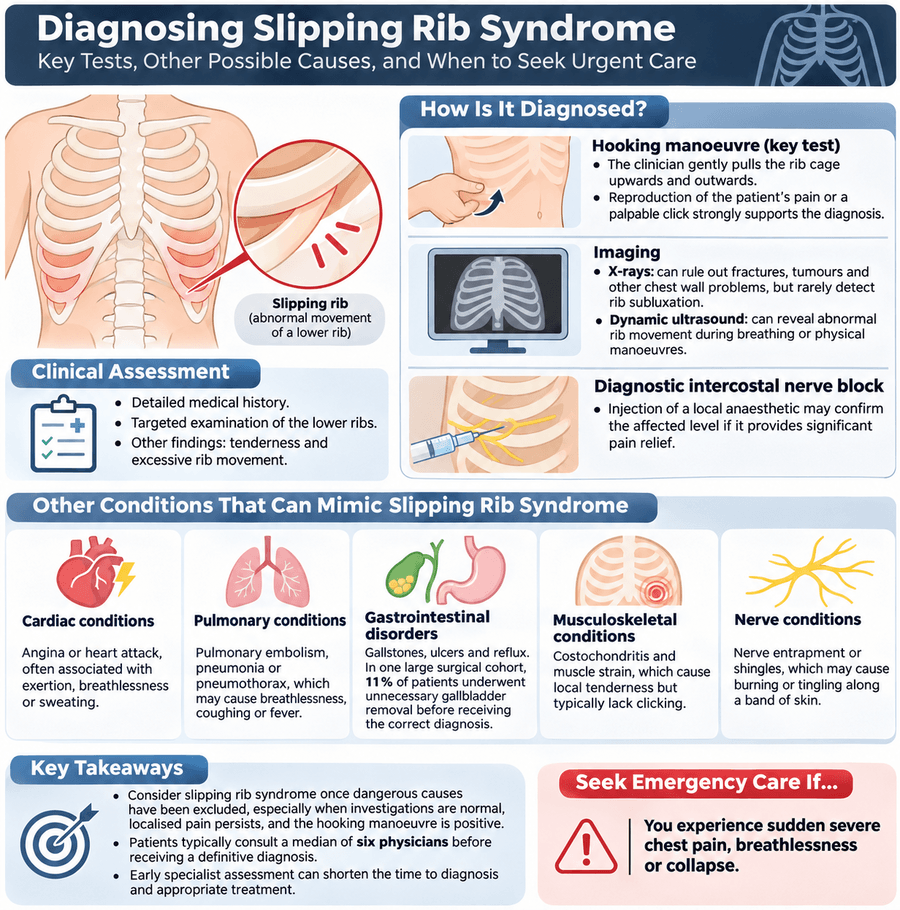
Diagnosis relies on a detailed medical history and targeted examination of the lower ribs. The key test is the hooking manoeuvre, in which the clinician gently pulls the rib cage upwards and outwards. Reproducing the patient’s pain or a palpable click strongly supports the diagnosis. Other findings include tenderness and excessive rib movement.
X-rays can rule out fractures, tumours and other chest wall problems but rarely detect rib subluxation. Dynamic ultrasound can reveal abnormal rib movement during breathing or physical manoeuvres. A diagnostic intercostal nerve block may also confirm the affected level if local anaesthetic provides significant pain relief.
Several conditions can mimic slipping rib syndrome and must be considered, including:
- Cardiac conditions: Angina or heart attack, often associated with exertion, breathlessness or sweating.
- Pulmonary conditions: Pulmonary embolism, pneumonia or pneumothorax, which may cause breathlessness, coughing or fever.
- Gastrointestinal disorders: Gallstones, ulcers and reflux. In one large surgical cohort, 11% of patients underwent unnecessary gallbladder removal before receiving the correct diagnosis.
- Musculoskeletal conditions: Costochondritis and muscle strain, which cause local tenderness but typically lack clicking.
- Nerve conditions: Nerve entrapment or shingles, which may cause burning or tingling along a band of skin.
Slipping rib syndrome is considered once dangerous causes have been excluded, particularly when investigations are normal, but localised pain persists, and the hooking manoeuvre is positive. Patients typically consult a median of six physicians before receiving a definitive diagnosis, making early specialist assessment valuable. Anyone experiencing sudden severe chest pain, breathlessness or collapse should seek emergency care immediately.
Have a question about your diagnosis?
A consultation gives you a personalised plan — not a generic estimate.
Treatment Options: From Conservative Care to Surgery
Treatment of slipping rib syndrome depends on symptom severity, duration and impact on daily life, ranging from conservative measures to surgery.
Conservative treatment
Initial treatment involves avoiding trigger movements, painkillers or anti-inflammatory medication, ice or heat, gentle stretching and physiotherapy to improve posture, breathing and core strength.
Interventional pain procedures
Intercostal nerve blocks, with or without corticosteroids, can confirm the diagnosis and provide relief lasting days to months. Repeat injections may help delay surgery.
Surgical treatment options
Surgery may be considered after three to six months of unsuccessful conservative treatment, particularly when persistent pain affects work, sport or daily activities. Options include cartilage excision, rib stabilisation, partial rib resection and rib plating.
Modern minimally invasive techniques aim to preserve normal rib anatomy. Specialist centres report pain scores dropping from around 7.5 to below 1 out of 10 within two years, alongside significant improvements in quality of life. Some patients may experience residual or recurrent symptoms.
"After multiple failed consultations elsewhere, Mr Scarci identified exactly what was wrong and operated within two weeks. Recovery was smooth and I'm back to normal life."
Physical Therapy, Nerve Involvement and Pain Management
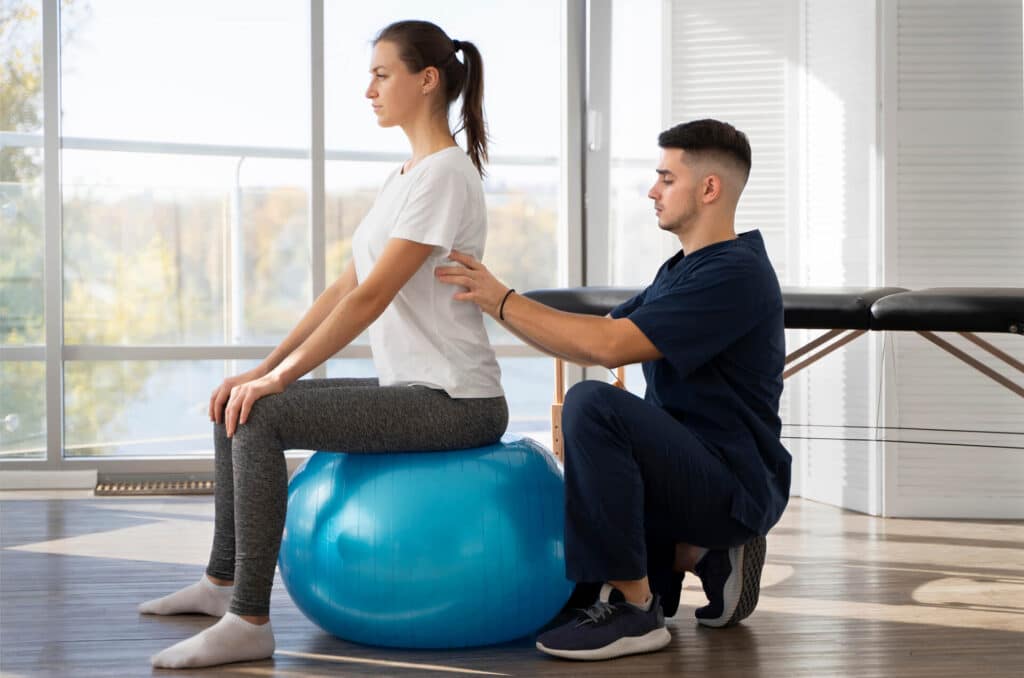
In slipping rib syndrome, excessive rib movement can compress the intercostal nerves, causing sharp, localised pain, burning or tingling. Physical therapy helps improve posture, breathing and core, back and chest wall strength to stabilise the lower ribs. Treatment may include targeted exercises, gentle stretching, manual therapy and movement guidance, supporting recovery and a gradual return to sport.
Intercostal nerve blocks deliver local anaesthetic, sometimes with steroid, near the affected nerve. These outpatient procedures help confirm the diagnosis by identifying the affected rib level while providing pain relief that can last days to months. Radiofrequency treatment may also be considered for complex or persistent cases.
Specialist Care with Mr Marco Scarci in London
Mr Marco Scarci is a London-based Consultant Thoracic Surgeon with extensive experience in chest wall conditions, including slipping rib syndrome, rib fractures, rib flare and chest wall deformities. With over 20 years of experience and thousands of keyhole procedures, he combines a detailed history, focused physical examination and dynamic ultrasound, and uses intercostal nerve blocks both diagnostically and therapeutically.
Patients can arrange for a private consultation in central London or virtually, including review of previous imaging for UK and international patients. Expert evaluation often leads to a clear diagnosis and treatment plan, sometimes in a single visit.
Complications, Prognosis, and Living with Slipping Rib Syndrome
Although not life-threatening, untreated slipping rib syndrome can cause chronic pain, reduced physical activity, anxiety and repeated hospital visits. Most patients improve with conservative treatment, physiotherapy or nerve blocks, while surgery often provides substantial or complete pain relief.
Self-management includes avoiding trigger movements, maintaining good posture and strengthening core muscles with physiotherapy guidance. Persistent pain despite normal investigations warrants specialist assessment.
FAQ
Can slipping rib syndrome cause serious internal damage?
It rarely damages internal organs, but pain can be severe. Heart attack, pulmonary embolism and other serious causes must first be ruled out.
Will slipping rib syndrome show up on an X-ray or CT scan?
Routine scans often appear normal because they cannot capture rib movement. Dynamic ultrasound and physical examination are more effective for confirming the diagnosis.
Can I exercise or play sport with slipping rib syndrome?
Light or modified exercise is usually possible, provided movements that trigger pain are avoided. Physiotherapy can guide safe activity, while high-impact sports may need limiting until symptoms improve.
Can slipping rib syndrome return after surgery?
Recurrence is possible but uncommon. Modern surgical techniques, including costal margin reconstruction, offer good long-term results, with reported failure rates as low as 4% per side.
Do I need a referral to see Mr Marco Scarci?
GP or specialist referrals are common, but private self-referral is usually possible. In-person and virtual consultations are available.
