

If you have been told you need surgery for thoracic outlet syndrome, one of the first questions on your mind is likely how long recovery will take and what each stage will feel like. The answer depends on several variables, but the overall trajectory is well understood.
This article breaks down the full recovery timeline from the first hours in hospital through to return to sport and heavy manual work, so you can plan ahead with confidence.
- Most patients take around 6–12 weeks for comfortable day-to-day function, while fuller recovery and return to demanding sport can take several months after thoracic outlet surgery.
- Recovery time varies by the type of TOS, including neurogenic TOS, venous TOS and arterial TOS, and the procedure performed, such as first rib resection, cervical rib removal or wider decompression surgery.
- Typical milestones include 1–3 days in hospital, around two weeks for basic self-care, several weeks before more physical work and several months before heavy overhead use.
- Around 80–90% of appropriately selected patients report significant symptom improvement in published surgical series, although individual outcomes vary.
- Specialist physiotherapy, gradual rehabilitation and appropriate follow-up are important parts of recovery after thoracic outlet decompression.
Understanding Thoracic Outlet Syndrome and Decompression Surgery
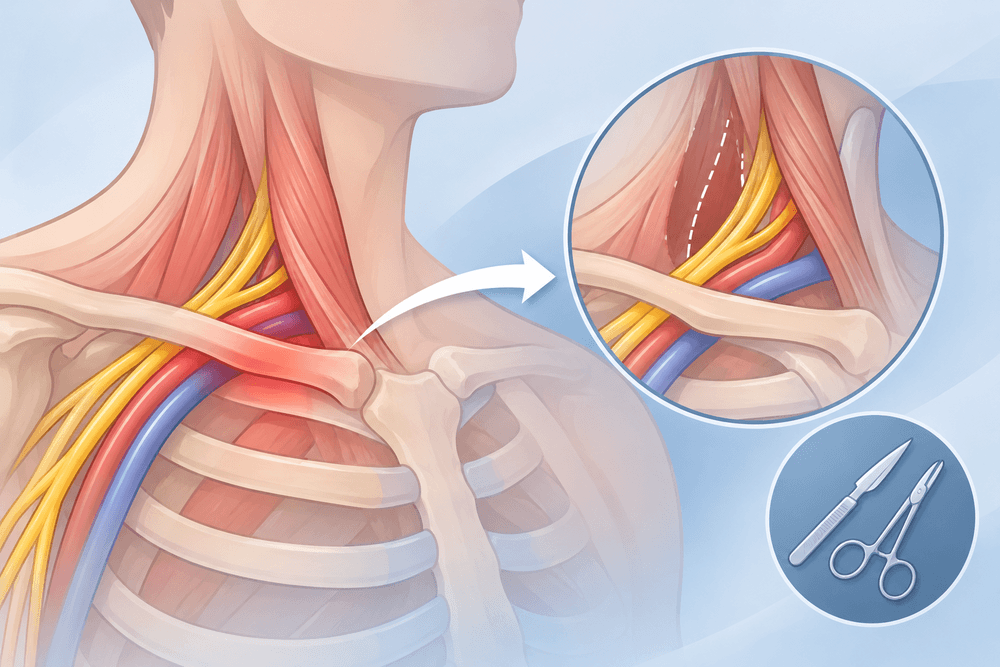
Thoracic outlet syndrome describes compression of nerves or blood vessels as they pass through the thoracic outlet, the narrow space between the collarbone and first rib, into the arm. Symptoms include arm pain, numbness and tingling, and they commonly worsen with overhead activities. Some patients also experience arm swelling or colour change, while cold, pale hands may indicate arterial thoracic outlet syndrome.
There are three main types. Neurogenic thoracic outlet syndrome accounts for approximately 95% of cases and involves compression of the brachial plexus. Venous TOS occurs in about 4% of cases and can lead to blood clot formation, known as Paget-Schroetter syndrome or effort thrombosis. Arterial TOS is the rarest type at about 1% and can cause complications such as aneurysm formation in the subclavian artery.
Common causes include a cervical rib, sometimes called an extra rib, bulky or tight scalene muscles, previous trauma, poor posture or abnormal first rib anatomy. Diagnosis primarily relies on clinical history and physical examination, supported where appropriate by investigations such as X-ray, MRI, nerve conduction studies, ultrasound and CT angiography when vascular involvement is suspected.
Decompression surgery usually involves first rib resection, sometimes combined with cervical rib resection, scalenectomy and removal of fibrous or scar tissue to relieve pressure on the nerves and subclavian vessels. For neurogenic TOS, conservative management is generally offered for 3–6 months before surgery is considered, unless progressive weakness, muscle wasting or another clear indication justifies earlier intervention.
The type of compression and extent of the operation both affect recovery after thoracic outlet surgery, which is why timelines can vary considerably from one patient to another.
Not sure about your treatment options?
Mr Scarci provides expert consultations typically within one week of contact.
What Factors Influence Thoracic Outlet Surgery Recovery Time?
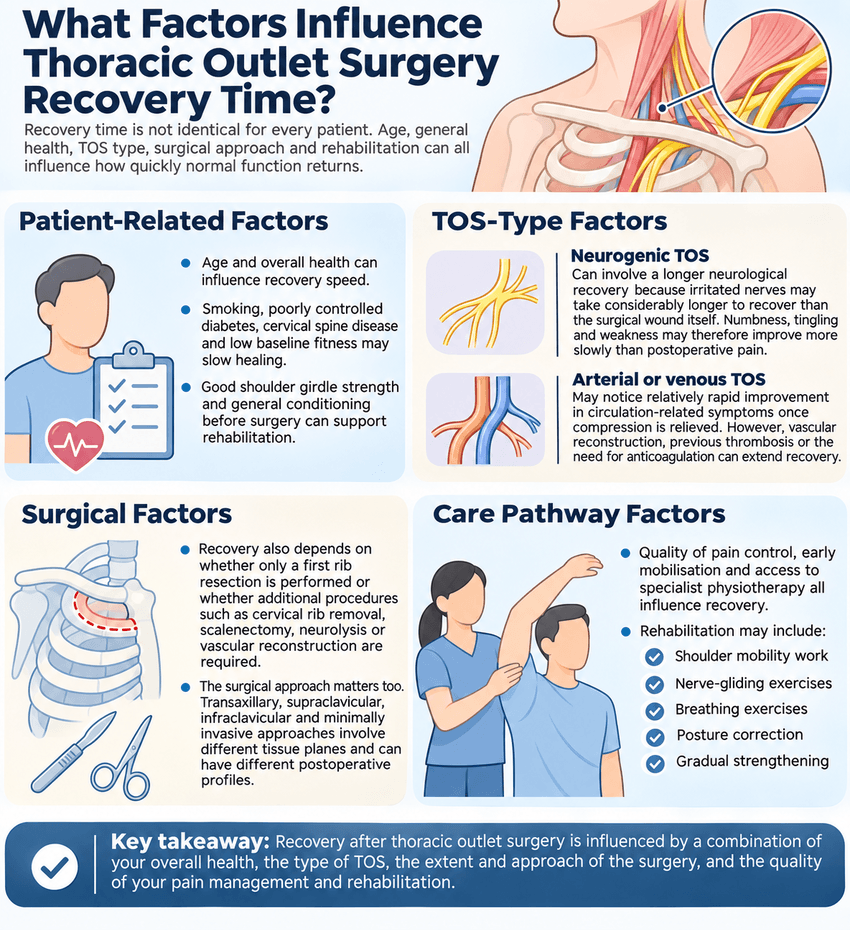
Recovery time is not identical for every patient. Age, general health, TOS type, surgical approach and rehabilitation can all influence how quickly normal function returns.
Patient-Related Factors
Age and overall health can influence recovery speed after thoracic outlet syndrome surgery. Smoking, poorly controlled diabetes, cervical spine disease and low baseline fitness may slow healing, while good shoulder girdle strength and general conditioning before surgery can support rehabilitation.
TOS-Type Factors
Neurogenic TOS can involve a longer neurological recovery because irritated nerves may take considerably longer to recover than the surgical wound itself. Numbness, tingling and weakness may therefore improve more slowly than postoperative pain.
Patients with arterial or venous TOS may notice relatively rapid improvement in circulation-related symptoms once compression is relieved. However, vascular reconstruction, previous thrombosis or the need for anticoagulation can extend recovery.
Surgical Factors
Recovery also depends on whether only a first rib resection is performed or whether additional procedures such as cervical rib removal, scalenectomy, neurolysis or vascular reconstruction are required.
The surgical approach matters too. Transaxillary, supraclavicular, infraclavicular and minimally invasive approaches involve different tissue planes and can have different postoperative profiles.
Care Pathway Factors
Quality of pain control, early mobilisation and access to specialist physiotherapy all influence recovery. Rehabilitation may include shoulder mobility work, nerve-gliding exercises, breathing exercises, posture correction and gradual strengthening.
"After multiple failed consultations elsewhere, Mr Scarci identified exactly what was wrong and operated within two weeks. Recovery was smooth and I'm back to normal life."
Immediate Postoperative Period: First 24–72 Hours in Hospital
Typical hospitalisation after uncomplicated thoracic outlet decompression is often around 1–3 days, although this varies according to the operation. Patients with vascular TOS requiring more extensive reconstruction or treatment of a blood clot may need a longer stay.
In the recovery room and ward, the clinical team monitors breathing and chest expansion, circulation in the arm and hand, neurological function in the fingers, wound appearance and pain levels. Pneumothorax is one of the recognised complications that may be checked for following first rib resection.
Patients may experience limited arm use immediately after surgery. Gentle hand, wrist and elbow movement is usually encouraged early, while heavy lifting and prolonged overhead positions are avoided.
Early mobilisation and breathing exercises form an important part of recovery. Individual instructions vary according to the procedure and should follow the advice given by the surgical and physiotherapy teams.
First Two Weeks at Home: Pain, Wound Care and Basic Function
The first two weeks focus on pain control, protecting the incision and gradually increasing simple daily activities. General fatigue, soreness around the collarbone, shoulder or chest, bruising and a pulling sensation during movement can all occur during early recovery.
These symptoms should gradually settle rather than progressively worsen. Increasing pain, redness, warmth, swelling or wound discharge should prompt medical review because they may indicate infection or another complication.
Wound Care
The incision should be kept clean and managed according to the team’s specific instructions about dressings and showering. Steri-Strips, sutures or clips are dealt with according to the type of wound closure used rather than on one fixed timetable.
Activity Guidance
Walking is generally encouraged, and the hand can usually be used for light tasks such as eating and typing as comfort allows. Heavy lifting and sustained overhead activity should be avoided during early healing.
Driving should only resume when the patient can safely control the vehicle, turn the steering wheel comfortably, perform an emergency stop and is no longer affected by strong opioid painkillers. A propped-up or well-supported sleeping position may also be more comfortable during the first couple of weeks.
General guidance on healing after surgery can also help patients understand the role of mobilisation, wound care, nutrition and gradual increases in activity.
A first follow-up appointment is usually arranged during the early postoperative period to review wound healing, pain, arm function and rehabilitation progress.
"I had rib pain for 6 years, was bounced around NHS without diagnosis. I was recommended to Mr Scarci — at consultation within minutes he knew what the problem was. Was offered surgery date the next week. 2 weeks post surgery I am almost back to full health."
Weeks 3–6: Regaining Shoulder Mobility and Returning to Light Work
This is the phase when most patients notice a clear improvement in comfort, stamina, and arm use. Structured physiotherapy ramps up between weeks 2 and 6 to restore mobility, focusing on gentle stretching, posture correction, and restoring shoulder and neck range of motion.
Work and activity guidance:
| Activity | Typical Timeline |
| Desk work (phased return) | Weeks 3–4 |
| Light household tasks | Weeks 3–4 |
| Stationary cycling/walking | Weeks 3–4 |
| Physical or overhead work | Weeks 6–8 at earliest |
| Heavy lifting or gym weights | Not yet |
Neurogenic TOS symptoms such as tingling, numbness, or weakness may gradually reduce but can fluctuate – nerve recovery often lags behind improvement in surgical pain. Physical therapy is essential and often starts a few weeks post-surgery to improve mobility and strength. Most patients transition to outpatient physical therapy for structured rehabilitation after four weeks.
Months 2–6: Long-Term Recovery, Strengthening and Return to Sport
While most day-to-day activities become more comfortable over the first few months, full functional recovery following thoracic outlet surgery may take considerably longer.
Physiotherapy increasingly focuses on scapular stabilisers, rotator cuff muscles and postural muscles, together with gradual return to overhead use. Nerve-gliding exercises may remain part of rehabilitation for patients recovering from neurogenic thoracic outlet syndrome.
Light non-contact sport or gym activity can sometimes be introduced earlier, while more demanding overhead sports such as tennis, swimming and throwing, as well as heavier weight training, generally require a more gradual return.
In one study of high-performance athletes treated for neurogenic or venous TOS, 85% returned to competition at their previous level, with an average return at approximately 4.6 months. The study included both surgically and non-surgically treated athletes, so the figure should not be interpreted as a universal postoperative recovery time.
Patients recovering from arterial or venous TOS with vascular reconstruction should also follow specific vascular-team advice regarding activity intensity and anticoagulation.
A small proportion of patients may notice residual tightness, weakness or altered sensation beyond six months. Ongoing home exercises and periodic physiotherapy reviews can continue to improve comfort and function.
Differences in Recovery: Neurogenic vs Vascular TOS
The underlying problem, whether involving nerves, a vein or an artery, changes both the urgency of treatment and the pattern of recovery.
Neurogenic TOS
Neurogenic TOS is the most common form, accounting for approximately 95% of TOS cases.
Pain, tingling and weakness in the arm can take months to improve because irritated nerves may recover slowly. Posture, cervical spine mechanics, shoulder control and nerve-friendly exercises are therefore central to rehabilitation.
Similar symptoms can sometimes arise from cervical spine disease or peripheral nerve entrapment, making accurate diagnosis essential before surgery.
A long-term surgical study found that 54% had complete relief of symptoms, while symptoms improved in approximately 90% overall. This supports a generally favourable long-term outcome while recognising that complete symptom resolution cannot be guaranteed.
Venous TOS
Swelling and bluish discolouration of the arm can improve after clot treatment and first rib decompression. Treatment may also include thrombolysis, venoplasty or anticoagulation depending on the individual case.
Patients may remain on anticoagulation for a defined period after treatment, with duration determined by the vascular team and the nature of the thrombosis. Arm heaviness and venous congestion may gradually improve as venous drainage recovers.
Arterial TOS
Cold, pale fingers or embolic symptoms may improve once blood flow is restored and arterial damage has been treated.
A cervical rib may require removal when it contributes to arterial compression. This is common in arterial TOS associated with a cervical rib, but cervical rib resection is not automatically required in every arterial TOS operation.
The procedure may also include repair or reconstruction of the subclavian artery, which can lengthen recovery compared with straightforward decompression.
Have a question about your diagnosis?
A consultation gives you a personalised plan — not a generic estimate.
Potential Setbacks and When Recovery Takes Longer
Most patients recover without major problems, but thoracic outlet surgery is still a significant operation, and complications can delay progress.
Recognised surgical complications include pneumothorax, wound infection, haematoma, bleeding and temporary or persistent nerve symptoms. Scar tissue around the brachial plexus, continued neck or shoulder muscle spasm and altered shoulder mechanics may also require additional physiotherapy or pain-management input.
Lifestyle factors can influence recovery too. Smoking can impair wound healing, poorly controlled diabetes or hypertension can complicate recovery, and returning to heavy overhead work too soon can aggravate symptoms.
Seek prompt medical review for increasing pain, new weakness, colour changes in the hand, shortness of breath or signs of deep vein thrombosis. These issues are among the broader thoracic surgery risks that should be discussed before an operation.
A large surgical database study reported a 3.5% complication rate within 30 days following operations for thoracic outlet syndrome. The study included several different surgical approaches, so this figure reflects that population rather than an individual’s predicted risk.
Long-Term Outlook After First Rib Resection and Decompression Surgery
The majority of appropriately selected TOS patients experience substantial long-term improvement in pain and function after first rib resection or thoracic outlet decompression.
Published surgical series generally report high rates of improvement, although outcomes vary according to the type of TOS, diagnostic criteria, surgical technique and patient selection.
A UK multicentre study of 133 surgical patients reported 89% symptom resolution overall. Outcomes differed according to TOS type, with symptom resolution lower in neurogenic TOS than in arterial and venous cases.
Some intermittent tightness, tingling in provocative positions or reduced endurance during prolonged overhead activity may remain despite overall improvement. Continued attention to posture, mobility and shoulder girdle strength can help maintain function over the longer term.
Careful patient selection and accurate diagnosis are central to achieving good outcomes. Assessment may include imaging, nerve conduction studies and provocative manoeuvres such as the Adson and Roos/EAST tests, but no single physical test confirms thoracic outlet syndrome by itself.
A scalene block may also provide useful diagnostic information in selected patients. However, it should be interpreted alongside the clinical history, examination and other investigations rather than used as stand-alone confirmation of neurogenic TOS.
Want a specialist opinion on your condition?
Get a clear answer from a surgeon who will be with you throughout.
Preparing for Surgery to Support a Smoother Recovery
Good pre-operative preparation can support a more comfortable recovery and help reduce avoidable complications.
Optimise Your Health
Stopping smoking as early as possible before surgery is important for wound healing and respiratory recovery. Alcohol intake should remain moderate, while conditions such as diabetes and hypertension should be as well controlled as possible.
Prehabilitation
Where appropriate, patients can learn and practise breathing exercises before surgery and begin gentle shoulder and upper-back mobility work. Postural exercises under the guidance of a physiotherapist familiar with thoracic outlet syndrome can also help prepare for rehabilitation.
Practical Planning
Planning ahead can make the first few weeks easier. This may include arranging time away from work, organising help at home and transport from hospital, and preparing a comfortable sleeping position that minimises unnecessary strain on the neck and shoulder.
Pre-operative consultations also allow the planned procedure, anaesthetic, expected hospital stay and personalised recovery pathway to be discussed before surgery.
Why Choose a Specialist Thoracic Outlet Surgeon in London?

Thoracic outlet decompression is technically demanding because the brachial plexus, subclavian artery and subclavian vein all pass through a confined anatomical space. Diagnosis and treatment may therefore require input from thoracic surgery, vascular surgery, neurology, radiology and specialist physiotherapy.
Mr Marco Scarci is a consultant thoracic surgeon in London whose practice includes first rib resection, thoracic outlet decompression and complex chest wall surgery. His practice also includes minimally invasive thoracic techniques where clinically appropriate.
The service includes diagnostic assessment, imaging review, coordination with neurological and vascular specialists where needed, surgery and structured postoperative rehabilitation.
If thoracic outlet decompression is being considered, an individual assessment can clarify the type of TOS, whether surgery is appropriate and what recovery is likely to involve for that specific patient.
Frequently Asked Questions
How soon after thoracic outlet surgery can I drive again?
Many patients can consider driving within the first few weeks after decompression surgery, but there is no single safe date for everyone. Patients should be able to perform an emergency stop, turn the steering wheel without significant pain and no longer be affected by strong opioid painkillers. Insurer requirements should also be checked, and timing can be discussed during the first postoperative review.
Will thoracic outlet surgery leave permanent restrictions on my activities?
The aim of surgery is to restore normal or near-normal function without long-term restrictions. Many patients return to sport, including overhead disciplines, and manual work. A minority may need to modify highly repetitive overhead activity or extreme weightlifting if these continue to provoke residual nerve sensitivity. Posture correction, strengthening and targeted exercises may help manage residual symptoms.
Does removal of the first rib or a cervical rib cause any long-term weakness or instability?
Removal of part or all of a first rib or cervical rib for thoracic outlet decompression does not usually result in clinically significant chest wall instability. Recovery depends on the extent of the operation, surrounding muscle dissection and rehabilitation, so patients should follow their individual postoperative programme.
What if my symptoms don’t improve after decompression surgery?
A small number of patients may have persistent or recurrent symptoms due to scar tissue, incomplete decompression, ongoing nerve irritation or an alternative diagnosis such as cervical spine disease or peripheral nerve entrapment. Further assessment may include repeat imaging, targeted nerve tests, review of rehabilitation and, in selected situations, revision surgery or specialist pain-management input.
Can both sides be operated on if I have bilateral thoracic outlet syndrome?
TOS can affect both sides, but surgery is normally considered according to the symptoms and clinical findings on each side. An asymptomatic side is generally not operated on simply because imaging shows anatomical compression. Decisions about bilateral surgery are made cautiously after specialist assessment, physical examination and an individual risk-benefit discussion.
