

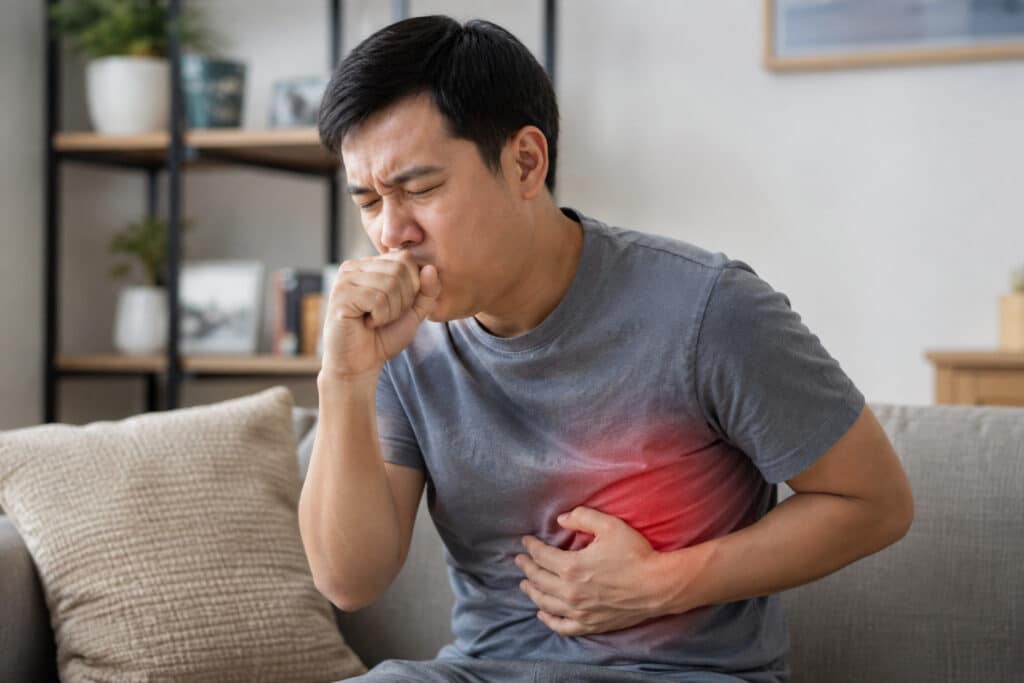
A persistent cough can place considerable strain on the chest wall. In some cases, particularly when coughing is forceful or prolonged, that strain can lead to a rib fracture. Although less common than fractures caused by a fall, collision or direct blow, cough-related rib fractures can cause significant pain and make everyday movements, deep breathing and sleep more difficult.
Symptoms may develop gradually or begin with a sudden, sharp pain during a coughing episode. Because chest pain and breathlessness can have several causes, it is important to know when a rib injury may be involved and when urgent medical assessment is needed.
A cough-induced rib fracture typically presents as sudden, sharp chest wall pain during or after a coughing fit, often with no history of external trauma.
These fractures can lead to chest infection, pneumonia and, rarely, empyema or pneumothorax, so they should never be ignored.
A standard chest X-ray can miss up to 42% of rib fractures. A CT scan is usually the most accurate way to diagnose them when pain is severe or persistent.
How Can a Cough Break a Rib?
Imagine a previously fit adult in their fifties develops a bad chest infection. After ten days of relentless coughing, they feel a sudden crack and searing pain in the side of their chest, with no fall, blow or obvious injury, just a cough.
A rib fracture is a break in one of the twelve pairs of bones forming the rib cage. Most people associate fractured ribs with major trauma such as a car accident or a heavy fall, but forceful coughing alone can generate enough internal force to cause one.
A cough-induced rib fracture is a break in a rib that occurs as a direct result of forceful or persistent coughing rather than external trauma.
A consultation with a thoracic specialist is advisable if pain is uncontrolled or complications develop.
Can Severe or Persistent Coughing Really Fracture Your Ribs?
Yes. Repeated, forceful coughing creates high internal pressures and opposing muscle pulls across the ribs, which can eventually cause stress fractures and full-thickness breaks, most often along the lateral chest wall affecting ribs 5 to 10. Without external bruising, these fractures are often mistaken for a pulled muscle.
Most occur after several days to weeks of persistent coughing due to conditions such as bronchitis, pneumonia, or COPD exacerbations. A review of 54 patients found 85% had coughed for at least three weeks before diagnosis.
A single violent coughing episode can also cause a fracture, particularly with osteoporosis or osteopenia, though case reports confirm it can even happen with normal bone density.
Typical Symptoms: When Should You Suspect a Rib Fracture From Coughing?
Chest pain is the hallmark symptom, but its pattern offers useful diagnostic clues. Typically, there is sudden, sharp pain in a specific spot during or after a coughing fit, worsening with deep breaths, coughing or sneezing, with tenderness when pressing directly over one rib. Some patients feel or hear a click, crack or pop at the time of injury, usually along the lateral chest wall.
Associated symptoms warranting concern include chest tightness, difficulty breathing, fever, productive, coloured sputum, or pain that worsens over 24 to 72 hours rather than improving.
Recognising broken rib symptoms requiring expert advice is important. Any pain radiating to the jaw, arm or back, or accompanied by sweating, nausea or collapse, should be treated as an emergency to exclude heart attack or pulmonary embolism. It’s important to understand that chest pain that accompanies coughing may also signal a serious medical condition.
How Are Rib Fractures Diagnosed After a Cough?
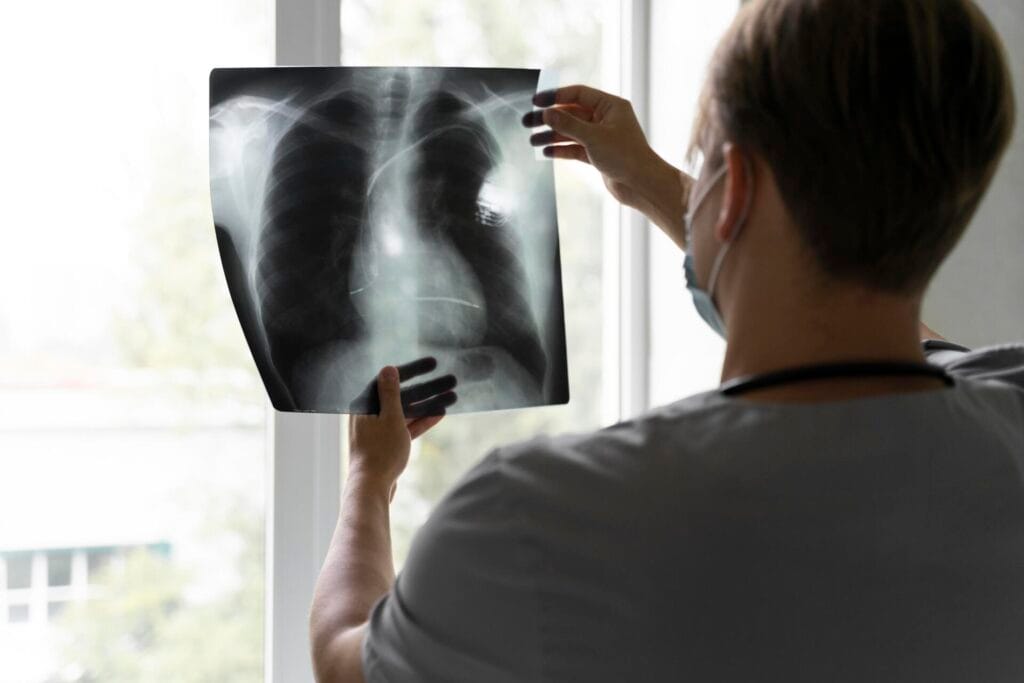
Diagnosis starts with a history and examination, covering cough duration, recent infection, steroid use, osteoporosis or cancer, and when the pain began. Examination usually finds a localised tender spot over the rib, sometimes with crepitus and pain on chest compression or deep breathing.
A chest X-ray is often the first test but can miss up to 42% of isolated fractures, particularly small or non-displaced ones. A chest CT is the gold standard in many series, detecting nearly all fractures and revealing complications such as pneumothorax or haemothorax. Ultrasound can also detect subtle fractures and small pleural effusions in the hands of experienced operators.
What Complications Can Follow Cough-Related Rib Fractures?
The main danger is usually the effect on breathing rather than the fracture itself. Pain often causes shallow breathing, leading to ineffective coughing, mucus build-up and a higher risk of chest infection, atelectasis and pneumonia.
More serious complications are less common but important. Pneumonia occurs in 6 to 9.1% of cases, usually within 2 to 14 days, with multiple fractures raising the risk significantly.
Empyema, an infected pleural collection requiring specialist drainage, can develop alongside pneumonia, while haemothorax sometimes requires chest drain insertion.
Pneumothorax is an uncommon but potentially serious complication in which air enters the space between the lung and chest wall, causing part or all of the lung to collapse. It can occur if a fractured rib damages the lung lining. It requires urgent medical assessment, particularly if breathing becomes difficult or symptoms worsen.
Subcutaneous emphysema, a crackling sensation or swelling beneath the skin of the chest, neck or face, can also indicate an air leak and should be assessed promptly.
Fever should prompt medical review, and rarely, displaced fragments can pierce the lung or blood vessels.
Want a specialist opinion on your condition?
Get a clear answer from a surgeon who will be with you throughout.
Managing Pain and Protecting Your Lungs
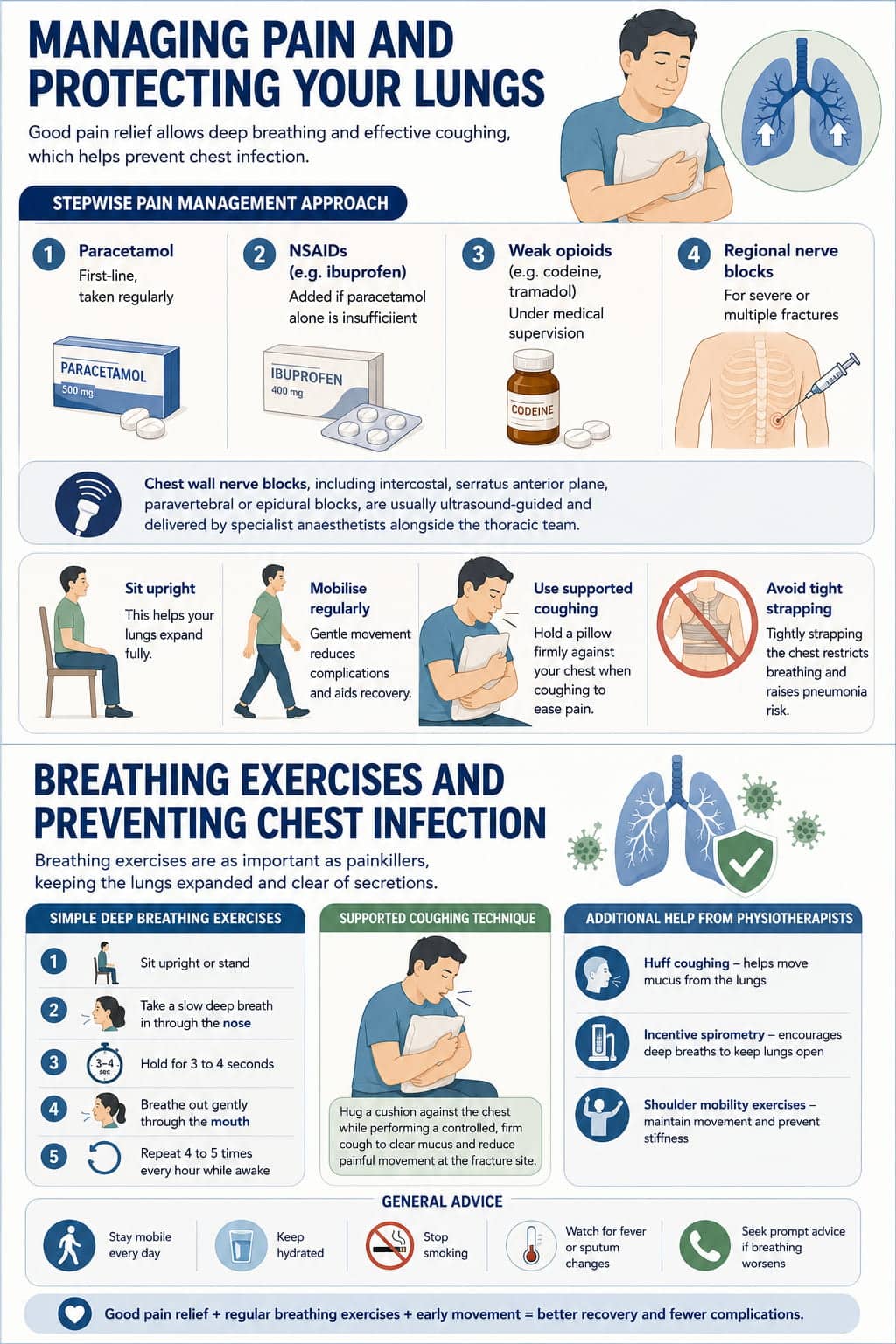
Good pain relief allows deep breathing and effective coughing, which helps prevent chest infection.
Stepwise pain management approach:
Paracetamol – First-line, taken regularly
NSAIDs (e.g. ibuprofen) – Added if paracetamol alone is insufficient
Weak opioids (e.g. codeine, tramadol) – Under medical supervision
Regional nerve blocks – For severe or multiple fractures
Chest wall nerve blocks, including intercostal, serratus anterior plane, paravertebral or epidural blocks, are usually ultrasound-guided and delivered by specialist anaesthetists alongside the thoracic team.
Patients should sit upright, mobilise regularly and use supported coughing with a pillow against the chest to ease pain. Tightly strapping the chest should be avoided, as it restricts breathing and raises pneumonia risk.
Breathing Exercises and Preventing Chest Infection
Breathing exercises are as important as painkillers, keeping the lungs expanded and clear of secretions.
Simple deep breathing exercises:
Sit upright or stand
Take a slow deep breath in through the nose
Hold for 3 to 4 seconds
Breathe out gently through the mouth
Repeat 4 to 5 times every hour while awake
Supported coughing technique: Hug a cushion against the chest while performing a controlled, firm cough to clear mucus and reduce painful movement at the fracture site.
Physiotherapists often add techniques such as huff coughing, incentive spirometry and shoulder mobility exercises, complementing specialist-led bruised and fractured rib treatment for complex injuries.
General advice includes staying mobile, keeping hydrated, stopping smoking, watching for fever or sputum changes and seeking prompt advice if breathing worsens.
When Is Surgery or Specialist Thoracic Care Needed?
Most rib fractures from coughing heal without surgery over 6 to 8 weeks. However, some situations justify referral to a thoracic surgeon.
Indications for specialist assessment include multiple rib fractures or flail segments, persistent severe pain despite optimal medical therapy, complications such as pneumothorax, haemothorax or empyema, a suspected pathological fracture (for example due to metastasis or tumour), or an unusual presentation raising concern about underlying chest wall disease.
In complex injuries, surgical stabilisation of the ribs with plates and screws may be considered to restore chest wall mechanics and reduce pain. Thoracic surgeons can also manage related lung problems, such as infected pleural effusion needing drainage or keyhole VATS surgery, and assess for underlying chest wall tumours or deformities.
Recovery Timeline: What to Expect After a Cough-Related Rib Fracture
Most uncomplicated rib fractures, including those from coughing, improve substantially within 6 to 8 weeks, though mild aches can persist longer.
Typical healing timeline:
Timeframe | What to Expect |
Days 1–10 | Severe pain; pain-free periods rare; shallow breathing common |
Weeks 2–3 | Gradual improvement; deeper breaths possible |
Weeks 3–4 | Increasing mobility |
Weeks 6–8 | Progressive return to normal activities |
Heavy lifting, contact sports and strenuous twisting should be avoided until you can breathe deeply and cough without significant pain. Ongoing coughing can delay healing through continued mechanical stress, so treating the underlying cause of the cough matters equally.
Follow-up imaging is sometimes performed after several weeks to confirm healing, especially with osteopenia, osteoporosis or ongoing pain. Patients should discuss modified duties with their employer and avoid driving until an emergency stop can be made without pain.
How Mr Marco Scarci Can Help With Rib Fractures and Chest Wall Problems
Mr Marco Scarci is a London-based consultant thoracic surgeon experienced in managing rib fractures, chest wall injuries and lung conditions using minimally invasive and keyhole approaches. He commonly sees patients with persistent chest pain, suspected non-union of fractures, chest wall deformities or recurrent chest infections after a rib fracture, and tailors care from imaging review through to surgery and postoperative rehabilitation where needed.
If you have ongoing chest wall pain, breathing difficulty or repeated chest infections after a rib fracture, you can contact his practice for a specialist assessment.
When Should You Seek Urgent Medical Attention?
A single rib fracture from coughing can usually be assessed during normal clinic hours, but certain symptoms need same-day or emergency review.
Red-flag symptoms requiring urgent attention:
Sudden or rapidly worsening shortness of breath
Confusion, blue lips or blue fingers
Chest pain that feels like pressure or heaviness
Coughing up blood
High fever with shivering and thick green or rusty sputum
Severe chest pain after coughing, particularly in older adults or those with heart disease, should prompt immediate assessment to rule out heart or lung emergencies, including a collapsed lung. In the UK, call 999 for severe or rapidly deteriorating symptoms, or NHS 111 for urgent advice if unsure whether hospital attendance is needed.
Patients already under a thoracic team’s care should use the contact numbers provided to them during working hours and attend the nearest Emergency Department if they are unable to reach a clinician and their symptoms are severe.
Have a question about your diagnosis?
A consultation gives you a personalised plan — not a generic estimate.
FAQ
Can a single coughing fit cause a rib fracture if my bones are normal?
Yes, though it’s less common than fractures from prolonged coughing, and case reports confirm it can happen with normal bone density. It’s more likely with added risk factors such as age over 60, smoking or undiagnosed low bone density, so sudden localised pain after one violent cough should be taken seriously.
How do I tell the difference between a pulled chest muscle and a rib fracture?
A fracture typically causes pinpoint tenderness over one rib, sometimes with a palpable step or grating sensation, while a pulled muscle causes more diffuse soreness. If pain limits deep breathing or lasts more than a few days, imaging is needed to confirm.
Do I always need a CT scan if I have chest pain after coughing?
No. Mild, uncomplicated cases are often managed on clinical assessment alone. CT is more likely if pain is severe or worsening, an X-ray is inconclusive, or there’s concern about multiple fractures, pneumothorax or haemothorax.
Can I fly with a rib fracture caused by coughing?
Sometimes, provided pain is controlled, breathing is comfortable, and there are no complications. Discuss plans with your GP or thoracic surgeon, allow extra time before long-haul flights (often 4 to 6 weeks after injury) and check your travel insurance covers pre-existing conditions.
Should I be tested for osteoporosis after a cough-induced rib fracture?
Adults over about 50, particularly postmenopausal women or those with added risk factors, should consider a DEXA scan after a low-impact fracture. Around 65% of patients tested after a cough-induced fracture had osteopenia or osteoporosis, so early diagnosis matters.
