

Deciding whether lung cancer surgery is the right path involves more than looking at a scan. It depends on a careful assessment of your cancer type and stage, lung and heart health, overall fitness and personal preferences. This guide explains who typically qualifies, who usually does not, and how modern techniques are changing the picture for many patients.
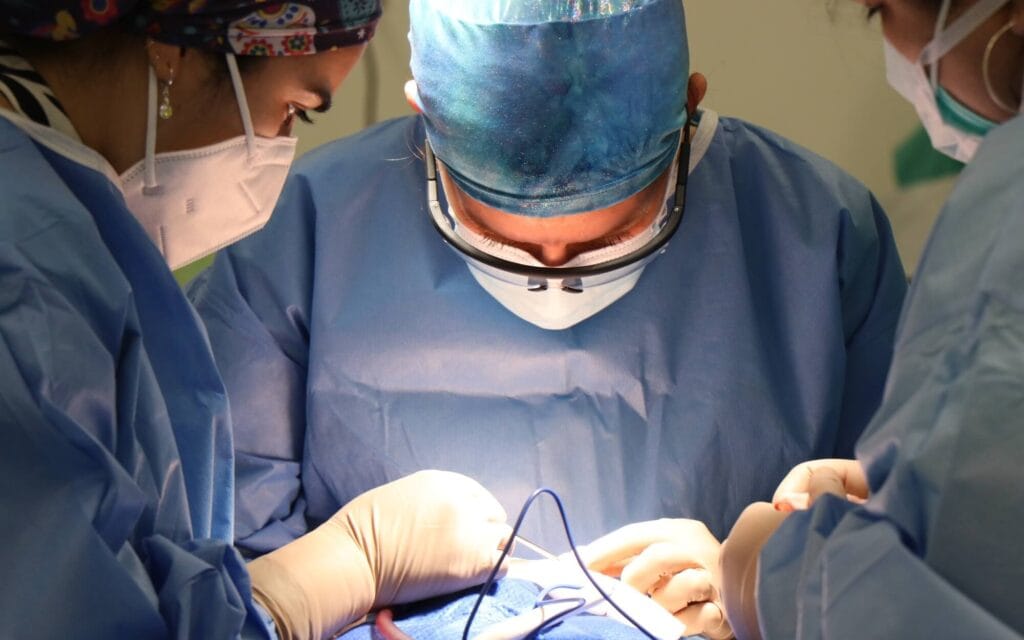
Lung cancer surgery remains one of the most effective ways to cure early-stage lung cancer, but not every patient is a suitable candidate. The decision is always individualised, based on detailed tests and a multidisciplinary team discussion rather than any single factor.
Surgery is usually offered for early-stage non small cell lung cancer (NSCLC) confined to one lung and nearby lymph nodes. Small cell lung cancer (SCLC) is rarely treated with surgery as a primary option.
The main factors that determine whether you can receive surgery include cancer stage, whether cancer cells have spread to lymph nodes or other organs, lung function, heart health, overall fitness, and your own preferences.
Modern keyhole surgery – including VATS, uniportal VATS, and robotic techniques – now allows many more people, including some higher-risk patients, to safely undergo cancer surgery.
Patients with poor health, uncontrolled comorbidities, or advanced disease with distant metastasis are typically not suitable for surgery, but effective non-surgical treatment options still exist.
Understanding When Lung Cancer Surgery Is Possible
Being labelled “operable” or “inoperable” is not a judgement about you as a person. It is a medical assessment of whether your lung cancer can be safely and completely removed with an acceptable level of risk.
These categories are not always fixed. A patient’s suitability may change if their health improves, the cancer responds to treatment or newer surgical techniques make a previously difficult operation possible.
The goal of surgery is to remove the tumour with a margin of healthy lung tissue and nearby lymph nodes, ideally clearing all known cancer in a single operation. Surgery is generally reserved for localised tumours that can be completely resected.
Understanding what surgery involves can help patients prepare for the tests, hospital stay and recovery process.
Surgeons usually consider three broad questions:
Can all known cancer be removed? This depends on the tumour’s size, position and spread.
Will enough healthy lung remain? Sufficient functioning lung tissue must remain for comfortable breathing after surgery.
Is the overall risk acceptable? This includes general health, heart function, lung function and the ability to recover.
The answers come from detailed imaging, including CT and PET-CT scans, lung-function testing, cardiac assessment and multidisciplinary team discussion. Age alone does not determine eligibility.
Criteria and techniques have evolved significantly. Some patients who would previously have been considered inoperable may now be candidates because of minimally invasive surgery, lung-sparing operations and improved perioperative care.
Have a question about your diagnosis?
A consultation gives you a personalised plan — not a generic estimate.
Who Typically Can Have Lung Cancer Surgery?
Most suitable patients have early-stage lung cancer confined to one area of the lung and are fit enough to tolerate anaesthesia, removal of lung tissue and recovery.
Patients do not need to be in perfect health, but existing conditions should be assessed and controlled as far as possible before surgery.
Common Features of Operable NSCLC
A tumour confined to one lobe of the lung
No distant spread identified on PET-CT
No lymph-node involvement, or limited involvement that can be treated as part of a combined plan
Sufficient lung and heart function for the proposed operation
A reasonable level of mobility and overall fitness
Surgery is often an option for Stage 0 and Stage I NSCLC. Small tumours without involved lymph nodes are frequently suitable for treatment with curative intent.
Surgery may also be offered for Stage II disease and carefully selected Stage III cases. Treatment can involve chemotherapy, immunotherapy or chemoradiotherapy before or after lobectomy and lymph-node dissection.
The operation selected depends on tumour position, lymph-node involvement, lung reserve and whether complete removal is realistically achievable.
Factors Increasing Eligibility
Patients with satisfactory lung-function results, controlled blood pressure or diabetes and good mobility are more likely to tolerate surgery well.
Stopping smoking before surgery can also reduce the risk of chest infection, wound-healing problems and heart complications. Even when surgery has already been scheduled, stopping as soon as possible remains worthwhile.
Preparation may include respiratory physiotherapy, nutritional support, medication review and structured exercise. These measures can improve fitness and help some borderline patients become suitable surgical candidates.
"After two years of being told my symptoms were anxiety, Mr Scarci identified the problem immediately. The surgery was straightforward and I was discharged after three days. I only wish I had found him sooner."
Who Usually Cannot Have Lung Cancer Surgery?
Some patients are not offered surgery because it would be unlikely to remove all the cancer or because the risk of serious harm outweighs the likely benefit.
This decision is made carefully. Lung surgery carries recognised risks, and these must be weighed against the expected chance of cure or long-term control.
Tumour-Related Reasons
Cancer-related reasons why surgery may not be appropriate include:
Widespread metastases involving the brain, liver, bones or adrenal glands
Multiple tumours affecting both lungs
Extensive lymph-node spread on both sides of the chest
Disease that cannot be completely removed with an adequate margin
When cancer has spread widely, systemic treatment is usually more appropriate because an operation on one area would not treat disease elsewhere in the body.
Anatomical Limitations
Some tumours are difficult to remove because of their relationship to major structures within the chest.
Examples include cancers that encase major blood vessels, invade the carina or both main bronchi, involve the spine or affect so much essential lung tissue that complete removal would leave insufficient breathing capacity.
Specialist techniques can sometimes make surgery possible, including sleeve resection, vascular reconstruction or treatment before surgery. However, these options depend on individual anatomy and specialist expertise.
Patient-Related Reasons
Health-related reasons may include:
Severely reduced lung function caused by advanced emphysema or pulmonary fibrosis
Serious heart disease, including unstable angina, recent heart attack or uncontrolled heart failure
Significant frailty or poor performance status
Difficulty walking or managing ordinary daily activities
Uncontrolled medical conditions that substantially increase surgical risk
Possible complications include chest infection, blood clots, prolonged air leak, heart rhythm disturbances and extended hospital admission.
Some patients decide not to undergo surgery after discussing the risks and alternatives. Patient choice is always respected.
Importantly, inoperable does not mean untreatable. Chemotherapy, radiotherapy, targeted therapy, immunotherapy and clinical trials may still control lung cancer, relieve symptoms and extend life.
Not sure about your treatment options?
Mr Scarci provides expert consultations typically within one week of contact.
Role of Stage and Type: NSCLC vs SCLC
The two principal types of lung cancer, non-small cell lung cancer (NSCLC) and small cell lung cancer (SCLC), behave differently and are treated differently when surgery is considered.
Non-Small Cell Lung Cancer
Approximately 85% of lung cancers are non-small cell lung cancer. This group includes adenocarcinoma, squamous cell carcinoma and large cell carcinoma.
Surgery is a standard treatment for many patients with early-stage NSCLC and selected patients with more locally advanced disease. Early cancers confined to one lobe can often be treated with lobectomy or lung-sparing resection and lymph-node removal.
Depending on the stage and tumour biology, chemotherapy, targeted therapy or immunotherapy may be given before or after surgery.
Small Cell Lung Cancer
Small cell lung cancer accounts for a smaller proportion of diagnoses but tends to spread through the lymph nodes and bloodstream earlier.
Surgery is therefore rarely used for extensive SCLC. It may be considered for a small number of patients with very early, node-negative disease after thorough staging.
When surgery is used, chemotherapy is normally required afterwards. Some patients may also be considered for radiotherapy according to their stage and response.
Accurate staging with CT, PET-CT and often brain MRI is essential. It determines whether lung surgery is realistic or whether non-surgical treatment is more likely to provide effective disease control.
Screening also plays an important role because cancers found at an earlier stage are more likely to be operable. The benefits and limitations of early lung cancer detection are closely linked to treatment eligibility.
"Dr. Marco Scarci is a deeply knowledgeable, open-minded, and empathetic surgeon. He listens to details and solves problems to truly deliver the most optimal results. As a medical professional myself, I can tell you that finding a specialist like Dr. Scarci is very rare, and it is a privilege to have him in my corner."
Assessing Operability: Tests and Fitness for Lung Surgery
Before recommending surgery, the cancer team must be confident that the patient can tolerate anaesthesia, removal of lung tissue and the recovery period.
Assessment includes respiratory testing, cardiovascular review and evaluation of overall performance status.
Lung-Function Tests
Common tests include:
Spirometry: Measures FEV1, or how much air can be forcibly exhaled in one second.
Gas transfer testing: DLCO or TLCO measures how effectively oxygen moves from the lungs into the bloodstream.
Predicted post-operative values: These estimate how much lung function is likely to remain after the planned resection.
Cardiopulmonary exercise testing: CPET measures how the heart, lungs and muscles respond during exercise and is particularly useful in borderline cases.
Predicted post-operative values below accepted thresholds may indicate a high-risk operation. These figures are not considered alone, as the proposed procedure, exercise capacity and general health all influence the decision.
Heart Assessment
Assessment may involve an ECG, echocardiogram, medication review and, where necessary, stress testing or specialist cardiology input.
This helps determine whether the heart can safely tolerate anaesthesia, one-lung ventilation and the physical demands of major surgery.
Additional Pre-operative Investigations
Other investigations may include:
Blood tests
CT and PET-CT scans
Brain imaging where appropriate
Bronchoscopy
Endobronchial ultrasound
Lymph-node biopsy
Molecular and biomarker testing
A lung biopsy procedure may be required to confirm the diagnosis and cancer type before definitive treatment is planned.
Age alone is not an absolute barrier. Surgeons also consider whether the patient can climb stairs, walk a reasonable distance and manage ordinary daily activities.
Prehabilitation, including supervised exercise, breathing exercises, smoking cessation and nutritional optimisation, may improve fitness and convert some borderline patients into safer surgical candidates.
Want a specialist opinion on your condition?
Get a clear answer from a surgeon who will be with you throughout.
Operable but High-Risk: When Surgery Is Possible but Challenging
Some patients are technically operable because their cancer can be completely removed, but their risk is higher than average because of medical conditions, previous treatment or reduced lung reserve.
Common high-risk features include:
Moderate COPD or reduced lung function
Previous chest radiotherapy
Previous lung surgery
Obesity
Controlled heart disease that still increases anaesthetic risk
Frailty or reduced mobility
For these patients, lung-sparing procedures such as segmentectomy or wedge resection may sometimes be selected instead of lobectomy. The aim is to remove the cancer while preserving as much healthy lung as possible.
Minimally invasive surgery, including keyhole thoracic surgery, may reduce pain, tissue trauma and recovery time compared with open thoracotomy.
These potential advantages can make surgery feasible for some older adults and moderately high-risk patients who may struggle to tolerate a large open incision.
High-risk cases are usually discussed in detail at a multidisciplinary meeting and may benefit from assessment by a surgeon experienced in complex lung cancer operations.
High-risk does not mean never. It means the expected benefits and risks require particularly careful assessment and clear explanation.
When Is Lung Cancer Considered Inoperable?
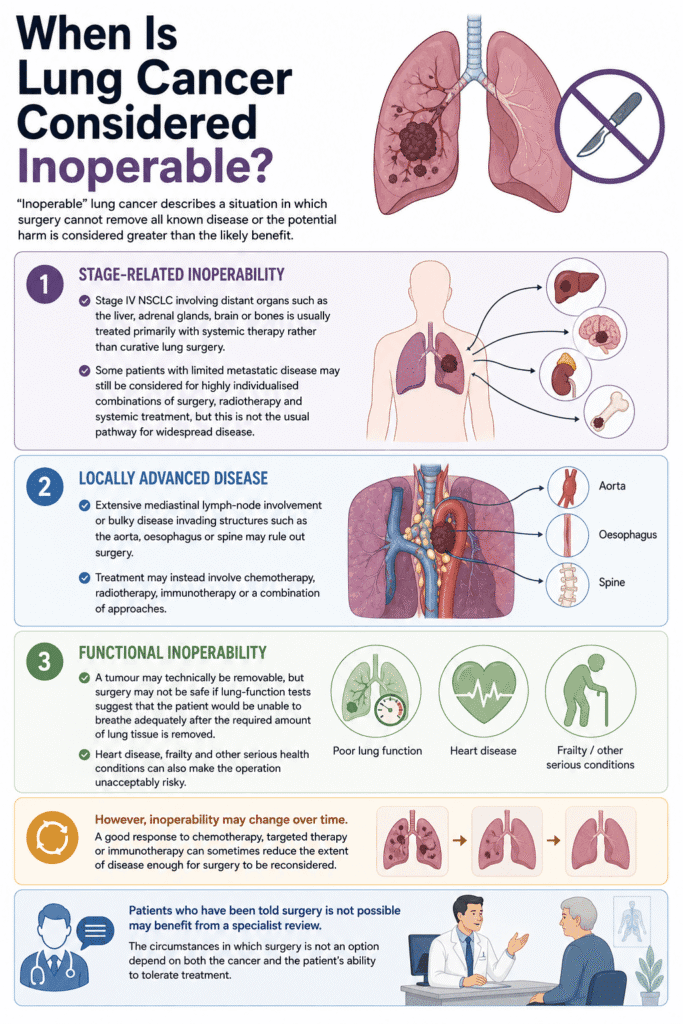
“Inoperable” lung cancer describes a situation in which surgery cannot remove all known disease or the potential harm is considered greater than the likely benefit.
Stage-Related Inoperability
Stage IV NSCLC involving distant organs such as the liver, adrenal glands, brain or bones is usually treated primarily with systemic therapy rather than curative lung surgery.
Some patients with limited metastatic disease may still be considered for highly individualised combinations of surgery, radiotherapy and systemic treatment, but this is not the usual pathway for widespread disease.
Locally Advanced Disease
Extensive mediastinal lymph-node involvement or bulky disease invading structures such as the aorta, oesophagus or spine may rule out surgery.
Treatment may instead involve chemotherapy, radiotherapy, immunotherapy or a combination of approaches.
Functional Inoperability
A tumour may technically be removable, but surgery may not be safe if lung-function tests suggest that the patient would be unable to breathe adequately after the required amount of lung tissue is removed.
Heart disease, frailty and other serious health conditions can also make the operation unacceptably risky.
However, inoperability may change over time. A good response to chemotherapy, targeted therapy or immunotherapy can sometimes reduce the extent of disease enough for surgery to be reconsidered.
Patients who have been told surgery is not possible may benefit from a specialist review. The circumstances in which surgery is not an option depend on both the cancer and the patient’s ability to tolerate treatment.
Have a question about your diagnosis?
A consultation gives you a personalised plan — not a generic estimate.
Types of Lung Cancer Surgery and What They Mean for Eligibility
Not every patient requires the same extent of lung surgery. Modern practice ranges from removing a whole lung to removing a small, precisely targeted section.
The most suitable operation depends on tumour size, location, lymph-node involvement, lung reserve and overall fitness.
Operation | What It Involves | Typical Indication |
Lobectomy | Removes one complete lobe of the lung | Standard operation for many early-stage NSCLCs |
Bilobectomy | Removes two lobes of the right lung | Cancer extending across adjacent right-lung lobes |
Pneumonectomy | Removes an entire lung | Selected central tumours or disease involving multiple lobes |
Segmentectomy | Removes one anatomical lung segment | Selected small tumours or reduced lung reserve |
Wedge resection | Removes a small wedge-shaped section | Diagnostic procedures or selected small peripheral lesions |
Sleeve resection | Removes part of an airway and reconnects it | Central tumours where pneumonectomy may be avoided |
Lobectomy remains a standard treatment for many early-stage cancers. Pneumonectomy removes an entire lung and therefore requires particularly careful heart and lung assessment.
A wedge resection removes less tissue but may not provide the same oncological clearance as an anatomical resection in every case. Segmentectomy follows anatomical boundaries and can preserve more lung than lobectomy.
Recent clinical trials suggest that carefully selected patients with peripheral tumours measuring 2 cm or less may achieve comparable outcomes with sublobar resection. Selection, adequate margins and lymph-node assessment remain essential.
The wider range of lung cancer operations allows treatment to be tailored more closely to the tumour and remaining lung function.
During consultation, useful questions include:
Which operation is recommended?
Why is that procedure preferred?
How many lymph nodes will be assessed?
How much lung function is expected to remain?
Could a lung-sparing procedure be suitable?
What are the chances of conversion to open surgery?
Keyhole and Robotic Surgery: Expanding Who Can Safely Have Surgery
Many lung cancer operations at specialist centres are now performed using keyhole incisions rather than a large open thoracotomy.
Keyhole techniques commonly involve one to three small incisions and use a thoracoscope with specialised instruments. Video-assisted thoracoscopic surgery (VATS) can be used for lobectomy, segmentectomy, wedge resection and lymph-node assessment.
Robotic-assisted surgery uses instruments controlled by the surgeon from a console. The robotic platform provides magnified three-dimensional vision and wristed instruments capable of precise movements in confined areas.
Potential benefits include:
Less disruption to muscles and ribs
Lower blood loss
Reduced post-operative pain
Shorter hospital stays
Earlier mobilisation
Faster return to ordinary activities
These advantages may allow selected older or moderately high-risk patients to undergo surgery when an open procedure would be more difficult to tolerate.
However, eligibility still depends on tumour size and position, previous treatment, lymph-node involvement and the likelihood of complete removal. Minimally invasive surgery is not appropriate when it would compromise safety or cancer clearance.
Mr Marco Scarci specialises in minimally invasive and uniportal VATS lung surgery. His work includes assessing patients with early-stage lung cancer as well as complex or higher-risk cases requiring individualised planning.
Patients considering robotic lung cancer surgery should understand that the technology assists the surgeon but does not operate independently.
Not sure about your treatment options?
Mr Scarci provides expert consultations typically within one week of contact.
Alternatives When Lung Cancer Surgery Is Not an Option
Even when lung cancer is inoperable, several effective treatments can control disease, relieve symptoms and extend life.
Being told that surgery is not possible does not mean that nothing can be done.
Stereotactic Ablative Radiotherapy
Stereotactic ablative radiotherapy, also called SABR or SBRT, delivers a highly focused dose of radiation to a small tumour. It is often used for early-stage lung cancer when a patient cannot undergo surgery or chooses not to have an operation.
Standard Radiotherapy and Chemoradiotherapy
Radiotherapy may be used to control locally advanced lung cancer, reduce symptoms or form part of treatment with chemotherapy. Concurrent or sequential chemoradiotherapy may be recommended depending on cancer type, stage and general health.
Chemotherapy
Chemotherapy circulates through the bloodstream and can treat cancer cells in different parts of the body. It may be used before surgery, after surgery or as the main treatment when an operation is not appropriate.
Immunotherapy
Immunotherapy helps the immune system recognise and attack cancer cells. Eligibility depends on the cancer type, stage, biomarker results and previous treatments. It may be used alone or with chemotherapy.
Targeted Therapy
Targeted medicines are designed for cancers carrying particular genetic alterations, including changes involving EGFR, ALK, ROS1 and other genes. Molecular testing is therefore an important part of treatment planning for many patients with NSCLC.
Other Treatments
Bronchoscopic treatments may be used to relieve airway obstruction in selected patients. These can include laser therapy, stenting or photodynamic treatment.
Clinical trials may provide access to new drugs, radiotherapy techniques or combinations of treatment. Patients who cannot undergo surgery should ask whether an appropriate study is available.
Symptom management, including pain relief, breathlessness support, nutrition and emotional care, remains important alongside active cancer treatment.
The circumstances in which cure without surgery may be possible depend heavily on stage, tumour biology and response to treatment.
How Mr Marco Scarci Assesses Candidates for Lung Cancer Surgery
Mr Marco Scarci is a London-based consultant thoracic surgeon specialising in minimally invasive lung cancer surgery for private and NHS patients.
Every patient undergoes a structured assessment that may include:
Detailed medical history and examination
High-resolution CT and PET-CT imaging
Lung-function testing
Spirometry and gas-transfer measurements
Cardiopulmonary exercise testing where needed
Multidisciplinary team review
Discussion of the proposed operation and alternatives
Where appropriate, lung-sparing segmentectomy, lobectomy, sleeve resection or pneumonectomy may be considered. The recommended procedure depends on achieving cancer clearance while retaining sufficient functioning lung.
The risks, benefits, expected hospital stay and recovery milestones should be explained before a treatment decision is made.
Private patients may choose specialist thoracic care for quicker assessment, flexibility in hospital choice or coordination around other commitments.
Patients who are uncertain about their eligibility can arrange an in-person or secure video consultation to review their scans, test results and available treatment options.
Frequently Asked Questions
Is There an Age Limit for Lung Cancer Surgery?
There is no fixed upper age limit for lung surgery. Decisions are based on overall fitness, heart and lung function, mobility, frailty and other health conditions rather than age alone. Many people in their 70s and 80s can safely undergo keyhole lung procedures after appropriate assessment.
Can I Have Lung Cancer Surgery if I Still Smoke?
Smoking does not automatically prevent surgery, but it raises the risk of infection, slower wound healing, and heart or breathing complications. Stopping as early as possible is strongly recommended, although quitting at any point before surgery can help. Nicotine replacement and stop-smoking support may be available.
How Long Will I Be in Hospital and Off Work After Lung Cancer Surgery?
Many patients having minimally invasive lobectomy leave hospital within a few days, while open surgery or pneumonectomy can involve a longer stay. Overall recovery usually takes several weeks, with physically demanding jobs requiring more time off. Early movement and breathing exercises support recovery, and driving should wait until movement is comfortable and medication no longer affects alertness.
If I Was Told My Lung Cancer Is Inoperable, Should I Still Seek a Second Opinion?
A second opinion can be worthwhile, especially if the original assessment did not consider advanced minimally invasive surgery or the cancer has changed after treatment. A thoracic surgeon can reassess scans, pathology, staging and lung function to see whether surgery is possible. If it is not, the review can still help identify the most appropriate non-surgical treatments or clinical trials.
Can I Participate in a Clinical Trial if I Am Having or Cannot Have Surgery?
Clinical trials may be available whether surgery is planned or unsuitable. They can investigate new medicines, immunotherapy, targeted treatments, radiotherapy, imaging or recovery approaches. Eligibility depends on the cancer’s type and stage, biomarkers, previous treatment and the trial criteria. Patients can ask their surgeon or oncologist about suitable local or regional studies.
