

Titanium rib plates are usually designed to remain in the body permanently. They are not routinely removed once fractured ribs have healed, as most cause no long-term problems.
Removal may be considered for persistent pain, infection, loosening or plate fracture. When needed, it is usually performed 12 to 24 months after the original operation, once healing is confirmed.
Modern systems such as MatrixRIB™ and L1® Rib are strong, biocompatible and designed for long-term fixation.
Airport scanners, everyday activities and most future medical procedures are safe with a titanium plate in place.
Studies with follow-up beyond five years suggest that well-positioned titanium rib plates can usually remain indefinitely.
Introduction: Titanium Rib Plates and Rib Fractures
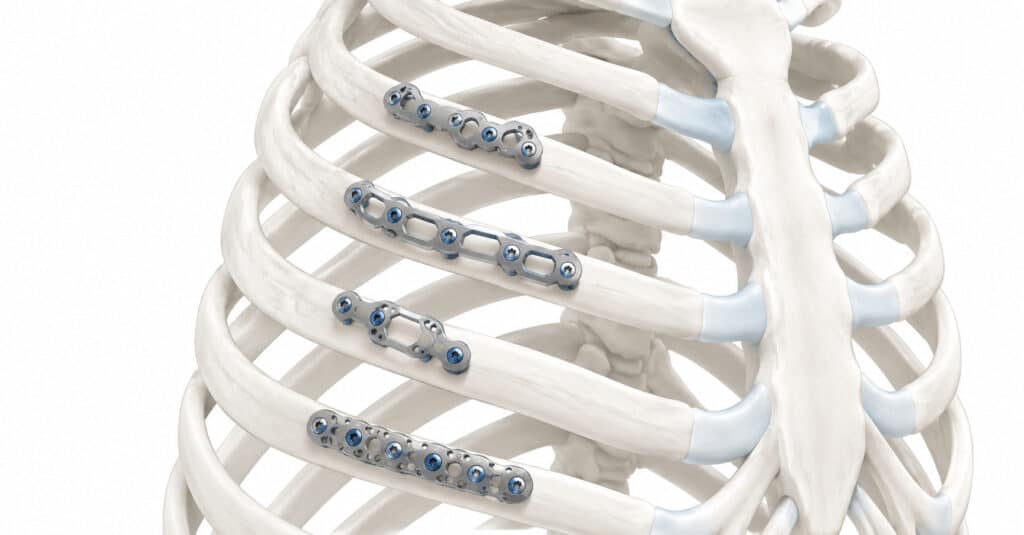
Rib fractures are common after chest trauma. Multiple displaced fractures can make breathing painful and ineffective. In severe cases, including flail chest, surgical stabilisation may improve breathing, pain control and recovery.
A titanium rib plate is fixed to the rib with screws to hold the fracture stable while it heals. This article explains how long plates remain in place and when removal may be appropriate.
What Is a Titanium Rib Plate and Fixation System?
Rib fixation systems use titanium plates, locking screws and, in some cases, intramedullary splints. Plates are shaped to match the curve of the rib and hold fractured sections in position.
Titanium is widely used because it is strong, lightweight, corrosion-resistant and generally compatible with MRI. It is also less stiff than stainless steel, which may be beneficial for chest wall movement. Although bioabsorbable materials are available, titanium remains the usual choice for surgical rib stabilisation.
Low-profile plates are designed to reduce soft-tissue irritation. They may also be used during chest wall reconstruction or chest wall deformity repair.
When Is Surgical Stabilisation of Rib Fractures Recommended?
Most isolated, non-displaced rib fractures heal without surgery. Treatment usually includes pain relief, breathing exercises and physiotherapy.
Surgical stabilisation may be considered for:
Flail chest
Severe chest wall instability causing respiratory failure or prolonged ventilation
Multiple displaced fractures that do not respond to non-operative treatment
Developing chest wall deformity after trauma
Severe ongoing pain despite appropriate pain relief
Ribs four to ten are often considered for fixation because of their role in chest wall movement. Decisions are based on CT imaging, breathing function and the overall injury pattern. Assessment by an experienced thoracic surgeon can help determine whether surgery is appropriate.
How Long Does a Titanium Rib Plate Stay In?
For most people, a titanium rib plate stays in place permanently.
Ribs usually unite within 6 to 12 weeks, although remodelling continues for several months. Plates are not routinely removed after healing because they rarely cause symptoms and may continue to reinforce the chest wall.
If removal is needed, it is usually considered after confirmed bone union, often between 12 and 24 months after surgery. In published studies, approximately 5 to 6 per cent of patients required removal.
Late removal remains possible if symptoms develop years later. Long-term data extending beyond five to ten years suggest that well-positioned titanium plates are generally safe to leave in place indefinitely.
Reasons to Keep a Titanium Rib Plate In Place
Most patients never need plate removal. Benefits of leaving the implant in place include continued chest wall support, avoiding another general anaesthetic, incision and recovery period, avoiding disruption to healed bone and surrounding tissue, and a very low risk of fatigue failure after successful fracture healing.
Titanium plates do not usually trigger airport security alarms and do not normally affect sport, work or daily activities once recovery is complete. MRI is generally safe, but the radiology team should always be told about any implant.
For older people or those with other medical conditions, the risks of a second operation often outweigh the benefits of routine removal.
Reasons a Titanium Rib Plate Might Be Removed
Only a small proportion of patients need plate removal. Common reasons include:
Persistent local discomfort or intercostal neuralgia after fracture healing
Infection involving the plate or screws
Plate loosening, screw migration or plate fracture
Prominent hardware causing pain with movement or pressure
Plate failure is uncommon but may occur after further trauma, technical problems during surgery or, rarely, significant strain on the chest wall.
In younger, very active patients, removal may be considered if a plate remains uncomfortable after healing. Decisions should be based on symptoms, examination and imaging rather than the presence of a plate alone.
What Happens to the Rib and Chest Wall Over Time?
Rib fractures usually unite within 6 to 12 weeks. As the bone heals, it gradually takes on normal mechanical load again, while the plate provides reinforcement.
Good pain control is important during recovery because it supports deep breathing and reduces the risk of complications arising from rib fractures.
In complex injuries or chest wall reconstruction, fixation may remain important for long-term stability. Over time, muscles and soft tissue settle around the implant, and many people no longer notice it.
Follow-up may include examination and imaging to confirm healing, stable fixation and the absence of loosening or migration.
Safety, Everyday Life, and Future Procedures With a Titanium Rib Plate
Recovery after rib fixation is gradual. Many people return to desk-based work within a few weeks, resume driving when they can brake safely without pain and begin light exercise after two to three months.
Practical points include:
Airport scanners rarely detect titanium, although an implant card may provide reassurance
X-rays and CT scans can clearly show the plate
MRI is usually safe, but should be discussed with the radiology team
Pregnancy and future general anaesthesia are not usually affected after full recovery
Always consult with a doctor for persistent or worsening pain, new chest wall deformity, clicking or breathlessness, or other long-term effects that you may encounter.
How Mr Marco Scarci Assesses Whether a Plate Should Stay or Be Removed

Mr Marco Scarci assesses symptoms, physical findings and imaging before recommending plate removal. A chest X-ray or CT scan can confirm bone union, plate position and any signs of loosening or breakage.
Local tenderness, clicking, restricted chest expansion or persistent nerve pain are weighed against the risks of further surgery. If removal is appropriate, it is usually delayed until healing is certain, often at least 12 months after fixation.
Most titanium rib plates can remain safely in place for life. If you have ongoing symptoms or concerns about a previous rib fixation, Mr Marco Scarci can provide a specialist assessment and discuss whether observation, revision or plate removal is appropriate.
Treatment Options for Rib Fractures and Chest Wall Injuries
Treatment ranges from non-operative care to reconstructive surgery:
Conservative care: Pain relief, nerve blocks, physiotherapy, breathing exercises and chest drainage where needed. This is usually suitable for non-displaced fractures.
Surgical routes: Open rib fixation, minimally invasive fixation and chest wall reconstruction for major defects or instability.
For selected patients, surgical stabilisation can improve pain control, reduce ventilator requirements and shorten hospital stay. Current WSES–CWIS guidelines support early fixation, often within 48 to 72 hours, where appropriate.
Management differs greatly between an isolated fracture and major trauma with flail chest. There are different types of surgery for different thoracic conditions, so it’s always best to consult with a thoracic specialist.
Case Example: Long-Term Outcome With a Titanium Rib Plate
A 52-year-old patient sustained multiple displaced fractures of ribs five to nine following a road traffic collision. CT imaging showed a flail segment, breathing difficulty, and a small haemothorax.
Rib fixation was performed within 48 hours using precontoured titanium plates and locking screws. A chest drain was inserted for the haemothorax.
Key milestones:
Pain improved within days, and ventilatory support was stopped within 24 hours
The patient was discharged on day seven with oral pain relief
At three months, imaging confirmed fracture union and the patient had returned to office work
At 12 months, the patient had resumed light exercise with no chest wall deformity or implant discomfort
The plates remained in place, and no further surgery was needed.
FAQ
Can I feel or see my titanium rib plate under the skin?
Some people, particularly those with less soft tissue over the chest wall, can feel a plate or screw. This is usually painless and not visible. If a plate becomes painful or prominent, a doctor can assess it with an examination and imaging.
Will a titanium rib plate affect MRI scans or other imaging?
Titanium is generally MRI-compatible. It may cause minor artefact near the plate, but this rarely prevents useful imaging. Always tell the radiology team about the implant and bring any available implant documentation.
Can I play sports or lift weights after rib fixation with a titanium plate?
After confirmed healing and resolution of pain, many people can gradually return to exercise, including gym work and non-contact sports. This is often possible after three to four months, although recovery varies. Resume heavier lifting and contact sports step by step, with medical or physiotherapy advice.
Does a titanium rib plate increase my risk of future chest infections?
No. A stable, healed chest wall does not usually increase the long-term risk of pneumonia or other chest infections. Infection risk is greatest around the time of surgery. Smoking, lung disease and overall fitness have a greater effect on future respiratory health.
How do I know if my rib plate has become loose or broken?
Seek prompt review if you develop sudden or worsening pain over the plate, clicking or grinding, a change in chest wall shape or increased breathlessness. Examination and X-ray or CT imaging can identify loosening, migration or fracture.
