

Nerve pain following chest surgery is one of the most common complications patients face during recovery. About 1 in 4 patients develop neuropathic pain after thoracic surgery, and while most improve within months, some need targeted treatment.
This guide covers why nerve pain and numbness occur, which operations carry the highest risk, what you can do at home, and when to seek urgent help.
- About 26% of thoracic surgery patients develop nerve pain, usually starting around 7 days after surgery as burning, stabbing, or tingling.
- Pain and numbness are common after lung cancer surgery, lung resection, and chest tube insertion. Most patients improve within 3 to 6 months, but about 19% still have pain at one year.
- Fully minimally invasive surgery (VATS) lowers nerve pain risk by 82% compared with open thoracotomy, and an experienced surgeon helps.
- Treatments include gabapentin or pregabalin, nerve blocks, physical therapy, and scar desensitisation, often combined for best results.
- Seek emergency care for sudden severe chest pain with breathlessness, coughing up blood, leg swelling, or fever above 38°C.
Understanding Nerve Pain After Chest Surgery
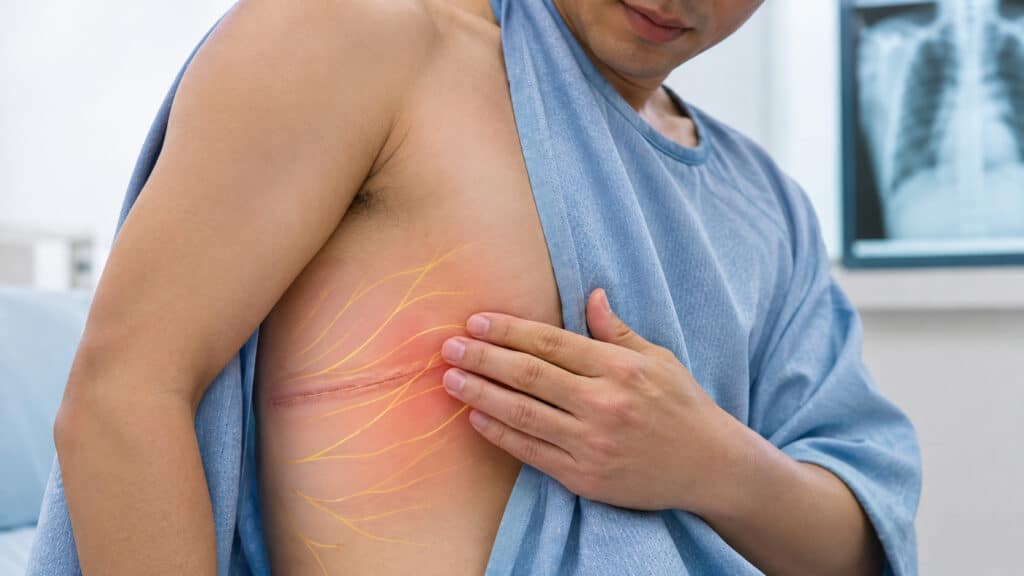
Nerve pain after thoracic surgery develops because the intercostal nerves running beneath each rib are disturbed during the surgical procedure. Unlike ordinary postoperative soreness (which feels like deep bruising and fades steadily), neuropathic pain produces burning, shooting, or electric shock-like sensations along the chest wall. These symptoms of neuropathic pain include burning, stabbing, and tingling sensations that follow the path of the affected nerve.
Nerve pain can occur after many types of chest operations: lung cancer surgery (lobectomy, segmentectomy, pneumonectomy), other lung resections for benign thoracic disease, pneumothorax surgery, mediastinal procedures, and even after chest tube insertion alone. In a cohort of 185 thoracic surgery patients, 25.9% developed postoperative neuropathic pain, with a median onset of 7 days after the operation.
The typical timing follows a pattern: pain may start within the first week, peak over the first few weeks, and gradually fade over 3 to 12 months. The key distinction from “normal” soreness is the quality of the sensation. If you feel hypersensitivity to light touch, tingling along the scar, or burning that is out of proportion to the wound itself, those are neuropathic symptoms rather than routine healing discomfort.
Not sure about your treatment options?
Mr Scarci provides expert consultations typically within one week of contact.
Why Numbness and Nerve Pain Happen After Thoracic Surgery
Intercostal nerves can be damaged during chest surgeries. These nerves sit in grooves along the underside of each rib, and any surgical approach through the chest wall must navigate around them.
During open chest surgery, a retractor spreads the ribs apart, which stretches or crushes the intercostal nerves on either side of the gap. Inserting instruments through port sites in minimally invasive procedures also compresses the nerve running below the rib at each entry point. Placement of a chest drain or chest tube adds another site of potential nerve irritation, because the tube sits between ribs and can press on the nerve for days.
Even in VATS (video-assisted thoracoscopic surgery) or robotic approaches, ports still pass between ribs and may temporarily affect nerve function. VATS causes less intercostal nerve damage than thoracotomy because it avoids rib spreading, but some degree of nerve stretch is unavoidable.
Scar tissue around the surgical site, previous inflammation from infection, radiotherapy, or the lung cancer itself can further irritate nerves during wound healing. Strange “electric” or itchy sensations often indicate nerves waking up and regenerating rather than new damage. Persistent nerve pain after chest surgery does not necessarily indicate permanent nerve damage; it reflects the slow pace of nerve repair.
"I had rib pain for 6 years, was bounced around NHS without diagnosis. I was recommended to Mr Scarci — at consultation within minutes he knew what the problem was. Was offered surgery date the next week. 2 weeks post surgery I am almost back to full health."
Which Operations Carry the Highest Risk of Nerve Pain?
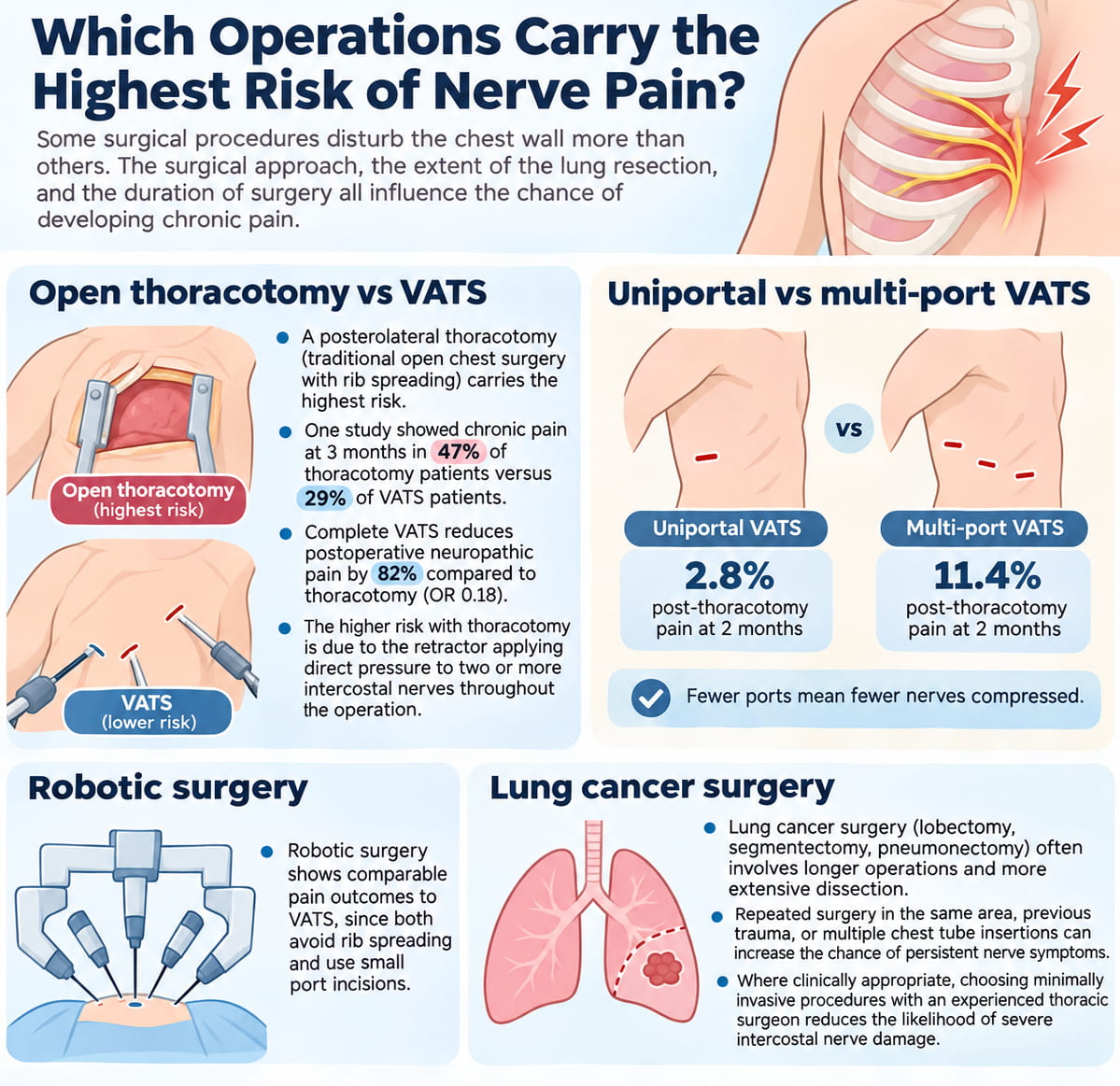
Some surgical procedures disturb the chest wall more than others. The surgical approach, the extent of the lung resection, and the duration of surgery all influence the chance of developing chronic pain.
Open thoracotomy vs VATS
A posterolateral thoracotomy (traditional open chest surgery with rib spreading) carries the highest risk. In one study, chronic pain at 3 months occurred in 47% of thoracotomy patients versus 29% of VATS patients. Complete VATS reduces postoperative neuropathic pain incidence by 82% compared to thoracotomy (OR 0.18). The thoracotomy approach is linked to higher neuropathic pain incidence because the retractor applies direct pressure to two or more intercostal nerves for the duration of the operation.
Uniportal vs multi-port VATS
Among lobectomy patients, uniportal VATS produced post-thoracotomy pain in only 2.8% of cases at 2 months, compared to 11.4% with multi-port VATS. Fewer ports mean fewer nerves compressed.
Robotic surgery
Robotic surgery shows comparable pain outcomes to VATS, since both avoid rib spreading and use small port incisions.
Lung cancer surgery
Lung cancer surgery (lobectomy, segmentectomy, pneumonectomy) often involves longer operations and more extensive dissection. Repeated surgery in the same area, previous trauma, or multiple chest tube insertions can increase the chance of persistent nerve symptoms. Where clinically appropriate, choosing minimally invasive procedures with an experienced thoracic surgeon reduces the likelihood of severe intercostal nerve damage.
Have a question about your diagnosis?
A consultation gives you a personalised plan — not a generic estimate.
From Hospital to Home: What Nerve Pain Feels Like Over Time
Recovery from thoracic surgery follows a recognisable pattern, although individual timelines vary.
First 3 to 5 Days
During the first few days, pain is usually driven by the surgical incision, muscle and chest wall disruption, and chest tube discomfort. Acute postoperative pain may be managed using regional analgesia, intravenous medicines and oral pain relief depending on the operation.
Deep breathing, coughing and early mobilisation are encouraged because effective pain control allows patients to expand their lungs and reduces the risk of complications.
Weeks 1 to 4
As deeper incisional pain starts to settle, neuropathic symptoms may become more noticeable. Burning, stabbing, or electric pains can occur around the scar, nipple area or beneath the shoulder blade on the operated side.
Numbness, tingling and sensitivity to clothing are also common during this period.
Months 2 to 3
For many patients, the intensity of nerve pain gradually decreases. Patches of numbness or sensitivity to clothing, seatbelts or bra straps may continue even as mobility and general recovery improve.
Recovery timelines depend on the operation and individual healing.
Beyond 3 to 6 Months
Most patients report gradual improvement, but a minority develop persistent postsurgical pain or post-thoracotomy pain syndrome requiring specific treatment.
In the thoracic surgery cohort discussed earlier, 18.8% of patients who initially developed neuropathic pain still reported it at one year.
"I was diagnosed in March with a rare condition. My local hospital said it was inoperable due to the size of the mass. Mr Scarci reassured me the thymoma was resectable. I was booked for surgery the following week where he successfully removed the entire tumour."
Risk Factors: Why Some Patients Develop Long-Term Pain
Studies of thoracic surgery patients have identified several factors associated with a higher risk of persistent neuropathic pain.
Surgical factors include longer operations, open thoracotomy, more extensive lung resection and repeated or prolonged chest drainage. In the 185-patient cohort, surgery lasting at least 2.5 hours was associated with 2.72 times higher odds of neuropathic pain, while pre-operative hypnotic medication use was also associated with increased risk.
Age may also influence risk. In another study, post-thoracotomy pain syndrome occurred in 42.3% of patients younger than 65 compared with 26.4% of those aged 65 or over.
Other patient-related factors can include pre-existing chronic pain, anxiety, depression, diabetes or other conditions affecting nerve health. Severe acute postoperative pain, complications and reduced mobility may also contribute to the likelihood of longer-term pain.
These factors help the clinical team identify patients who may benefit from earlier intervention and closer follow-up.
Pain Control in Hospital: How Epidural Analgesia and Other Methods Help
Aggressive early pain control after lung surgery does more than provide comfort. It allows deep breathing, coughing, and movement, reducing complications such as pneumonia and blood clots. Effective pain management often requires a multimodal approach combining medication and rehabilitation.
Epidural analgesia involves a fine catheter placed in the back before surgery, delivering continuous local anaesthetic and a small dose of opioid near the spinal cord. This numbs the chest wall on both sides of the surgical incision. Epidural analgesia reduces the incidence of chronic pain by 50% according to observational data, and the 2025 PROSPECT guidelines recommend it as first-line for open thoracotomy.
When epidural analgesia is not suitable (for instance, in patients on anticoagulants or those with spinal abnormalities), alternatives include:
- Paravertebral blocks (PVB): In the TOPIC2 trial of 770 patients, chronic pain at 6 months occurred in 22% of the PVB group versus 16% of the epidural group; the difference was not statistically significant (p=0.12), but PVB caused less hypotension;
- Erector spinae plane blocks (ESPB): A network meta-analysis of 3,360 patients ranked ESPB among the top techniques for pain relief with fewer adverse events than epidural;
- Patient-controlled IV opioids combined with oral paracetamol and anti-inflammatory drugs;
- Multimodal oral painkillers started from the first postoperative day.
Numbness Around the Scar and Chest Tube Site
Numbness around the incision and previous chest tube site is extremely common after chest surgery. Cutting through skin and soft tissue can interrupt small sensory nerve branches, creating areas that feel wooden, thick or completely numb for weeks or months.
Typical patterns include numbness along the side of the chest following the surgical incision, under the breast or around the nipple on the operated side, and extending towards the back near the shoulder blade after a posterolateral thoracotomy.
Gradual improvement is usual as nerve branches recover or neighbouring nerves compensate. Some patients remain with a smaller stable patch of reduced sensation that can persist long-term.
This is not necessarily harmful, although it can feel unusual when clothing or a seatbelt presses against the area.
Seek medical review if numbness is expanding, if you develop new muscle weakness, or if there is a sudden change in sensation accompanied by severe pain.
Want a specialist opinion on your condition?
Get a clear answer from a surgeon who will be with you throughout.
Post-Thoracotomy Pain Syndrome (PTPS) and Other Long-Term Issues
Post-thoracotomy pain syndrome is defined as pain along the thoracotomy or port-scar area that persists beyond about 2 months after surgery and has neuropathic characteristics. Pain lasting over 2 months may indicate post-thoracotomy pain syndrome. The condition affects 33% to 57% of patients depending on the study and the surgical approach; post-thoracotomy pain syndrome affects up to 50% of patients undergoing open surgery.
PTPS can occur after open thoracotomy and, less commonly, after video-assisted thoracic surgery or robotic lung resections. Chronic pain can persist for more than three months after surgery, and pain often runs along the operation scar due to intercostal nerve damage.
Typical PTPS symptoms include:
- Constant aching, burning, or stabbing pain around the scar
- Sensitivity to clothing, weather changes, coughing, or stretching
- Flare-ups with physical exertion or certain arm movements
Chronic nerve pain can lead to secondary issues such as insomnia, reduced activity, depressed mood, and reliance on prolonged opioid use if not properly managed. While PTPS is not itself life-threatening, it can reduce health-related quality of life and delay return to work.
Raising ongoing pain at follow-up appointments is essential so that referrals to a pain clinic, physiotherapy, or psychology can be arranged early rather than waiting for symptoms to become entrenched. For more information about risks of thoracic surgery, see our dedicated guide.
Red-Flag Symptoms: When Pain May Signal a Serious Problem
Some patterns of pain after chest surgery require urgent assessment because they may indicate a pulmonary embolism, pneumothorax, infection, bleeding or another postoperative complication rather than nerve pain.
Call 999 or attend A&E immediately for sudden severe chest pain with shortness of breath, severe difficulty breathing, collapse or fainting, blue lips or fingertips, or coughing up significant fresh blood.
Signs of a possible DVT or pulmonary embolism include a painful, swollen or warm calf or thigh together with unexplained chest pain, rapid heartbeat, breathlessness or collapse.
Increasing redness or swelling around the wound, smelly discharge, fever above 38 °C with shaking chills, or feeling acutely unwell may indicate infection.
A new or worsening air leak or recurrent collapsed lung can also cause sharp chest pain and breathlessness. If you have previously had pneumothorax surgery, seek urgent assessment if the same symptoms suddenly return.
These situations are distinct from routine nerve pain and require different, urgent treatment.
Not sure about your treatment options?
Mr Scarci provides expert consultations typically within one week of contact.
Practical Remedies: What You Can Do at Home for Nerve Pain and Numbness
Many self-care strategies, alongside prescribed medication, can help ease nerve pain and support recovery after discharge.
Gentle daily movement is important. Walk short distances at first and increase gradually as recovery allows. Movement supports circulation and helps prevent stiffness that can make chest wall discomfort more noticeable.
Once the wound is fully healed and the surgical team is satisfied with healing, scar desensitisation may help with hypersensitivity. Gentle massage around the scar and gradual exposure to different soft textures can help retrain the nervous system’s response to touch.
Supporting the wound with a small firm pillow or folded towel when coughing or sneezing can reduce sudden pulling sensations around the surgical site.
Many patients initially find sleeping semi-reclined or with additional pillows more comfortable. Pacing activity by alternating movement and rest can help prevent major pain flare-ups while maintaining fitness.
For additional practical advice, the guide on healing after surgery covers wound care, mobilisation and other recovery measures.
Medical Treatments for Neuropathic Pain After Chest Surgery
If nerve pain remains troublesome after the first few weeks, your doctor may suggest specific medical treatment options beyond standard painkillers.
Gabapentin and pregabalin are the most studied neuropathic pain medicines for pain after thoracic surgery. Gabapentin and pregabalin are effective for neuropathic pain management; they work by dampening abnormal nerve signalling rather than acting on inflammation. In a meta-analysis of 9 randomised trials (684 patients), pregabalin reduced neuropathic pain incidence (OR 0.20) and lowered pain scores by 0.87 to 1.69 points on a 10-point visual analogue scale. Side effects include dizziness (OR 3.33) and drowsiness (OR 8.61), so dosing starts low.
Low-dose antidepressants such as amitriptyline or duloxetine are sometimes prescribed for chronic neuropathic pain, particularly when sleep or mood is also affected. They modify pain processing pathways in the spinal cord and brain.
Local anaesthetics such as lidocaine patches can be applied directly over the painful area for localised nerve pain relief without systemic side effects.
Regional techniques: Intercostal nerve blocks, paravertebral blocks, or image-guided injections can temporarily switch off pain signals in the affected nerves, providing pain relief lasting days to weeks.
Opioids (codeine, morphine, tramadol) may be useful in the short term but are generally not the best long-term solution for nerve pain. They carry risks of dependence, and prolonged opioid use is avoided where possible. Analgesic consumption should be reviewed regularly by your care team.
Have a question about your diagnosis?
A consultation gives you a personalised plan — not a generic estimate.
Exercises, Physiotherapy and Breathing Techniques
Targeted exercises and physiotherapy are important for reducing tightness, stiffness and nerve irritation after thoracic surgery.
Gentle shoulder and arm mobility exercises, including arm raises, wall slides and pendulum movements when advised by the treating team, can help prevent shoulder stiffness and maintain range of motion.
Breathing exercises may include slow deep breathing, controlled huff coughing and respiratory physiotherapy techniques. Incentive spirometry may also be used in some recovery pathways to encourage controlled inspiration and lung expansion.
Enhanced recovery pathways usually encourage early mobilisation and respiratory physiotherapy soon after surgery. Individual exercises should follow the recommendations given by the surgical or physiotherapy team.
Patients experiencing persistent pain, posture problems or reduced exercise tolerance after lung cancer surgery may benefit from specialist thoracic physiotherapy. The broader lung cancer surgery recovery process also includes gradual increases in mobility, breathing exercises and monitoring for complications.
Lifestyle Factors: Smoking, Activity, and General Health
Lifestyle choices before and after surgery impact wound healing, nerve recovery, and overall lung function.
Smoking cessation
Stopping smoking before and after lung resections or other thoracic surgery improves wound healing, reduces infection rates, and protects remaining lung tissue. Continued smoking impairs blood flow to the chest wall, slowing nerve repair.
Regular low-impact activity
Walking, light stair climbing, and gentle stretching reduce breathlessness, support circulation, and lower blood clot risk. Aim to increase walking distance each week. Most patients can resume driving 4 to 6 weeks after major surgery, though this depends on pain levels and the ability to perform an emergency stop.
Nutrition
A balanced diet rich in protein, vitamins (especially B vitamins and vitamin C), and adequate fluids supports tissue and nerve repair after lung cancer surgery or other major chest operations.
Mental health
Anxiety, depression, and sleep problems are psychological factors that can amplify the perception of pain and reduce coping. These issues are treatable and worth raising with your GP or surgical team. Managing them early reduces the risk of such pain becoming entrenched.
Want a specialist opinion on your condition?
Get a clear answer from a surgeon who will be with you throughout.
How Mr Marco Scarci Supports Patients With Post-Surgical Nerve Pain
As a consultant thoracic surgeon in London, Mr Marco Scarci routinely uses minimally invasive techniques (video-assisted thoracoscopic surgery, keyhole, and where appropriate, robotic approaches) to reduce trauma to the chest wall and intercostal nerves.
Pre-operative consultations include discussion of pain management options, individual risk factors for nerve pain, and the likely recovery timeline. For lung cancer surgery or other lung resections, understanding what each surgical approach involves helps patients make informed decisions.
His multidisciplinary care team works closely with anaesthetists, pain specialists, and physiotherapists to deliver personalised peri-operative care. This includes optimised epidural analgesia or regional blocks when indicated, and a structured plan for stepping down from IV to oral pain relief.
Structured follow-up appointments (in person or via virtual consultations) allow early identification and active management of long-term pain or numbness. Rather than assuming such symptoms are “just normal”, the team assesses neuropathic features using validated tools and arranges referrals to a pain clinic or specialist physiotherapy when needed.
Preparing Questions for Your Follow-Up Appointments
Preparing questions in advance helps you make the most of each follow-up visit after chest surgery. Consider keeping a brief pain diary noting location, severity, triggers, numbness, burning sensations and what relieves the pain.
Questions may include whether the amount of numbness is normal at your stage of recovery, whether symptoms could indicate post-thoracotomy pain syndrome, whether neuropathic pain medication or a nerve block may help, and when it is safe to return to driving, work, exercise or air travel.
Patients preparing for an operation may also find the guide to questions before thoracic surgery useful, while those planning travel can review advice on flying after chest surgery.
Bringing a family member or friend to early appointments can help with remembering information and shared decision-making.
Frequently Asked Questions
How long does nerve pain usually last after lung resection or other chest surgery?
Most patients notice clear improvement in nerve pain within 3 to 6 months. Mild twinges or small numb patches can persist longer, but these typically become less bothersome over time. If pain is still significant or worsening beyond about 8 to 12 weeks, raise this with your surgeon or GP. Earlier assessment allows targeted treatment with neuropathic medications, physiotherapy, or nerve blocks before central sensitisation sets in.
Is numbness around my chest scar permanent?
Some reduction in sensation often improves gradually over 6 to 18 months as severed nerve branches heal and reroute. A small, stable area of numbness may remain lifelong in some people. This usually does not interfere with daily activities once any associated pain is controlled, but it can feel unusual when a seatbelt or clothing presses against it.
Can nerve pain develop months after apparently successful surgery?
Although most neuropathic symptoms start within a few weeks, some patients only become aware of burning or electric pains as they become more active several months after surgery. Late-onset symptoms can still respond well to neuropathic medications, physiotherapy, and nerve blocks when assessed by a specialist. A population-based cohort study and systematic review have confirmed that delayed presentations are recognised and treatable.
Does having lung cancer increase my risk of nerve pain compared with other conditions?
Lung cancer surgery often involves more extensive lung resections and longer operations, which can increase the risk of long-term pain compared with smaller procedures such as wedge resection for a benign nodule. Prior chemotherapy, radiotherapy, or poor lung function may also influence recovery.
When should I contact my surgeon rather than my GP about chest pain after surgery?
Any sudden change in pain pattern, new shortness of breath, fever, or signs of wound infection should prompt same-day contact with the surgical team if possible. For ongoing low-grade nerve pain or questions about medication side effects, patients can usually start with their GP, who may liaise with the thoracic team if needed. If you experience less pain overall but notice a new, different type of pain, that warrants direct surgical review rather than assuming it is part of normal recovery.
