

If you are preparing for thoracic outlet syndrome surgery or have recently had your operation, knowing what lies ahead makes the weeks that follow easier to manage. Recovery is a gradual process that depends on the type of TOS you have, the surgical approach used, and how your body heals, so no two timelines look exactly alike. Many people notice early symptom relief, but nerves, muscles, and blood vessels need time to settle, and how you approach rest, rehabilitation, and activity in the first few months can shape your long-term results.
This guide covers recovery from TOS surgery, from your first night in hospital to returning to work and sport.
- Day-to-day comfort usually returns within several weeks, while full strength can take 3 to 6 months.
- Most patients stay in hospital for 1 to 3 days and return to desk work within 2 to 4 weeks.
- Vascular symptoms often improve quickly, but nerve symptoms can take 6 to 12 months to settle.
- Physical therapy and good posture are the best protection against recurrence.
How Long Does Thoracic Outlet Syndrome Recovery Take?
Recovery from TOS surgery typically takes several weeks for day-to-day comfort and 3 to 6 months for full strength. Most patients leave the hospital after 1 to 3 days following decompression surgery such as first rib resection or cervical rib resection. Your own timeline depends on your general health and the severity of your earlier symptoms.
Vascular symptoms in venous and arterial thoracic outlet syndrome often improve once blood flow is restored. In neurogenic thoracic outlet syndrome, nerve pain and tingling improve gradually over 6 to 12 months as compressed nerves heal. Large surgical series report meaningful improvement in about 80 to 90% of patients.
Recovery at a glance:
| Timeframe | What to expect |
| First 24–72 hours | Hospital stay, safety monitoring, pain control |
| 1–2 weeks | Wound healing, light activity at home, basic self-care |
| 2–4 weeks | Desk work may resume, early physiotherapy starts |
| 6 weeks | Moderate range of motion, light strengthening |
| 3 months | Significant symptom improvement for many patients |
| 6–12 months | Full strength, residual nerve symptoms continue settling |
Understanding Thoracic Outlet Surgery and Why It Affects Recovery
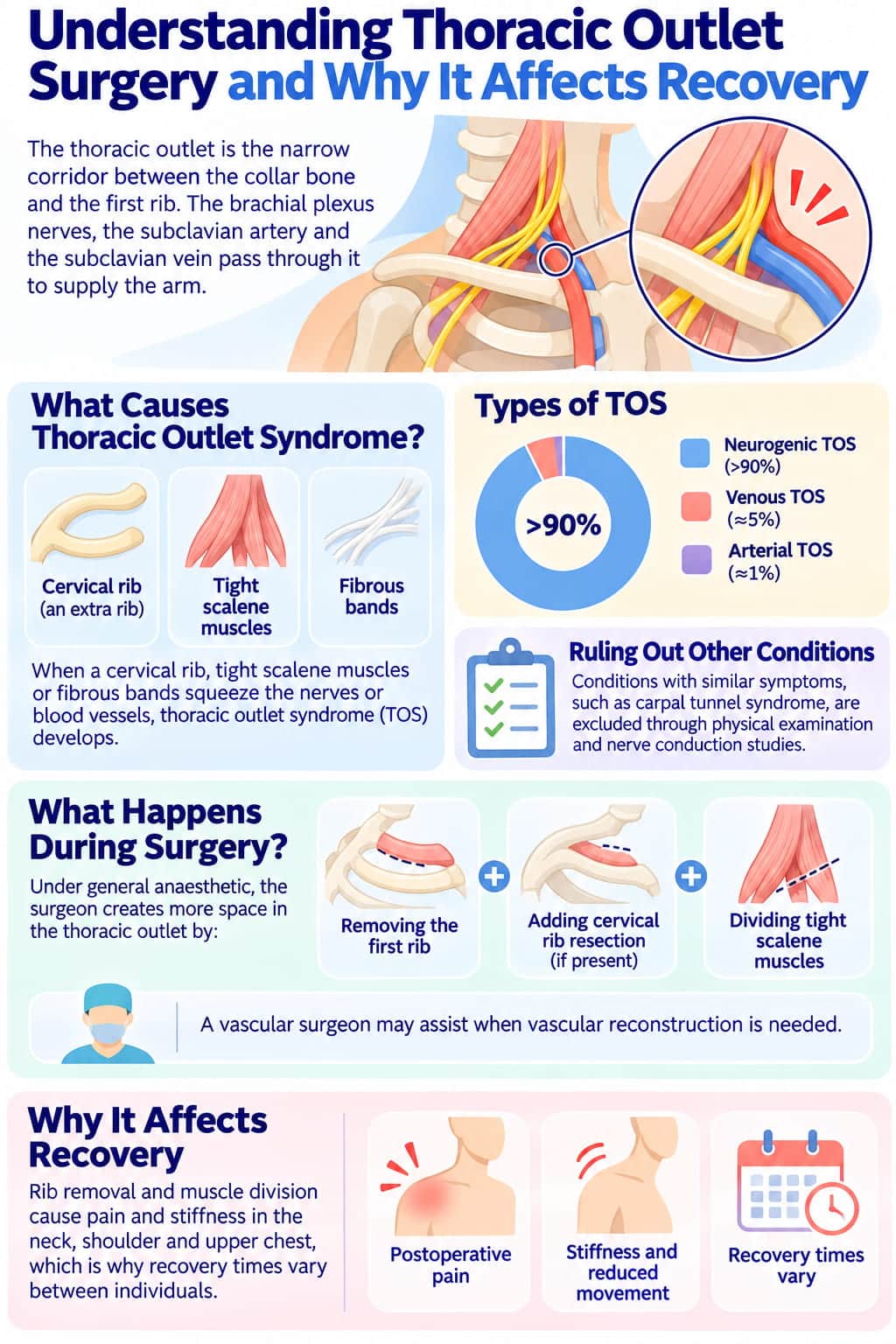
The thoracic outlet is the narrow corridor between the collarbone and the first rib. The brachial plexus nerves, the subclavian artery and the subclavian vein pass through it to supply the arm. When a cervical rib, tight scalene muscles or fibrous bands squeeze these structures, thoracic outlet syndrome develops.
Neurogenic TOS accounts for over 90% of cases, venous TOS about 5%, and arterial TOS roughly 1%. Physical examination and nerve conduction studies exclude conditions with similar symptoms, such as carpal tunnel syndrome.
Under general anaesthesia, the surgeon removes the first rib, adds cervical rib resection if an extra rib is present and divides tight scalene muscles to create more space. A vascular surgeon may assist when vascular reconstruction is needed. Rib removal and muscle division cause pain and stiffness, which is why recovery times vary.
Immediately After Surgery (Hospital Stay: First 24–72 Hours)

You will wake in the recovery area with monitors tracking your blood pressure, heart rate and oxygen levels. Most patients begin gentle hand, wrist and elbow movement within 24 hours, which reduces the risk of a blood clot. Your care team checks arm pulses and nerve function.
A chest X-ray on the first day rules out a collapsed lung, and major complication rates in published series are around 3.5%. Pain is managed with intravenous medication or a nerve block before you move to oral painkillers.
First Two Weeks at Home: Pain, Wound Care and Safe Movements
Keep the wound clean and dry, leave dressings in place until advised and take simple painkillers regularly rather than waiting for pain to flare. Some numbness or tingling is normal as nerves heal. Keep the arm below shoulder height and avoid heavy lifting for several weeks.
Do:
- Use the hand for eating, light typing and dressing
- Take short walks and rest when tired
Avoid:
- Lifting anything heavier than a kettle
- Sleeping with your arms overhead
- Driving, swimming or carrying heavy bags
Breathing Exercises, Posture and Early Physiotherapy

Deep breathing and huff-cough exercises keep the lungs expanded and lower the risk of chest infection, so repeat them five to ten times every waking hour in the first few days. An open chest and gently drawn-back shoulders stop the thoracic outlet narrowing again.
Physical therapy usually begins around two weeks after surgery. Early exercises include:
- Gentle neck turns and tilts, twice daily
- Drawing the shoulder blades together and holding for five seconds
- Small pendulum arm swings
Stop and contact your team if you develop severe pain or colour changes in the hand.
Activity, Driving and Returning to Work or Study
You can usually drive when you can turn your head comfortably and perform an emergency stop safely, often 2 to 4 weeks after surgery. Confirm this with your surgeon and insurer first.
Desk work is often possible within 2 to 4 weeks. Manual roles with repetitive overhead movements or heavy lifting may need 6 to 12 weeks, with a phased return. Short walks and regular breaks help manage stiffness.
Rehabilitation From Weeks 2–12: Regaining Strength and Mobility
From around two weeks, the focus shifts from protection to restoration, and progress should be steady rather than rushed.
- Weeks 2 to 4: Pain-free shoulder and neck movement, posture retraining
- Weeks 4 to 8: Resistance bands, light weights, movement towards shoulder height
- Weeks 8 to 12: Job-specific or sport-specific conditioning under physiotherapist guidance
Recovery Differences Between Neurogenic, Venous and Arterial Thoracic Outlet Syndrome
Recovery from neurogenic TOS is slowest because nerves regenerate gradually. One long-term study found good or excellent recovery in about 59% of patients at three months, rising to 81.5% at around 15 years.
With venous TOS, swelling usually resolves quickly after first rib removal. Anticoagulation continues for several months, and follow-up imaging is essential. A study of 103 patients reported 75% vein patency and 95% symptomatic improvement at 14 months.
For arterial TOS, early decompression prevents irreversible vessel damage, and some patients need long-term antiplatelet therapy with periodic CT angiography.
Long-Term Outcome, Recurrence Risk and Life After TOS Surgery
Complete relief of every symptom occurs in roughly half of cases, so realistic expectations matter. Among 699 operations, complication rates were 9.8% at 30 days and 18.8% at one year, highlighting the importance of follow-up. Scar tissue, incomplete decompression or poor posture can occasionally cause symptoms to return, and good rehabilitation reduces the risk factors.
- Return to sport: Most resume full activity within 3–6 months.
- Residual symptoms: Mild sensory changes are common.
- Revision surgery: Needed by a small minority; outcomes are best at specialist centres.
Practical Self-Care Tips: Sleeping, Daily Tasks and Posture Habits
Sleeping: Sleep on your back or the non-operated side with a pillow supporting the arm.
Daily tasks: Carry shopping in small loads close to the body and use a cross-body bag.
Posture at a computer: Keep the screen at eye level and take a micro-break every 30 to 45 minutes to roll your shoulders.
Follow-Up Appointments, Investigations and When to Seek Help
Structured follow-up helps your care team catch problems early and confirm you are on track. Understanding what to expect during your hospital stay and beyond can reduce anxiety.
- Wound review at about two weeks
- Symptom and function review at 6 to 12 weeks
- Longer-term assessment at 6 to 12 months for vascular or complex neurogenic cases
Follow-up may include checking arm pulses, a repeat duplex ultrasound and a review of your physiotherapy progress. If symptoms persist or recur, a second opinion from Mr Marco Scarci can clarify whether further treatment is needed. A symptom diary recording activities, pain levels and any numbness gives your surgeon useful information.
Contact your team urgently if you notice:
- A sudden increase in arm swelling or blue discolouration
- New severe chest pain or breathlessness
- Fever with wound discharge
- Sudden weakness or numbness in the arm
How Mr Marco Scarci’s Team Supports Recovery After TOS Surgery
Mr Marco Scarci is a consultant thoracic surgeon in London with a particular interest in minimally invasive surgery for neurogenic and vascular thoracic outlet syndrome. His team supports patients from diagnosis to full recovery.
- Pre-operative assessment: Examination and imaging to confirm the diagnosis and plan the surgical approach
- Surgery and decompression: Expert thoracic outlet syndrome treatment using rib resection, scalene muscle release and, where required, coordination with vascular specialists for arterial TOS and venous TOS
- Post-operative rehabilitation: Coordinated aftercare with specialist physiotherapists
- Flexible consultations: Face-to-face and virtual appointments for UK and international patients
- Complex and revision cases: Tailored opinions for persistent symptoms after previous treatment
If you are considering surgery or need support during your recovery, you can contact Mr Marco Scarci’s team to discuss a personalised plan.
Frequently Asked Questions
When can I return to work after TOS surgery?
Most patients return to desk work within 2–4 weeks, while manual jobs involving heavy lifting or overhead movements may require 6–12 weeks. Your surgeon can advise on timing and provide a sick note if needed.
How long do nerve symptoms take to improve?
Numbness, tingling, and aching from neurogenic TOS may take 6–12 months to improve as nerves heal. Incision-area numbness usually fades with time. Report any new or worsening arm weakness to your care team.
When can I drive again?
Most patients can drive after 2–4 weeks, once they can turn their head, raise their arm to shoulder height, and perform an emergency stop safely. Confirm with your surgeon and check your insurance requirements.
Can thoracic outlet syndrome come back after surgery?
Recurrence is uncommon but can result from scar tissue, incomplete decompression, or poor posture. Physiotherapy, ergonomic adjustments, and regular posture breaks help reduce the risk. Revision surgery is rarely needed.
When can I return to sport?
Most patients resume sports and weight training within 3–6 months, guided by their physiotherapist. Overhead movements and heavy lifting should be reintroduced gradually. Contact sports may require medical clearance, especially when taking blood thinners.
