

Costochondritis pain is one of the most common reasons people visit a doctor for chest discomfort. Yet, many patients are surprised when that same inflammation seems to radiate into their back. Understanding where the pain comes from, what triggers it and when it needs urgent attention can save you unnecessary worry and help you recover faster.
This guide is intended for individuals experiencing chest or back pain who are seeking to understand costochondritis and its management. Recognising the symptoms and triggers of costochondritis can help patients seek timely care and avoid unnecessary anxiety.
Costochondritis is inflammation of the cartilage where the ribs join the breastbone. It most commonly causes sharp chest pain but can occasionally radiate into the back.
Back pain associated with costochondritis usually stems from irritation of the chest wall and rib joints. It tends to be movement-related and tender to touch.
New or sudden chest pain must always be checked urgently to exclude a heart attack or lung emergency. Crushing central chest pain, sweating, breathlessness or collapse requires immediate 999 attendance.
Most cases settle within days to a few weeks with rest, anti-inflammatory medication, gentle stretching and activity modification, but persistent or recurrent pain should be reviewed.
What Is Costochondritis?
Costochondritis is inflammation of the costochondral or costosternal joints, the points where the ribs join the sternum through strips of costal cartilage.
It is one of the commonest causes of non-cardiac chest pain in adults. Understanding the symptoms of costochondritis can help distinguish the condition from more serious cardiac or lung problems.
The anatomy involved is straightforward. Your rib cage is formed by twelve pairs of ribs. The upper ribs, typically ribs one to seven, connect directly to the breastbone via cartilage.
These connections, along with the chest wall muscles, protect the lungs and heart while supporting breathing. When the cartilage at these joints becomes inflamed, the result is localised, often intense pain near the sternum.
Costochondritis is a benign condition and is not linked to cancer or heart disease, but the chest pain it produces can be frightening and easily mistaken for a heart attack.
Pain is usually worst at the front of the chest, near the bone on the left or right side of the breastbone, although it may spread along the rib or around to the side.
It is worth noting that Tietze syndrome is a closely related condition in which visible swelling occurs at one or more costosternal joints, something rarely seen in standard costochondritis.
Want a specialist opinion on your condition?
Get a clear answer from a surgeon who will be with you throughout.
Symptoms of Costochondritis: Chest Pain, Back Pain and Other Signs
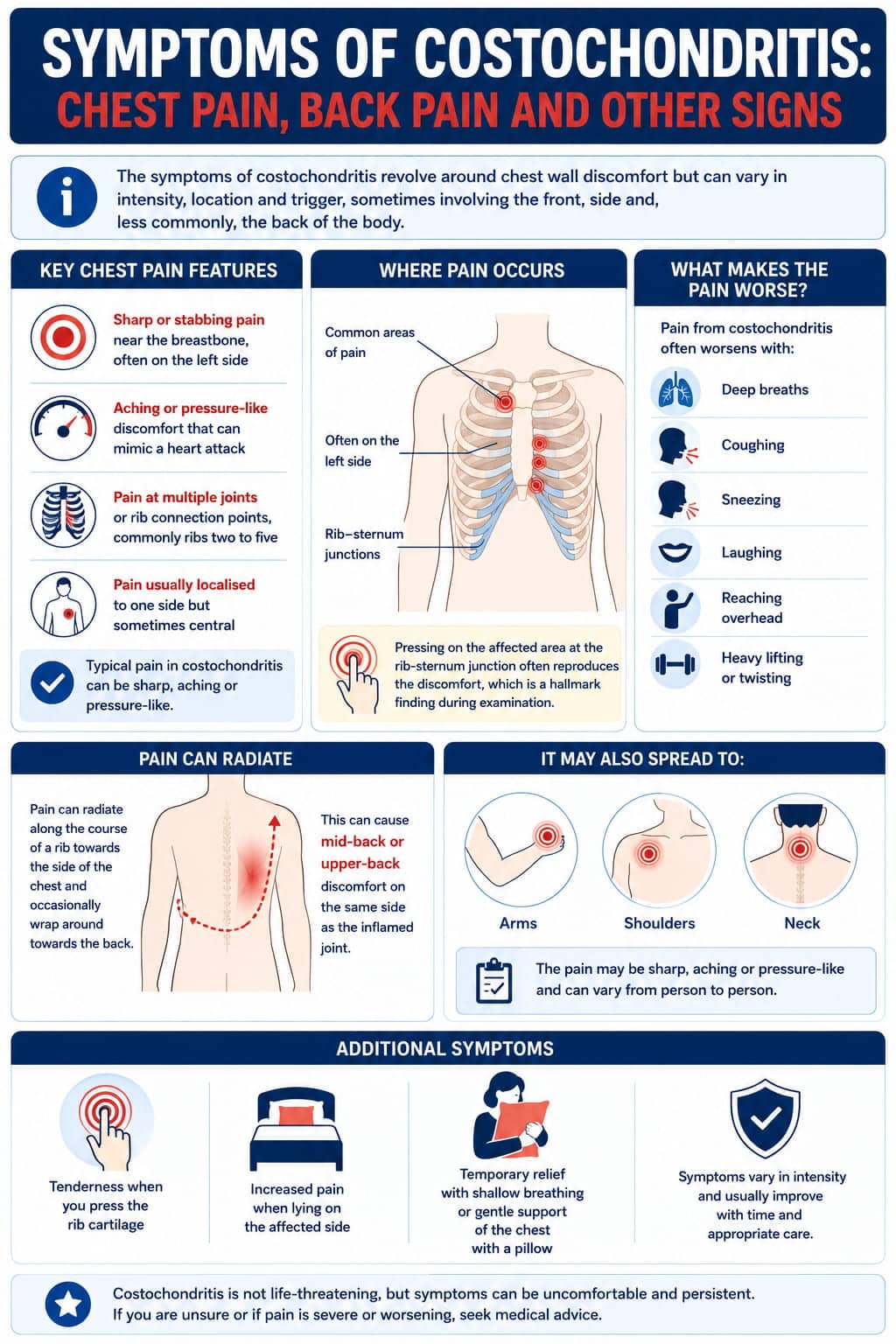
The symptoms of costochondritis revolve around chest wall discomfort but can vary in intensity, location and trigger, sometimes involving the front, side and, less commonly, the back of the body.
Key chest pain features include:
Sharp or stabbing pain near the breastbone, often on the left side;
Aching or pressure-like discomfort that can mimic a heart attack;
Pain at multiple joints or rib connection points, commonly ribs two to five;
Pain usually localised to one side but sometimes central.
Typical pain in costochondritis can be sharp, aching or pressure-like.
Pain from costochondritis often worsens with deep breaths, coughing, sneezing, laughing or upper-body movement, such as reaching overhead, heavy lifting or twisting.
Pressing on the affected area at the rib-sternum junction often reproduces the discomfort, which is a hallmark finding during examination.
Pain can radiate along the course of a rib towards the side of the chest and occasionally wrap around towards the back, producing mid-back or upper-back discomfort on the same side as the inflamed joint. It may also spread to the arms, shoulders or neck.
Additional symptoms include tenderness when you press the rib cartilage, increased pain when lying on the affected side and temporary relief with shallow breathing or gentle support of the chest with a pillow.
"Dr. Marco Scarci is a deeply knowledgeable, open-minded, and empathetic surgeon. He listens to details and solves problems to truly deliver the most optimal results. As a medical professional myself, I can tell you that finding a specialist like Dr. Scarci is very rare, and it is a privilege to have him in my corner."
Can Costochondritis Cause Back Pain? Pain Locations Explained
The short answer is yes, although back pain is not the main symptom.
Costochondritis primarily causes front-of-chest pain, but because the ribs are attached to both the breastbone at the front and the thoracic spine at the back through costovertebral and costotransverse joints, inflammation or muscle guarding in the chest wall can lead to perceived pain around the ribs and back.
Costochondritis-related back pain typically presents as:
Unilateral discomfort, following the line of a rib from front to back
Pain that worsens with deep breathing, trunk rotation or exercise
Tenderness at the front costochondral joint
Pain in the upper or mid-thoracic spine region, often between the shoulder blades
The back pain in this context is usually muscular or mechanical, resulting from altered posture and muscle spasm rather than direct inflammation of the spine. Standard spinal imaging is often normal.
A case series of eight patients with chronic costochondritis referred for physiotherapy found that all had impaired thoracic spine and rib cage movement, and many reported scapular tightness as part of their complaints.
Other causes of combined back and chest pain must be ruled out, including heart conditions, pulmonary embolism, aortic dissection, pneumothorax, lung cancer or chest wall tumours.
Pain felt in the lower back or bilateral back pain is less typical of simple costochondritis and should prompt a broader assessment. Burning, shooting or band-like pain may instead suggest intercostal neuralgia or a spinal condition.
Have a question about your diagnosis?
A consultation gives you a personalised plan — not a generic estimate.
Causes and Risk Factors: Why Costochondritis Develops
Many cases of costochondritis are idiopathic, meaning no clear single cause is identified. However, certain triggers and risk factors are well recognised.
Mechanical and Overuse Causes
Repeated heavy lifting, vigorous upper-body exercise such as bench press, rowing or racket sports, sudden exertion or awkward twisting during physical strain can irritate the costochondral joint. Costochondritis can develop from physical strain or repetitive loading, and repeated stress on the chest can contribute over time.
Post-Infectious and Cough-Related Causes
Prolonged severe coughing from respiratory tract infections, including flu, COVID-19 or pneumonia, places significant stress on the chest wall. Asthma flare-ups can have a similar effect because repeated forceful coughing and breathing increase chest wall movement.
Traumatic and Post-Surgical Causes
Direct blows to the chest from falls, contact sports or road traffic collisions can trigger chest wall inflammation. Previous chest surgery, lung surgery or breast surgery may also irritate or weaken the rib joints. Costochondritis can therefore occur following chest wall trauma or surgery. After an injury, symptoms may sometimes overlap with a broken rib, particularly when pain is sharply localised and worsens with breathing or movement.
Systemic Inflammatory Links
Inflammatory arthritis can increase susceptibility to chest wall inflammation. Costochondritis may occur alongside conditions such as rheumatoid arthritis and ankylosing spondylitis. Other underlying conditions, including fibromyalgia, can also contribute to persistent chest wall discomfort.
Demographics
Costochondritis is more commonly reported in adults over 40. Tietze syndrome, which produces prominent swelling in addition to pain, tends to affect younger adults. Age can therefore influence how chest wall pain presents, but symptoms and examination findings remain more important than age alone when making a diagnosis.
"After multiple failed consultations elsewhere, Mr Scarci identified exactly what was wrong and operated within two weeks. Recovery was smooth and I'm back to normal life."
How Is Costochondritis Diagnosed? Tests and Specialist Assessment
Chest pain should always be evaluated appropriately, particularly when it is new or unexplained.
The priority is to exclude potentially life-threatening causes such as a heart attack, pulmonary embolism, aortic dissection or pneumothorax.
The typical clinical assessment involves:
Detailed history: Onset, character, triggers, associated breathlessness or cough, and cardiac risk factors.
Physical examination: Focused on chest wall tenderness and reproduction of symptoms with palpation and movement.
Baseline investigations: These may include an ECG, blood tests such as troponin, and a chest X-ray, depending on the symptoms and clinical setting.
In straightforward costochondritis, imaging is often normal.
Diagnosis is largely clinical, based on the pattern of symptoms and reproducible chest wall tenderness, after more serious cardiac and pulmonary conditions have been appropriately excluded. When cardiac investigations are reassuring, but discomfort continues, other causes of chest and rib pain may also need to be considered.
When pain is persistent, recurrent or atypical, a specialist chest wall assessment may be useful.
Mr Marco Scarci may use targeted imaging, such as chest CT or MRI where appropriate, alongside careful assessment for chest wall tumours, lung lesions, structural rib abnormalities, or other conditions that can mimic costochondritis.
A specialist review can also consider other thoracic conditions affecting the lungs, pleura, ribs and chest wall when the cause of symptoms remains uncertain.
Not sure about your treatment options?
Mr Scarci provides expert consultations typically within one week of contact.
When to Seek Urgent Help for Chest or Back Pain
Sudden chest pain must always be treated seriously until an urgent cause has been ruled out, even if it later proves to be costochondritis.
Call 999 immediately if you experience:
Sudden severe sharp chest pain or crushing, tightening pressure in the centre of the chest
Pain spreading to the arm, neck, jaw or back with breathlessness, sweating, nausea or collapse
Coughing up blood or marked breathlessness at rest
Pain after major trauma or a new asymmetrical chest shape
If these emergency features are not present, persistent or recurrent symptoms may still need medical review.
Contact NHS 111, your GP or a private specialist if you have:
Persistent chest or upper-back pain lasting more than a few days without improvement
Recurrent episodes previously diagnosed as costochondritis
Pain that interferes with sleep, breathing or normal daily activity
Patients previously treated for lung or breast cancer, chest wall tumours or previous thoracic surgery should report new atypical chest pain promptly.
Sharp chest pain associated with sudden breathlessness can have other thoracic causes, including a collapsed lung, and requires appropriate assessment.
Treatment Options: Relieving Costochondritis and Related Back Pain
Costochondritis is usually a self-limiting condition, often settling over days to several weeks. Management focuses on relieving pain, reducing inflammation and avoiding activities that repeatedly irritate the affected area.
Medication
Simple analgesia such as paracetamol may help mild discomfort. Non-steroidal anti-inflammatory drugs, such as ibuprofen or naproxen, may help reduce inflammation when they are suitable for the individual patient. Stronger prescription pain relief may occasionally be considered for severe symptoms, with appropriate consideration of possible stomach, kidney and cardiovascular side effects.
Local Treatments
Applying heat or ice for around 20 minutes at a time, with a towel or other barrier protecting the skin, may ease symptoms. Rest can be helpful during an acute flare, although prolonged complete inactivity may contribute to stiffness.
Interventional Options
Persistent cases may occasionally be considered for local anaesthetic or steroid injections into or around the affected costochondral joint. Fascial plane blocks have also been described in case reports. These are specialist interventions rather than routine first-line treatments and should be considered according to the individual diagnosis.
Physiotherapy and Rehabilitation
Physiotherapy may be recommended for persistent symptoms. Treatment can include manual therapy, mobility exercises and work on the thoracic spine and rib cage. Gentle stretching of the chest and upper-back muscles, postural correction, breathing exercises and gradual strengthening of the shoulder girdle can help reduce stress on the chest wall.
For more complicated or persistent symptoms, support from a multidisciplinary thoracic team can bring together imaging, pain management and physiotherapy where needed.
Want a specialist opinion on your condition?
Get a clear answer from a surgeon who will be with you throughout.
Self-Care, Activity and Work: Managing Day-to-Day Life

Rest and activity modification are key components of managing costochondritis, but complete inactivity can prolong stiffness. A balanced approach generally works best.
Activity Modification
Reduce or temporarily pause heavy lifting, high-impact sports or repetitive upper-body movement until the pain settles. Low-impact exercise such as walking or gentle stationary cycling may be easier to tolerate. Because costochondritis can be triggered by heavy lifting, weights and resistance exercises should be reintroduced gradually rather than returning immediately to previous loads.
Work Adjustments
Desk-based workers can often continue working with ergonomic adjustments. Chair height, screen position and regular short movement breaks can reduce sustained strain through the chest wall and upper back. Manual workers may need temporary modified duties depending on the severity of symptoms and the physical requirements of their job.
Sleep and Posture
An extra pillow can support the affected side, and it may help to avoid sleeping directly on the painful area during a flare. Maintain an upright but relaxed sitting posture to reduce unnecessary strain on the chest wall and thoracic spine. Reintroduce hobbies and sports gradually, monitoring for flare-ups and stopping short of movements that provoke sudden chest pain.
Other Chest Wall Conditions That Can Feel Similar
Not all chest wall pain is costochondritis, particularly when symptoms persist despite rest and anti-inflammatory treatment.
Tietze syndrome can cause similar pain but is more likely to produce visible or palpable swelling. Intercostal neuralgia tends to cause burning, stabbing or electric pain that follows the course of a rib.
Lower chest or upper abdominal pain accompanied by clicking or popping may instead point towards slipping rib syndrome.
Muscle strain, rib fracture symptoms, post-surgical nerve pain and less common chest wall abnormalities can also produce overlapping symptoms.
When cardiac investigations are normal, but pain persists, understanding the broader spectrum of non-cardiac chest pain can help guide the next stage of assessment.
How a Thoracic Surgeon Like Mr Marco Scarci Can Help
Mr Marco Scarci is a consultant thoracic surgeon in London, specialising in lung and chest surgery, including conditions affecting the lungs, chest wall, and mediastinum, offering both NHS and private consultations.
His priority when a patient presents with chest or back pain is to exclude serious thoracic causes such as lung cancer, chest wall tumours, pneumothorax or complications from previous surgery, often using detailed CT or MRI imaging. He distinguishes simple costochondritis from more complex chest wall disorders, rib fractures, deformities or structural problems that may rarely require minimally invasive surgical correction.
For patients with recurrent or persistent pain, he coordinates multidisciplinary care involving radiologists, pain specialists and physiotherapists. Private thoracic surgery appointments in London are available alongside NHS options for patients seeking specialist assessment.
Faster-access private thoracic surgery pathways are also available, including consultations at the Elstree Outpatients Centre in Hertfordshire. The focus throughout assessment is on timely diagnosis, clear explanation of results and personalised follow-up.
Frequently Asked Questions
How long does costochondritis-related chest or back pain usually last?
Costochondritis often improves within a few weeks. Many people find pain settles significantly within a few days and has largely resolved by four to six weeks. However, some individuals experience intermittent flare-ups over several months, particularly if strenuous activities are resumed too quickly. Pain persisting beyond about three months or steadily getting worse should prompt review by a GP or specialist to confirm the diagnosis.
Can costochondritis come back after it has healed?
Recurrence is possible, particularly if the original trigger such as repetitive heavy lifting, poor posture or chronic coughing is not addressed. Preventive strategies include maintaining good posture, strengthening upper-back and core muscles, managing asthma or chronic cough, and building training loads slowly when returning to sport.
Is costochondritis dangerous or linked to heart disease?
Costochondritis itself is not dangerous and does not cause heart disease, heart attack or cancer. However, because people experience chest pain that closely mimics cardiac symptoms, urgent assessment is always essential for new or painful episodes. Once serious conditions have been excluded, ongoing discomfort is managed as a benign chest wall condition.
Can I exercise if I have costochondritis and upper-back pain?
Gentle low-impact exercise is generally safe and can aid recovery. Walking, light cycling and gentle mobility work supervised by a physiotherapist are good options. Avoid or modify exercises that happen to provoke sharp chest or back pain, such as heavy bench press, push-ups or intense rowing, until symptoms have clearly settled.
When should I see a thoracic surgeon rather than just my GP for chest wall pain?
Most initial assessments can be handled by a GP or emergency department doctor. Referral to a thoracic surgeon like Mr Marco Scarci is appropriate when pain is persistent, recurrent, atypical or associated with abnormal imaging. Patients with known lung disease, chest wall deformity, rib fractures or a history of thoracic cancer may particularly benefit from specialist evaluation to ensure accurate diagnosis and the best possible treatment plan.
