

A fractured rib is one of the most common injuries following chest trauma. Around 30% of chest trauma patients break at least one rib, and rib fractures account for 15% of emergency department admissions for chest trauma.
Recovery is usually straightforward, but poor pain control and inadequate breathing can turn a manageable injury into weeks of unnecessary discomfort and increase the risk of complications.
Understanding what fractured ribs feel like, how they are treated, when to seek medical help and what supports healing can make recovery safer and more manageable.
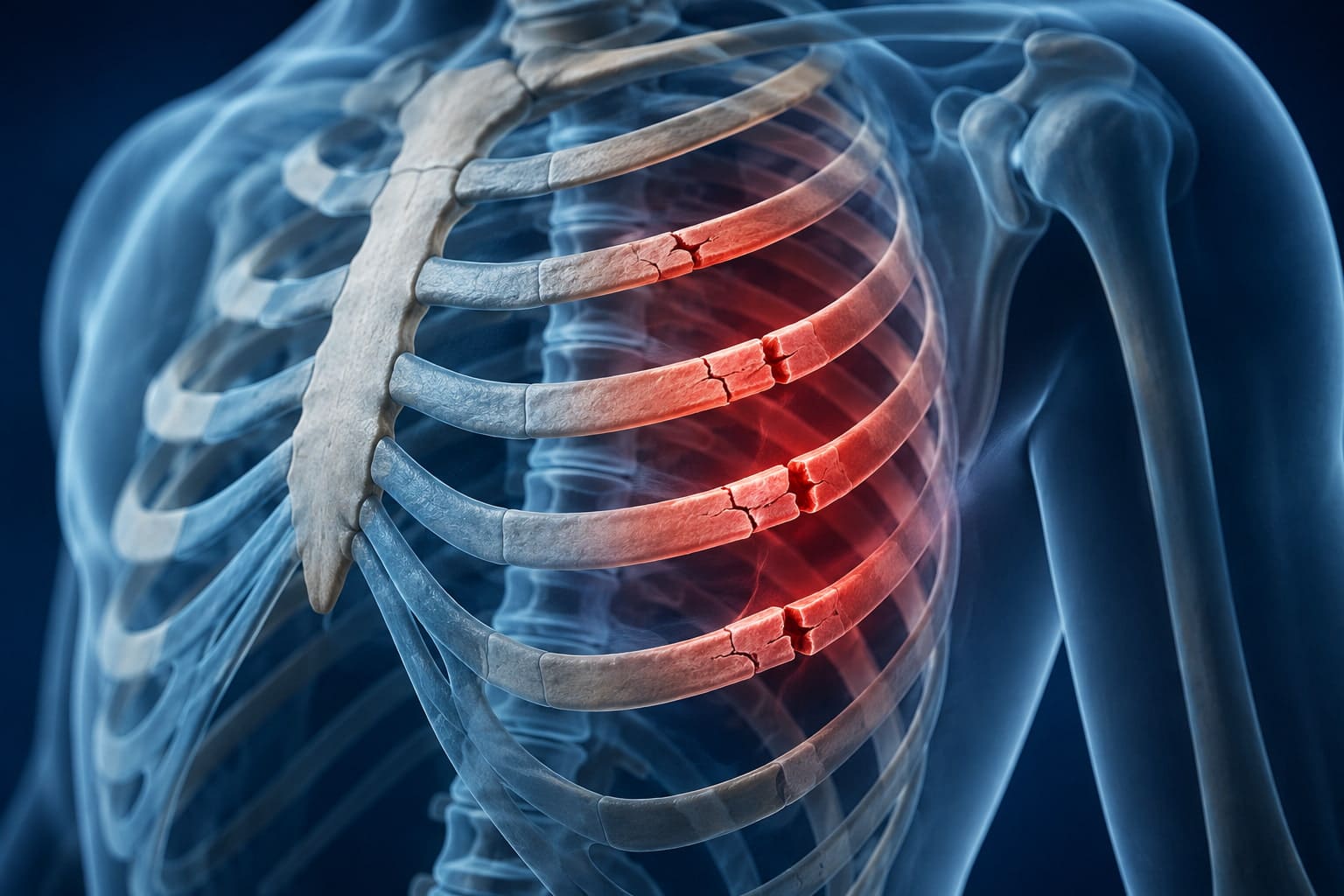
Most broken ribs and bruised ribs heal on their own in about six weeks, but good pain control and breathing exercises are essential to help prevent chest infections. Most people need at least a month to recover from rib fractures.
Seek urgent medical help for red-flag symptoms, including severe shortness of breath, coughing up blood or dizziness after a chest injury. These may indicate a collapsed lung, internal bleeding or organ damage.
Effective pain relief, supported deep breathing and early gentle movement are three of the main ways to help fractured ribs heal safely and reduce complications of rib injury.
While chest wall injuries are painful, most people make a full recovery with appropriate self-care, monitoring and, when needed, specialist input.
Understanding Fractured Ribs and Chest Wall Injuries
A fractured rib is a break or crack in one of the bones of the rib cage. The chest wall includes the ribs, intercostal muscles, cartilage and soft tissue. A broken rib differs from a bruised rib, where the bone stays intact, or a chest muscle strain, where only soft tissue is injured, although all three can cause chest pain that initially feels very similar.
Fractured ribs are often caused by chest trauma such as falls or accidents. Falls at home are a leading cause in older adults, while sports collisions, cycling crashes, winter slips and high-speed road traffic accidents are common in younger patients. Severe coughing can also fracture weakened ribs in people with osteoporosis. The causes, symptoms and recovery pattern are similar to those seen in other broken rib injuries.
Simple rib fractures involve a single crack without the bone ends moving apart. Displaced rib fractures occur when the fractured ends move out of alignment, increasing the risk of injury to the lungs, blood vessels or internal organs. Most rib fractures do not require surgery unless the chest wall is unstable, healing is impaired or associated injuries require intervention.
Broken and bruised ribs often feel similar during the first hours after an injury. Symptoms may overlap with those seen after a bruised rib injury, particularly when there is tenderness, swelling and pain with breathing.
Ribs 4 through 10 are most commonly injured because the upper ribs receive greater protection from the shoulder girdle. Lower broken ribs, particularly ribs 9 to 12, sit close to the liver and spleen and can sometimes damage these organs following significant blunt chest trauma. In a study of 1,338 trauma patients, 17.5% of those with multiple rib fractures had intra-abdominal injuries.
Have a question about your diagnosis?
A consultation gives you a personalised plan — not a generic estimate.
Broken Rib or Bruised Rib: How to Tell the Difference
Symptoms of a rib fracture commonly include sharp chest pain, localised tenderness and difficulty breathing deeply. However, a bruised rib or chest muscle strain can also cause significant discomfort after an accident or fall, making self-diagnosis unreliable.
A broken rib tends to produce sharp, pinpoint pain over one specific rib. The pain is commonly worse when taking a deep breath, coughing, sneezing, laughing or twisting the upper body. There may be intense tenderness at a single point, and some people report feeling or hearing a crack when the injury occurs.
A bruised rib or muscle strain generally causes more diffuse aching across a broader area of the chest wall. Soreness may be less sharply focused, although tenderness, swelling and bruising can occur with both injuries.
After a road traffic accident or fall, adrenaline can temporarily mask pain. Some patients only recognise the true severity of the chest injury several hours later when the initial adrenaline response settles.
These differences provide clues but cannot reliably confirm whether a rib is fractured. Worsening or persistent symptoms may need assessment, especially when they match recognised broken rib symptoms or when it is difficult to identify a broken rib after trauma.
"I had rib pain for 6 years, was bounced around NHS without diagnosis. I was recommended to Mr Scarci — at consultation within minutes he knew what the problem was. Was offered surgery date the next week. 2 weeks post surgery I am almost back to full health."
Red-Flag Symptoms: When to Seek Emergency Help
Most broken ribs can be managed at home with careful self-care and effective control of fractured rib pain. A small number of patients develop serious complications that require urgent or same-day assessment.
Call 999 or go to A&E if you have:
Severe shortness of breath at rest or breathing difficulty that is getting worse
Chest pain that suddenly becomes much more severe
Coughing up blood
Feeling faint or light-headed, or developing a rapid, weak pulse
Grey, pale or clammy skin that feels cold to the touch
A very high temperature with worsening cough or green mucus
Rib fractures can cause a pneumothorax, where air collects around the lung and causes partial or complete lung collapse. Sudden sharp pain on one side of the chest with one-sided breathlessness after a rib injury may indicate a collapsed lung.
A haemothorax can also occur when blood collects around the lung, causing increasing chest pain and breathlessness after trauma. Severe pain in the upper abdomen or shoulder tip following lower rib fractures may indicate damage to the liver or spleen and also requires emergency assessment.
UK patients experiencing these red-flag symptoms should call 999 and should not drive themselves to hospital. For urgent but non-emergency advice, contact NHS 111 or arrange an urgent GP assessment.
Not sure about your treatment options?
Mr Scarci provides expert consultations typically within one week of contact.
Getting a Diagnosis: What Happens When You See a Doctor
In the UK, assessment may take place through a GP, Urgent Treatment Centre or A&E depending on the severity and mechanism of the chest injury.
Doctors usually assess bruising, point tenderness over individual ribs, abnormal chest wall movement, breathing pattern and oxygen saturation. Rib fractures are often diagnosed through the history and physical examination, although imaging may be required where there is concern about complications or a significant injury.
A chest X-ray may be used to look for rib fractures, pneumothorax, haemothorax or chest infection. Chest X-rays can miss up to 50% of isolated fractures, so CT scanning is more useful when doctors suspect multiple broken ribs, displaced fractures, high-speed trauma or internal injury. Ultrasound may also detect subtle fractures or small fluid collections in selected circumstances.
Mr Marco Scarci, consultant thoracic surgeon in London with expertise in chest wall and rib conditions, reviews complex chest wall injuries, non-healing fractures and patients being considered for surgical fixation, including those who need more detailed assessment of fractured rib treatment.
"After multiple failed consultations elsewhere, Mr Scarci identified exactly what was wrong and operated within two weeks. Recovery was smooth and I'm back to normal life."
How to Help Fractured Ribs Heal Faster at Home
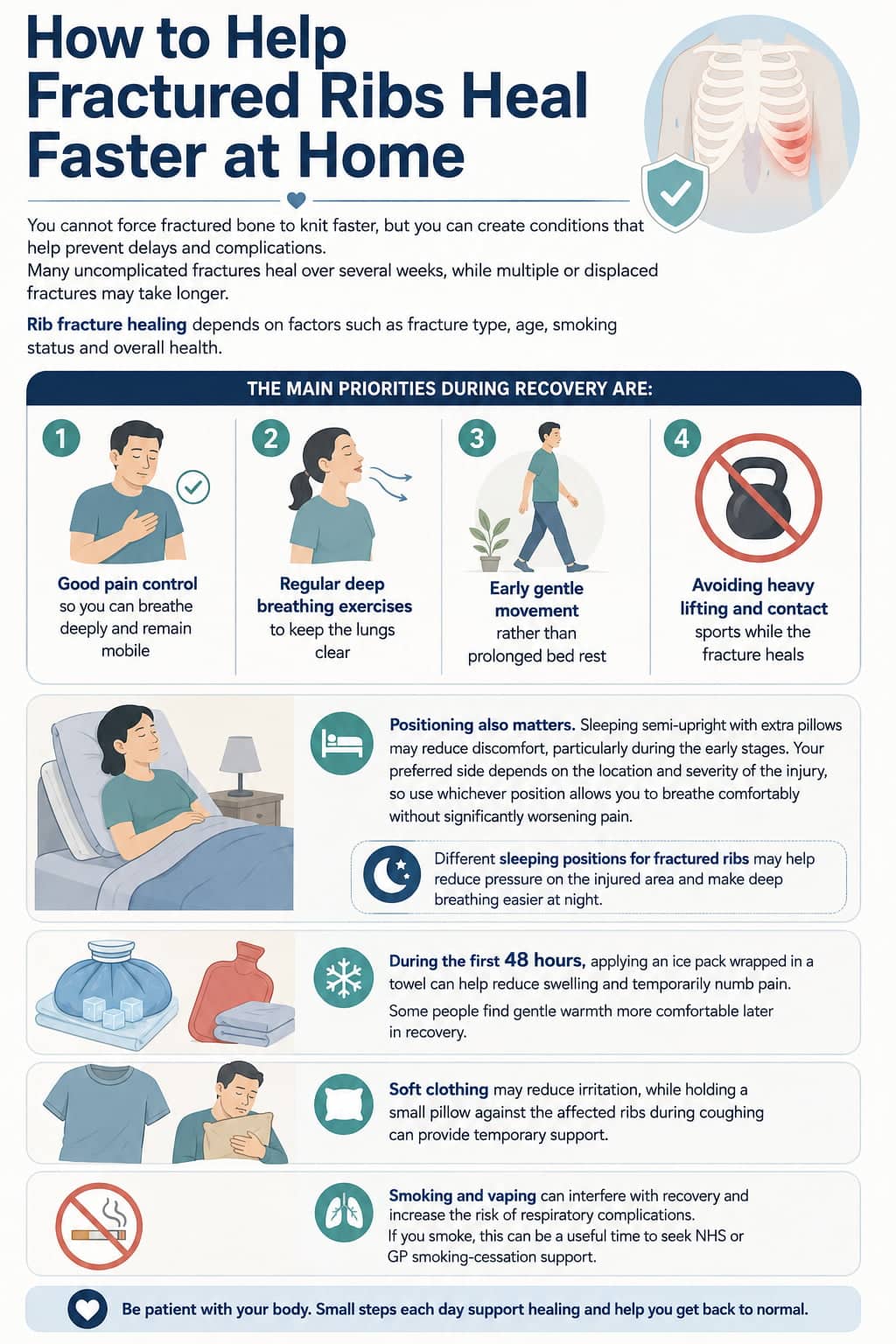
You cannot force fractured bone to knit faster, but you can create conditions that help prevent delays and complications. Many uncomplicated fractures heal over several weeks, while multiple or displaced fractures may take longer. Rib fracture healing depends on factors such as fracture type, age, smoking status and overall health.
The main priorities during recovery are:
Good pain control so you can breathe deeply and remain mobile
Regular deep breathing exercises to keep the lungs clear
Early gentle movement rather than prolonged bed rest
Avoiding heavy lifting and contact sports while the fracture heals
Positioning also matters. Sleeping semi-upright with extra pillows may reduce discomfort, particularly during the early stages. Your preferred side depends on the location and severity of the injury, so use whichever position allows you to breathe comfortably without significantly worsening pain.
Different sleeping positions for fractured ribs may help reduce pressure on the injured area and make deep breathing easier at night.
During the first 48 hours, applying an ice pack wrapped in a towel can help reduce swelling and temporarily numb pain. Some people find gentle warmth more comfortable later in recovery. Soft clothing may reduce irritation, while holding a small pillow against the affected ribs during coughing can provide temporary support.
Smoking and vaping can interfere with recovery and increase the risk of respiratory complications. If you smoke, this can be a useful time to seek NHS or GP smoking-cessation support.
Want a specialist opinion on your condition?
Get a clear answer from a surgeon who will be with you throughout.
Pain Management: Why Good Pain Relief Speeds Healing
Pain management is crucial for preventing chest infections. When pain is poorly controlled, patients breathe shallowly, avoid coughing and stay still. This can lead to mucus buildup, atelectasis (partial lung collapse), and infection. Effective pain control helps patients breathe more deeply, cough properly and remain mobile during recovery.
Over-the-Counter Options
Paracetamol can help reduce pain when taken regularly at the recommended dose. Ibuprofen may also be effective for mild to moderate pain, although it may not be suitable for people with NSAID-sensitive asthma, kidney problems or stomach ulcers.
Always follow the dosage instructions on the packaging or guidance from your GP, and avoid taking more than the recommended amount or doubling up on medicines containing the same active ingredient.
Prescription Pain Relief
GPs may prescribe weak opioids or short courses of codeine-based medication when over-the-counter treatment is not enough. Topical anti-inflammatory gels can sometimes supplement oral medication, depending on the type and severity of pain.
Maintaining adequate pain relief is important because severe discomfort can discourage deep breathing and coughing, increasing the risk of respiratory complications.
Non-Drug Pain Management
Supporting the chest with a pillow when coughing or moving can make certain activities more comfortable, while gentle relaxation techniques may also help reduce muscle tension around the injured ribs.
Tightly wrapping or binding the chest is generally avoided because restricting chest wall movement can make deep breathing more difficult and may increase the risk of chest infection.
Advanced Hospital-Based Pain Relief
Patients with severe pain or multiple rib fractures may require more advanced pain management. Where the chest wall is unstable, or pain remains severe despite medication, rib fracture surgery may also be considered as part of the overall treatment plan.
An epidural or nerve block, including a thoracic epidural, intercostal nerve block, serratus anterior block or erector spinae plane block, can deliver local anaesthetic directly to the nerves supplying the injured ribs. Patient-controlled analgesia may also be used, allowing patients to administer prescribed doses of pain relief through a pump according to their needs.
NICE NG-211 recommends considering regional analgesia when oral or intravenous pain relief is inadequate to allow effective deep breathing and coughing.
Patients recovering from less severe injuries may still benefit from a structured broken rib recovery plan when pain continues to interfere with breathing, movement or everyday activities.
Breathing Exercises to Prevent Chest Infections
Deep breathing exercises help keep the lungs expanded and clear mucus, which is particularly important for patients with underlying respiratory conditions such as COPD or asthma.
A simple routine is:
Sit upright or stand if comfortable.
Take a slow, deep breath through your nose, filling your lungs as fully as the pain allows.
Hold the breath for around three to four seconds.
Breathe out gently through your mouth.
Repeat five to ten times regularly while awake.
Holding a folded towel or small pillow against the injured ribs can make coughing more comfortable. A firm, supported cough several times during the day can also help clear mucus.
Hospital teams may use incentive spirometers, physiotherapy-led breathing exercises or supported coughing techniques. These measures are particularly important when pain makes it difficult to take a deep breath or clear respiratory secretions normally.
If breathing exercises cause severe dizziness, marked breathlessness or rapidly worsening chest pain, stop and seek medical advice.
Have a question about your diagnosis?
A consultation gives you a personalised plan — not a generic estimate.
Staying Active Safely During Recovery
Complete bed rest is not normally recommended. Gentle movement supports circulation, helps maintain lung function and reduces the loss of strength that can follow prolonged inactivity.
During the first week, short indoor walks for a few minutes at a time are usually appropriate if pain allows. Between weeks two and four, walking distances can gradually increase. By weeks four to six, many patients with uncomplicated injuries can begin resuming light everyday tasks as their pain and movement improve.
Heavy lifting, pushing and pulling should be avoided during the early stages, along with intense gym sessions and contact sport. Any activity that causes a sharp increase in chest wall pain should be stopped and reintroduced more gradually.
Driving should wait until you can turn the steering wheel quickly, twist comfortably to check your surroundings and perform an emergency stop without significant pain. Check with your insurer if you are uncertain about returning to driving.
For work, desk-based roles may be possible earlier than manual jobs. Physically demanding work often requires more recovery time and may benefit from a phased return.
Potential Complications of Rib Fractures and When Specialist Care Helps
Most uncomplicated rib fractures heal naturally without lasting problems. However, recognised complications of rib fractures include chest infection, pneumothorax, haemothorax, non-union, mal-union, chronic pain and respiratory problems in more serious injuries.
Surgical emphysema may occur when air leaks into the tissues beneath the skin, producing a characteristic crackling feeling when the area is touched. Poorly controlled pain and shallow breathing can also contribute to a chest infection, with symptoms such as fever, a productive cough, and worsening breathlessness.
Around 12% of patients with rib fractures may develop pneumonia, with the risk increasing in older adults, smokers and people with pre-existing lung disease.
Non-union occurs when a broken rib fails to heal adequately over several months. Mal-union means that the bone heals in an abnormal position. Both can lead to persistent pain, clicking, chest-wall deformity or breathing discomfort.
Persistent symptoms after healing may reflect the long-term effects of broken ribs, particularly after displaced fractures, non-union or significant chest wall injury.
Patients with multiple rib fractures, displaced fractures or a flail chest may benefit from specialist assessment. Flail chest occurs when three or more adjacent ribs are each fractured in multiple places, creating an unstable section of chest wall that can move abnormally during breathing.
Surgical stabilisation may be considered for selected patients with severe displacement, chest-wall instability, uncontrolled pain, respiratory compromise or complications. The decision depends on the pattern of injury, general health and response to conservative treatment.
Not sure about your treatment options?
Mr Scarci provides expert consultations typically within one week of contact.
When to Consider a Private Thoracic Surgery Consultation

Many patients recover completely with GP and NHS care, and a simple rib fracture rarely requires specialist treatment. Consultant thoracic assessment becomes more useful when the injury is complex, recovery is unusually slow, or symptoms persist beyond the expected healing period.
Specialist review may be appropriate if you have:
Persistent rib pain beyond three to six months
Suspected non-union or a visible or palpable chest-wall deformity
Repeated chest infections after the injury
Continuing difficulty taking a deep breath
Multiple or significantly displaced rib fractures
An underlying lung condition that increases the risk associated with chest-wall injury
Mr Marco Scarci can review existing imaging, arrange further investigations where necessary and discuss options ranging from tailored pain management to surgical fixation for selected complex fractures.
A private thoracic consultation may provide faster access when persistent rib pain, chest-wall deformity or delayed healing needs specialist review.
FAQ: Fractured Ribs and Recovery
How long do fractured ribs usually take to heal?
Most simple rib fractures and bruised ribs improve within the first two to three weeks and are largely healed by about six weeks. Mild twinges or sensitivity can persist for a few weeks beyond that. Rib fractures usually heal within 2 to 6 weeks, though healing may take longer in older adults, smokers, people with osteoporosis, or those with multiple or displaced rib fractures.
Can I sleep on the side of my broken ribs?
Many patients find it more comfortable to sleep on the uninjured side, slightly propped up on pillows. Some can lie on the injured side if it actually reduces movement of the affected ribs and feels less painful. Avoid positions that worsen pain or breathing. Experiment gently until you find a posture that allows deeper, easier breaths.
Do I always need an X-ray for suspected broken ribs?
Not every patient with chest wall pain needs a chest X-ray. Many broken ribs are rib fractures diagnosed clinically based on history and examination alone. Imaging is more likely after a high-speed accident, a serious accident with multiple injuries, red flag symptoms, or concern about complications such as pneumothorax or chest infection.
Will a rib belt or tight bandage help my fractured ribs heal faster?
Tight wrapping around the chest is no longer routinely recommended. It restricts chest wall movement, makes deep breathing harder, and raises the risk of chest infection and lung collapse. Use a small pillow or a folded towel to briefly support the ribs during coughing or certain movements, keeping the chest otherwise free to expand.
When should I worry that my broken rib is not healing properly?
Speak to your GP or a thoracic specialist if you still have severe pain, chest wall deformity, or breathing difficulty more than three months after the original injury. Ongoing pain could stem from non-union, intercostal nerve irritation, or another chest wall problem.
